Profile view of a bearded man wearing a dark baseball cap and a dark gray T-shirt against a plain off-white background.

How long a central air conditioner lasts in Maryland

New system or replacementCentral ACMaryland
Step 1 of 2

What ZIP code is the job in?

A central air conditioner in Maryland lasts about 12 to 15 years. Summers here are hot and sticky for months at a stretch, so the compressor and the fan run hard for a long stretch of the year, and that steady load wears the system down faster than it would somewhere milder. Most homes here heat with electricity, which means the outdoor unit often does double duty running the heat pump side too, if that's what you have, adding even more hours onto the same equipment. Toward the end of that span you'll likely see more repair calls, weaker cooling on the hottest days, and higher bills even when the unit is running fine, since an aging compressor pulls more power to do the same job. If your system came with the house, it's worth finding out its age rather than guessing. A unit past 12 years that needs a real repair is usually a candidate for replacement rather than another fix.

A middle-aged woman with shoulder-length dark hair, wearing a gray cardigan over a cream top, sits in an upholstered armchair and looks toward a sunlit window, with a shelf holding framed pictures and a plant behind her.
A woman and a child wrapped together in a thick knitted blanket on a sofa, both with eyes closed, with a lit table lamp and houseplant in the dim background.
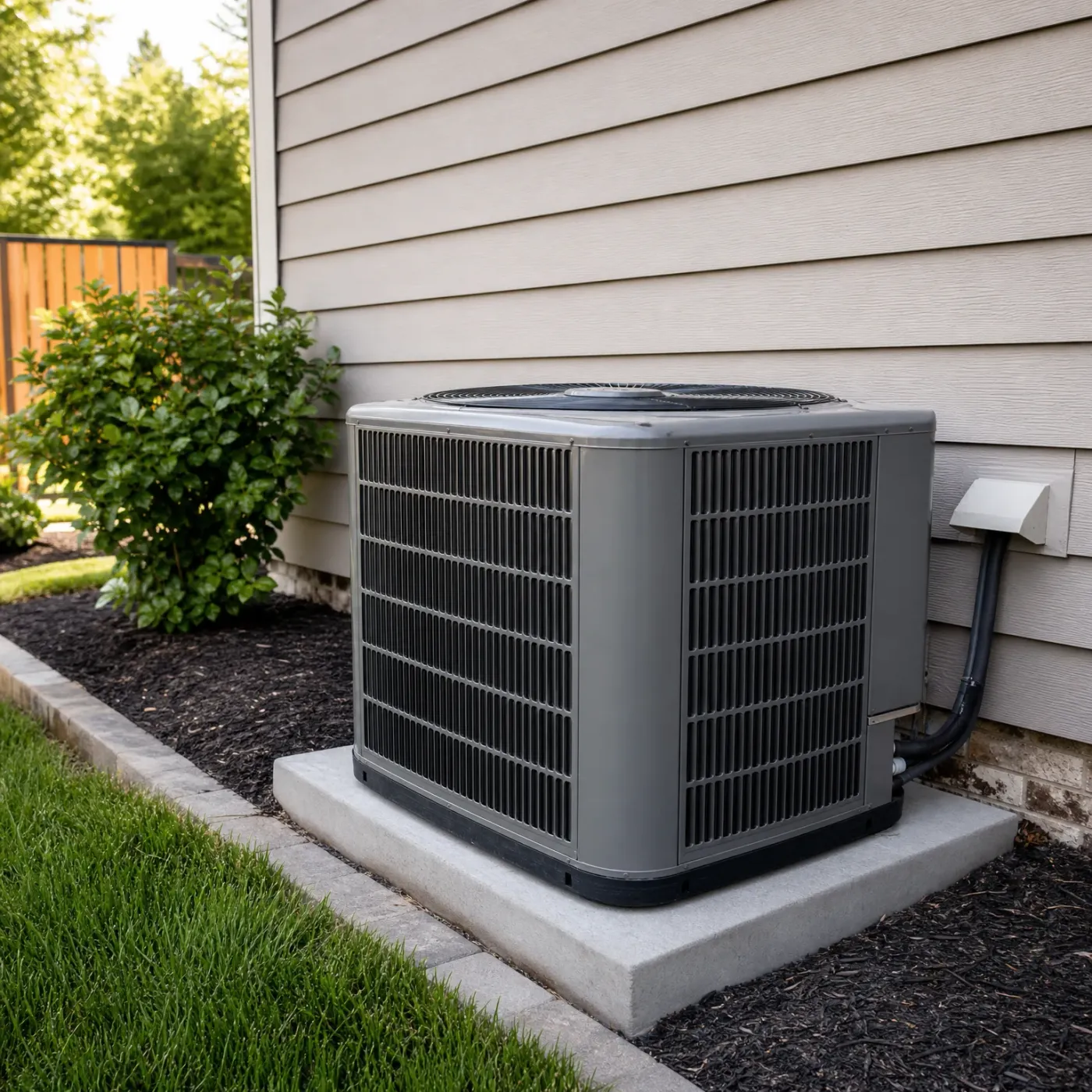
A gray outdoor air conditioner condenser unit sits on a concrete pad beside a house with horizontal lap siding, with conduit and an electrical disconnect box on the wall, dark mulch and a shrub to the left, and a concrete walkway in the foreground.

Running the way it should

A unit like this one, clean grilles, clear airflow, pad level, is pulling its weight without a fight. At this stage, regular care from someone who knows the equipment keeps it running efficiently instead of straining through July and August on borrowed time.

An outdoor air conditioning condenser unit on a concrete pad beside a house with horizontal lap siding, with a shrub and mulch bed to the left and conduit and a small electrical box on the wall to the right.

Running on borrowed time

Dirt caked on the coil and a disconnect box this worn are signs of a system near the end of its 12 to 15 years. Replacing it before it fails outright means you choose the contractor and the timing, not a dead compressor in August.

Repair It or Replace It

Repair

  • A capacitor or contactor costs far less to replace than the system costs to rebuild, and either one can knock out a unit in the middle of August.
  • If the compressor itself is still sound, fixing the part around it gets you through the summer without touching the part that costs the most.
  • A unit that's getting regular attention, coils cleaned, charge checked, can keep running at 12 or 13 years without needing anything major.
  • Parts for a unit this age are still easy to find, so a repair doesn't mean waiting on something backordered.
  • Maryland humidity is hard on outdoor units, and sometimes what looks like a bigger problem is corrosion on a single connection.

Replace

  • Past 12 to 15 years, the compressor is the part most likely to go, and that repair often costs close to what a new system runs.
  • A new system installed correctly for your house size and ductwork runs on less power each month, which matters with what electricity costs in Maryland.
  • If the unit is low on refrigerant and it's an older charge, a contractor may not be able to simply top it off anymore.
  • Replacing before a breakdown means you're choosing the timing, not scrambling to find someone the week it quits in July.
  • A properly sized and installed system handles Maryland summers without the compressor straining the way an old undersized one does.
A gray-haired man in a dark long-sleeve shirt sits on a gray sofa in a living room, looking toward a sunlit window with sheer curtains.
A gray-haired man in a dark green sweatshirt sits on a sofa in a living room, looking toward a bright window, with a houseplant, lamp, fireplace and framed art behind him.
A gray-haired bearded man in a dark green collared sweater sits on a sofa in a living room with a window, houseplant, floor lamp and bookshelves, looking off to the side.
A gray-haired man in a dark green sweater sits on a sofa in a sunlit living room, looking off to the side, with a framed landscape painting, dining table and shelving behind him.

12 to 15 years

That is the span a central air conditioner typically covers in Maryland. Where your unit falls in that range says more about what to plan for than a repair-or-replace guess.

Reach a local pro

Humid air, longer run times

A sticky Maryland summer keeps the compressor cycling for hours at a stretch. That steady demand is what shortens the life of a unit versus a drier climate.

Reach a local pro
A closed silver laptop and a glazed ceramic mug on a wooden table, with a blurred kitchen counter, potted plant, cutting board and window in the background.

What an aging system means for your house

Past year 12 or so, you'll likely notice the upstairs rooms stay a few degrees warmer than the thermostat says, especially by late afternoon. The unit is still cooling, just not keeping up the way it did. Your electric bill climbs too, since a system working harder to push the same air through tired components pulls more power to do it, and electricity here isn't cheap to begin with.

There's also the risk of it failing outright on a July afternoon, which is when these units tend to give out, under the heaviest load of the year. If yours is in that range, it's worth getting a straight read on where it stands rather than waiting to find out the hard way. That means skipping the usual runaround of finding someone qualified, getting a few people out to look at it, and sorting through opinions that don't agree. One licensed local contractor who works on these systems all summer can tell you plainly whether yours has a few good years left or whether you're better off planning the replacement now.

A dark ceramic mug on a round wooden table beside a light grey sofa with a woven cushion and knit throw, with a window, potted plant, floor lamp and wooden cabinet blurred in the background.
  1. Thermostat calls for cooling and signals the outdoor unit

  2. Compressor pulls in refrigerant gas and compresses it

  3. Hot refrigerant releases heat through the outdoor coil

  4. Refrigerant cools and expands as it enters the indoor coil

An outdoor air conditioner condenser unit on a gray composite pad beside a house with horizontal siding, a concrete foundation, a basement window, and a conduit and disconnect box on the wall.
Before you get your air conditioner installation
A gray outdoor air conditioning condenser unit on a concrete pad beside a house with horizontal lap siding and a stone veneer base, with a disconnect box and conduit on the wall, mulch bed and shrub to the right, and mowed grass in the foreground.
After you get your air conditioner installation
A gray outdoor air conditioning condenser unit on a concrete pad beside a house with horizontal vinyl siding, with mulch, a shrub, and lawn nearby.

No quotes to chase

The pro who reaches out is licensed in Maryland.

Fill out one short form instead of calling around.

Find a licensed air conditioner pro

You're not committing to anything by asking.

Is your AC telling you something right now

Walk through your house on a hot afternoon. If one room stays warmer than the rest no matter where you set the thermostat, the system is struggling to push air that far. Listen for a rattle or a hum that wasn't there last summer, or a short cycle where it shuts off a few minutes after it starts. Check the outdoor unit for ice on the lines, even on a 90 degree day. None of this means it's done, but a unit that cycles too often or can't keep up is working harder for the same result, and that shows up on your electric bill before it shows up as a breakdown.

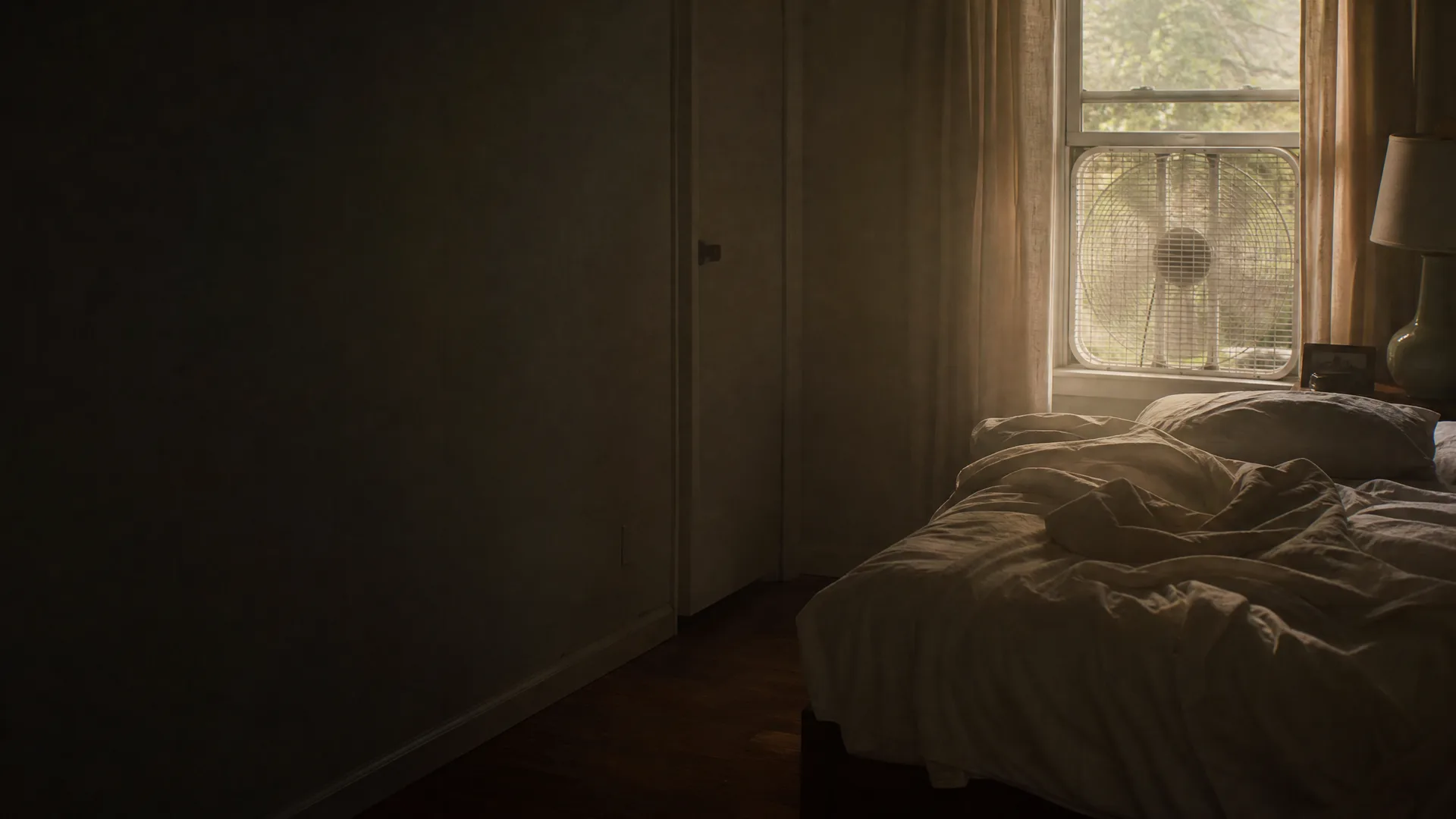
A dim bedroom with an unmade bed beside a window holding a box fan, with sheer curtains, a lamp at right and a large blank wall at left.

The box fan in the window is doing most of the work tonight. It's past nine and still in the mid-80s outside, the kind of June evening that doesn't cool off once the sun's down. You're lying on top of the sheets, not under them, and the air coming through the vent is there but it isn't cold, not really. Downstairs the thermostat reads 72. Up here it's nothing like that. The fan pulls in the same thick air it's been pulling in for an hour, pushing it around the room instead of doing anything to it. You can hear the unit outside still running, working, and you wonder how long it's been losing this particular fight.


Power costs 19.53 cents per kilowatt-hour statewide

At 19.53 cents per kilowatt-hour, every extra year an aging compressor labors through August shows up fast on your bill. A unit past 12 or 15 years draws more just to hold the same temperature, so the strain costs you twice, on the electric bill and on the equipment itself.

EIA-861 2025 statewide residential average

Where That Leaves You

  • Twelve to fifteen years is the span to expect from a central air conditioner running summers in Maryland.
  • Where your unit sits in that span tells you whether a repair makes sense or whether install is the smarter move.
  • A local contractor who works on these systems all summer knows which parts tend to fail first in this climate.
  • Working with one licensed contractor means one conversation and one visit, not a round of calls to sort through.
  • An install done right sizes the unit to your house and sets it up to run the full stretch of years ahead.
  • A system past its years running on electricity priced at 19.53 cents per kilowatt-hour costs you more every month it stays in.

Twelve to fifteen years is what a central air conditioner gives you in Maryland, and by now you have a sense of where your own unit falls in that span. A system in its early years with a part failing is worth fixing. A system past year twelve, running harder every summer and costing more on the electric bill at 19.53 cents per kilowatt-hour, is telling you something different. Either way, the next step is the same: someone needs to look at the unit and tell you straight what it needs.

That's where a licensed Maryland contractor matters more than the search results suggest. Someone who works on these systems all summer has already seen what fails first in this kind of heat, the capacitor that gives out in July, the coil that cakes up and chokes the airflow. They know it from the units they've serviced down the street, not from a manual. When you reach out through this page, you're not collecting five quotes and explaining your attic access five times over. You're talking to one contractor, local to where you live, who takes it from there. They'll size the system to your house if it needs replacing, or tell you plainly if a repair gets you through this summer and the next. Either way, you're left with a straight answer from someone who knows the equipment, not a guess you have to sort out yourself.

Kitchen corner with cream upper cabinets, oak lower cabinets, white marble-look countertop, beige tile backsplash, a ceramic vase of greenery, a wooden cutting board and bowl, and a black-framed window at right.
Interior corner of a room with a white-framed window and wide sill, beige walls with panel molding, a wooden cabinet holding a ceramic vase with a green leafy plant, and blurred shrubs and trees outside.
A wood-framed armchair with beige cushions and a woven lumbar pillow sits in a corner beside a large window overlooking green trees, with a tall ceramic vase holding leafy branches on the left and plaster walls and wood flooring.
Interior corner with a white-framed window above a sill, beige walls with baseboard molding, a greige shaker-style cabinet with brass knobs and a potted plant on top, light wood flooring and a woven jute rug.
A dark-framed six-pane window with white trim and sill set in gray horizontal lap siding, with hydrangea shrubs below and a white column and shingled roof section at left.

Skip the calls to every shop

Only one pro gets your request, so you hear from one company.

Get one local pro

It costs nothing to send, and you don't have to hire anyone.