





Repair or replace a heat pump in Maryland

New system or replacementHeat PumpMaryland
Step 1 of 2

What ZIP code is the job in?

Should I repair or replace my heat pump in Maryland?

Your heat pump is giving you trouble again, maybe short-cycling, maybe blowing air that's not quite warm or cool enough, and you're trying to figure out if this is worth fixing or if you're better off putting that money toward a new system. With electric heat as the main way most Maryland homes stay warm, and power rates what they are, this isn't a small decision either way.

Repair it if it's under 10 years old, replace it if it isn't

A heat pump works harder in Maryland than in most places. It's your main source of heat through the winter and it's running the AC all summer when the humidity sets in, so the compressor rarely gets a break. Past 10 years, the odds of a second breakdown within a year or two climb fast, and a unit that's losing efficiency costs you more every month it stays in your wall or yard. A repair under 10 years buys you real time. Past that, you're paying to patch a system that's already worked harder than most, in a state where electric heat makes an inefficient unit expensive to keep running.

A gray outdoor air conditioner condenser unit on a concrete pad beside a house with horizontal siding and an electrical disconnect box, surrounded by grass.

Why heat pumps work harder here

A heat pump moves heat instead of burning fuel to make it, so in January it's pulling what little warmth is in the outside air into your house. The colder it gets, the harder that job is, and the unit leans on backup electric resistance heat to make up the difference. That backup heat draws a lot more power than the compressor alone, and with Maryland winters running cold enough most years, an older or undersized unit ends up using it often.

A white outdoor heat pump unit on a concrete pad beside a house with horizontal lap siding, with a plain light wall and grass lawn to the left.

What a mismatch costs you monthly

Most homes here heat with electricity, so the heat pump isn't competing against a gas bill, it's your whole bill. A unit that's aging or sized wrong for your house runs longer to hit the same temperature, and in the summer humidity it struggles to pull moisture out of the air even when it hits the number on the thermostat. That strain shows up as a higher electric bill before it shows up as a breakdown you can see.

Repair the Heat Pump or Replace It

Repair

  • A single failed part, like a defrost board or a reversing valve, can be swapped without touching the rest of the system.
  • If the unit is handling the heat and humidity most summers without running constantly, the problem may just be that one component.
  • A repair buys time if you're not ready to pay for a full install right now, as long as the fix holds.
  • Repeated calls for the same symptom, like short-cycling that keeps coming back, usually mean the fix didn't address what's actually wrong.
  • Parts for an older heat pump can be harder to find, which can stretch out a repair longer than you'd like.

Replace

  • A heat pump that's struggling to keep up on both the coldest and hottest days of the year is working past what repairs can fix.
  • Electricity rates in Maryland make an inefficient unit expensive to run every month it's in the house, not just in winter.
  • A new system is sized and set up for your house as it is now, not for whatever load it was built for originally.
  • If you're facing a second or third repair in close succession, that pattern usually points toward replacing rather than patching again.
  • Replacement resets the clock, so you're not guessing every season whether this is the year it finally gives out.
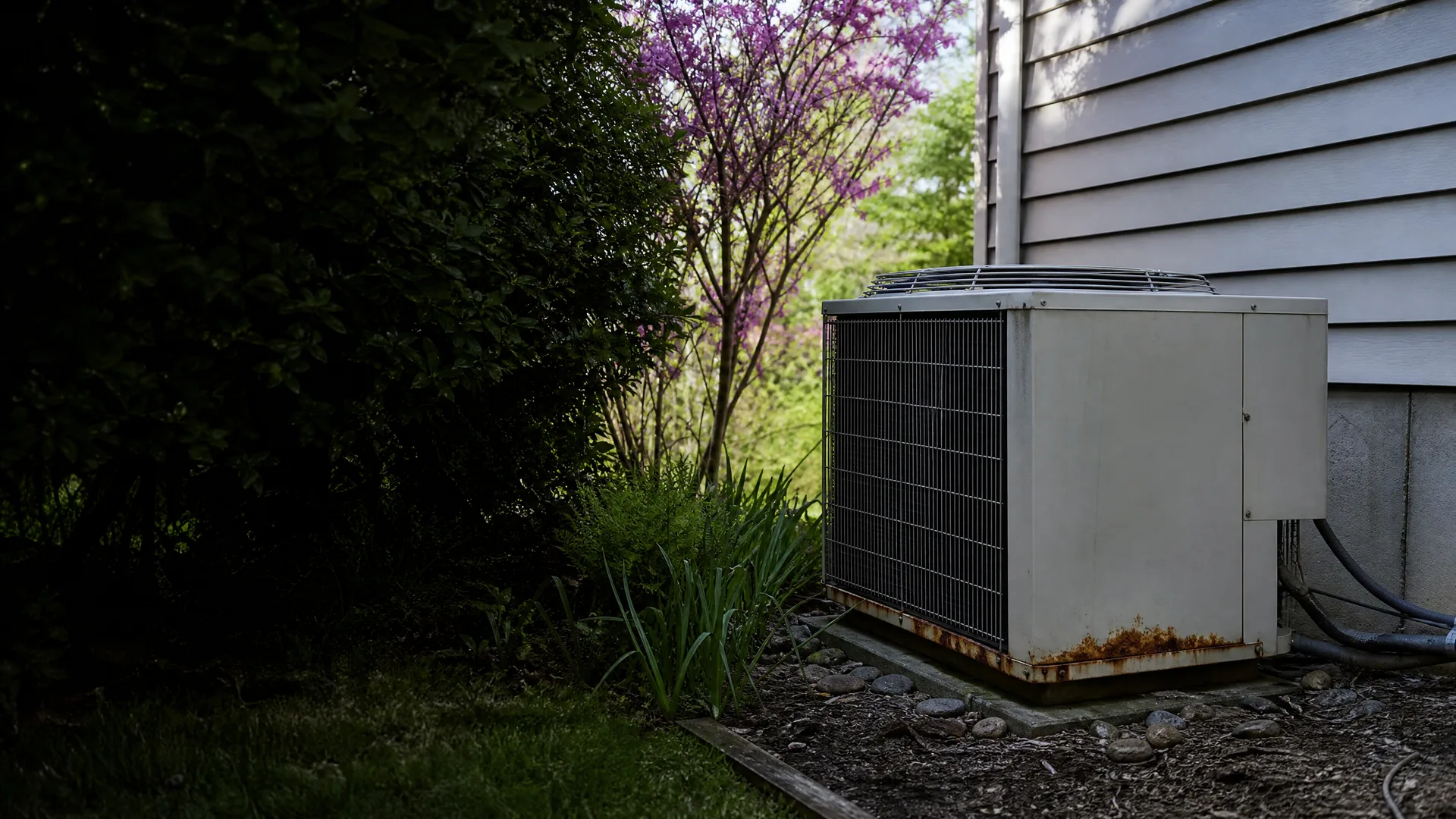
An outdoor air conditioning condenser unit with rust streaks sits on a concrete pad beside a light-colored lap-sided house, surrounded by shrubs, gravel and a flowering tree.

You walk out to the side yard to check on the unit before it gets warm enough to need it. The rust along the base has spread since last spring, a powdery orange line where the metal meets the concrete pad. The panel seams show it too. You crouch down and press a finger to it and a little flakes off. It still ran fine last summer, kept the house comfortable through the sticky months without much trouble, but you know what rust like that usually means for what's underneath. You've been meaning to get someone out to look at it rather than wait for it to fail on the first ninety degree day, and you stand there a minute longer trying to decide if today's the day you make the call.

Get your heat pump to the right pro

A failing heat pump in Maryland does not wait for a convenient month. It quits in July when the humidity is bad, or in January when electric backup heat is the only thing standing between you and a cold house, and either way the bill for running a struggling unit climbs while you decide. Getting quotes on a replacement usually means calling several companies, explaining the same symptoms each time, waiting on callbacks, then sitting with a stack of estimates you have no easy way to compare. That takes days you may not have if the unit is actually done. Handing the search off gets you to a straight answer faster, from someone who can look at your system and tell you whether it is worth repairing or whether replacement is the better use of your money. You still make the call on what happens to your house. You just make it with the facts in front of you instead of chasing them yourself.

How a heat pump actually works

  • A heat pump runs the same refrigerant cycle as your AC, then reverses it with a valve to pull heat from outside air in winter.
  • Below about 35 to 40 degrees the outdoor coil can't gather enough heat, so a second heat source, usually electric strip heat, kicks in to help.
  • That backup heat uses far more electricity than the compressor alone, which is why a cold snap shows up on the power bill.
  • A reversing valve stuck in one position will leave you with a system blowing cold air in winter or warm air in summer.
  • Frost on the outdoor unit in winter is normal; the defrost cycle melts it by briefly running in cooling mode and firing a small heater.
  • A low refrigerant charge makes the system work harder in both directions, since the same coils and valve handle heating and cooling all year.

A heat pump is an air conditioner that can run backward. Refrigerant moves through the same two coils and compressor your AC uses, and a reversing valve decides which coil absorbs heat and which one releases it. In summer that means pulling heat out of your house and dumping it outside. In winter it means the opposite, pulling what heat exists in the cold outdoor air and pushing it inside, which is a harder job the colder it gets. Somewhere around 35 to 40 degrees outside, the outdoor coil can't pull in heat fast enough on its own, so electric strip heat switches on to carry the load. That backup heat is plain resistance heating, the same principle as a toaster, and it draws far more power than the compressor does by itself. That's the real reason a stretch of cold Maryland nights can push your electric bill up even though the thermostat didn't change. Frost building up on the outdoor unit during winter isn't a sign anything's wrong. The system handles it with a defrost cycle, briefly switching back to cooling mode so the outdoor coil warms up and melts the frost, while a small heater keeps cold air from blowing inside during that minute or two. Because heating and cooling share the same coils, valve and charge of refrigerant, a problem in one season usually shows up in the other too. A reversing valve stuck in position or a system low on refrigerant doesn't wait for summer or winter to cause trouble.

A woman in a cream sweater with her hair in a bun laughs while seated at a stone counter holding a glass of red wine, in a dimly lit interior with a sofa, houseplants and a large window at night.
A woman with long dark hair in a cream knit sweater laughs while looking off to the side, seated in front of a dimly lit kitchen with an island, stools, open shelving and a potted plant, with a glass of red wine in the foreground.
A smiling woman with long dark wavy hair in a light knit sweater sits at a marble counter with a glass of red wine, with a dimly lit living room and kitchen in the background.
A smiling woman with long wavy brown hair in a beige sweater sits at a white marble counter with a glass of red wine, with a living room, dining table and kitchen cabinets behind her.

When repair is the right call

A heat pump that's otherwise kept up with Maryland's summers and winters without much trouble is usually worth fixing once. A capacitor, a contactor, a defrost sensor, these fail on their own and don't mean the rest of the system is going. If the compressor is still sound and the refrigerant charge has held, a repair gets you back to normal without the cost of a full swap. This makes the most sense when the unit hasn't needed much attention before and the failure looks like a single part rather than a pattern.


When replacing makes more sense

If you're calling about the same unit every year, or the compressor itself is what's failing, replacing stops the cycle of paying to patch something that keeps breaking. An older unit also loses efficiency over time, and with Maryland electric rates what they are, a system working harder than it should shows up on every bill, not just the repair invoice. Replacing makes sense when the repairs are stacking up, when the unit can't keep the house comfortable through the humidity or the cold anymore, or when the cost of fixing it again starts to rival putting in something new.

A weathered gray outdoor condenser unit sits on a concrete pad beside a house with horizontal siding, with refrigerant lines entering the wall at left and a mulched shrub bed at right.
Before you get your heat pump installation
A gray outdoor condenser unit on a concrete pad beside a house with horizontal lap siding, with an electrical disconnect box and insulated refrigerant lines on the wall, gravel in the foreground and a planting bed at left.
After you get your heat pump installation
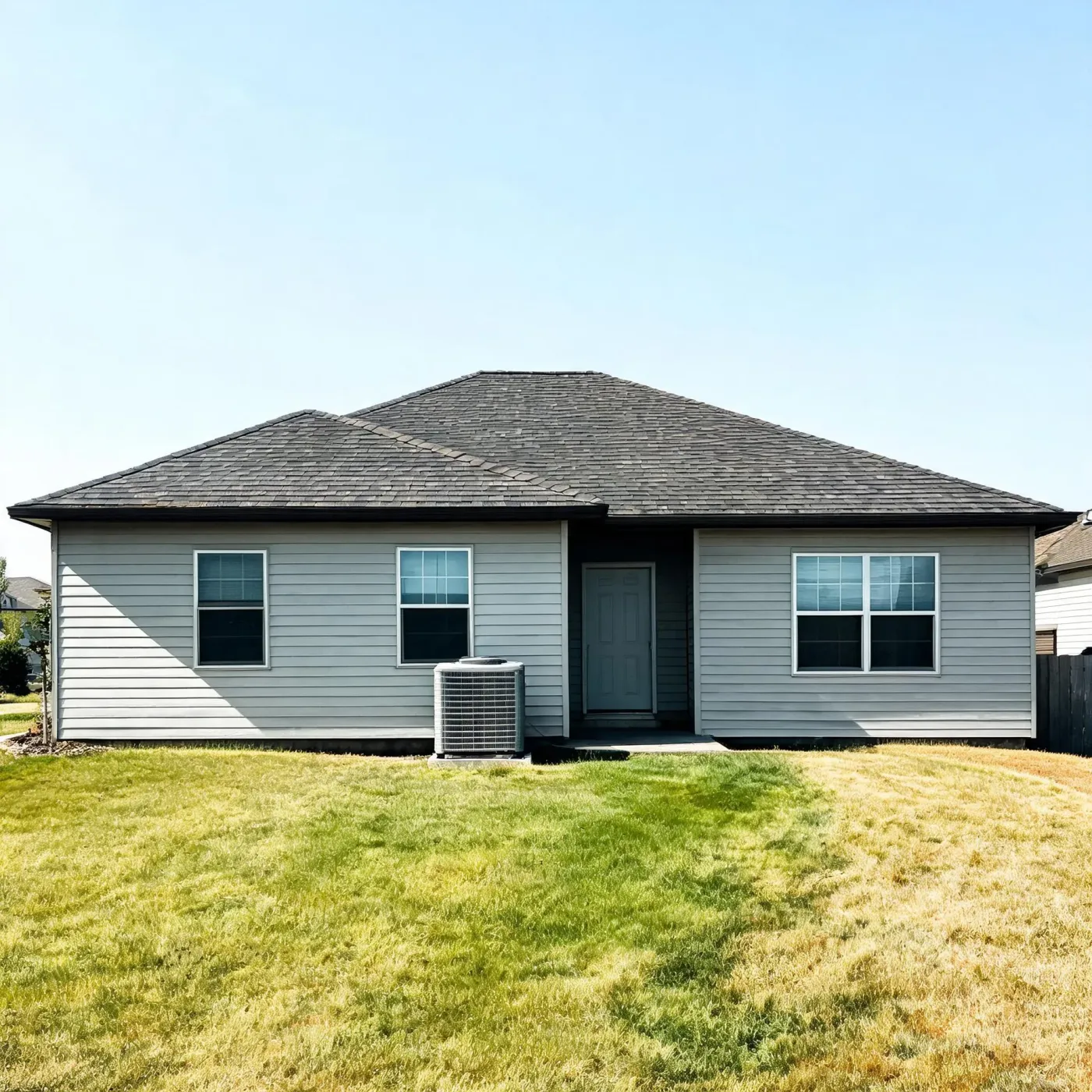
Rear view of a single-story gray vinyl-sided house with a dark shingled hip roof, three windows, a center door, an outdoor air conditioning unit, and a patchy green and brown lawn under a clear sky.

A summer dew point averaging 64°F across Maryland means the air your heat pump handles in June, July and August is already heavy with moisture before it does anything. Pulling that moisture out is part of what the unit is doing every time it runs, not just cooling the air. A system that's lost some capacity, low on refrigerant or dragging on a weak compressor, will still drop the temperature some but leave the house feeling damp and sticky. If rooms feel clammy even when the thermostat says it's cold enough, that's the dew point working against a unit that's no longer keeping up.

NASA POWER T2MDEW county cells weighted by homes

A gray outdoor air conditioner condenser unit on a concrete pad beside a house with horizontal lap siding and a stone veneer base, with a conduit running to a wall-mounted disconnect box and shrubs and evergreen trees to the left.
A heat pump that still cycles on and off at a normal pace, holds its set temperature, and hasn't needed a repair call this year is doing its job.
An outdoor air conditioning condenser unit sits on a concrete pad beside a white horizontal-siding house, with a gray electrical disconnect box and insulated refrigerant lines on the wall, mulch and green shrubs to the right, and a concrete slab in the foreground.
A heat pump with rust creeping up the cabinet and lines running into a house that's started losing its edge on the hottest days is telling you something.
A smiling middle-aged man in a dark green sweater sits at a candlelit table with wine glasses and a plate of greens in a dimly lit interior.
A woman in a dark knit turtleneck sweater reclines on a couch under a cream knit blanket, looking down at an open book, with a lit table lamp and framed pictures behind her.

Power costs 19.53 cents per kilowatt-hour statewide

At 19.53 cents per kilowatt-hour, every hour your heat pump leans on electric backup heat shows up fast on the bill. An older unit that's lost efficiency, or one sized wrong for your house, costs you more each month just to hold the same temperature.

EIA-861 2025 statewide residential average

A heat pump that's working with your house and your budget deserves a repair. One that's fighting you every July and leaning hard on electric backup every January is telling you something a repair won't fix twice. You know which one you have by now, the pattern this winter and last summer already showed you. What you don't have to do is figure out which contractor to call, sit on hold explaining the same rust and the same noise three separate times, then line up quotes against each other with no way to tell if they're even looking at the same problem. That part ends when you ask for a match. A contractor who knows Maryland heat pumps, the humidity they fight all summer and the cold they fight all winter, takes it from here.

A covered porch with a wood front door with six upper glass panes, a lantern wall sconce, tapered column on a stone base, potted ferns and flowers, a woven doormat, and wide steps leading to a paver walkway bordered by shrubs and white hydrangeas.
A beige upholstered sofa with a cream cushion and chunky knit throw sits beside a white-framed window, with a leafy potted plant in a stone vase against a tan wall.
Sunlit corner of a room with a linen curtain beside a window, built-in shelves holding ceramic vases, wooden bowls, a potted green plant, stacked books and a woven basket, above a textured rug.
A dark wood three-drawer dresser against a pale wall holds a tall ceramic vase with leafy branches, stacked books and a shallow bowl, with a framed print above, a woven basket on the wood floor at left, and an upholstered sofa with a green pillow in the foreground.
A cream upholstered sofa with a textured ivory cushion and a rust-colored cushion sits beside a window with sheer linen curtains, with a potted leafy plant behind it and a wooden bowl on a wood table in the foreground.

The right pro for this job

Fill out one short form instead of calling around.

Skip calling around

Asking costs nothing, and the choice to hire stays yours.