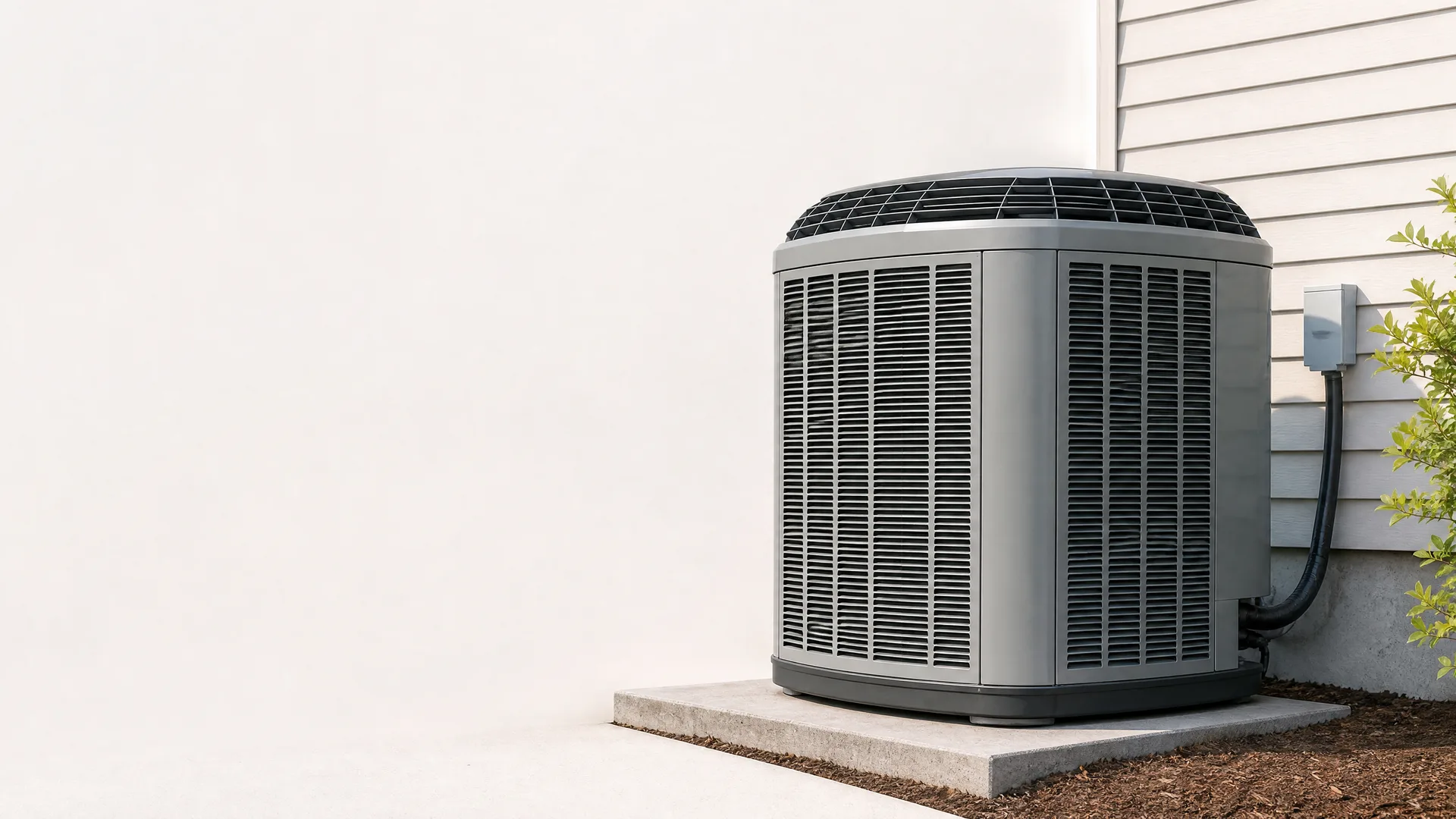
AC blowing warm air in Gaithersburg, MD

RepairCentral ACMontgomery County, MD
Step 1 of 2

What ZIP code is the job in?

Why is my AC blowing warm air instead of cold?

You go to the thermostat expecting cool air and instead feel room-temperature or warm air coming out of the vents. In a Gaithersburg summer, with the humidity sitting heavy outside, that's not something to put off. You want to know whether this is a quick fix or a sign something bigger has failed before you decide what to do next.

Usually a dirty filter, a low refrigerant charge, or a failed outdoor unit

Most of the time, warm air means the outdoor condenser isn't running even though the indoor fan is. That can be a tripped breaker, a failed capacitor, or a compressor that's given out. It can also mean the system has a refrigerant leak, so it's moving air but not pulling heat out of it. A clogged filter can cause the same symptom by freezing the indoor coil, which then blocks airflow until it thaws. With Montgomery County summers running hot and humid for months, a system that's low on refrigerant or short a part struggles the moment it's asked to work hard, and the air coming out turns warm fast. None of these fixes themselves, and running the system in this state can strain the compressor further.

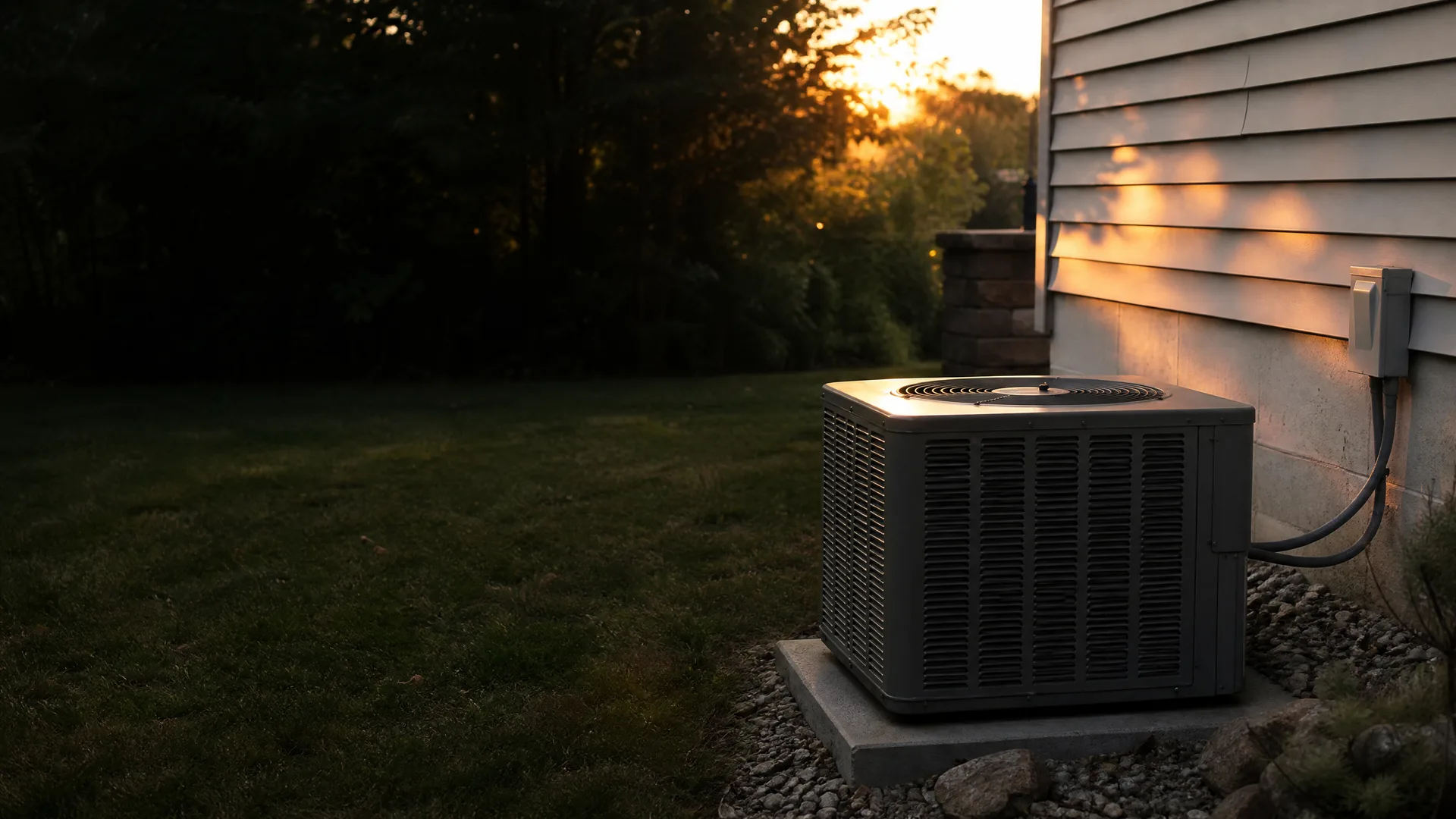
An outdoor air conditioning condenser unit on a concrete pad beside a house with horizontal lap siding, with a gravel bed, refrigerant lines and an exterior electrical disconnect box on the wall, and a lawn and trees at sunset in the background.

You're out back around seven, the light still gold but low over the fence line, and the air hasn't let up any from the afternoon. The condenser sits against the house where it always does, humming the way it should, except the fan on top isn't moving. You crouch down and feel for the pull of air through the grille and there's nothing. Inside, your wife calls out that the vents are blowing warm again. You stand there a minute, hand still near the unit, listening to the motor run without the blade turning, and you already know this isn't something that fixes itself before bedtime.

Is this going to ruin a day you planned around being cool

You'll notice it first at the vents, air that's barely moving or not cold enough to matter, then the thermostat reading a few degrees above what you set. Walk past the outdoor unit and you might hear it running fine, or hear nothing at all from the fan. Inside, the house warms room by room instead of all at once, so the bedrooms might still feel okay while the living room doesn't. Left alone through a stretch of Gaithersburg summer days, a system that's struggling to cool still runs, which means a higher bill for less comfort, and whatever's causing it tends to get worse, not better, the longer it keeps cycling that way.

A gray outdoor air conditioning condenser unit on a concrete pad beside a house with horizontal gray siding, with a wall-mounted electrical disconnect box and insulated refrigerant lines, and blue hydrangeas in a mulched bed to the left.

Running the way it should

The fan turns, the lines stay clear, and cold air reaches the vents on a hot Gaithersburg afternoon. Nothing on the pad looks out of place, and the unit pulls its load without strain. This is what a working system looks like next to your house.

A gray outdoor air conditioner condenser unit on a concrete pad beside a house with beige horizontal siding, with an electrical disconnect box and insulated refrigerant lines on the wall and dry leaves on the ground.

Warm air is a sign, not a mystery

Rust on the shroud, dirt packed into the fins, a fan that struggles to turn. An older condenser wears like this after enough summers, and warm air at the vents is usually the first thing you notice before you see any of it. A contractor who works on these units every season will know what that wear usually means once they're standing in front of it.

A closed dark gray laptop and a ceramic mug on a wooden table in a kitchen, with a window, potted plant, bowl on a counter, and cutting boards near white cabinets in the background.

What's actually happening inside the unit

Warm air at the vents usually traces back to one of two places: the refrigerant circuit or the airflow across the indoor coil. The compressor outside is supposed to compress refrigerant gas and send it through the coil as a cold liquid that pulls heat out of the air moving across it. If the charge is low, from a leak somewhere in the lines, that process doesn't pull enough heat out, and what reaches your vents is close to room temperature. A dirty filter or a blocked return does something different. It starves the coil of airflow, the coil gets too cold, ice builds on it, and once that ice forms, no air handler can push cold air through it at all.

Either problem needs someone who can tell the difference, because a frozen coil can look like a refrigerant problem until it's thawed and checked. That's not a guess you want to make by searching reviews and calling three different companies to compare quotes and explain the same thing three times. A contractor who services this equipment around Gaithersburg every summer has seen both and knows which gauge or test settles it fast.

A shallow dark wooden bowl and a stack of books rest on a wooden table in front of a beige sofa with linen and green cushions, with a tall ceramic vase of thin branches beside a window in the background.
A gray outdoor air conditioner condenser unit sits on a concrete pad beside a house, with a gray electrical disconnect box and conduit on the lap-siding wall above it and a green shrub and pine straw at the lower left.

A frozen coil needs time

If the indoor coil has iced over from low airflow or a low charge, turning the thermostat down further won't speed anything up. The ice has to melt first, and that can take a few hours with the system off and the fan running. Running it on cooling the whole time only adds more ice. A contractor can confirm it's actually frozen rather than guessing from the vents, since a coil can ice up out of sight above the furnace or air handler.

A gray outdoor air conditioner condenser unit on a concrete pad beside a light-colored stucco wall and horizontal lap siding, with an electrical disconnect box, conduit, mulch, and a shrub at right.

What a dirty filter costs you

A filter clogged with dust and pet hair chokes off the air moving across the indoor coil. Less air means less heat absorbed, and the coil runs colder than it should until it drops below freezing. That ice then blocks airflow even more, so the problem feeds itself. Checking the filter costs nothing and takes a minute. If it's gray and matted instead of white, that's worth ruling out before assuming the trouble is the compressor or the refrigerant line outside.

Cooling runs June through September

Four months of that is all your air conditioner gets here, June through September, but those are the months it has to work. When it quits on you mid-summer in Gaithersburg, there isn't a mild stretch coming to bail you out, so getting it fixed now matters more than it would in a place that leans on cooling less.

NOAA nClimDiv 1991-2020

A gray-haired bearded man in a dark green sweater sits on a light sofa indoors, looking to the side, with a houseplant, framed picture, table lamp and sunlit window behind him.
A middle-aged man in a dark denim shirt sits on a light beige sofa in a living room with wooden shelving and a potted plant, looking off to the side.
A gray-haired man in a dark navy sweater sits on a light sofa in a living room, looking toward a sunlit window with a houseplant and wooden cabinet behind him.
A man with greying hair in a dark green sweater sits on a light sofa in a sunlit living room, looking off to the side, with a large window, table lamp, framed art and white built-in shelves behind him.
A gray outdoor air conditioner condenser unit on a concrete pad beside a house with light vinyl siding, with an electrical disconnect box and conduit on the wall and a leafy shrub with dark mulch to the right.
The grille is clean, the fan spins free, and the unit sends cold air to the vents without a fight.
An outdoor air conditioner condenser unit on a concrete pad beside a house with horizontal lap siding, with a gray electrical disconnect box and conduit on the wall and a green shrub over pine-needle mulch at left.
A grille caked with dirt and pine mulch chokes the airflow the condenser needs to send cold air inside.
A woman with shoulder-length brown hair in a gray knit cardigan sits in an upholstered armchair indoors, looking toward a window with sunlit trees outside, with a bookshelf behind her.
A woman with her hair in a bun sits on a couch with a sleeping child resting against her, both wrapped in a cream knit blanket, with a lit floor lamp, houseplant and dark window behind them.

No calling every shop in Montgomery County

Tracking down a frozen coil or a low charge yourself means finding someone licensed to handle refrigerant, since that part of the job isn't legal to do without that license. That usually means calling around, explaining what the vents are doing and what the outdoor unit sounds like, then doing it again for the next company, and sorting through quotes that don't quite match up. This request goes to one licensed contractor working in Gaithersburg, someone who sees this exact problem every summer and knows whether it's the compressor, the coil, or the airflow before they even arrive. No flood of calls from five companies working off the same lead. With the humidity outside and only a few months where your AC gets any rest, a warm house isn't something to sit with while you sort through estimates. Handing it off now gets someone qualified looking at the actual unit instead of you guessing from the pad outside.

  1. The compressor pulls low-pressure refrigerant gas in from the coil

  2. It compresses that gas, which heats it, and sends it to the condenser

  3. The condenser fan pulls outside air across the coil to shed that heat

  4. Refrigerant cools, turns liquid, and travels inside to the evaporator coil

Call It In or Ride It Out

Call a licensed pro

  • A licensed contractor carries the refrigerant handling certification the repair legally requires, so there's no separate search for who's allowed to touch that part of the job.
  • Someone who works on these units all summer in Montgomery County has likely already seen the exact failure in your unit, whether that's a stuck contactor or a coil iced from low charge.
  • You explain the problem once, to one contractor, instead of repeating the same vent and thermostat details to three or four companies to compare quotes.
  • Gauges and a recovery setup confirm whether the charge is low and find the leak, instead of guessing from what the vents are doing.
  • One company shows up, not a string of callbacks from competing outfits once you've put your number out to get quotes.

Wait it out

  • A frozen coil can take a few hours to melt even with the system off, and nothing about the unit gets better in that time on its own.
  • Running the system with low refrigerant or blocked airflow longer doesn't fix either problem and can push the compressor toward a harder failure.
  • Gaithersburg only gives the unit four months, June through September, to do its job, and a stretch sitting warm cuts into the only window you have.
  • Without gauges on the system, there's no way to tell from the vents alone whether it's a charge problem, a frozen coil or an electrical fault.
  • The humidity outside doesn't let up to give the house a break while the system sits broken.
A single-story gray horizontal-siding house with multiple gables, dark shingled roof, shuttered windows, and an exterior air conditioning unit, set on a large grassy lawn under a clear blue sky.

That humidity you feel the second you step outside isn't separate from what's going wrong at your vents. Montgomery County summers hold a dew point around 64°F across June, July and August, according to NOAA climate data, which is heavy enough that your skin stays damp even standing still in the shade. Your air conditioner has to pull that moisture out of the air before it can cool it, and that's extra work on top of dropping the temperature. A system that's low on refrigerant or starved for airflow struggles with the moisture load first, which is often why the air at the vents feels damp and warm instead of just a few degrees off.

NASA POWER T2MDEW

A dirty outdoor air conditioning condenser unit on a concrete pad beside a house wall with horizontal siding above a painted brick foundation, with a gray electrical disconnect box and conduit on the wall.
Before you get your air conditioner repair
A gray outdoor air conditioning condenser unit on a concrete pad beside a house with horizontal lap siding, with a wall-mounted disconnect box and conduit to the left and a green shrub with mulch to the right.
After you get your air conditioner repair
An outdoor air conditioning condenser unit on a concrete pad beside a house with horizontal lap siding, with an electrical disconnect box and conduit on the wall and a green shrub to the right.

Clean and clear

Nothing blocks the louvers, the fan spins without catching, and the disconnect box and wiring sit untouched on the wall beside it. Air moves through the coil the way it's supposed to, so what comes off that coil reaches your vents cold on a Gaithersburg afternoon.

An outdoor air conditioner condenser unit on a concrete pad beside a house with horizontal siding and a lower concrete foundation wall, with coiled refrigerant lines at right.

Dirty and strained

Years of weather have left the louvers and top grille coated in grime, and that buildup chokes the airflow the coil depends on to shed heat. A unit that looks like this is working harder to move less air, and warm air at the vents is often the first sign you notice.

Warm air at the vents comes down to refrigerant or airflow, and either one needs a licensed hand to put right. That's the whole answer: find which it is, fix it, and the cold air comes back. A local contractor who handles these units all over Montgomery County every summer has seen this exact complaint plenty of times, on the same condensers and coils installed around here, and knows which of the two to check first. You're matched with one contractor, not a handful calling you back at once, and that contractor is licensed for the refrigerant work this repair requires. You don't have to figure out which part failed before you call. You just have to get someone out there before the next muggy afternoon sets in, and from here that part is handled.

Dark standing-seam metal roof with a stone chimney in the foreground, surrounded by deciduous trees in autumn color and conifers, with forested ridges and overcast sky behind.

No phone calls to make

Find a licensed air conditioner pro

Asking costs nothing, and the choice to hire stays yours.

A system blowing warm air through another humid Gaithersburg week isn't fixing itself, and the longer the coil or the charge goes untouched, the more strain the compressor carries in the meantime. One request puts a licensed local contractor on it instead of you sorting through who's free and who's qualified.