AC won't turn on in Gaithersburg, MD

Send the request today and let an air conditioner pro reach out to you.

Hand it off

Why won't my AC turn on in Gaithersburg?

You go to the thermostat expecting cool air and nothing happens. No hum, no click, no air at all. In Gaithersburg, a dead AC on a hot, sticky day isn't something to wait out. You want to know whether this is a quick fix you can check yourself or something that needs a technician before the house gets uncomfortable.

Most often it's power to the unit, not the AC itself

Before anything else, check the thermostat batteries and the breaker panel. A tripped breaker is one of the most common reasons an AC won't start, especially on a hot day when the system is working hard and pulling more current than usual. If the breaker's fine and the thermostat has power but the outdoor unit still won't run, the problem is likely inside the system: a failed capacitor, a bad contactor, or a safety switch that's shut things down to protect the compressor. In Montgomery County summers, a unit that won't turn on during a stretch of heat and humidity needs attention quickly, since the house can warm up fast and stay that way until the system is running again.

A smiling man in a green sweater stands at a kitchen counter with a dark mug, with an open-plan dining area and large windows behind him.
A smiling man in a dark green sweatshirt sits at a kitchen island with a gray mug, with cabinets, plants, and a dining area near large windows behind him.
A smiling bearded man in a green sweater sits at a white marble kitchen island with a mug, potted plant and bowl of fruit, in a bright white interior with open shelving and an arched doorway.
A smiling man in a gray long-sleeved shirt stands in a kitchen looking to the side, with open shelves of dishes, a white mug on the counter, a potted plant, and a view through a doorway into a living room.

What's going on when nothing happens at all

Nothing at the thermostat usually means nothing at the unit either. No click when you lower the temperature, no hum from outside, no air moving through the vents even when you put your hand up to them. Maybe the thermostat screen itself is dark, or it's lit but pressing buttons does nothing. Sometimes you'll notice a breaker in the panel has tripped, or the outdoor unit is dead quiet when it should be running. Left alone on a muggy Gaithersburg afternoon, the house heats up fast, and if anyone inside is older or has breathing trouble, a long stretch without cooling is more than just uncomfortable.

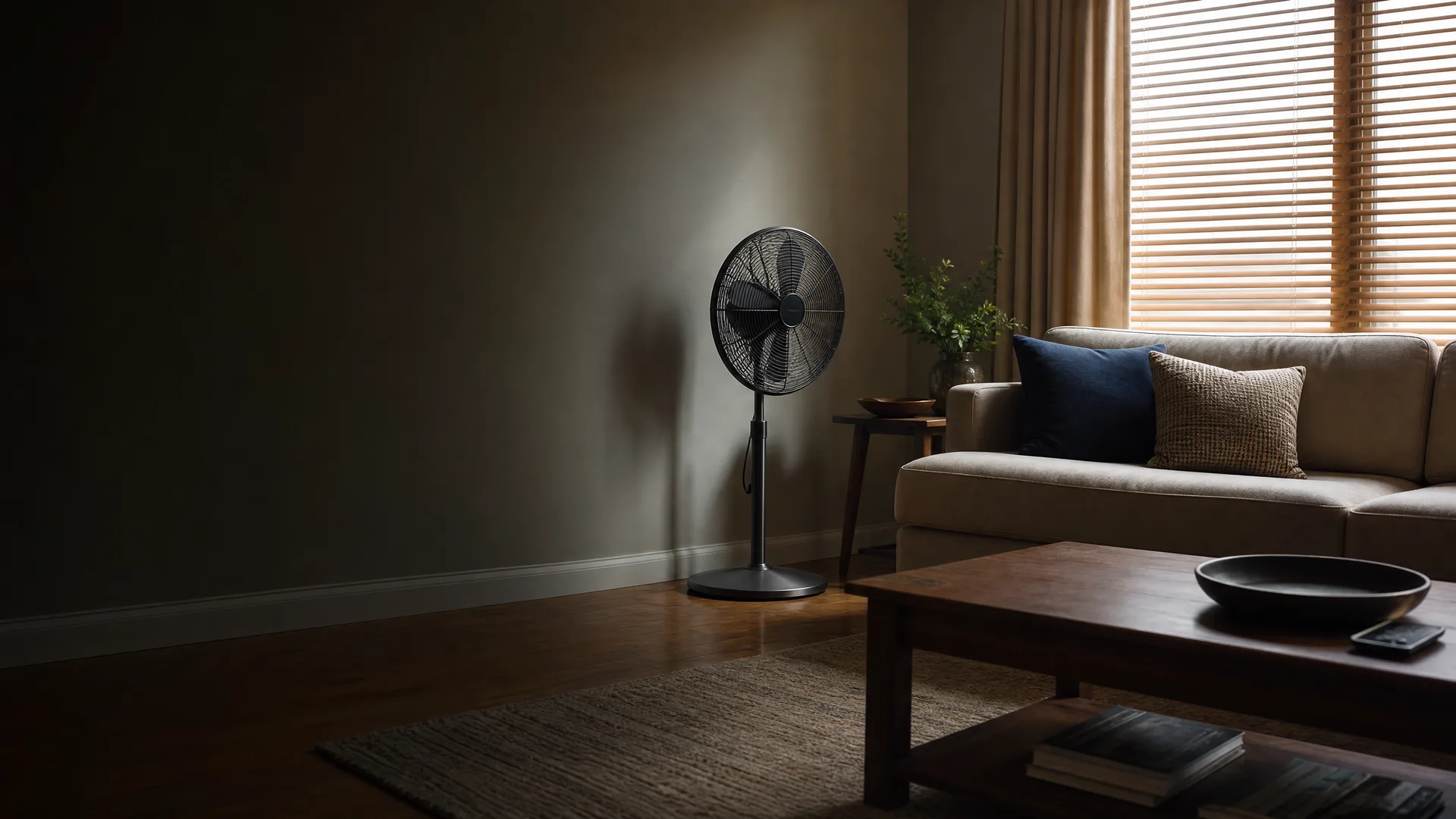
A dark pedestal fan stands near a wall in a dimly lit living room with a beige sofa, cushions, a side table with a plant, a wooden coffee table holding a dark bowl, and window blinds admitting light.

By two in the afternoon the blinds are already drawn, but the sun still finds the gaps and lays a bright line across the carpet. The fan next to the couch pushes the same warm air around the room. You've stopped checking the thermostat every ten minutes, but you still catch yourself listening for the outside unit to kick on. It doesn't. Montgomery County summers don't let up in the middle of the day, and the house has started to feel it, the air gone thick and still in the back rooms. You move the fan a few inches closer and sit back down, phone in hand, trying to decide how much longer you can wait this out.

What You Can Check, What Needs a Pro

Check it yourself

  • A tripped breaker shows as a switch sitting between on and off, and resetting it takes a minute.
  • If the thermostat screen is blank, dead batteries are a common cause and an easy swap.
  • Some condensate pans have a float switch that shuts the whole system off when the pan fills, so emptying it can bring the AC back.
  • A breaker that trips again right after you reset it means something downstream is pulling too much current, and that's past what you can fix yourself.
  • If the outdoor unit is silent but the thermostat is responding, the problem is likely electrical rather than something you can reset.

Call a contractor

  • A breaker that keeps tripping points to a failing capacitor, a seized motor, or a short, and all three need a licensed hand.
  • If the outdoor unit hums but never starts, the compressor or capacitor is the likely cause, and running it like that can damage the compressor.
  • A thermostat with a lit screen but no response from the system usually means a wiring or control board issue a homeowner can't see.
  • Refrigerant lines, high-voltage wiring, and the compressor are not safe to open up without the right training and tools.
  • Someone who works on AC units in Gaithersburg every summer has seen which parts fail first in this area's heat and humidity.
  • Getting a contractor out quickly matters more here than in milder climates, since a dead AC on a 95 degree day isn't something to sit with.
A gray outdoor air conditioner condenser unit on a concrete pad beside a house with horizontal siding and a stucco foundation, with a disconnect box and conduit on the wall, decorative gravel, mulch, and a shrub nearby.

Running the way it should

The coil stays clear and the air moves through it without working hard. The disconnect box on the wall stays untouched unless someone needs to cut power for service. This is what lets the system cycle on and cool the house without a second thought.

An outdoor air conditioning condenser unit on a concrete pad beside a house with horizontal lap siding, with an electrical disconnect box and conduit on the wall, mulch and a green shrub to the right, and a concrete walkway in the foreground.

Dirt built up on the coil

Grime across the grilles blocks the airflow the unit needs to move heat outside. The system has to work harder to do the same job, and in some cases it trips off and won't restart at all. A coil like this is worth having a contractor look at.

An outdoor air conditioner condenser unit on a concrete pad beside a house with light horizontal vinyl siding, surrounded by bare dirt, gravel and dry leaves, with refrigerant lines and conduit running along the wall.
Before you get your air conditioner repair
A gray outdoor air conditioner condenser unit on a concrete pad beside a house with horizontal lap siding, with a flowering shrub at left and a disconnect box with conduit on the wall at right.
After you get your air conditioner repair
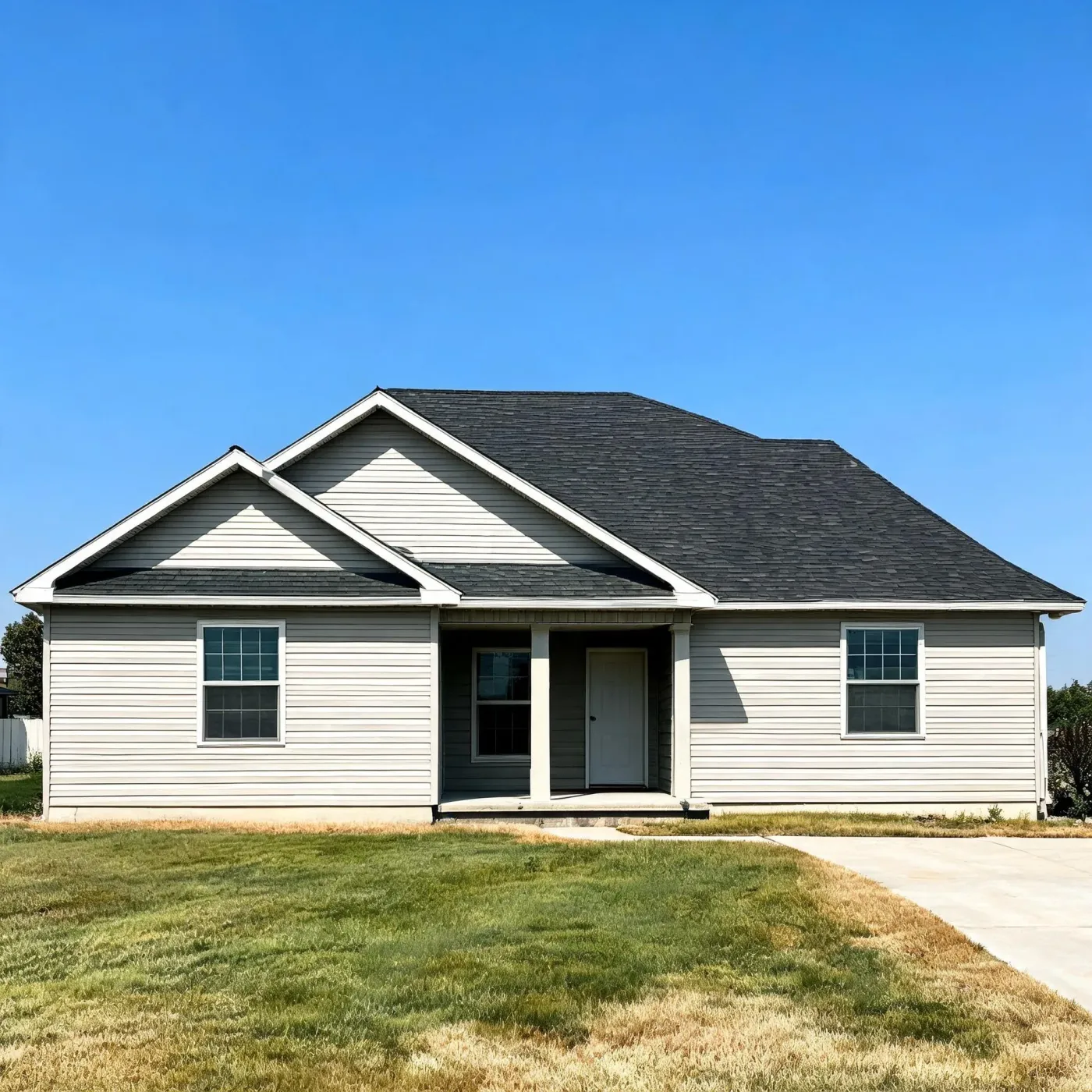
A single-story house with light beige vinyl siding, dark gray gabled shingle roof, a small covered front entry, and two windows, fronted by a patchy green and brown lawn with a concrete driveway at right under a clear blue sky.

A dew point near 64°F is what Montgomery County averages across June, July and August, and that's the number that decides how hard your AC has to work, not the temperature on the thermostat. Air that heavy holds its moisture, so your system has to pull more of it out before the house feels dry and cool, and a unit that's already struggling to start has less chance of getting there. That's what makes a dead AC different here than it would be somewhere drier. A few hours in, the air inside starts to feel close even with fans running. Source: regional climate averages for Montgomery County, MD. Once you send the request, you're done hunting for someone who works on this; a local contractor takes it from there.

NASA POWER T2MDEW

Hand off the air conditioner problem

A licensed pro who repairs air conditioners in Montgomery County gets your request.

You're not committing to anything by asking.

What a breaker trip tells you

An air conditioner draws the most power the moment the compressor starts, not while it runs. That surge is what trips a breaker, and it happens more on the hottest afternoons because the system is working against a bigger difference between the indoor and outdoor temperature. A breaker that trips once and holds after a reset was probably just loaded down by that startup surge on a hard day. A breaker that trips again within a few minutes is telling you something downstream is drawing too much, often the compressor itself, and resetting it again won't change that. A licensed contractor can check the amp draw and find out which one you have.

Why the outside unit matters too

The indoor thermostat only tells part of the story. The outside unit has its own disconnect box, usually a gray switch mounted on the wall near it, and that has to be fully seated for power to reach the compressor and fan. It can get bumped loose during yard work or storm cleanup without anyone noticing until the next time the AC is needed. The outdoor unit also needs clear air around it to run at all. Leaves, mulch, or a cover left on from spring can block the coil enough that the system shuts itself down rather than overheat the compressor.

Cooling runs June through September

Four months a year, your air conditioner is the only thing standing between you and a house like the one outside. The other eight months it sits mostly idle, so when June comes and you flip it on, it has to work right the first time. A short cooling season means less time for small issues to show themselves before you need the system most.

NOAA nClimDiv 1991-2020

How the signal gets to the compressor

  • Thermostat power runs on a separate low-voltage circuit from the compressor, so a dead screen doesn't always mean the outdoor unit lost power too.
  • A 24-volt control signal travels from the thermostat to a contactor outside, and that small switch is what actually pulls power into the compressor.
  • If the contactor coil fails, the thermostat can call for cooling all day and the outdoor unit still never gets the signal to start.
  • A float switch in the condensate line is built to cut power the moment the pan fills, stopping the system before water backs up into the house.
  • The indoor blower and the outdoor compressor are wired on different legs of the same circuit, so one can run while the other stays silent.
  • Transformers that step household voltage down to 24 volts can fail quietly, leaving every switch and wire upstream of them working fine.

Your thermostat doesn't run the compressor directly. It sends a low-voltage signal, 24 volts, down a thin wire to a contactor mounted in the outdoor unit. That contactor is a switch, and when it pulls in, it closes the circuit that lets full household power reach the compressor and the outdoor fan. Everything before that point can be working, the thermostat lit up and calling for cooling, and still nothing happens outside if the contactor doesn't respond. A contactor coil wears out from the inside. It can look fine, sit in place, and still fail to pull in when the signal arrives. The transformer that makes that 24-volt signal in the first place can fail the same way, quietly, with no warning and nothing visibly burnt or loose. When that happens, the thermostat display still lights up because it's drawing from a different part of the circuit than the one that actually starts the compressor. There's also a safety switch sitting in the condensate line on many systems. If the drain pan fills, that float switch opens and cuts power on purpose, before the pan overflows into the house. From the thermostat, all of these look the same: you ask for cool air and nothing starts. The difference is in which part of the circuit stopped carrying the signal, and that's what a contractor is checking for when they get out there.

A gray outdoor air conditioner condenser unit on a concrete pad beside a house with dark horizontal siding and a stone base, surrounded by gravel, with a flowering shrub at left and a concrete walkway in front.
Clean fins, a clear pad and a disconnect box nobody's had to touch, which is what lets the unit cycle on whenever the thermostat calls for it.
An outdoor air conditioner condenser unit sits on a concrete pad beside a stucco wall, with refrigerant lines and conduit running to the wall and a shrub to the left.
Grime packed into the fins makes the compressor work harder to push heat off the coil, and that's often what's behind a unit that won't start on the hottest days.

A dead AC on a muggy Gaithersburg afternoon almost always comes down to one of a few things: a tripped breaker, a dead thermostat battery, a full condensate pan, or a failed part like a contactor or capacitor that only a technician can reach. Checking the breaker and the batteries takes a minute and rules out the simplest causes first. If the unit still won't start after that, the problem is inside the system, and running it further won't fix it. A licensed, local contractor who works on these systems all summer can look at the outdoor unit, test the part that's failing, and get the house cooling again. You don't have to figure out which part it is before you ask for help. You just have to know it's not something to wait out through another hot afternoon.

A bearded man in a blue T-shirt sits on a gray couch smiling while looking down at a laptop screen, with a houseplant and window in the blurred background.
A bearded man in a plaid flannel shirt stands indoors looking out a window at a snow-covered conifer, with a steaming dark mug on the windowsill and wooden cabinets behind him.

Air Conditioner Repair

Send one request and you're done looking

The pro who gets in touch is licensed in Maryland and works in Montgomery County.

A smartphone with a blank green screen stands upright against a plain light gray background.
RepairCentral ACMontgomery County, MD
Step 1 of 2

What ZIP code is the job in?