Side profile of a bearded man wearing a dark faded baseball cap and a dark gray t-shirt against a plain light background.

Why your AC is blowing warm air in Maryland

RepairCentral ACMaryland
Step 1 of 2

What ZIP code is the job in?

Why is my AC blowing warm air in Maryland?

You walked over to a vent expecting cold air and got room-temperature air instead, right in the middle of a Maryland summer when the house needs it most. That's worth taking seriously fast, because a system blowing warm air usually isn't cooling at all, and letting it run that way on a humid day doesn't help the house and can run up the bill while the real problem sits unfixed.

The refrigerant charge is low, or the compressor has stopped working

Warm air from the vents almost always means the system isn't actually cooling anymore, even if the fan still runs. A low refrigerant charge from a leak is one common cause, since the coil needs the right amount of refrigerant to pull heat out of the air. A failed compressor is another, since that's the part that moves the refrigerant through the system in the first place. Either one leaves you with air movement but no cooling. In Maryland, where the AC runs hard through a long muggy stretch and power costs are high, a system working overtime without actually cooling adds to the bill fast and leaves the house sticky on top of warm. A licensed technician can check the charge and the compressor to find which one it is.

A gray outdoor air conditioner condenser unit on a concrete pad beside a house with horizontal lap siding, with a wall-mounted disconnect box and conduit at left and a green shrub and mulch bed at right.

Running right

The outdoor unit hums along steady, the fan spinning, cold air coming out of every vent in the house. The disconnect box stays untouched, the condenser cycles on and off with the thermostat, and the air coming out matches what you set it to. This is what a working system looks like, quiet and doing its job.

An outdoor air conditioner condenser unit on a concrete pad beside a house with horizontal lap siding, with a conduit running to a gray electrical disconnect box on the wall.

Blowing warm

The outdoor unit sits there doing nothing, or the fan spins but no cold air follows it inside. Maybe you hear it click and shut off fast, or run nonstop without ever catching up. Either way, something between that condenser and your vents has stopped moving heat the way it's built to.

Refrigerant Leak or Electrical Fault

Low refrigerant

  • Warm air alongside ice on the copper line at the outdoor unit points to a leak, not just a low charge that needs a top-off.
  • Refrigerant doesn't get used up, so if the level is low, it left somewhere through a crack or a worn fitting.
  • A system run low on charge for weeks can put extra strain on the compressor, which costs far more to replace than the leak would have to fix.
  • Finding the leak takes gauges and often a dye test, since the spot where refrigerant escapes isn't usually visible by eye.
  • A licensed tech in Maryland can pressure test the line set and seal the leak before adding back what the system actually needs.

Electrical or airflow fault

  • A failed capacitor can leave the outdoor fan or compressor unable to start, so the indoor blower still runs but nothing outside is cooling the air.
  • A dirty filter or a coil caked with dust restricts airflow enough that the system can't pull heat out of the air passing through.
  • A tripped breaker or a bad contactor cuts power to the outdoor unit while the thermostat still calls for cooling, so the blower keeps pushing warm air.
  • Electrical faults like these don't usually get worse slowly, the unit either runs or it doesn't, which makes them quicker to pin down.
  • A frozen evaporator coil from restricted airflow needs time to thaw before a tech can test the system properly.
An outdoor air conditioning condenser unit on a concrete pad at the corner of a house, next to vinyl siding and a plain light-colored wall, with grass and a mulch bed in the foreground.

The outdoor unit does the work

The indoor fan can run forever and never cool anything by itself. The compressor and condenser outside are what actually move heat out of the house, so when that unit is iced over, tripped off, or starved of refrigerant, the vents still push air but it comes out warm. A system blowing warm air almost always points outside first, not at the vents themselves.

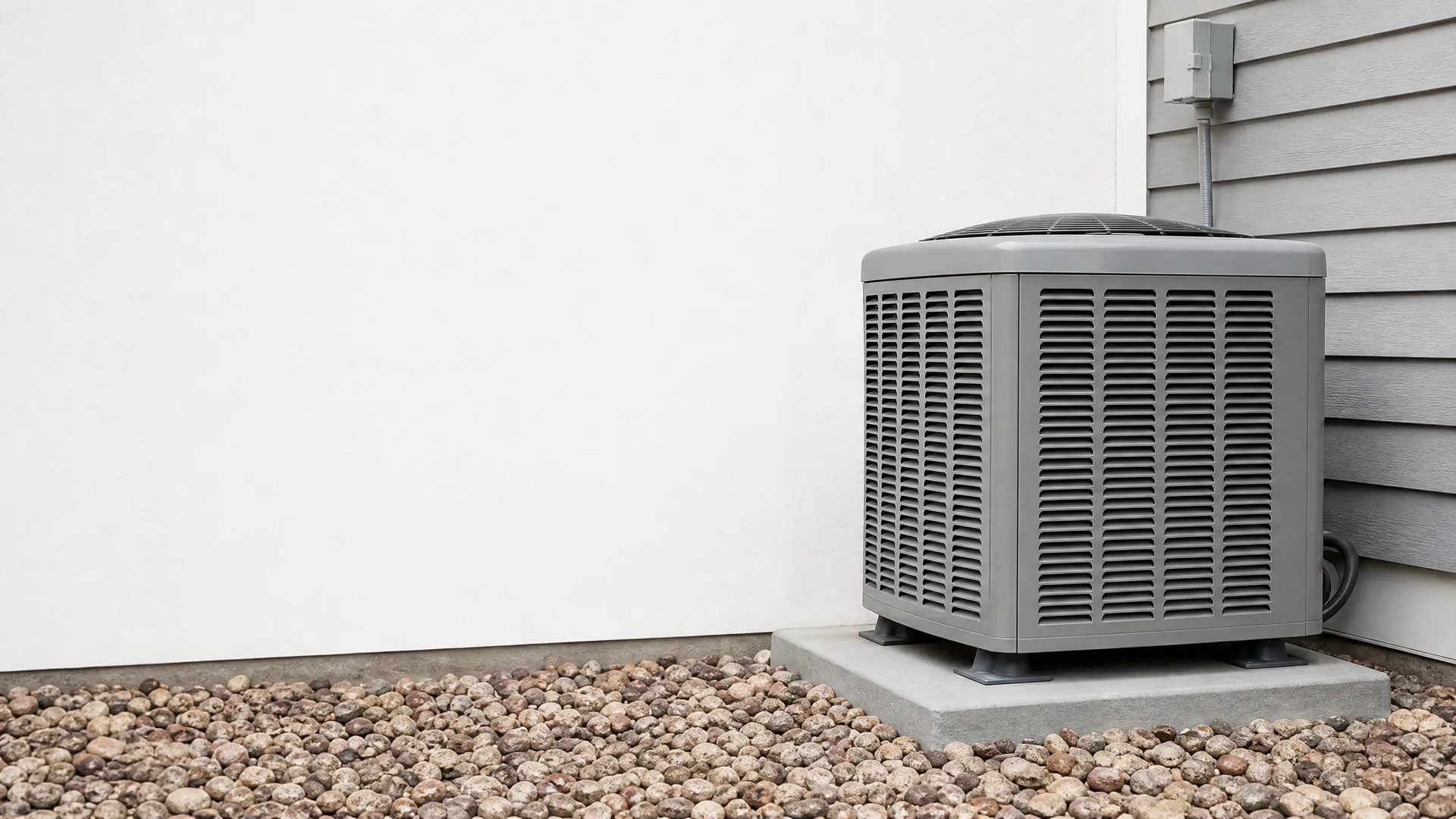
A gray outdoor air conditioning condenser unit sits on a concrete pad beside a white stucco wall and gray horizontal siding, surrounded by rounded landscaping gravel, with an electrical disconnect box mounted on the siding above.

A frozen coil takes hours to clear

Once the indoor coil ices over from low airflow or low refrigerant, running the AC harder doesn't help. The ice has to melt before the system can cool again, and that can take several hours with the system off. Switching the thermostat to fan only speeds that along, but turning the compressor back on too soon just refreezes the coil and wastes the wait.

Power costs 19.53 cents per kilowatt-hour statewide

At 19.53 cents per kilowatt-hour, every hour your AC runs with warm air coming out is an hour you're paying full price to move room-temperature air around. A system blowing warm isn't cooling your house, just running up the meter.

EIA-861 2025 statewide residential average

What a stuck system costs you

A system blowing warm doesn't rest easy. The compressor outside may keep trying to start against a low charge or a stuck contactor, drawing power on every attempt whether it catches or not. That's wear on a part that's expensive to replace compared to the repair that would have caught it earlier. Meanwhile the house climbs past 80 through a Maryland afternoon, and the thermostat keeps calling for cooling that never arrives, so the blower runs nearly nonstop moving warm air through the ducts. You're paying for runtime you aren't getting results from, and the longer it sits, the more likely the next call is about a failed compressor instead of a simple fix.

What it means for the house

Humidity is what makes a Maryland summer feel worse than the number on the thermostat. Your AC pulls moisture out of the air as it cools, and a system blowing warm isn't doing that either, so the house feels damp on top of hot. Wood floors, window frames, anything upstairs where heat collects, all of it sits in that damp heat longer the more days this runs unfixed. None of that happens overnight. But a system that's warm today because of a refrigerant leak or a failed part doesn't fix itself by tomorrow, and every day it runs like this is a day of wear and humidity you don't get back.

A man with greying hair in a dark green sweater sits on a light sofa in a sunlit living room, looking off to the side, with a large window, table lamp, framed art and white built-in shelves behind him.
A gray-haired man in a dark navy sweater sits on a light sofa in a living room, looking toward a sunlit window with a houseplant and wooden cabinet behind him.
A gray-haired man in a dark green ribbed sweater sits on a light sofa in a living room, looking toward a sunlit curtained window with a potted plant and lamp nearby.
A middle-aged man with gray hair and a beard, wearing a dark green sweater, sits on a light sofa in a sunlit living room with large windows, a potted plant, and a dining area in the background.

Send one request and you're done looking

A Maryland summer doesn't leave room to wait this out. Humidity climbs fast once the sun's up, and a house that isn't actually cooling gets uncomfortable within hours, not days. Add in what you're paying per kilowatt-hour, and a stuck system is money spent on nothing while the real problem, whether it's a frozen coil, a failed capacitor, or a refrigerant leak, sits there getting worse. Figuring out which one it is means getting hands on the unit, and that's not something to sort out alone with the forecast working against you. Send the request and a licensed contractor near you in Maryland takes it from there, someone who works on these systems all summer and has likely seen whatever's happening with yours before. It goes to one contractor, not a handful competing for your callback. That's one less thing to manage while your house sits warm.

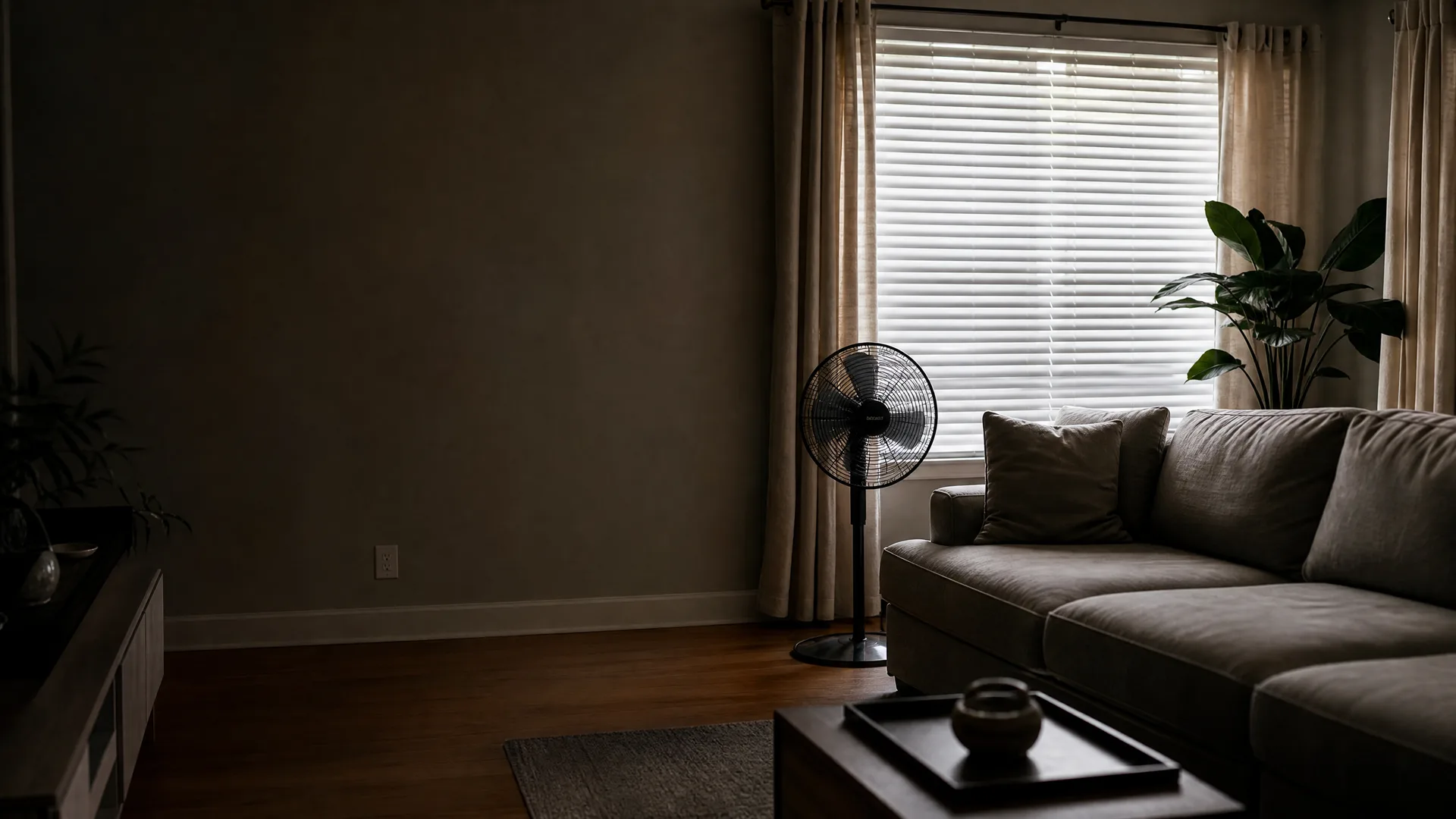
A dimly lit living room with a gray sectional sofa, a standing pedestal fan, a curtained window with blinds, a potted broad-leaved plant, a wooden coffee table with a tray and lidded jar, and a rug on dark wood flooring.

It's a little after three and the blinds are drawn against the sun, but the light still comes through white at the edges. The floor fan is running next to the couch, pointed straight at you, the only thing in the room actually doing anything. You can hear it ticking on its oscillation mount. Outside, Maryland is thick with that mid-July air that sits on your skin the second you step into it, and the vent above the window is pushing out air that doesn't feel any different from the room. You hold your hand under it for a second to check, then let it drop. The fan keeps turning. The thermostat still reads three degrees above where you set it.


What are you actually noticing right now in your house

You're probably checking the thermostat more than once, watching the set temperature and the actual temperature drift further apart instead of closing. Rooms upstairs likely feel worse than rooms downstairs, since warm air that isn't being cooled still rises. You might notice the outdoor unit running almost nonstop, the fan going but never seeming to catch up. Some people notice a smell, a little musty or a little electrical, coming from a vent. Others just notice the house feels the way it does with the windows open, except the windows are closed and the system is running. Left alone through a Maryland summer, that strain on the equipment tends to turn a repair into a bigger one, and it does it while the house stays uncomfortable the whole time.

A gray-haired woman in a white top and gray cardigan sits in an upholstered armchair indoors, looking toward a window with a green potted plant, with a bookshelf behind her.
A woman with dark hair in a bun sits on a grey couch holding a sleeping child wrapped in a knit blanket, with a lit lamp and potted plant blurred in the background.
A two-story house with light siding and a dark hipped roof behind a green lawn, with a sprinkler spraying water near a concrete walkway leading to the front door.

Maryland summers run a 64°F dew point average across June, July and August, a figure from NOAA climate data. That's heavy, sticky air, the kind where sweat doesn't dry and a room can feel warm even near the set temperature. Your AC isn't just dropping temperature in air like that, it's also pulling moisture out through the coil, and that coil has to stay cold to do it. When the system is low on charge or the airflow across it is choked, the coil can't pull enough heat or moisture out, and the air coming through the vents feels warm and damp instead of cool and dry. A system working fine in dry air can still fall behind once the dew point sits this high.

NASA POWER T2MDEW county cells weighted by homes

An outdoor air conditioning condenser unit on a concrete pad beside a house with horizontal siding and a concrete foundation, with dry brown leaves on the ground to either side.
Before you get your air conditioner repair
A gray outdoor air conditioning condenser unit on a concrete pad beside a house with horizontal lap siding, with a wall-mounted disconnect box and conduit, and shrubs to the left.
After you get your air conditioner repair

Where this leaves you

  • Warm air from the vents means the system isn't moving heat out of the house, whatever the cause turns out to be.
  • A refrigerant leak, a failed capacitor, a tripped contactor and a frozen coil all show up the same way at the vent, so a look at the outdoor unit settles which one it is.
  • Every hour spent running on warm air is an hour billed at the full rate, with nothing cooling the house to show for it.
  • A contractor who works on Maryland systems through the summer has usually already seen whatever is wrong with yours.
  • Sending the request puts one licensed local contractor on the job, not a string of calls from companies you didn't choose.
  • Once that contractor is on the way, finding someone stops being something you have to manage yourself.

Warm air at the vent has a cause, and that cause is sitting out at the condenser whether it's a leak, a bad capacitor, a tripped contactor or a frozen coil. None of that gets fixed by waiting it out on the couch with a fan pointed at you. It gets fixed by someone who opens the panel on the outdoor unit and checks each one in order until the problem shows itself.

That's work for someone who's already done it this summer, more than once, on a system not so different from yours. A contractor who services Maryland homes through June, July and August has seen a stuck contactor often enough to know what it looks like before the cover's even off. That's the kind of familiarity that gets a system running again instead of guessing at it.

Sending the request through this page puts one licensed local contractor on your job. Not three companies competing for the call, not a list of strangers to vet yourself. One contractor, local to you, who shows up knowing the kind of heat and humidity your system has been fighting all summer.

From there, it's off your plate. You're not the one tracking down who's available or whether they know what they're doing. The system gets looked at, the actual cause gets named, and the warm air stops being something you have to think about every time you walk past a vent.

Corner of a room with a white window at left, a white fireplace mantel with dark stone surround at right holding a weathered clay vase of leafy branches, and a cream upholstered sofa with a knit throw and tan pillow in the foreground.
A cushioned window seat with a brown lumbar pillow beside a white-framed window overlooking green trees, next to built-in cream cabinetry with shelves holding ceramic vessels and a wooden bowl.
An entryway with a dark wood console table holding a stone vase of olive branches and a shallow wooden bowl, a woven basket on the lower shelf, a framed landscape print on the wall, and a glass-paned wood door at left.
A wooden vanity cabinet with dark knobs and a beige stone countertop holding a round terracotta vase with leafy branches, beside a wood-framed mirror and a white sink.
Sunlit room corner with wide-plank oak flooring, white baseboard molding and beige walls, a window at left showing green trees, and a dark cabinet at right topped by a stone vase holding a leafy branch.

Finding a pro stops being your job

The pro who reaches out is licensed in Maryland.

Hand off my repair

Sending the form costs nothing.