AC leaking water inside in Bowie, MD

Let a pro reach out

Water showing up around your indoor unit in Bowie isn't something to watch for a few days. It usually means the condensate line is clogged or the pan has cracked, and either way that water is landing on your floor, your closet, or the ceiling below if the unit sits in an attic. With humidity as high as it gets here all summer, a central AC can produce a lot of condensate, and once the drain backs up it has nowhere else to go. The longer it sits, the more it can warp flooring or stain drywall. What you don't need right now is the runaround: calling a few companies, describing the leak over and over, waiting to hear back, then weighing quotes against each other. Send the form here and that part is off your plate. A licensed contractor who handles this in Prince George's County takes it from there, so you're not the one chasing it down.

Why is my AC leaking water inside my house?

Water pooling near your indoor unit or dripping from the ceiling below it is unsettling, especially if you don't know where it's coming from. You turn the AC off, mop it up, and it comes back the next hot day. Before you call anyone, it helps to know what's actually happening inside the unit and why water that should go outside is ending up on your floor instead.

A clogged drain line or a full drain pan is almost always the cause

Your AC pulls moisture out of the air and that water is supposed to run down a drain line and out of the house. Algae and dirt build up inside that line over time, especially with how much the unit runs in a Bowie summer, and once it's blocked the water backs up into the drain pan. From there it overflows onto the floor or drips through the ceiling if the unit sits in an attic or closet above a living space. A cracked or rusted pan causes the same thing even with a clear line. Either way, the water isn't draining where it should, and it keeps coming back until the line is cleared or the pan is replaced.

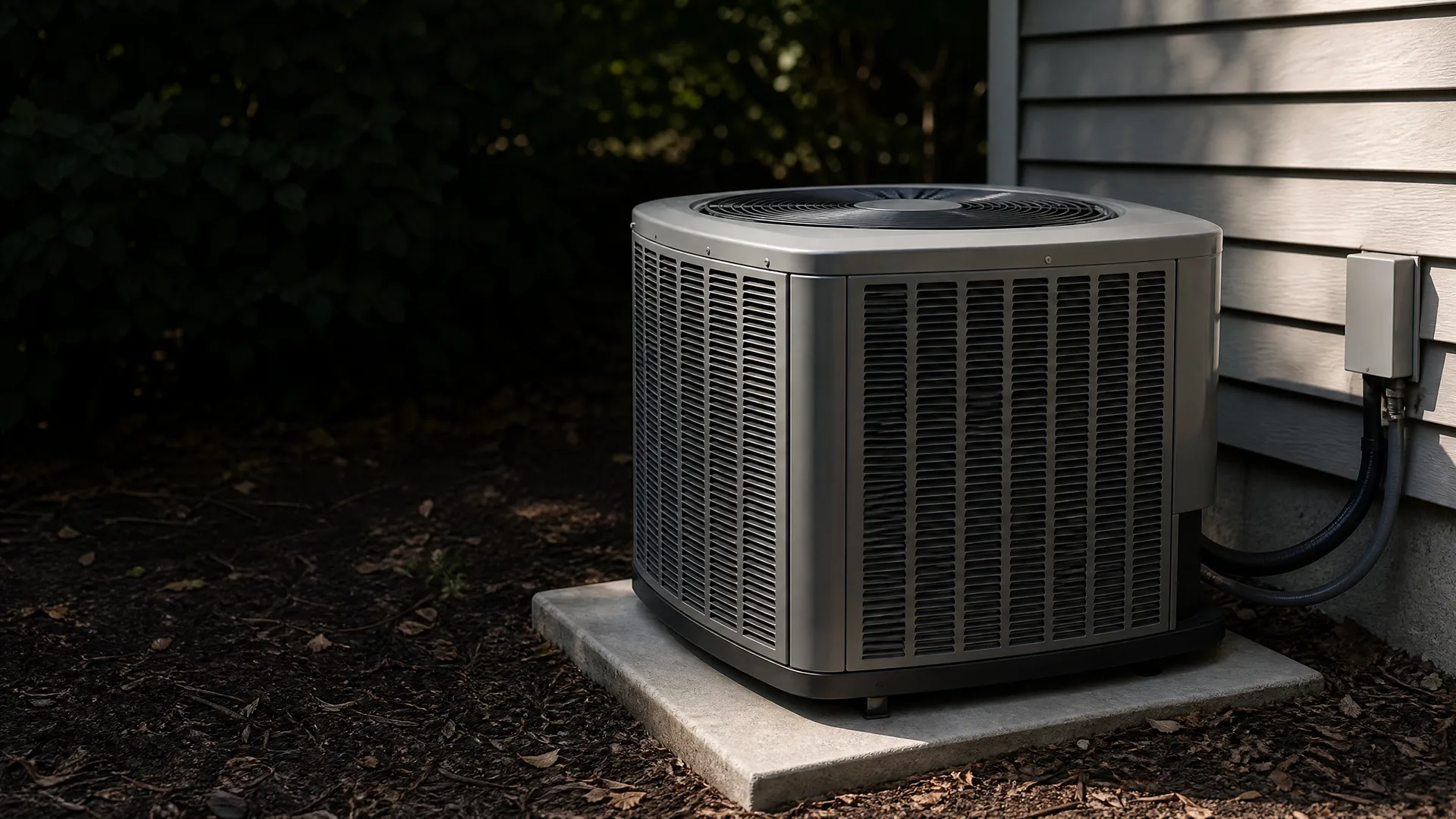
An outdoor air conditioning condenser unit on a concrete pad beside a house with horizontal lap siding, with an electrical disconnect box and conduit on the wall and a green shrub in the lower left foreground.

Where the water actually starts

The indoor unit pulls humidity out of the air, and that water has to go somewhere. It drips off the evaporator coil into a shallow pan underneath, then down a condensate line that's supposed to carry it outside. Algae and dust build up inside that line over time, the same way a drain under a sink gets slow. Once it's blocked, the pan fills, and the water finds the nearest way out, usually down through the cabinet or ceiling below.

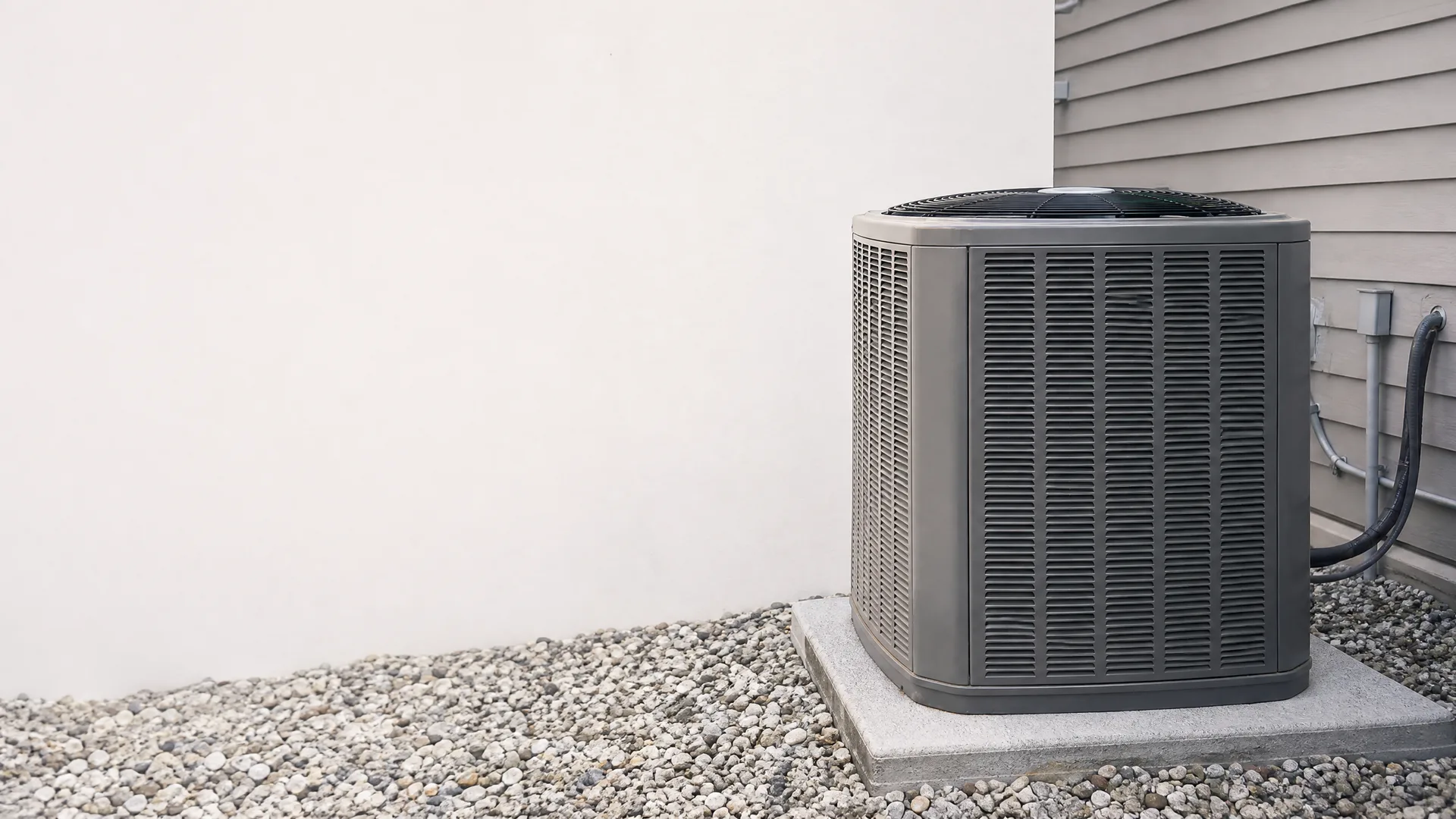
An outdoor air conditioner condenser unit on a concrete pad beside a light stucco wall and vinyl-sided wall, surrounded by gravel.

Why it shows up in summer

A system that's running for hours at a stretch on a humid Bowie afternoon is pulling more water out of the air than it does on a mild day in April. More water means the pan fills faster once the line is clogged, so a problem that was sitting there unnoticed for weeks suddenly turns into a puddle on a 95 degree day. A dirty air filter makes it worse, since it restricts airflow and can cause the coil itself to freeze and then thaw all at once.

What are you noticing around the house right now

A stain spreading across the ceiling under a closet or utility room. A musty smell near the vents that wasn't there before. Water beading along the baseboard, or a puddle that shows up again a day after you wipe it dry. If the unit is in the attic, you might not see any of this until it has soaked the drywall below, so a soft spot or a brown ring overhead is worth checking now rather than later. Left alone, the water damages the ceiling, the floor, or whatever is stored nearby, and standing moisture in a closed-up closet grows mold fast in Bowie's summer humidity.

A gray outdoor air conditioning condenser unit on a concrete pad beside a house with horizontal lap siding and a stone veneer base, with a disconnect box and conduit on the wall, mulch bed and shrub to the right, and mowed grass in the foreground.

Running the way it should

This is what a healthy system looks like outside. The condenser sits on its pad, wired to the disconnect, doing its job without drama. Inside, the pan stays dry and the condensate line keeps carrying water out and away, not into your house.

An outdoor air conditioner condenser unit on a gray composite pad beside a house with horizontal siding, a concrete foundation, a basement window, and a conduit and disconnect box on the wall.

Dust, dirt, and a clogged line

A cabinet caked in dust like this often means the coil behind it is just as dirty, and that buildup travels. Dirt and algae work their way into the condensate line until it's blocked, and once it's blocked, the water backs up and finds your floor or ceiling instead.

Clear It Yourself or Call It In

Clear the line yourself

  • A wet-dry vac held against the outside drain line opening for a couple minutes can pull a clog loose without opening anything up.
  • Pouring a cup of distilled vinegar down the line's access point near the indoor unit can break up algae before it builds into a full blockage.
  • This only works if the clog is algae or dust and not a cracked pan or a line that's come loose underneath the coil.
  • If the water keeps coming back within a day, the clog is further down the line or somewhere else entirely.
  • You won't know if the pan itself is cracked until someone opens the unit and looks, and a cracked pan won't stop leaking no matter how many times you clear the line.

Get a contractor out

  • A contractor can tell you in one visit whether it's the line, the pan, or the coil, instead of you guessing and redoing the vinegar trick every few days.
  • If the pan is cracked, it has to be replaced, and that's not something to attempt without pulling the unit apart.
  • A technician can check the condensate pump too, if your system has one, since a failed pump leaks the same way a clogged line does.
  • Once it's diagnosed right, you stop mopping up the same spot every week waiting to see if the fix held.
  • Finding someone licensed for this, explaining the leak over the phone, and waiting on a callback is its own chore when the water's already on your ceiling.
Dimly lit living room with a pedestal fan on a dark wood floor, a potted plant by blinded windows, a beige sectional sofa with cushions, a low table and a rug.

It's a little after two on a July afternoon and the blinds are drawn against the sun, the kind of light that turns the room orange around the edges. The floor fan is running next to the couch because the house feels thick even with the AC on. You notice the smell before you look down, that damp, closed-up smell, and there it is, a dark ring spreading across the carpet near the closet door. You press a towel into it and it comes away soaked. The fan keeps turning. Outside, the heat sits heavy over Bowie the way it does every July, and the only thing on your mind now is getting someone out to look at this before it reaches the wall.


Finding a pro stops being your job

Explain the air conditioner problem once instead of to every shop in Prince George's County.

There's no charge for the request.

Fixing it yourself

Clearing the line or shutting off the system buys you time, and sometimes it's enough. But you're guessing at what actually failed. A clogged line looks the same from the outside as a cracked pan or a coil that's frozen over, and only one of those you can fix with a wet-dry vac. If you got it wrong, the water comes back, maybe in a worse spot, and now there's a ceiling to deal with on top of the AC. You've also spent an afternoon on it instead of knowing the answer in the first call.

Having someone look at it

A contractor opens the unit, finds the actual cause, and tells you straight whether it's the line, the pan, or something upstream like a dirty coil. You stop guessing and stop losing afternoons to it. Instead of searching around, calling a few places, and explaining the same leak over and over, you send one form and the finding part is done. What gets fixed and when is still between you and the contractor, but you're not the one tracking down who can even look at it this week.

Cooling runs June through September

Four months of real work a year isn't much time for a clogged line or a cracked pan to show itself, but it's enough. Most of that running happens June through September, so a leak that starts now has the whole rest of summer to keep landing on the same spot on your floor or ceiling.

NOAA nClimDiv 1991-2020

Let it sit through summer

Nothing stops a leak on its own. If the line is clogged, algae and dirt keep building until the water backs all the way up the drain pan and over the edge. If the pan already cracked, every gallon the coil pulls out of the air goes straight through it. The ceiling stain gets wider. The musty smell gets stronger. Some homeowners shut the AC off when they see water and leave it off for days, which stops the leak but leaves the house hot and sticky through a Bowie summer. The system still needs to run eventually, and when it does, the water goes to the same spot it did before, because nothing about the clog or the crack changed while it sat.

Have someone look at it now

A contractor can tell you in one visit whether the line is clogged, the pan is cracked, or the coil is frozen over, which is something you can't tell from a wet spot on the ceiling. Clearing a line takes different tools and a different fix than replacing a pan. Getting it looked at now means the water stops landing on the same drywall or flooring day after day, and you're not stuck guessing whether the vinegar you poured down the drain actually worked. You send the request once. Finding a licensed contractor, calling around for availability, and explaining the same leak over and over stops being something you have to do.

A man in a dark blue t-shirt sits on a grey couch laughing while looking down toward an open laptop in the foreground, with a blurred kitchen and potted plant behind him.
A man with graying hair and a beard in a plaid flannel shirt looks out a frosted window, with a steaming ceramic mug on the wooden sill and shelves behind him.

Leave it alone

The drip stops when you catch it and starts again the next hot day. Every cycle in between sends more water into the same ceiling or closet floor.

Hand it over

Have it looked at

A contractor can tell you in one visit whether it's the line, the pan, or a frozen coil, and stop the water from landing in the same spot again.

Hand it over
A smiling man in a green ribbed sweater stands behind a wooden table holding a ceramic mug of coffee in a kitchen with white subway tile, shelves of potted plants, and a bowl of fruit.
A smiling man with dark curly hair and a beard, wearing a dark green knit sweater, stands at a white marble kitchen counter with a dark blue mug, with open shelving, pendant lights and a houseplant behind him.
A smiling bearded man in a green henley shirt stands at a kitchen island with a gray mug, looking off to the side, with a dining area and shelves blurred behind him.
A smiling man in a navy long-sleeve shirt sits at a wooden table in a kitchen and dining area, with a ceramic mug, a potted plant, and a sliding glass door behind him.
A two-story gray horizontal-siding house with dark shingled gable roofs, a brown front door, and a concrete walkway crossing a patchy green and dry lawn under a clear blue sky.

The air here is part of the problem. Summer dew points in Prince George's County average 64°F, heavy enough that your skin feels it the second you step outside. Your AC isn't just cooling that air, it's wringing water out of it, and more moisture in the air means more water running through that condensate line all summer long. A line that might handle a light load without trouble gets pushed harder when the air stays this wet for weeks at a time. That's more water looking for a way out, and more chances for a clog or a cracked pan to show up as a wet spot on your floor or ceiling. Source: regional climate data for Prince George's County.

NASA POWER T2MDEW

Water inside around your indoor unit means the condensate line is clogged or the pan has cracked, and nothing about that fixes itself. You can shut the system off, clear the line, mop up what's there, but the only way to know which one actually failed, and whether the coil underneath is frozen or fine, is to have someone look at it. Left alone, it comes back the next hot day and keeps landing on the same spot until the ceiling or the floor underneath shows it. Instead of searching around for a contractor, calling a few, explaining the same leak over and over, and sorting through quotes to see who actually answers, you send one form and the search is done. Someone who does this for a living comes to look at the pan, the coil, and the line, and tells you straight what failed. You stay in Bowie through another muggy summer with a system that drains where it's supposed to, not onto your floor.

An outdoor air conditioner condenser unit on a concrete pad beside a house with horizontal lap siding, with an electrical disconnect box and conduit on the wall and dark mulch and shrubs around it.

One request and it's handed off

RepairCentral ACPrince George's County, MD
Step 1 of 2

What ZIP code is the job in?