










A calm shoreline curving to the right with golden marsh grass and tall pine trees along the bank under a clear blue sky, with trees reflected in the shallow water.Match me with a pro

Why mini splits drip inside in sticky Maryland summers

A local pro who knows mini splits gets your details and gets in touch.

Water dripping from the indoor unit, or pooling on the floor beneath it, usually means condensation isn't draining the way it should. Maryland summers push a lot of moisture through the air, and that unit is pulling gallons of it out of your house every day. When the drain line clogs, the drain pan cracks, or the condensate pump fails, that water has nowhere to go but out the front of the unit and onto your wall or floor.

Some of it comes down to the system itself. A dirty filter or a frozen coil can send water past where it belongs. A line that was never pitched right will back up faster once the humidity climbs. None of this is something you can see by looking at the unit from across the room.

Finding someone who actually works on mini splits in Maryland takes more effort than it should. A lot of HVAC outfits handle central air and furnaces all day and only see a ductless system a few times a year. You'd be the one calling around, explaining the brand and the symptoms over and over, trying to figure out who's actually comfortable opening up a wall-mounted unit versus who's just willing to take the job.

That's the part this page skips for you. Tell it what's going on with your unit and where you live, and it matches you with a contractor who works on mini splits in your area and knows what the humidity here does to them over a summer. They reach out to you directly, so you're not the one chasing quotes or repeating the same explanation to three different companies. With electric heat already running up winter bills around here, a leaking unit in July isn't something to let sit while you sort through who to call.

Why is my mini split leaking water inside during summer?

You've got the AC running most of the day to keep up with the humidity, and now there's water showing up where it shouldn't be. Before you shut the unit off or start mopping up every afternoon, it helps to know what's actually going on behind that panel, since the cause determines whether this is a quick fix or something that's been building for a while.

A clogged or disconnected condensate drain is the most common cause

Every mini split pulls moisture out of the air and routes it through a drain line to the outside. In Maryland's humid summers, that line is working harder than it would almost anywhere else, and algae or dust can build up inside it until water backs up and finds another way out, usually down the wall or across your floor. A bent or sagging drain line causes the same backup even when it's clean. Less often, a dirty filter or low refrigerant causes the coil to ice over, and the water shows up when that ice melts faster than the drain can handle. Either way, the water is a symptom of something specific inside the unit, not a sign it's broken beyond use.

A smiling woman with dark shoulder-length hair in a cream V-neck sweater sits at a marble counter with a glass of red wine, with a kitchen and softly lit living room behind her.
A woman in a dark green sweater laughs while seated at a marble kitchen island with a glass of red wine, with open shelving, cabinets and a living room visible behind her.
A woman with long dark hair in a cream knit sweater laughs while looking off to the side, seated at a counter with a glass of red wine, in a dimly lit living room with a sofa, lamp, framed pictures and houseplant behind her.
A smiling woman with long dark hair in a beige sweater sits at a marble kitchen counter with a glass of red wine, with a dimly lit living room behind her.

The indoor unit isn't just blowing cold air. It's wringing water out of the air in your house, and all that water has to go somewhere. It drips into a small pan, then either gravity or a condensate pump pushes it through a line to the outside. That system works fine most days. It's a narrow path, though, and anything that slows it down or adds more water than it's built for will back it up into your living room. A clogged filter cuts airflow across the coil until parts of it freeze, then melt all at once. Line set insulation that's worn through lets the cold pipes sweat right there in the wall. Running the fan too low for how hard the unit is working does the same thing to the coil. Even a drain line installed with too little slope will let water sit instead of running out. None of these show up until the house is sticky enough for the unit to be working at its hardest, which in Maryland is most of the summer.

Where the water actually comes from

  • The indoor unit's coil pulls moisture out of the air and that water collects in a drain pan built into the base of the unit.
  • A condensate pump or gravity line carries that water out through the wall, and either one can clog or lose its slope over time.
  • A dirty air filter blocks airflow across the coil and can make it frost over, and the thaw sends more water than the pan was built to hold.
  • The line set insulation around the copper pipes wears thin or slips, and the pipes sweat inside the wall or at the unit.
  • Running the unit on a lower fan speed than the room needs lets the coil get too cold and ice up during long humid stretches.
  • A drain line installed without enough pitch lets water sit and back up instead of draining out as fast as the coil produces it.
A white wall-mounted mini-split indoor unit high on a beige interior wall, with a potted olive-like tree at right and an armchair and window visible through a doorway at left.
A clean mini split like this drains the way it's supposed to, with condensate leaving through the line as fast as the coil pulls it from the air.
A wall-mounted mini-split air conditioner indoor unit with visible dust and staining, installed on a beige interior wall below white crown molding.
A mini split caked with dust and grime like this blocks airflow across the coil, which lets water collect and back up into the room.
A dim room with a wall-mounted mini-split air conditioner above a water stain running down the gray wall to a towel on the wood floor, with a black shelving unit, a desk with a lamp and potted plant by a window, and an office chair at right.

You're at the desk around three, laptop open, and you catch the smell first, that damp drywall smell. Then you see it: a dark streak running down the wall below the indoor unit, following the line of the bracket. You already put a towel down yesterday, and it's soaked again. The AC hasn't stopped running since lunch, the air outside thick enough to see. You get up, press a finger to the wet patch, and it's cold. Behind you the unit hums along like nothing's wrong, still blowing cold air into the room while the wall underneath it keeps getting worse.

A pro who works on mini splits

Answer a few questions instead of calling shop after shop.

It costs nothing to send, and you don't have to hire anyone.

A white wall-mounted mini-split air conditioner unit installed high on a plain beige wall near the ceiling, with empty wall space to the right.

Why the drain line clogs so often

That drain line runs downhill from the unit, usually just a quarter inch of fall for every foot it travels. Algae and dust settle in that slow-moving water and build up a plug over a few months. In Maryland, with the coil running most of the day from June through September, there's more condensate moving through that line than almost anywhere else in the country, so the buildup happens faster.

A white wall-mounted mini-split air conditioner indoor unit on a plain light-colored wall, with a beige curtain at the right edge of the frame.

What a clogged line costs you

A gallon of water a day is a reasonable amount for a mini split to pull out of humid air, and all of it has to leave through that line or the pump. When it backs up instead, the drain pan fills, and most pans aren't deep enough to hold more than a cup or two before they overflow onto the wall or floor below. Electric heat already makes the power bill high here, and a unit straining against a clog draws more of it.

What's that water doing on my floor right now

Right now you're probably looking at a wet patch on the carpet or floorboards under the indoor unit, maybe a towel already down from last time. You might notice the wall below the bracket feels damp, or the baseboard has started to warp a little. If this has been going on a few days, check for a soft spot in the drywall or a faint musty smell when you walk past. That's moisture getting into material that doesn't dry out on its own, and left long enough it feeds mold behind the wall where you can't see it. The unit itself isn't damaged by this, but the floor and the wall underneath it are what's at stake if the water keeps finding the same spot every afternoon.

A white wall-mounted mini-split air conditioner unit installed high on a beige interior wall below white crown molding, with a window and woven shade at the left edge showing green foliage outside.

Working the way it should

A mini split like this sits level, the coil clean enough that air moves straight through it. Condensate runs off and out through the line as fast as the coil pulls it from your sticky Maryland air. No pan overflow, no streak on the wall below the bracket.


A dusty, stained white wall-mounted mini-split air conditioner indoor unit installed high on a plain off-white interior wall near the ceiling.

Dirty and backing up

Dust and grime like this build up across the coil and block airflow. Water collects instead of draining, the pan overflows, and that's what ends up on your floor or down the wall. By the time you can see it on the housing, it's likely been collecting inside for a while.

A woman in a cream cardigan and jeans stands with one hand raised facing an open front door of a gray horizontal-siding house, with a black lantern wall light, a potted shrub with yellow flowers, and a stone-faced porch column.

What this does to your house while you put it off

That water isn't staying under the unit. It's finding the stud, the baseboard, the floor beneath, and once drywall holds moisture it stays damp long after you mop up the visible puddle. A ceiling stain spreads wider than the leak that caused it. Left long enough, you're looking at mold behind the wall, not just a mark on it, and that's a different repair than a clogged drain line.

There's also the unit itself. Water sitting in the drain pan backs up toward the electrical components inside, and a mini split with that kind of exposure doesn't owe you a fix, it owes you a diagnosis first. Rather than pulling the unit apart yourself to find out which one you're dealing with, you can get matched with a contractor who handles this specific problem and have them call you, instead of spending your evening on hold explaining the same leak to three different companies.

A living room corner with a beige upholstered armchair holding navy and striped cushions, a small round wooden side table with a carved bowl and a potted green plant, a framed landscape picture on a pale wall, built-in shelving, and a curtained window.
Single-story house with gray horizontal lap siding, dark shingled gable roof, a small covered front porch with a dark door, and windows, set behind a patchy green and brown lawn under a clear blue sky.

The dew point across Maryland averages 64°F through June, July and August, according to NOAA climate data. That's thick, heavy air, the kind where a cold glass sweats the second you set it down. Your mini split has to wring that moisture out of every cubic foot of air it pulls across the coil, all day, for three straight months. The condensate line is moving that much more water than it would in a drier climate, so any slope that's off or any buildup inside the line gets overwhelmed faster. That's often why the drip shows up in July and August and not in May.

NASA POWER T2MDEW county cells weighted by homes

A white wall-mounted mini-split air conditioner indoor unit with dark louvered vents, installed near the ceiling on a beige wall below white crown molding.
Before you get your mini split repair
A white wall-mounted mini-split air conditioner on a beige interior wall, with a window at left showing trees and a wooden fence, and dark wood flooring below.
After you get your mini split repair
  1. Warm, humid air crosses the indoor coil and gives up its moisture

  2. Condensate collects in the drain pan under the coil

  3. Gravity or a condensate pump pushes the water into the drain line

  4. The line carries water downhill, out through the wall

A smiling bearded man in a navy sweater sits at a candlelit dinner table with a glass of red wine, a bowl of salad, and plates of food in the foreground.
A woman with dark hair in a bun reclines on a sofa with her eyes closed, wrapped in a cream fleece blanket, a closed blue hardcover book resting in front of her, with a lit lamp and a vase of dried flowers in the background.

Power costs 19.53 cents per kilowatt-hour statewide

At 19.53 cents per kilowatt-hour, every hour your mini split fights a clog or a low charge to keep up with the humidity shows up on your bill. A unit draining and running the way it should costs you less to keep that air dry all summer.

EIA-861 2025 statewide residential average

A mini split that drips inside almost always comes down to the same thing: water that can't get out through the line the way it should, whether that's a clog, a bad slope, or a dirty coil icing over and then melting faster than the pan can handle. Maryland's humid summers make this worse than it would be almost anywhere else, because the coil is working harder and pulling more water out of the air for more months of the year. You don't have to figure out which of those it is before you get help. Instead of searching through contractors, calling a few, explaining the dripping and the stain and the towel on the floor all over again to each one, then sitting with quotes trying to compare who actually knows mini splits, you can skip straight to a contractor who services this equipment and let them sort out whether it's the line, the pump, or the coil.

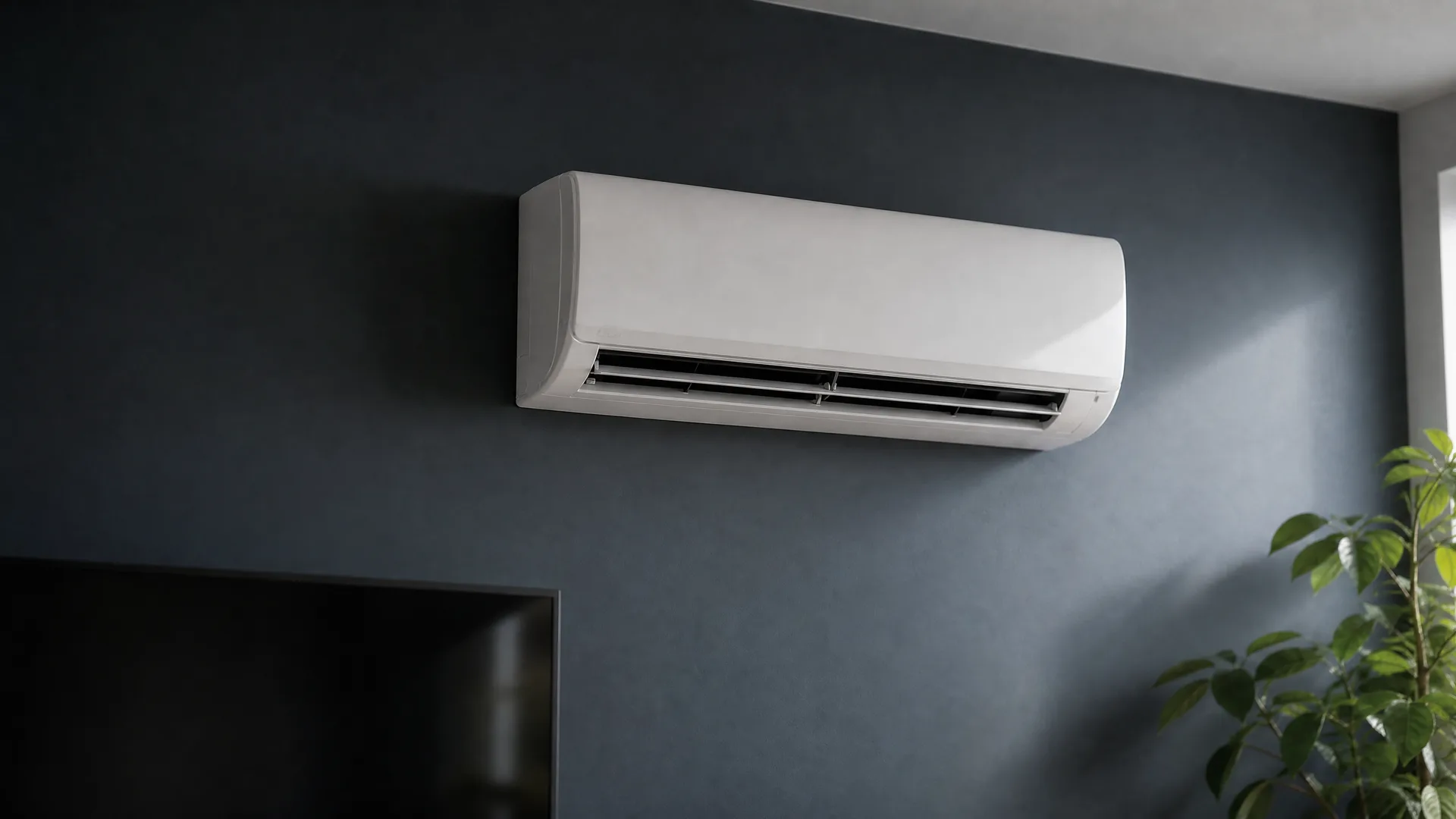
A white wall-mounted mini-split air conditioner on a dark gray interior wall, with a flat screen at lower left and a green leafy plant at lower right.

Get your mini split to the right pro

RepairMini-splitMaryland
Step 1 of 2

What ZIP code is the job in?