

Skip maintenance
You wait for the clog to show up as a shut-off system or a wet ceiling, then start calling contractors, explaining the problem over and over, and comparing quotes on your own.
A local pro who services air conditioners gets in touch about the tune-up.
You run the AC nonstop through a Maryland summer and then find water pooling near the unit, or the system shuts itself off for no clear reason. You check the drain line and it's backed up again, even though you just dealt with this a month ago. It feels like it shouldn't happen this often.
Your AC pulls moisture out of the air and sends it down the condensate drain line, and that line stays wet the whole time the system is running. Algae and mold grow in standing water, and in a Maryland summer the unit can run most of the day, which means the line rarely gets a chance to dry out between cycles. That buildup narrows the pipe until water backs up instead of draining. The longer the unit runs each day, the more often this happens, so a line that clogged once in June can clog again by August. A clear line and a clean drain pan keep that water moving out instead of into your house.
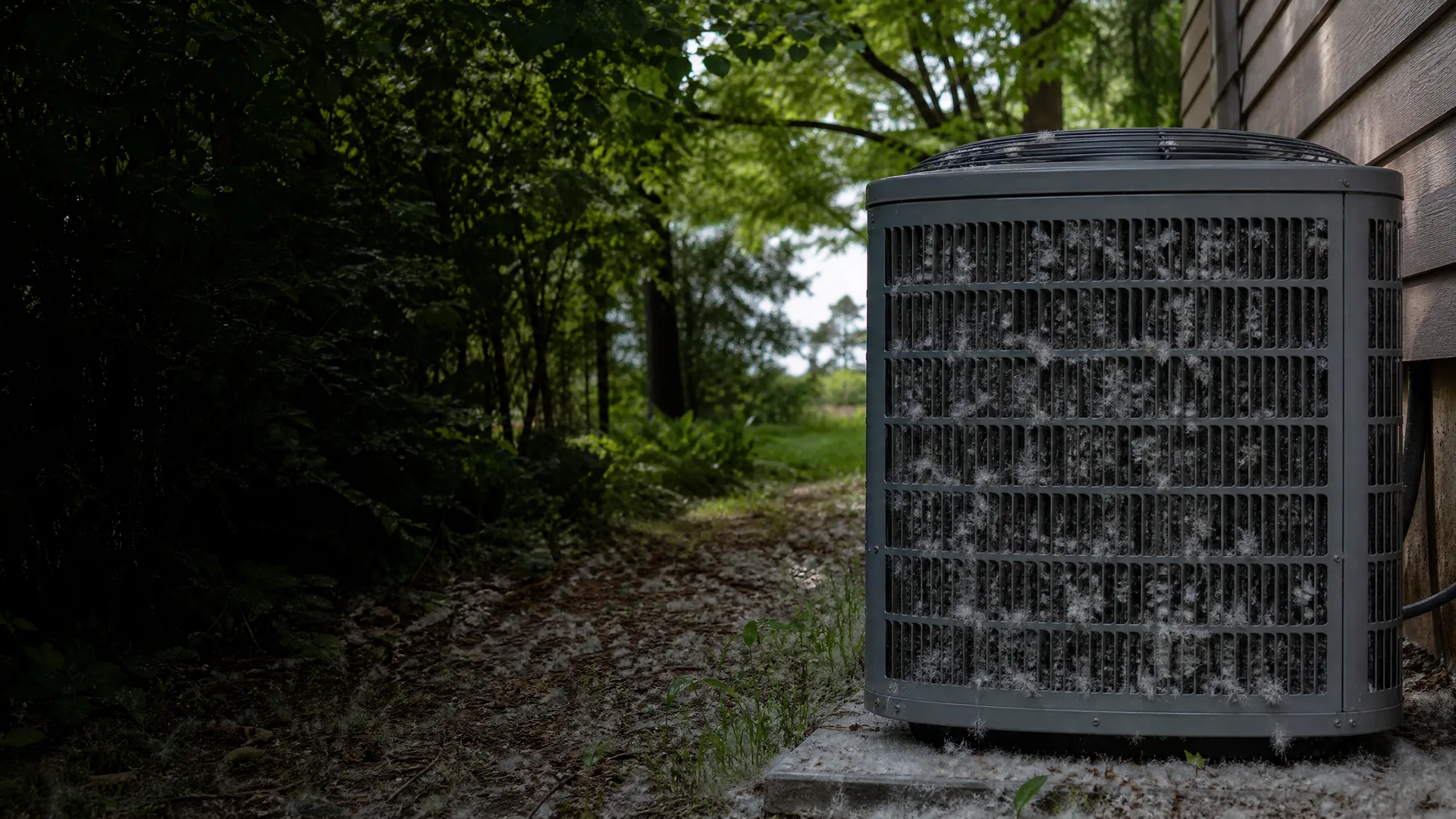
Late May, and the cottonwood trees two yards over have let go. You walk out to check on the condenser after noticing the AC running longer than it should, and the fins are covered in white fluff, packed in thick like snow that won't melt. Some of it has pulled loose and drifted toward the drain line fitting at the base. You pull a handful off the coil and more is already behind it, caught in the grille. The unit is still running, air moving through the fluff instead of around it. You make a note to check the drain line again before you head back inside.

The condensate drain line runs from a pan under the evaporator coil, inside the air handler, out to a stub near your foundation or into a floor drain. That water sits in a dark, wet pipe all summer, and algae grows in it the same way it grows in anything warm and standing. The clog isn't dirt washing in from outside. It's slime building up on the inside walls of the pipe, usually right at the trap or the first elbow, until the opening left for water is too small to keep up.
A contractor who checks this line knows to look at that trap first, not just flush the end of the pipe. Clearing it well enough that it holds through August, instead of backing up again in three weeks, takes knowing where your air handler sits and how that line was run. If you'd rather have someone who already knows your setup handle it than start by explaining your attic layout to a stranger on the phone, that's the match this page sets up.

A Maryland summer keeps the air handler running for hours at a stretch, and every hour of runtime pulls more condensate across that coil and down the drain. More water moving through the line means more chances for algae to catch and build a film on the inside of the pipe. A system in a drier climate making half as much condensate simply doesn't feed the clog the same way.
The drain line is the only path that water out of the house. When it backs up, the pan overflows, and on most systems a float switch on the pan senses that rise and shuts the whole unit down rather than let water reach the floor or the ceiling below. That shutdown can happen on the hottest, most humid afternoon of the year, with no warning beyond the air going still.
Look at the floor near the air handler. A damp spot on the carpet or a stain spreading across the ceiling below it means the drain line lost the fight and water found another way out. Check the pan under the unit too, since a clogged line backs water up into it until it overflows. If the system keeps shutting off on its own during the hottest part of the day, that's usually the float switch doing its job, cutting power before the overflow gets worse. Left alone, that standing water will warp the floor underneath it or leave mold growing somewhere you can't see until the smell gives it away.




You already know what a clogged drain line turns into here: a shut-off system on a ninety-degree afternoon, a stained ceiling, a wet-vac trip to the air handler. Finding someone to look at it before that happens usually means calling a few companies, explaining the same thing about the pan and the water stain three or four times, then sitting with quotes that don't line up because each contractor saw something different. Maryland summers don't give the line much of a break between May and September, so this isn't a once-and-done fix, it's something worth staying ahead of while the system is still running fine. Handing this off means one contractor who knows the area reaches out to you, and you explain the problem once. What's left after that is a normal maintenance visit, the kind that catches the algae and the buildup before the pan overflows again.

A summer dew point averaging 64°F across Maryland, per NOAA, is the kind of sticky where the air feels heavy even standing still. Your air handler has to pull more moisture out of that air to keep the house comfortable, and all that extra moisture has to leave through the same condensate line. More water draining means more for algae to feed on and more chances for a clog to start. That's the difference between a dry climate's AC and yours: the line here is working harder, more often, all summer long.
NASA POWER T2MDEW county cells weighted by homes


Condensate drips off the evaporator coil into the drain pan below it.
Water flows from the pan into the condensate drain line.
Algae and sludge coat the inside of the line all summer.
Buildup narrows the pipe until water backs up into the pan.


You wait for the clog to show up as a shut-off system or a wet ceiling, then start calling contractors, explaining the problem over and over, and comparing quotes on your own.
You answer a few questions once and a contractor who handles this in Maryland reaches out to you. No list of companies to call, no repeating yourself.



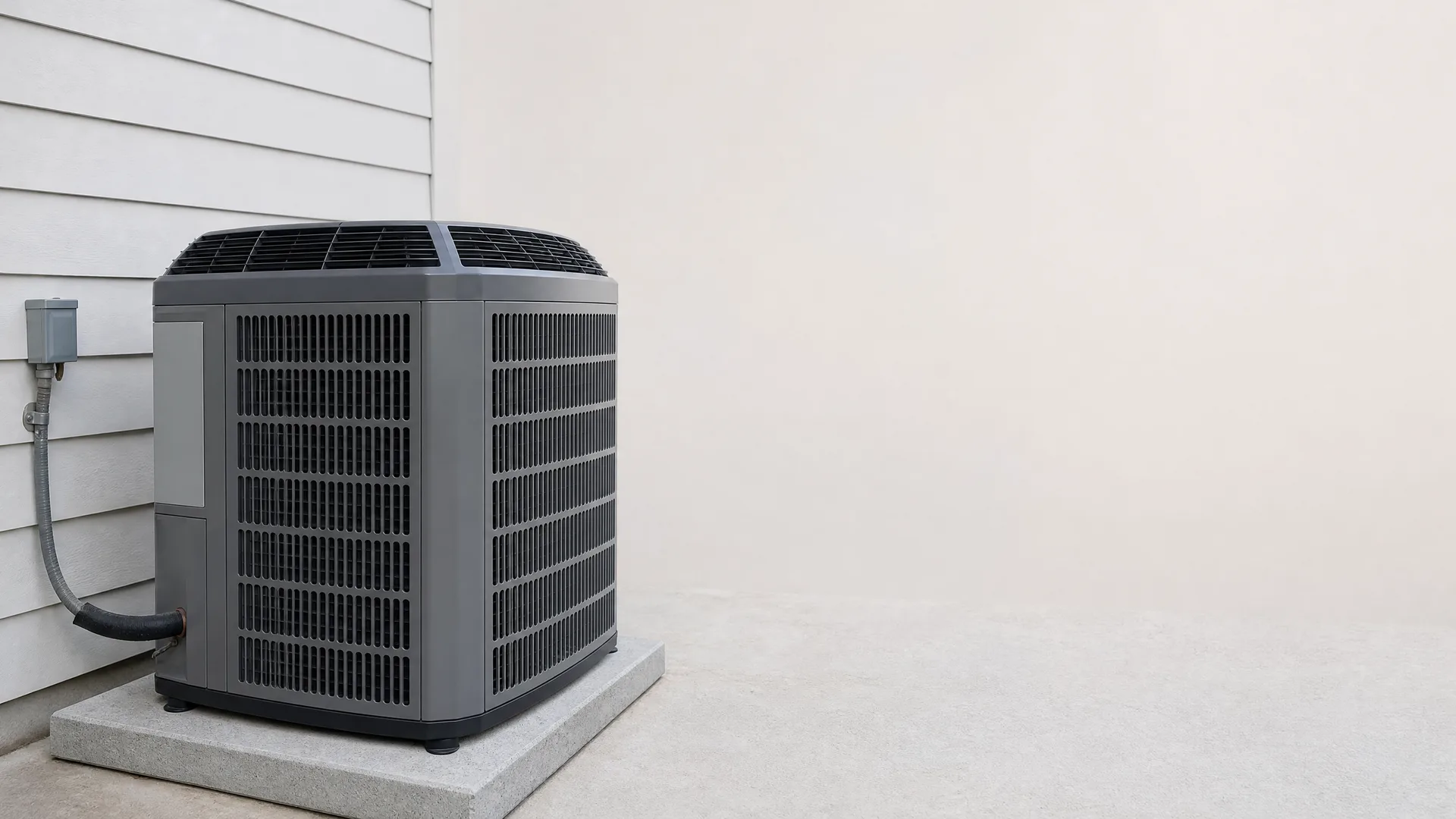
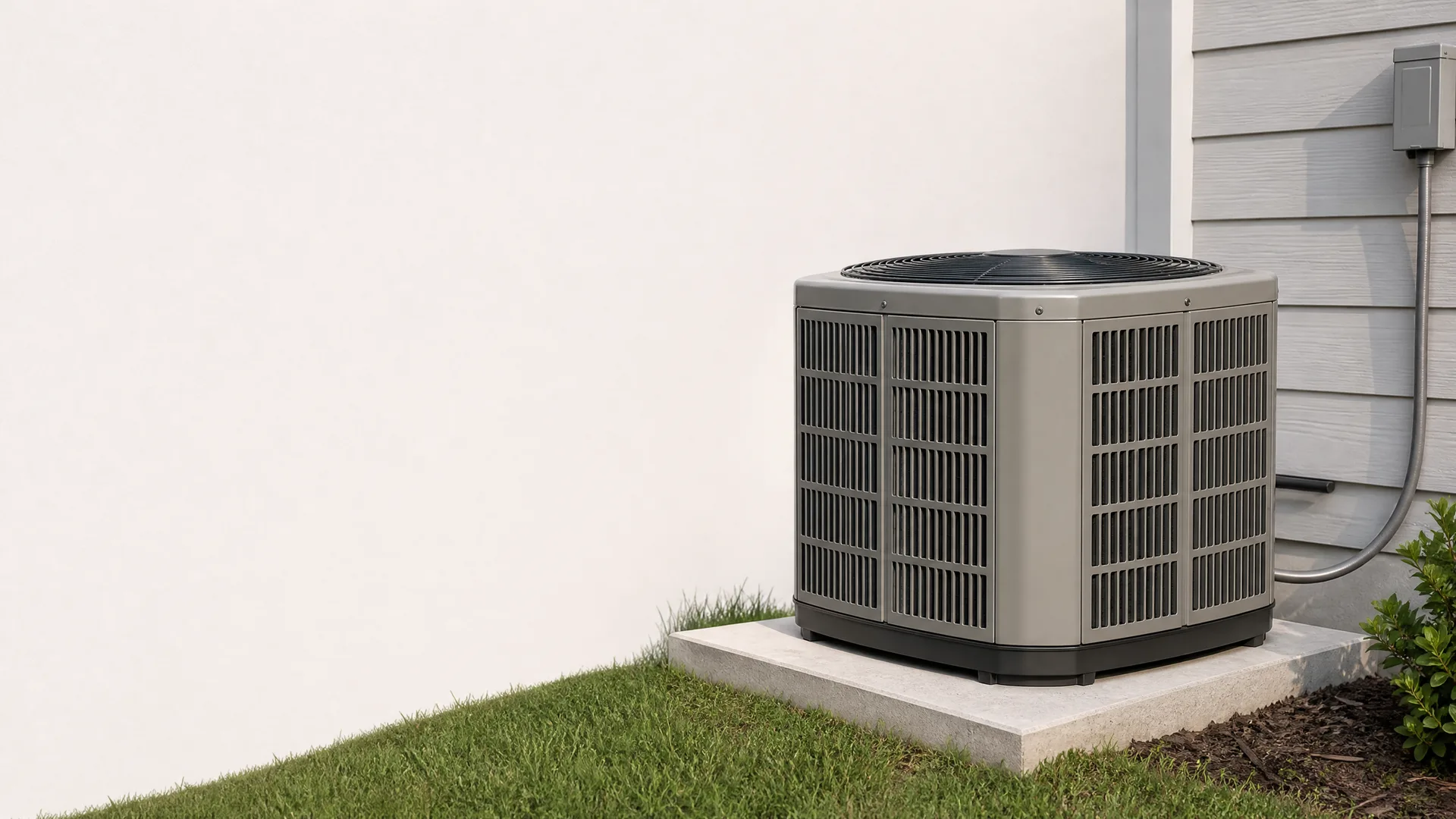
This is what a condenser looks like when the drain line is doing its job. The unit cycles on, runs, shuts off, and nothing collects around the pad. The lines running up to the disconnect box are just doing their job, nothing pooling at the base.

Dirt built up on the grille like this usually means the cabinet hasn't been opened in a while. A unit that goes unchecked outside often has a drain line going unchecked inside too, and that's where the clog that backs up into your house gets its start.
At 19.53 cents per kilowatt-hour, every extra hour your AC runs to push past a clogged line costs you more here than in most states. A unit working against a backed-up drain cycles longer and pulls more power to keep the house at temperature, and that shows up on your bill before you ever see standing water.
EIA-861 2025 statewide residential average

This is what sits beside most Maryland houses all summer: a gray unit on a concrete pad, lines running up to the disconnect box. Nothing pooling underneath, nothing clogging the fins. It can run all day and the drain line keeps up with it.

The fins and cage are packed with dirt and grime, the kind of buildup that takes a season or more to collect. A unit caked like this on the outside usually has the same problem on the inside, where the drain line sits unchecked and the algae keeps building.
A drain line clogs in a Maryland summer because algae grows in standing water and the line runs for hours every day pulling moisture out of thick, sticky air. That's the whole mechanism. Maintenance catches the line before it backs up into the pan, before the pan overflows, before you're looking at a stained ceiling or a wet-vac trip through the air handler. Left alone, the clog doesn't fix itself. It builds until the system shuts off on a ninety-degree afternoon or water finds its way out somewhere you don't want it. You don't have to figure out which contractor to call, sit on hold explaining the same backed-up line three or four times, or stack up quotes to compare on your own. Answer a few questions about your system and a contractor who handles this work in your area reaches out to you. The line itself still needs someone to open it up and clear it. Getting to that person is the part that stops being work.

You only hire the pro if you want to.
A technician who checks the drain line before August finds the clog while it's still just a slow trickle, not a wet shop vac and a stained ceiling. One visit now skips the part where you're calling around mid-heat wave trying to find someone free.