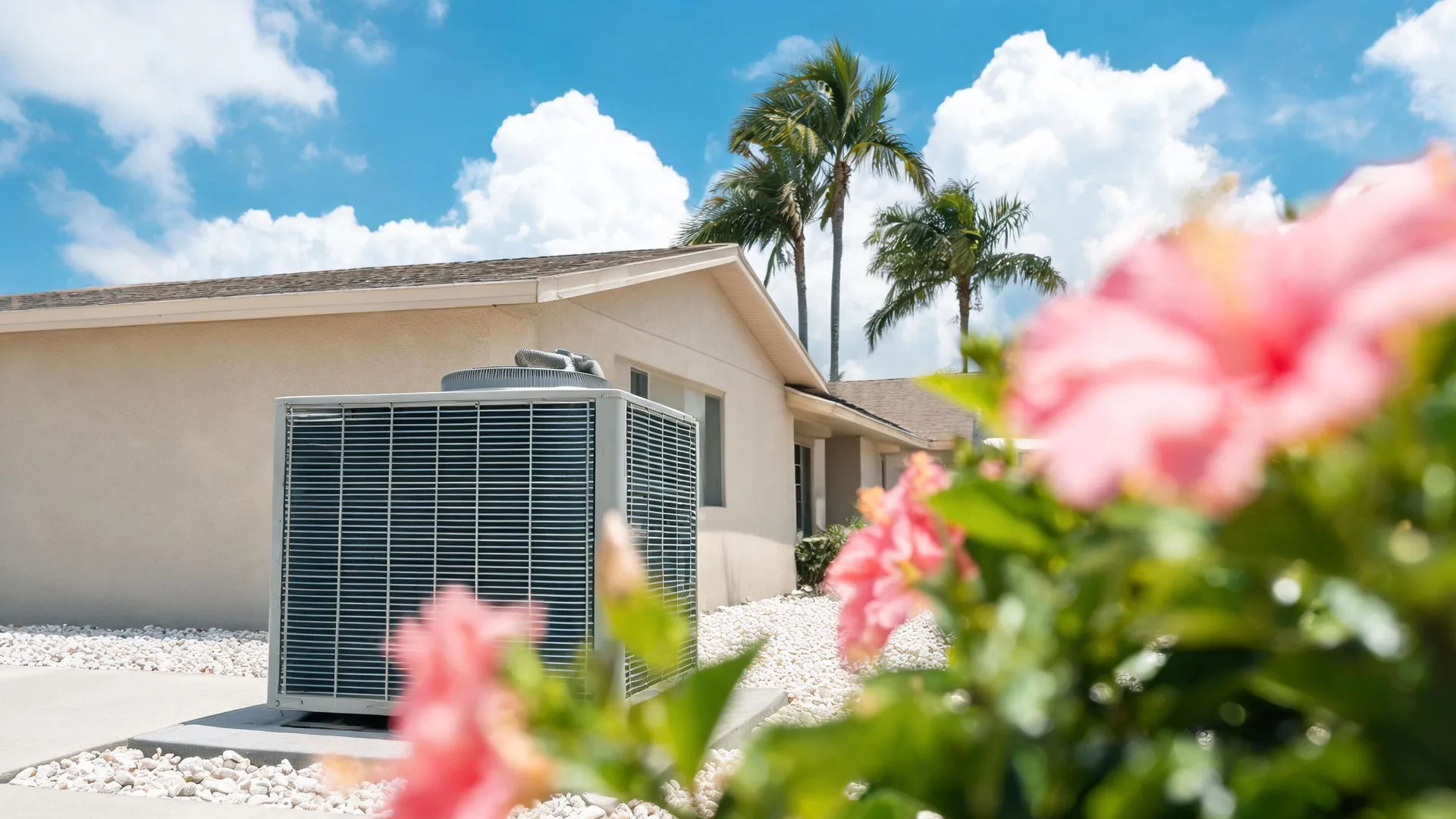
Overhead view of an outdoor AC condenser unit on a concrete pad next to a house with a dark shingle roof.

AC Maintenance in Baltimore, MD

Tell us about the job

Takes about a minute. No obligation.

Tune-up, service, or cleaningCentral ACBaltimore city, MD
Step 1 of 2

What ZIP code is the job in?

Electricity here isn't cheap

Maryland homes paid 17.86 cents per kilowatthour in 2024, well above what a lot of states pay. A dirty coil or a low charge makes your AC run longer to get the same cooling, and every one of those extra hours gets billed at that rate.


A neglected system wastes what it uses

A unit that's never been serviced loses efficiency slowly, so you don't notice it happening. The compressor works harder, the runtime creeps up, and the power that gets wasted still costs the same 17.86 cents per kilowatthour as the power that does something.

4 months
June through September, your air conditioner is on duty
87°F
the average summer afternoon it cools against
6 hail events
in ten years, and hail bends the fins on outdoor coils
45 wind events
in ten years, and wind drives debris into outdoor units
Isometric cutaway illustration of a single-story house showing interior rooms with ductwork and an air handler, connected by refrigerant lines to an outdoor condenser unit on the left.
Your air conditioner works hardest from June through August.

NOAA nClimDiv, 1991–2020 normals

Half the homes in Baltimore were built in 1947 or earlier.

An AC system in a house that old has usually been patched or replaced more than once, and a yearly check is how you find out which parts are original before one of them fails.

June is when Baltimore's AC earns its keep. May is when you get it checked.

Cooling runs June through September
Summer afternoons average 87°F
Power costs 17.86 cents a kWh statewide

Your AC only runs four months a year here, June through September, but the afternoons it works against average 87 degrees. That's real heat for a system to fight. One visit before summer covers what it needs. A technician checks the refrigerant charge, cleans the coil, and checks the capacitor and contactor so none of them give out in July. Zone 4A means this area asks real work of a cooling system, but it doesn't ask for more than once a year to keep it running right.

Get it checked before the running cost adds up

At 17.86 cents a kilowatthour, a system that has to work harder costs more every time it runs. A tune-up before summer gets the coil and charge checked while it's still an easy fix, not after a bill shows you something was wrong.

Find a contractor
A man in a gray long-sleeve shirt and work pants carries a canvas tool bag as he climbs porch steps toward an orange front door of a gray clapboard house, with a potted shrub to the right.
An outdoor air conditioning condenser unit mounted on a concrete pad beside a house, with electrical conduit running to a wall-mounted disconnect box.

A tune-up either checks the parts that fail or skips to the ones that don't

A quick visit gets the filter swapped and the gauges glanced at. A thorough one opens the cabinet. The tech pulls the panel to check the capacitor's actual reading, not just whether the unit starts. They wash the condenser coil instead of brushing off the top layer, because a coil can look clean from outside and still be caked between the fins where the air actually passes. They check the refrigerant charge against the system's own numbers, not a glance at the gauge, and they check the contactor for pitting, since that part burns slowly and fails without warning. Anyone can hose off a condenser and call it serviced. The difference shows up the first hot stretch the system has to work for real.

The sounds that mean something's starting to go

A healthy AC has one steady sound while it runs. A new rattle, a click that repeats, or a hum that wasn't there before means a part is loose, wearing, or struggling to start. Usually it's the capacitor or contactor that goes first, and the compressor takes the hit if that failure gets ignored. Catching it early is a part swap. Catching it late is a whole system.

What your vents are telling you

Feel the air at the vent closest to the unit and the one farthest away. If the far room never gets as cool as it used to, or the system runs longer to get there, something has lost ground. The charge could be low. The coil could be dirty. Airflow could be restricted somewhere in the duct. None of that shows up by looking at the thermostat, only by paying attention to how the house actually feels room to room.

Aerial view of a gray outdoor air conditioning condenser unit mounted on a concrete pad next to a house with vinyl siding.

Book your AC tune-up in May, before homes here start needing cooling in June.

  1. Jan
  2. Feb
  3. Mar
  4. Apr
  5. May
  6. Jun
  7. Jul
  8. Aug
  9. Sep
  10. Oct
  11. Nov
  12. Dec

A tune-up checks the refrigerant charge, cleans the coils, tests the capacitor and tightens the electrical connections.

A real tune-up follows the refrigerant cycle through, not just the parts that are easy to reach. The tech checks the suction line temperature against the outdoor temperature to see if the charge is right, since too much or too little refrigerant both make the compressor work harder than it should. They check the blower motor and the fan blades for wobble or wear, because a motor pulling more current than it should will run hotter and shorter. The drain line gets checked too, since a clogged one backs up and can shut the system down on its own before anything else fails. Filters and thermostats get attention on every visit. The compressor and the drain line only get checked on a real one.