Electricity here isn't cheap
Maryland households paid 17.86 cents per kilowatthour in 2024. A dirty coil or a low refrigerant charge makes the compressor run longer to cool the same house. Every one of those extra hours gets billed at that rate.
Takes about a minute. No obligation.
Maryland households paid 17.86 cents per kilowatthour in 2024. A dirty coil or a low refrigerant charge makes the compressor run longer to cool the same house. Every one of those extra hours gets billed at that rate.
A technician cleaning the coil, checking the charge and clearing the drain line gets the system back to pulling its rated amount of power instead of more. That is the whole job of maintenance on an AC. Keep it from working harder than it has to.

NOAA nClimDiv, 1991–2020 normals
Bowie runs its AC June through September, about four months a year.
One tune-up before summer starts covers the whole four months this system has to work.




One visit a year is enough for most AC systems, and that holds here too. A technician cleaning the coil, checking the charge and clearing the drain line once covers the whole season this system has to run. Half the homes in Prince George's County were built in 1977 or earlier, so a lot of these systems are tied into ductwork and wiring from that era. That is not a reason to schedule more visits. It is a reason to make sure the one visit happens before the system has to work. Whether a house is old or new, the tune-up does not change. What changes is whether anyone checked the system before it had to prove itself.
A system that has to work harder than it should runs up a bigger bill at 17.86 cents per kilowatthour. Getting the coil cleaned and the charge checked keeps that rate from costing more than it has to.
Find a contractor
A quick visit gets you a glance at the filter and a reading on the thermostat, done in a few minutes. A thorough one opens the cabinet. The technician checks refrigerant charge against what the system calls for, not just whether the lines feel cold. They pull the blower access panel and look at the coil itself, not just the filter in front of it, because a coil caked with dust loses its grip on the air moving past it. They check capacitor readings against spec instead of just listening for the compressor to kick on. They flush the condensate drain line, since a clogged one backs up quietly until it shuts the system down or drips into the ceiling below it. They check refrigerant line insulation and tighten electrical connections that work loose from months of vibration. None of this takes long to list, but each step is a separate check with a pass or fail, not a glance and a guess. If a technician is in and out faster than it takes to explain what they did, they skipped most of it.
A dirty filter is the one thing worth checking without calling anyone. A clogged filter starves the coil of airflow, and a starved coil can ice over even on a hot day. Pull it, hold it up to a light, and swap it when you can't see through it. That's the whole task.
Refrigerant charge, capacitor readings and wiring connections need gauges and test equipment to check safely, not a guess. Opening the cabinet without the right tools risks a shock or a burned-out part. If the system is low on refrigerant or a connection has worked loose, that waits for the tune-up.
A tune-up checks the refrigerant charge, cleans the coils, tests the capacitor and tightens the electrical connections.
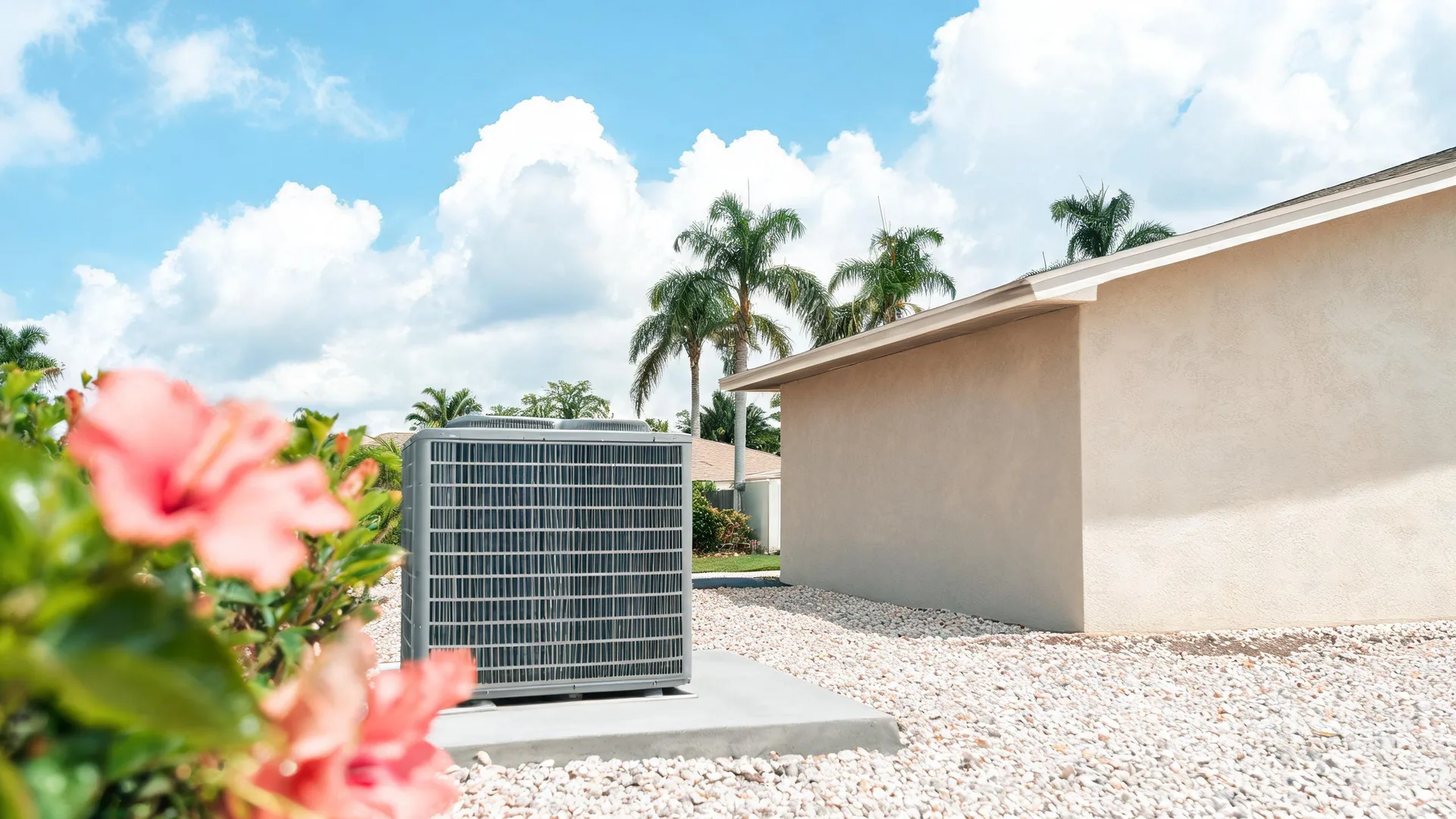
A tune-up also covers what happens outside the house, not just inside the cabinet. The outdoor unit pulls air through fins that bend and clog with grass clippings, cottonwood, and dust, and bent fins choke airflow the same way a dirty coil does. A technician straightens what can be straightened and clears what's blocking the fins. They check that the unit sits level, because a compressor tilted off level wears unevenly over time. They also check the contactor, the switch that sends power to the compressor each time the thermostat calls for cooling. Contacts on that switch pit and burn with use, and a bad one can keep the compressor from starting at all. None of this shows up by looking at the thermostat from across the room.