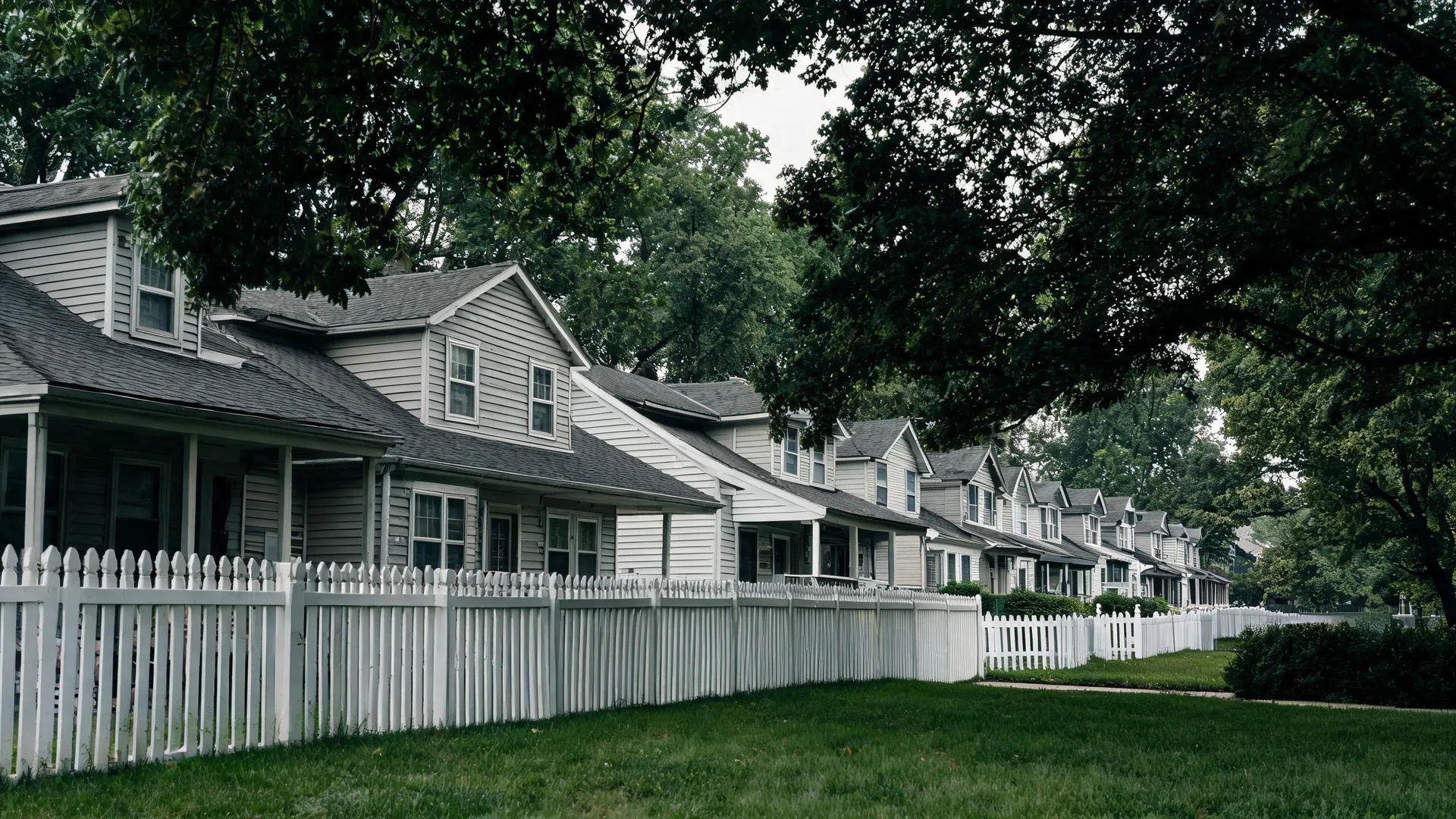






A row of similar gray-sided houses with gabled dormers behind a white picket fence, with mown grass in the foreground and large leafy trees overhead.

AC Repair in Bowie, MD

Tell us about the job

Takes about a minute. No obligation.

RepairCentral ACPrince George's County, MD
Step 1 of 2

What ZIP code is the job in?

A tech starts by asking what the system is doing. Short cycling, blowing warm, tripping the breaker, making noise, whatever brought the call. Then comes a look at the outdoor unit and the indoor coil. The refrigerant charge gets checked, along with the capacitor and the contactor. Airflow gets checked too, because a dirty filter or a blocked return can look like a refrigerant problem when it isn't one. If the system won't start or keeps tripping the breaker, the capacitor and the compressor get checked first, since those cause most no-start calls. The point of all this is to find the part that actually failed instead of guessing, so the repair fixes what's wrong and not something that happened to be nearby.

4 months
June through September, your air conditioner is on duty
86°F
the average summer afternoon it cools against
16 hail events
in ten years, and hail bends the fins on outdoor coils
222 wind events
in ten years, and wind drives debris into outdoor units
Isometric line illustration of a cutaway house showing interior rooms with furniture, ductwork leading to an indoor air handler, and an outdoor condenser unit connected by a line set.
Your air conditioner works hardest from June through August.

NOAA nClimDiv, 1991–2020 normals

A struggling compressor draws more current the longer it runs.

Let it keep cycling like that and you're looking at a burnt-out compressor instead of a bad capacitor.

An older or newer house here doesn't change what's wrong with your AC

Half the homes here were built by 1977
Cooling runs June through September
Summer afternoons average 86°F

Bowie gets its share of wind and the occasional winter storm, like most of Prince George's County. That's normal weather, not a reason an AC unit fails early. If your system is short cycling or won't start, the cause is almost always inside the unit. A weak capacitor. A failing contactor. A dirty coil. A low charge. A storm might knock out power for a while, and most systems come back on their own once it's restored. If yours didn't, that's worth mentioning when the tech asks what happened before the problem started.

Get the usual fix

Nothing about this area is especially hard on it. It's most likely the usual problem with the usual fix.

Find a contractor
A man in a dark sweatshirt and tan work pants, seen from behind, climbs porch steps toward a red-orange door while carrying a worn canvas duffel bag.
A gray residential air conditioner condenser unit mounted on a concrete pad in an open grass field.

What to check before the tech shows up

Before anyone comes out, there are a few things worth checking yourself. Look at the thermostat first. Make sure it's set to cool and the setting is below room temperature, since a bumped thermostat gets blamed on the system more often than it should. Check the breaker panel next. If the AC breaker is tripped, reset it once. If it trips again right away, leave it off and tell the tech that, since it usually means the compressor or a wire is pulling too much current. Go look at the outdoor unit. If the fan isn't spinning and you don't hear any hum, that detail matters, tell the tech exactly what you saw. Pull the filter and hold it up to light. If you can't see through it, swap it or clean it, because a blocked filter starves the coil of airflow and can freeze it solid. If there's ice on the indoor coil or the line running outside, turn the system off and let it thaw before anyone touches it. Running it iced up can send liquid refrigerant back into the compressor. None of this takes long, and it rules out the simple causes before the real diagnosis starts.

Warm air from the vents

The system runs, the fan blows, but the air isn't cold. Usually means the compressor isn't running even though the indoor blower is. Could be a bad capacitor, a failed contactor, or refrigerant too low to cool anything. Worth a call before the house heats up and the compressor keeps straining to catch up.

Short cycling or won't stay on

A system that starts and stops every few minutes, or shuts off and won't restart, is telling you something electrical or mechanical is failing under load. Leaving it alone doesn't give it a chance to fix itself. Each short cycle puts another hard start on a compressor that's already struggling.

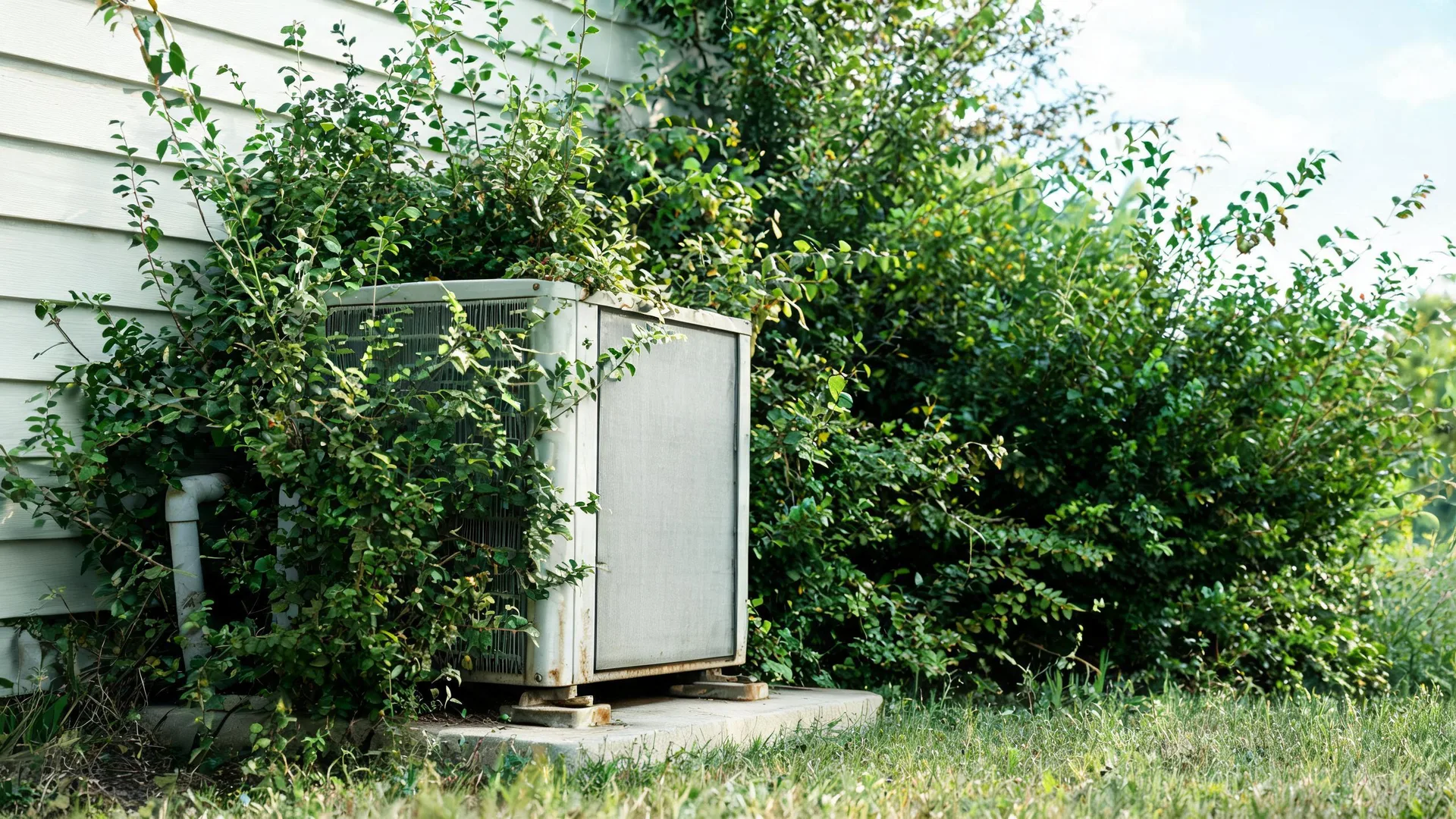
An outdoor air conditioning condenser unit on a concrete pad next to the gray vinyl siding of a residential home.

A new air conditioner would cut about $50 a year off cooling for a typical Prince George's County home.

  • A new one at the federal minimum, 14.3 SEER2$320 a year
  • An older air conditioner$370 a year

Estimates for a typical Prince George's County home, compared with an older unit built to the previous federal minimum, from EIA household energy data, Maryland fuel prices and NOAA climate normals. Your home will differ.

Repair makes sense when a part like a capacitor or contactor has failed.

Replacement makes sense when the compressor has failed or the system uses R-22 refrigerant, which is no longer made.

A repair makes sense when one part failed and the rest of the system is still sound. A capacitor, a contactor, a fan motor, these wear out on their own schedule and replacing one doesn't say anything bad about the compressor or the coil next to it. Replacement starts to make more sense when the compressor itself is the problem, since that's the part that can't be swapped out on its own, or when the refrigerant is low because of a leak rather than just needing a recharge. Age matters less than what's actually failing and how the rest of the system has held up. A unit that's needed a few different repairs over the years for a few different reasons is telling you something different than one that's never needed a call until now. Ask what failed and why before asking whether it's worth fixing.