Two white colonial houses with lit windows and black shutters photographed at dusk along a tree-lined residential street.

Heat Pump Repair in Aberdeen, MD

Tell us about the job

Takes about a minute. No obligation.

RepairHeat PumpHarford County, MD
Step 1 of 2

What ZIP code is the job in?

Check the thermostat and the breaker first

Set the thermostat to heat or cool a few degrees past room temperature and listen for the outdoor unit to kick on. If nothing happens anywhere in the house, look at the breaker panel for a tripped switch before assuming the heat pump itself has failed. A reset breaker that trips again right away points to an electrical problem a contractor needs to find.

Look at the outdoor unit and the filter

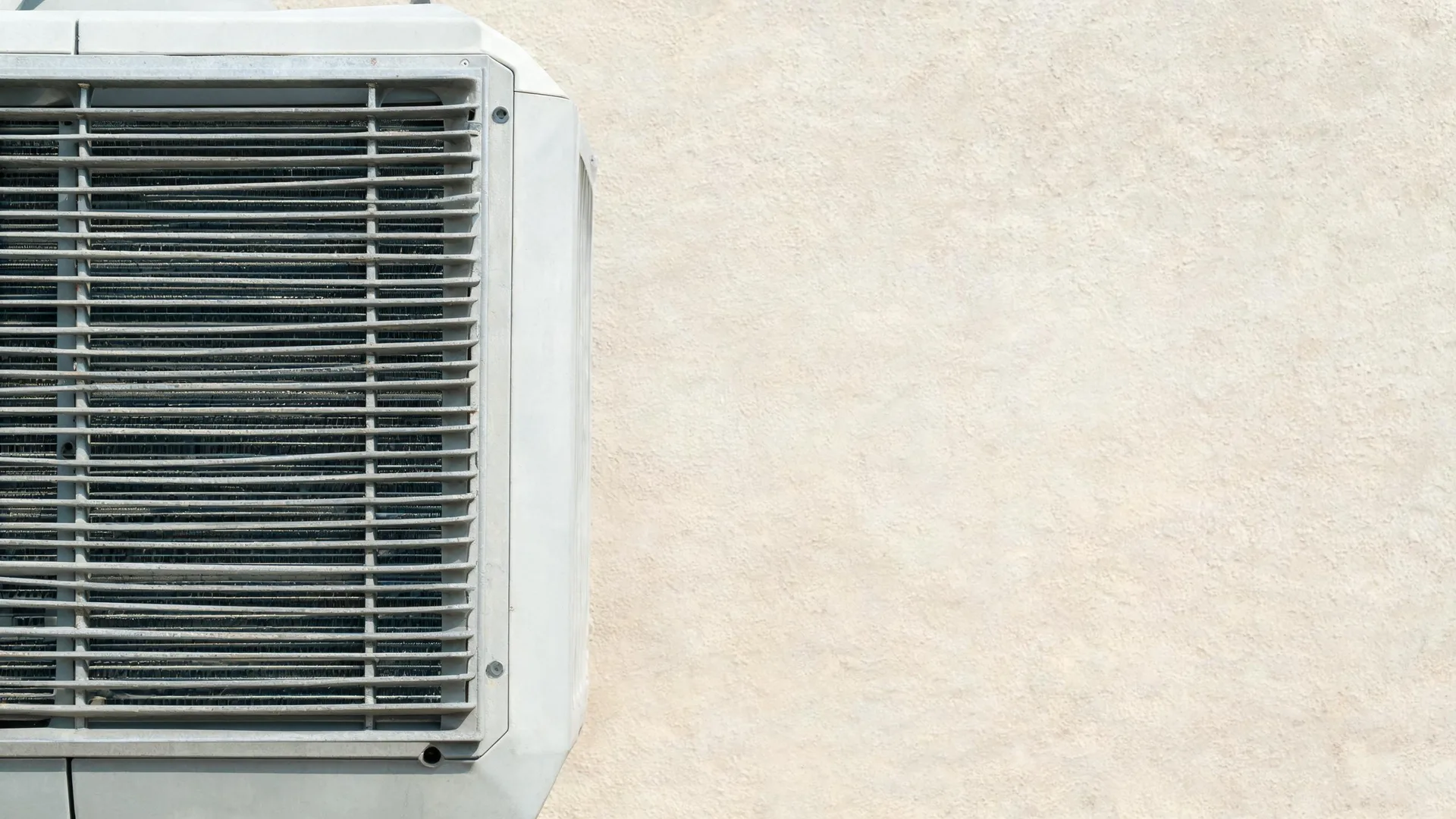
Walk outside and check that the outdoor unit isn't buried in leaves, ice, or anything blocking the coil, since restricted airflow there can mimic a bigger failure. Then pull the air filter inside and hold it up to a light. A filter so clogged you can't see through it chokes the system and is worth ruling out before paying for a diagnostic visit.

7 months
October through April, your system heats
4 months
June through September, it cools
26°F
the average winter night it heats against
85°F
the average summer afternoon it cools against
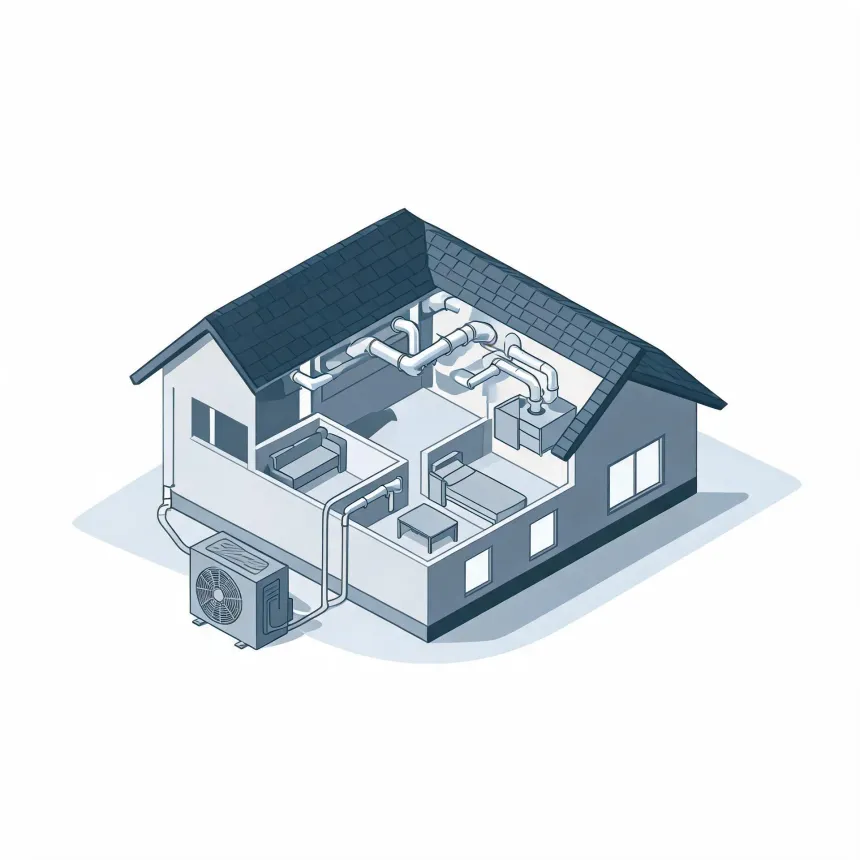
Isometric cutaway illustration of a house showing attic ductwork, an indoor air handler, furnished rooms, and an outdoor condenser unit connected by lines along the exterior wall.
Your system heats October through April and cools June through September.

NOAA nClimDiv, 1991–2020 normals

A heat pump in Harford County isn't fighting triple-digit heat or weeks of subzero cold.

A heat pump that's had an easier run is usually a heat pump worth fixing instead of replacing.

September and May are when a weak heat pump quits

Cooling runs June through September
Heat runs October through April
329 damaging wind events from 2015 to 2024

Harford County sees its share of wind and the occasional winter storm, same as most of this part of Maryland. None of it singles out a heat pump the way extreme heat or deep cold would. Wind can still knock out power long enough to matter, and a heat pump does nothing until power is back, so if the outage ran long check the breaker and the thermostat settings before calling anything else broken. Short of a branch coming down on the outdoor unit, weather here isn't what wears a heat pump out. The parts that fail usually fail from age and use, not from what the county throws at them.

A struggling heat pump costs more here. Get it looked at.

Electricity here runs 17.86 cents per kilowatthour, and a heat pump that's struggling pulls more of it every day you leave it alone. A problem that's cheap to fix now doesn't get cheaper by running a few more weeks.

Find a contractor
A man in a dark shirt jacket and tan work pants, seen from behind, carries a worn canvas duffel bag up stone steps toward an orange front door flanked by a potted shrub.
A gray air-source heat pump mounted on a concrete pad next to a house with gray vinyl siding, surrounded by gravel and flanked by green shrubs and white hydrangea flowers.

Steady work, not punishing work

This heat pump runs year round, heating through the cold months and cooling through the hottest stretch of summer, with the overnight winter low averaging only 26°F. That's steady work, not punishing work. A unit that never gets pushed to an extreme in either direction tends to still have good parts in it even when one piece fails, which is why it's worth having a contractor look at before anyone talks about replacing it.

A struggling compressor keeps drawing on itself

A compressor low on charge or losing its start capacitor still tries to run the cycle it was built for. It pulls harder to do it and runs hotter than it should. Every hour it keeps going adds wear to parts that were fine a month ago, and a repair that was simple early can turn into a compressor replacement if it runs too long in that state.

Ice on the coil doesn't melt itself

A heat pump low on refrigerant or short on airflow will frost the outdoor coil even when the defrost cycle should be clearing it. Once ice builds past what a normal defrost can handle, the coil loses what heat transfer it had left. The system keeps running anyway, doing less heating or cooling the longer it's left alone.

A heat pump in trouble doesn't always go quiet. More often it keeps running and just stops doing the job. In heating mode, air coming out of the vents feels cool instead of warm, because a heat pump moves heat rather than making it, and a struggling one moves less of it. You might hear it run longer than it used to, cycling on and off more through the day, or not shutting off at all. Outside, the reversing valve can get stuck, so the system blows cold air when it should be heating, or warm air when it should be cooling. A hissing or bubbling sound near the outdoor unit usually means refrigerant escaping, and that's not something that fixes itself. Listen for a hard clunk or a grinding sound when it starts up too, since that's often a compressor or fan motor on its way out.

A heat pump fails in a few different ways, and the fix depends on which part gave out. A capacitor, a contactor, or a fan motor can be swapped on its own without touching anything else, and the rest of the system keeps going like nothing happened. A compressor is a different story. It's the part that costs the most to replace, so when a compressor is the problem, that's when replacing the whole unit starts to make sense instead. Age matters more than any one symptom does. A heat pump still early in its working life is almost always worth repairing, because whatever quit is probably an isolated part and the rest of the system still has plenty left in it. An old unit gets judged differently, especially once the compressor itself is in question, since putting a new compressor in an old system often doesn't make sense against starting fresh. The real question isn't only what broke. It's whether that failure is a one-off or a sign of what's coming next on a system that's been running a long time.