A row of illuminated white colonial houses along a road photographed at dusk.

Heat Pump Repair in Cambridge, MD

Tell us about the job

Takes about a minute. No obligation.

RepairHeat PumpDorchester County, MD
Step 1 of 2

What ZIP code is the job in?

September is when a weak heat pump shows itself

Heat in Cambridge runs October through April. The first cold stretch in September or early October puts load on parts that have been sitting idle since spring, and anything already weak tends to fail right then.


Get it looked at before the cold settles in

A heat pump struggling in September will keep struggling through the winter months ahead. Calling at the first sign of trouble means it gets fixed before you actually need it to keep up.

7 months
October through April, your system heats
4 months
June through September, it cools
29°F
the average winter night it heats against
86°F
the average summer afternoon it cools against
Isometric illustration of a cutaway single-story house showing interior ductwork, an indoor air handler and simple furniture, connected by lines to an outdoor condenser unit beside the building.
Your system heats October through April and cools June through September.

NOAA nClimDiv, 1991–2020 normals

Cambridge winters average 29°F overnight, not the deep cold some places deal with all winter.

A heat pump here isn't fighting extreme temperatures year after year, so most repairs are worth making.

Electricity here runs 17.86 cents a kilowatt-hour, so a heat pump working harder than it should is costing you right now

Power costs 17.86 cents a kWh statewide
58 damaging wind events from 2015 to 2024
12 winter storms from 2015 to 2024
Cambridge, MarylandHalf the homes in Dorchester County were built in 1975 or earlier, half in 1975 or later. Either way, a heat pump problem here is usually the ordinary kind.

If a repair tech says a part failed from strain, that is worth a second question here. Dorchester County doesn't put the kind of load on a heat pump that wears it down early. So when something does fail, age or a buildup of small neglected issues is usually the reason, not the climate. That's good news for a repair call. It means fixing the one broken part is more likely to hold, instead of being the first of several failures as the system struggles against conditions it can't handle. Get the actual cause diagnosed rather than just the symptom, and the fix should last.

A heat pump running longer than it should is costing you now

At 17.86 cents a kilowatt-hour, every extra hour a struggling heat pump runs adds to the bill. Get the cause diagnosed and the repair done, and you stop paying for a problem that's already there.

Find a contractor
A man in a cap, dark T-shirt and tan work pants walks up porch steps toward an orange front door, carrying a canvas tool bag filled with hand tools, with a potted shrub in a terracotta planter at left.
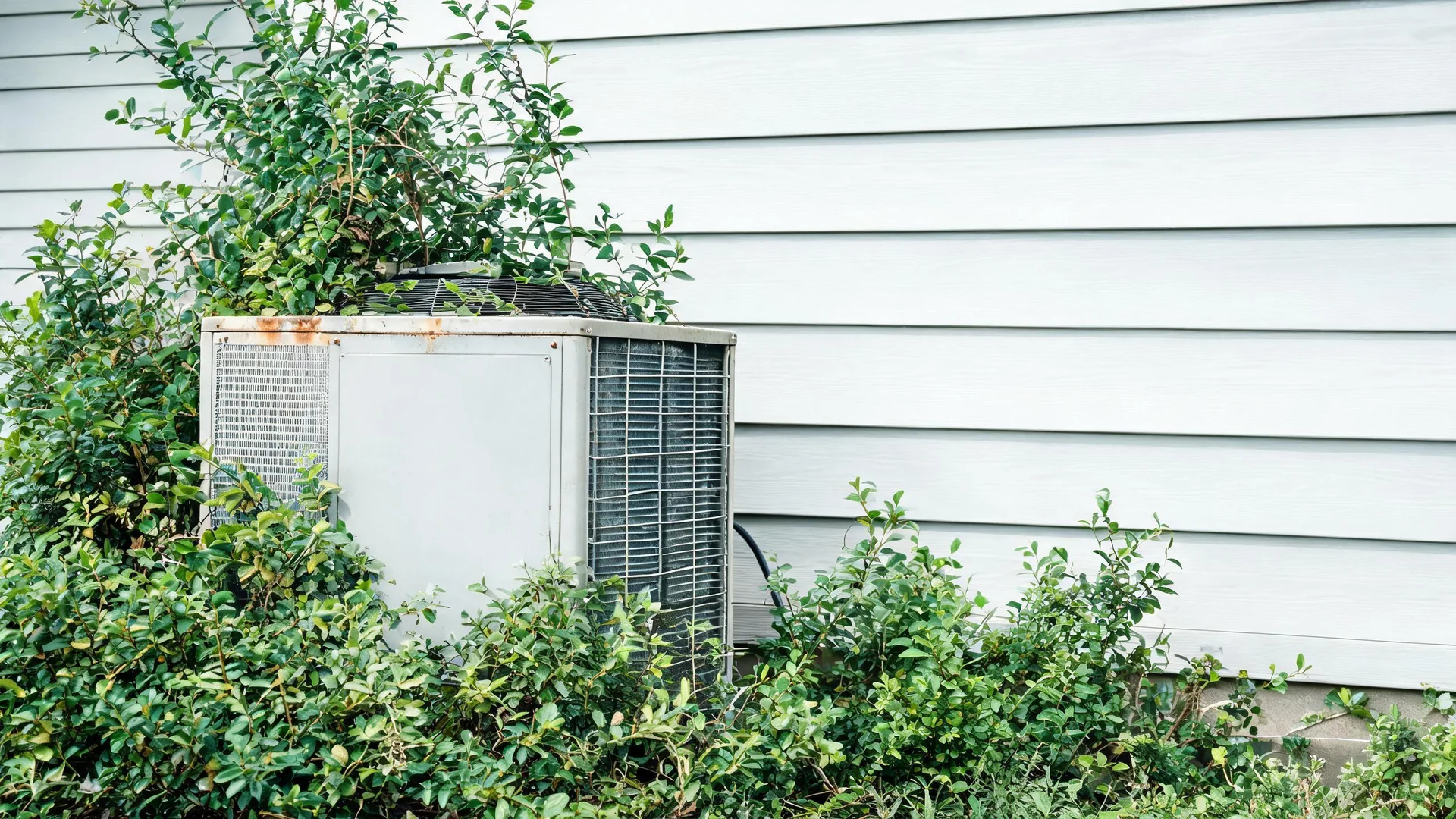
A white mini-split heat pump outdoor unit mounted on a concrete pad beside a gray-sided house, surrounded by gravel and green shrubs.

What a failing heat pump sounds and feels like before it quits

A heat pump that's running well is quiet about it. So the first sign of trouble is usually a sound that wasn't there before. A clicking at startup, a hum that never turns into the compressor actually running, a rattle from the outdoor fan that comes and goes. After sound, it's air. Air from the vents that feels barely warm. Cool air coming out when the system is set to heat. Short cycling is another sign worth paying attention to. The system kicks on, runs a few minutes, shuts off, then starts again before a room has had any real chance to warm up. Ice building up on the outdoor coil and staying there is further along than a noisy unit still managing to heat the house. None of these problems get easier to diagnose by waiting. They just narrow down which parts are still working by the time someone gets a look at it.

The reversing valve is usually the first thing to go

A furnace never needs this part. A heat pump does. The reversing valve switches the system between heat and cool using a solenoid coil and seals that wear from switching back and forth. When it sticks, the system can blow cold air when it should be heating, or get stuck in one mode and stay there.

Past that, it fails the way any air conditioner does

A weak capacitor makes the compressor or fan struggle to start. A slow refrigerant leak lets the charge drop low, so the system runs long and still falls short of the set temperature. Coils caked with dirt, inside or out, make the whole system work harder to move the same amount of heat.

A heat pump that's low on refrigerant or struggling to start doesn't fail outright. It keeps running, just worse, and something downstream pays for it. The compressor is built to pump refrigerant at a certain pressure, and when the charge is low, it still tries to do the job with less than it needs to work with. A weak capacitor has the same effect on startup, making the compressor or fan motor strain every time the system cycles on. A dirty coil adds to it. The system pulls more current to push the same heat through a dirtier surface, and that extra draw falls on the same parts. None of this shows up as a sudden breakdown. It shows up as a repair that would have been a part replacement turning into a compressor replacement, because the small problem kept running instead of getting looked at.

A diagnostic visit starts outside, at the unit itself. A tech checks the refrigerant pressure, because that number tells them right away if the system is low and by how much. They'll test the capacitor and the contactor, since those are what get the compressor and fan started in the first place. Inside, they'll check the airflow across the coil and look at what the thermostat is actually calling for versus what the system is doing. If the reversing valve is suspect, they'll run the system in both modes to see whether it actually switches when told to. Most of this is testing one part at a time until the readings point at something specific, not guessing from the sound or the symptom alone.