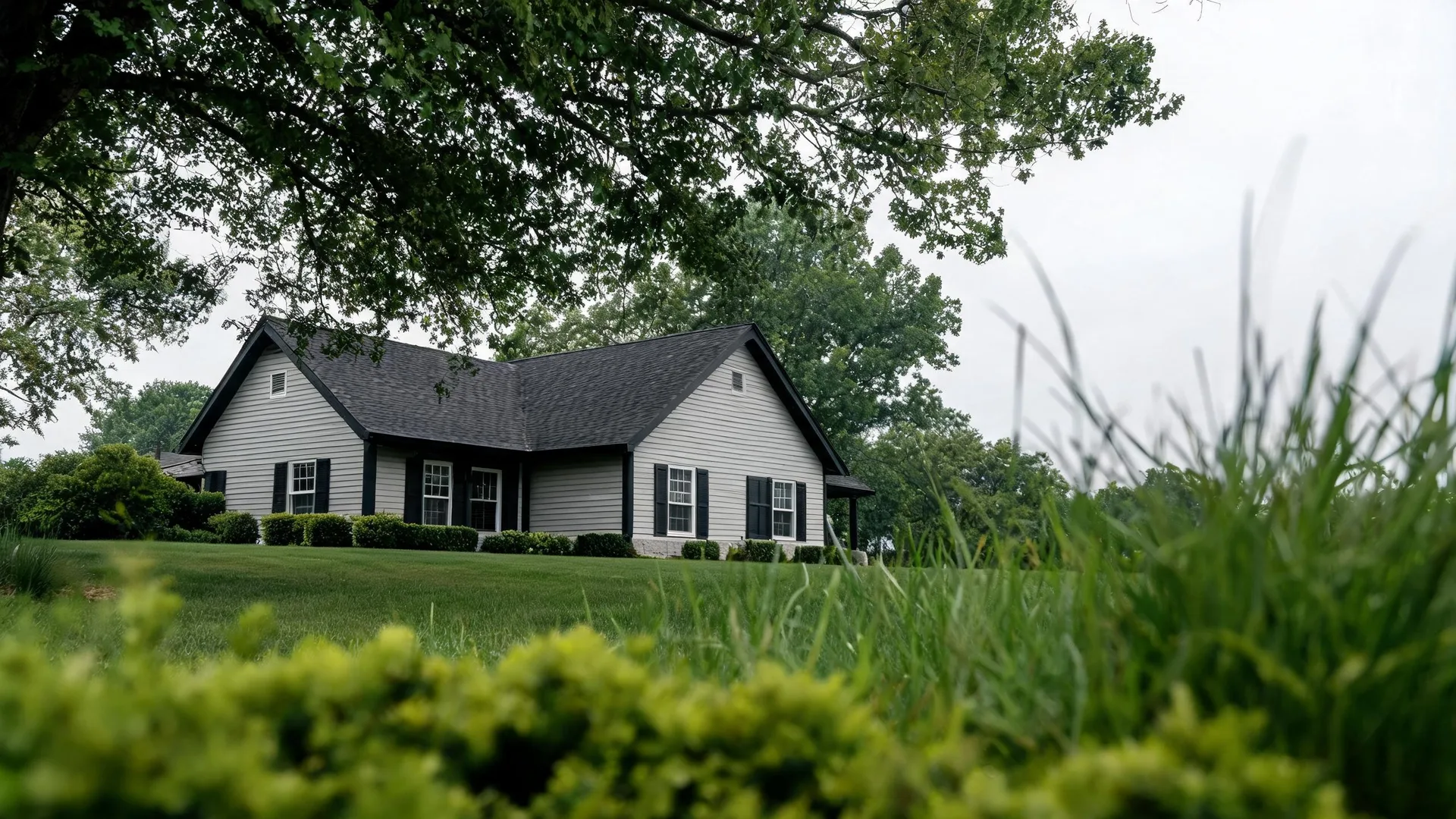





A single-story light gray house with dark shingled roof and black shutters sits on a mown lawn, framed by overhanging tree branches and blurred grass and shrubs in the foreground.

Heat Pump Repair in Centreville, MD

Tell us about the job

Takes about a minute. No obligation.

RepairHeat PumpQueen Anne's County, MD
Step 1 of 2

What ZIP code is the job in?

Half the homes in Queen Anne's County were built in 1990 or later. If yours is one of them, your heat pump is probably not that old either. A unit that still has years of normal life ahead of it is worth repairing. Replacement makes sense when a system is near the end, but that is not the usual case in a newer house. Whatever is going wrong with yours is more likely a single part than a system giving out.

7 months
October through April, your system heats
4 months
June through September, it cools
28°F
the average winter night it heats against
86°F
the average summer afternoon it cools against
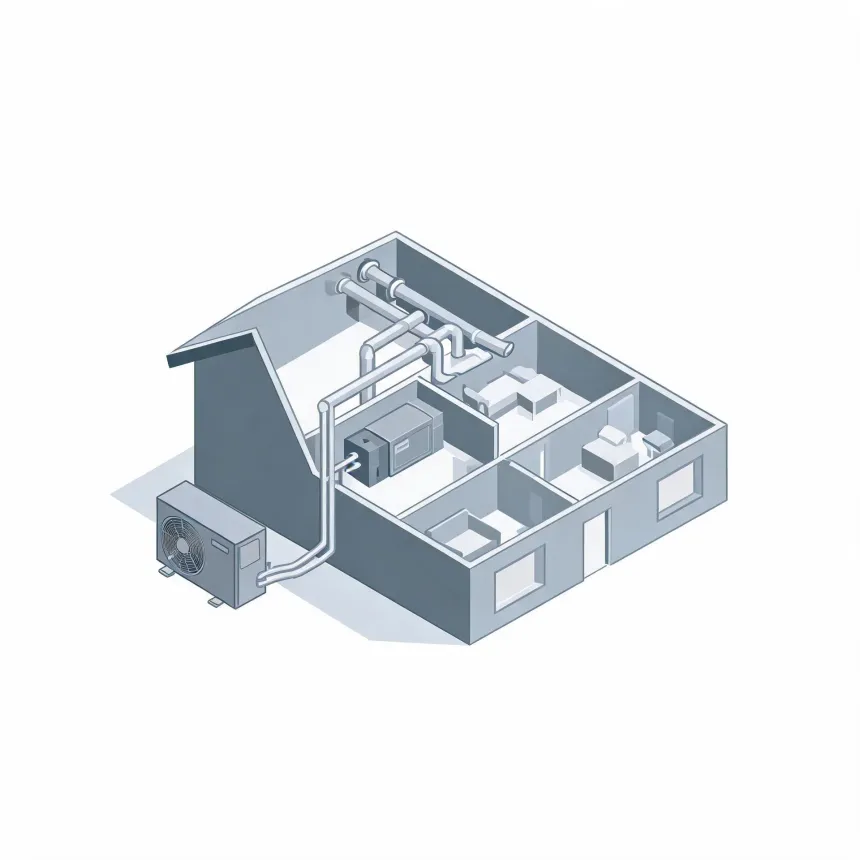
Isometric grayscale illustration of a cutaway house showing interior rooms, ducted air handler and duct runs, connected by pipes to an outdoor condenser unit beside the building.
Your system heats October through April and cools June through September.

NOAA nClimDiv, 1991–2020 normals

Centreville sees winter storms and damaging wind, but zone 4A doesn't run a heat pump into the ground.

A system that hasn't been pushed hard usually has a repair waiting at the end of the call, not a replacement.

A heat pump that's struggling still runs up a bill at 17.86 cents a kWh

Power costs 17.86 cents a kWh statewide
104 damaging wind events from 2015 to 2024
9 winter storms from 2015 to 2024
The first cold snap in September finds the weak partHeat pumps in Queen Anne's County start working through September, a month before heat season runs October through April

That 28°F average matters when a tech is out at your place. A heat pump in a colder climate runs harder, longer, every night of winter. Yours isn't doing that here. So when something fails, a contactor, a capacitor, a sensor, it usually fails on its own, not because the compressor behind it has been worn down for years. Ask the tech to name the part before any talk of replacing the system. In a climate this mild, the part is usually the whole story.

Fix the part, not the system

Get the part named and get it fixed. A newer system with one bad part is a repair call, not a decision about replacing the whole unit.

Find a contractor
A dark gray heat pump unit mounted on a concrete pad next to a house with gray siding and a stone veneer wall.

What a failing heat pump sounds and feels like before it quits

Most of the signs show up at the thermostat before anyone looks at the unit outside. Air coming out cold when it's set to heat, usually means the system has dropped into backup heat or isn't switching the reversing valve the way it should. Short cycling, where it kicks on and off every few minutes instead of running a steady stretch, points to a sensor or a control board that isn't reading the system right. Ice building up on the outdoor coil and staying there is another one. Some frost in cold weather is normal, a heat pump melts it off on its own, but a coil that stays caked over means the defrost cycle isn't doing its job. Listen for it too. A hum with no fan movement usually means a capacitor has given out. Grinding or squealing points to a motor bearing on its way out. None of these mean the system is done. They mean one part isn't doing its job, and the rest of the unit is waiting on it.

What you can check at the thermostat

Make sure it is set to heat, not cooling, and that the setpoint is actually above room temperature. If it runs on batteries, swap them before anything else. A thermostat that has lost power or lost its mind looks exactly like a failing heat pump.
What you can check outside

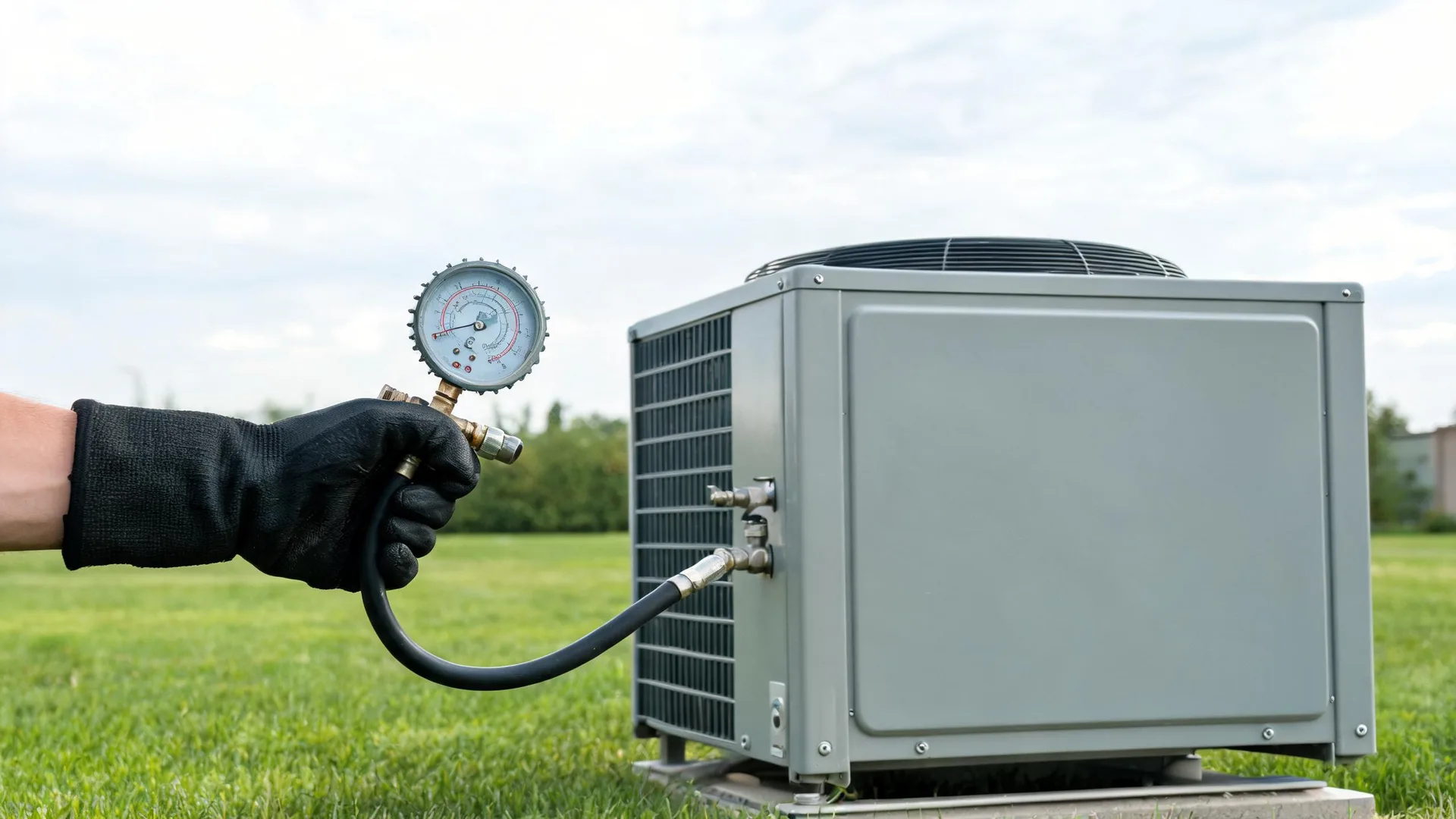
Walk out to the outdoor unit and clear away leaves, mulch, or anything piled against the cabinet. Blocked airflow around the coil can look like a real failure when it is not. Check the breaker for the unit too. Leave the ice and the cabinet alone. That part is for the tech.

A heat pump that's icing over or short cycling and gets left alone doesn't stay a small problem. Ice on the coil blocks airflow, so the system pulls harder to move the same heat, and that strain lands on the compressor. Short cycling does similar damage. Every start draws more from the compressor than running steady does, so a control board that keeps kicking the unit on and off every few minutes is wearing down the one part you least want to replace. A reversing valve stuck between modes forces the system to fight itself, heating and defrosting at once. None of these clear up on their own. The part that's failing keeps failing a little more each cycle, and it can take the compressor down with it if nobody steps in.

A diagnostic visit starts with the thermostat, confirming what the system is actually set to do and whether it's getting the call right. From there a tech checks airflow across the coils, since weak airflow is behind a lot of problems that look electrical at first. Refrigerant charge gets checked too, along with the pressures on both sides, since a heat pump running low on charge will short cycle or ice up the same way a bad sensor does. The reversing valve gets tested directly, because a valve stuck between heat and defrost can mimic several other failures. Electrical parts, the capacitor, the contactor, the control board, get checked under load rather than just looked at, since some test fine sitting still and fail the moment they're asked to do their job. The goal of the visit is to walk away with one part named, not a guess.