Two white colonial houses with lit windows and black shutters photographed at dusk along a tree-lined residential street.

Heat Pump Repair in Chesapeake Beach, MD

Tell us about the job

Takes about a minute. No obligation.

RepairHeat PumpCalvert County, MD
Step 1 of 2

What ZIP code is the job in?

Zone 4A means it works both ways

Calvert County sits in climate zone 4A, mixed and humid, which calls for real heating in winter and real cooling in summer. A heat pump here runs both directions through the year instead of sitting idle for long stretches.

Mild winters mean less strain

The overnight low through December, January and February averages 29°F. That's cold, but it's not the deep freeze that forces a heat pump into constant defrost cycles or long backup heat runs. A unit here isn't fighting the extremes that wear parts out early.

7 months
October through April, your system heats
4 months
June through September, it cools
29°F
the average winter night it heats against
85°F
the average summer afternoon it cools against
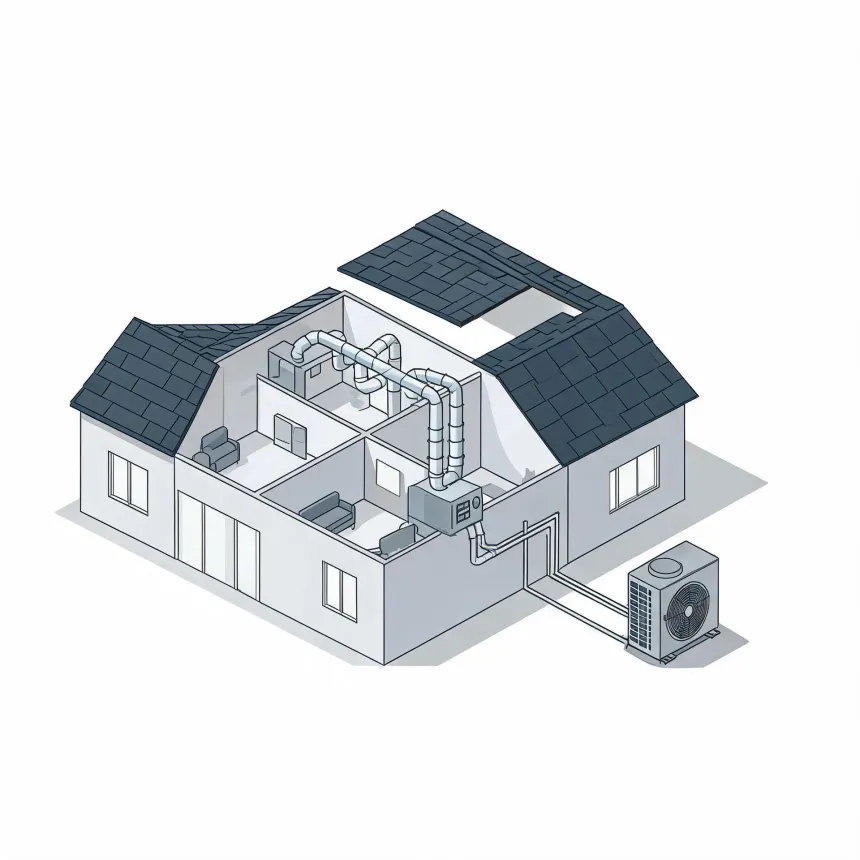
Isometric line illustration of a cutaway single-story house showing interior rooms, ceiling ductwork connected to an indoor air handler, and refrigerant lines running to an outdoor condenser unit on a pad.
Your system heats October through April and cools June through September.

NOAA nClimDiv, 1991–2020 normals

Half the homes in Calvert County were built in 1990 or later.

A heat pump installed with a newer house still has working life left in it, so repair is usually the right call here.

At 17.86 cents a kilowatt-hour, a heat pump running wrong keeps costing you until it's fixed

Power costs 17.86 cents a kWh statewide
120 damaging wind events from 2015 to 2024
14 hail events from 2015 to 2024

A heat pump that's short cycling, running constantly, or blowing air that's not quite warm enough is still pulling power the whole time it does it. At 17.86 cents a kilowatt-hour, that adds up faster here than in states paying less. A stuck reversing valve or a low charge makes the system work harder for less heat, and you pay for the extra work it's doing, not the comfort you're getting. Waiting on a repair doesn't pause the cost. It just means the unit keeps running wrong on your dime until someone gets out to look at it.

A heat pump that hasn't been fighting extreme weather is usually worth repairing

Your heat pump here isn't working against the kind of cold that wears a system down fast. If something's off with it now, that's more likely age or a part that needs attention than a system that's been run into the ground. Worth having someone look at it before you think about replacing it.

Find a contractor
A man in a cap, dark shirt and tan work pants walks up concrete steps toward a red front door, carrying a canvas tool bag with tools in its side pocket.
A dark gray heat pump unit mounted on a concrete pad next to a house with gray siding and a stone veneer wall.

Check the sticker before you call around

The install date is usually on a sticker inside the panel, or on the permit filed when the system went in. If that date is recent, running years are still ahead of this unit. A compressor or control board issue at that point is a repair, not a sign to start pricing a new system. Years running through both seasons add up, so knowing the actual date tells you more than a guess.

It's stuck in one mode

A heat pump that blows cold air when it should be heating, or won't switch over at all, usually has a reversing valve that's stuck or a solenoid that's failed. The system doesn't fix this on its own. It needs someone to get in there and either free up the valve or replace it.

It won't stop running

A heat pump that never shuts off, or that cycles on and off every few minutes, is telling you something specific. Short cycling often points to a thermostat sensing problem or a refrigerant charge that's off. Running nonstop without catching up points to a failing compressor or a coil that's iced over and not defrosting right. Either sign is worth a call regardless of what the weather's been doing outside.

Most heat pump failures trace back to a handful of parts doing the hardest work. The reversing valve switches the system between heating and cooling, and after years of shifting back and forth it can stick or wear out, leaving the unit stuck in one mode. The compressor is the heart of the system, and if it's starved of refrigerant from a slow leak, or flooded with liquid refrigerant because of a bad metering device, it wears down faster than it should. Outdoor coils ice over in normal operation, and a defrost board or sensor that fails stops the unit from clearing that ice, so it just keeps running without putting out real heat. Capacitors weaken over time and eventually can't give the compressor or fan motor the jolt it needs to start. Low refrigerant charge, whether from a slow leak or a bad installation, is behind a lot of service calls that start out looking like something else.

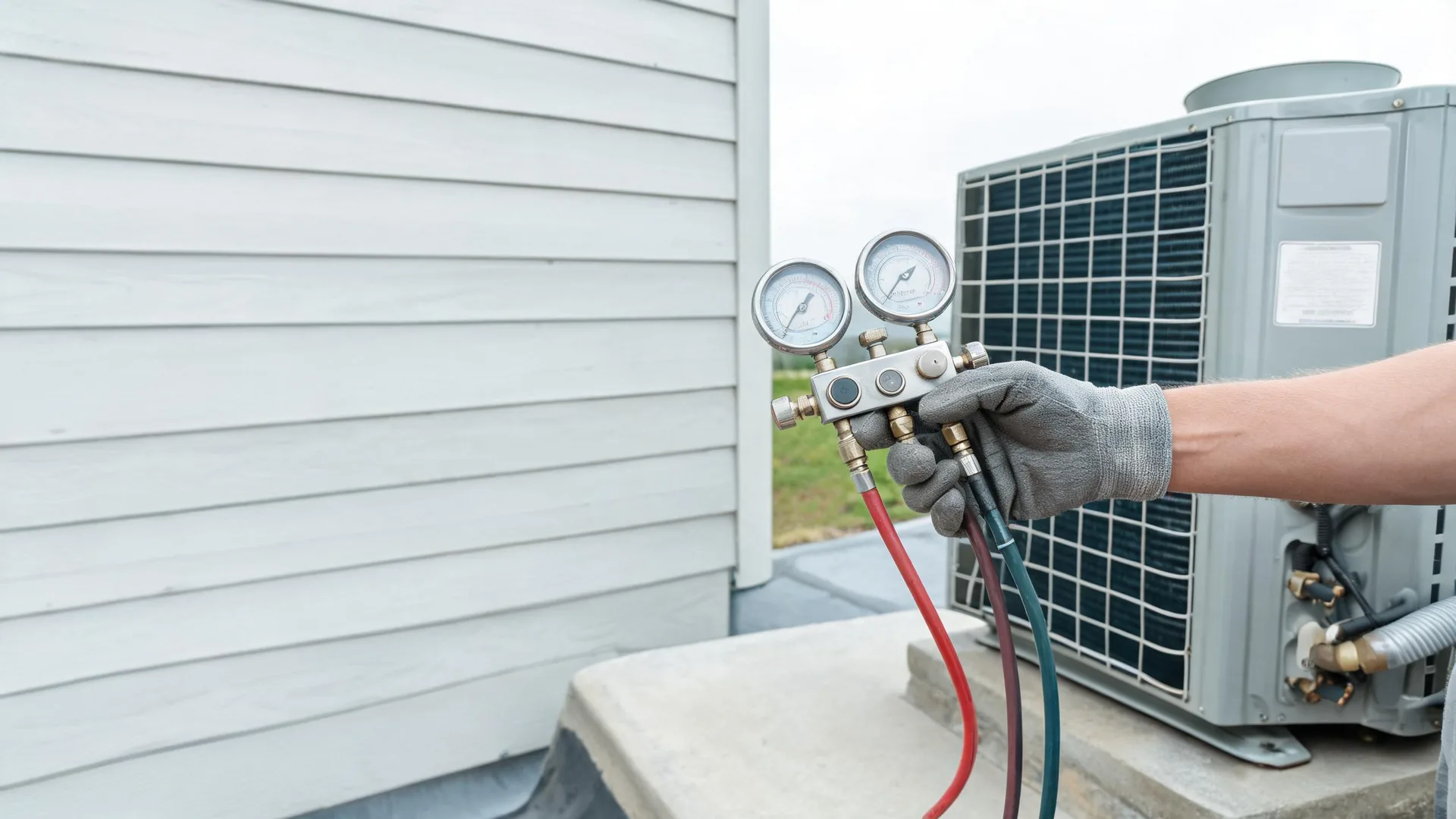
A diagnostic visit starts outside at the unit itself. A tech checks refrigerant pressure, looks at the reversing valve, and watches how the compressor and fan motor are drawing power. Inside, they'll check the air handler or furnace coil, look at static pressure in the ducts, and see what the thermostat is actually telling the system to do versus what it's doing. Electrical readings on the capacitor and contactor rule those out or confirm them fast. Most of this gets diagnosed with gauges and a multimeter rather than guesswork, because the readings either match a healthy system or they don't. Once the tech finds the part that's out of range, they'll walk you through what it means and what it takes to fix.