






Two white multi-story colonial houses with lit windows and black shutters photographed at night, fronted by a stone wall.

Heat Pump Repair in Cumberland, MD

Tell us about the job

Takes about a minute. No obligation.

RepairHeat PumpAllegany County, MD
Step 1 of 2

What ZIP code is the job in?

Cumberland sits in a cool climate where heating carries most of the load, and winter nights average 24°F. A heat pump here works hardest in the cold months, but it is not also fighting months of extreme heat and humidity the way units further south do. That makes for an easier year on the equipment overall. So when a heat pump here starts short cycling, blows cold air, or trips its breaker, the cause is usually wear on a specific part or something that was never set up right, not a system worn down from strain. That is worth knowing before you decide whether a repair makes sense.

8 months
October through May, your system heats
3 months
June through August, it cools
24°F
the average winter night it heats against
84°F
the average summer afternoon it cools against
Isometric line illustration of a cutaway single-story house showing interior rooms, ceiling ductwork, an indoor air handler unit, and an outdoor condenser connected by a line set.
Your system heats October through May and cools June through August.

NOAA nClimDiv, 1991–2020 normals

Heat here runs from October through May, about eight months a year.

September is when a part that was already weak gets tested by the first real cold, so that is when it tends to fail.

Half the homes here were built by 1959, old enough that the heat pump itself is rarely original

Half the homes here were built by 1959
106 damaging wind events from 2015 to 2024
7 hail events from 2015 to 2024
A struggling heat pump costs more to run hereMaryland households paid 17.86 cents per kilowatthour in 2024

A heat pump that has had an easier year than most is usually worth repairing rather than replacing, especially if the problem traces back to one part. A failed defrost control, a stuck reversing valve, or a worn contactor does not mean the whole system is on its way out. Before writing it off, it is worth asking a contractor to confirm the actual cause rather than guessing from the symptom alone. Short cycling and cold air blowing from the vents point to several different problems, some of them a quick fix. Get the real diagnosis first, then decide.

Ask how much life is left before you pay for a big repair

If your heat pump came with the house, find out its age before deciding what to fix. A contractor can check the nameplate and tell you where it stands. That number, not the symptom, is what should drive the repair decision.

Find a contractor
A gray air-source heat pump mounted on a concrete pad next to a house with gray vinyl siding, surrounded by gravel and flanked by green shrubs and white hydrangea flowers.

What a diagnostic visit actually checks

A tech starts outside at the unit itself, checking the reversing valve, the contactor, and the defrost board before touching anything inside. Readings come next. Refrigerant pressure, temperature split across the coil, amp draw on the compressor. Each one rules something in or out. Low pressure points toward a leak or a bad metering device. Weak amp draw on the compressor points toward a failing start component. The air handler gets checked too, since a clogged filter or a slow blower can mimic a refrigerant problem and send someone chasing the wrong fix. Most of this is done with the system running, watching how it behaves under load rather than guessing from a single reading at rest. By the end, the cause should be named, not just the symptom.

Noises mean something specific

A heat pump humming but not starting points to a failed capacitor or a seized compressor. A loud bang at startup or shutdown often means a reversing valve slamming into position. Rattling from the outdoor unit can be a loose fan blade or a failing motor bearing. Each sound narrows down the cause before a tech even opens the panel.
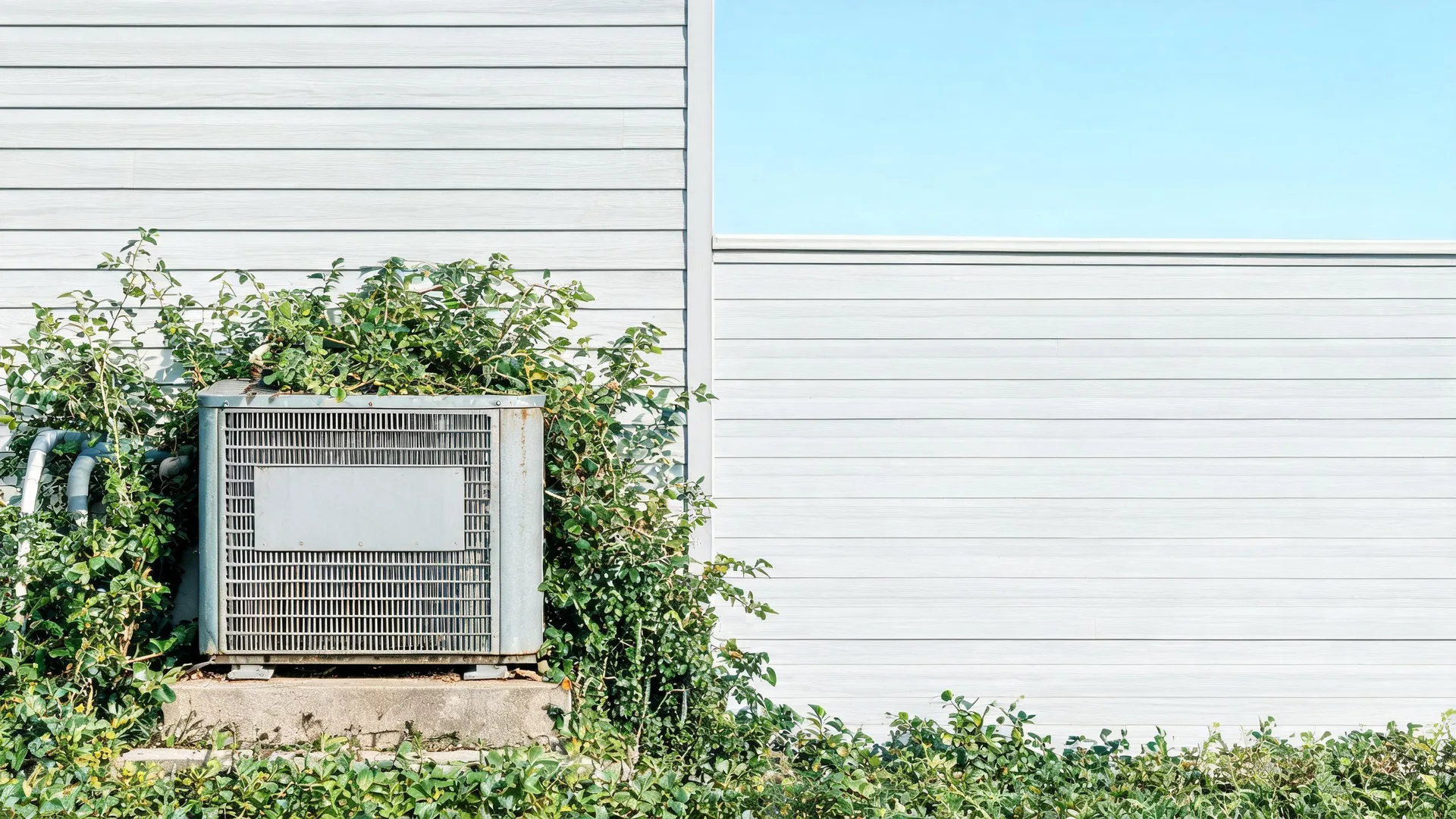
Warm air in winter is not always a failure

A heat pump blowing air that feels cool to the touch during a heating cycle can still be working. It moves heat rather than burning fuel, so the air coming out is warmer than the room but cooler than a furnace would deliver. The sign of real trouble is air that is cold, not just mild, or a unit stuck in defrost and never switching back to heat.

A heat pump that trips a breaker or blows cold air is still asking for attention, not demanding it. Let it keep cycling on the same fault and that changes. A refrigerant leak gets worse each time the compressor pulls down low pressure, since the compressor relies on refrigerant for lubrication as much as cooling. A stuck reversing valve forces the system to fight itself, heating and cooling at once, and that strain lands on the compressor. Ice that never clears during a failed defrost cycle will keep building until the outdoor coil is blocked solid and airflow stops. A failing capacitor makes the compressor draw more amperage to start each time, and heat from that extra draw breaks it down further. None of these fix themselves by running. The part that is struggling now is the part that fails outright later, usually at the worst possible time.

The part that failed tells you most of what you need to know, and the system's age fills in the rest. A blown capacitor or a bad contactor is a contained job, swapped out on its own without the rest of the system caring, whether the unit is new or old. A compressor failure is different, because the compressor is not practical to replace on its own in most cases, and that is where age earns its place in the decision. An older compressor failing on an older system is a harder case for repair. The same failure on a system with most of its life left is a clearer call. Ask a contractor to name the failed part, then weigh it against what the nameplate says about age. Neither answer alone tells you enough.