






A grey residential air-conditioning condenser unit mounted on a concrete pad beside a house, photographed at sunset.

Heat Pump Repair in Denton, MD

Tell us about the job

Takes about a minute. No obligation.

RepairHeat PumpCaroline County, MD
Step 1 of 2

What ZIP code is the job in?

Denton sits in a mixed climate, zone 4A, which means your heat pump works both sides of the year instead of getting hammered by one extreme. Winter nights average 28°F here, cold enough to run the system hard but nowhere near the teens or single digits that wear out a compressor fast. That's a real but moderate load, not constant strain. So when a heat pump here starts acting up, the cause is more often a part that's reached the end of its life, or something that got missed on a service call, than a system that's been pushed past what it can handle. That makes repair worth a real look before anyone talks replacement.

7 months
October through April, your system heats
4 months
June through September, it cools
28°F
the average winter night it heats against
86°F
the average summer afternoon it cools against
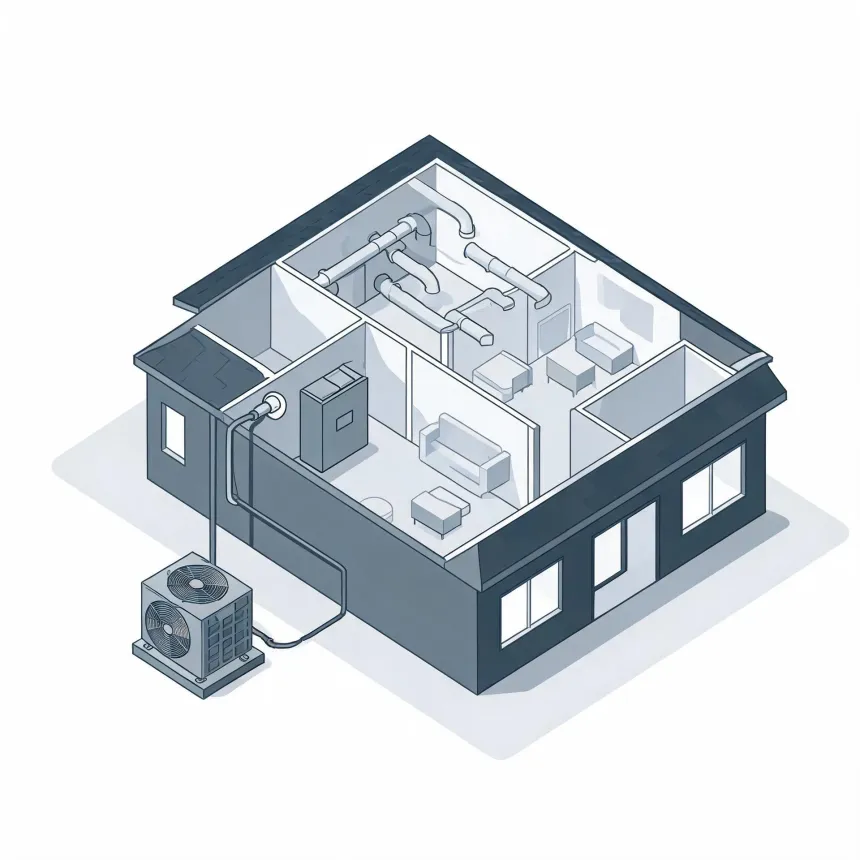
Isometric line illustration of a cutaway single-story house showing interior rooms, ceiling ductwork and an indoor air handler, connected by a line to an outdoor condenser unit on a pad beside the building.
Your system heats October through April and cools June through September.

NOAA nClimDiv, 1991–2020 normals

Half the houses in Caroline County were built in 1981 or later.

A heat pump that came with a newer house still has years of work left in it, and a broken part is worth fixing.

A heat pump that struggles in October or May is telling you something failed, not that it's worn out

Cooling runs June through September
Heat runs October through April
75 damaging wind events from 2015 to 2024
Electricity here runs 17.86 cents a kilowatt-hourA heat pump running on a bad part burns that rate every hour it limps along.

If your heat pump came with the house, check the year it was built against the year the system was installed. A newer unit has a straightforward fix behind most breakdowns. A failed capacitor, a bad contactor, a low charge from a slow leak. None of that points to a system on its way out. Ask the contractor whether the part that failed is a known weak point or a one-off. That tells you more about what to expect next than the age of the equipment does.

Get the failed part looked at, not the whole system

Get the part diagnosed before anyone brings up replacement. A heat pump working moderate loads in a 4A climate usually has a straightforward reason for breaking down, and most of those reasons are worth fixing.

Find a contractor
A man in a cap, dark T-shirt and tan work pants walks up porch steps toward an orange front door, carrying a canvas tool bag filled with hand tools, with a potted shrub in a terracotta planter at left.
A white mini-split heat pump outdoor unit mounted on a concrete pad beside a gray-sided house, surrounded by gravel and green shrubs.

What to check before you call

Before anyone comes out, look at the outdoor unit first. If the fan isn't spinning, or ice has built up on the coil, that's worth telling the contractor when you call. Go inside and check the thermostat setting against what's actually happening, and swap or check the air filter if you haven't in a while. A clogged filter chokes airflow and can make a heat pump run constantly without keeping up. Check your breaker panel too. A tripped breaker sometimes means a simple reset, though if it trips again, that's a sign to leave it off and wait for someone to look at it. Walk around the outdoor unit and clear away any leaves, grass clippings or ice so air can move through the coil. None of this tells you what's actually broken inside, but it rules out the easy explanations before a technician has to.

The reversing valve is the part unique to a heat pump

A heat pump has one part a straight air conditioner doesn't. The reversing valve switches it between heating and cooling. When that valve sticks, the system keeps running but stays stuck in one mode, blowing cold air when it should be heating or the other way around. It's a common point of failure because nothing else in the system does that job, and there's no backup for it.
Most other failures are wear, not design

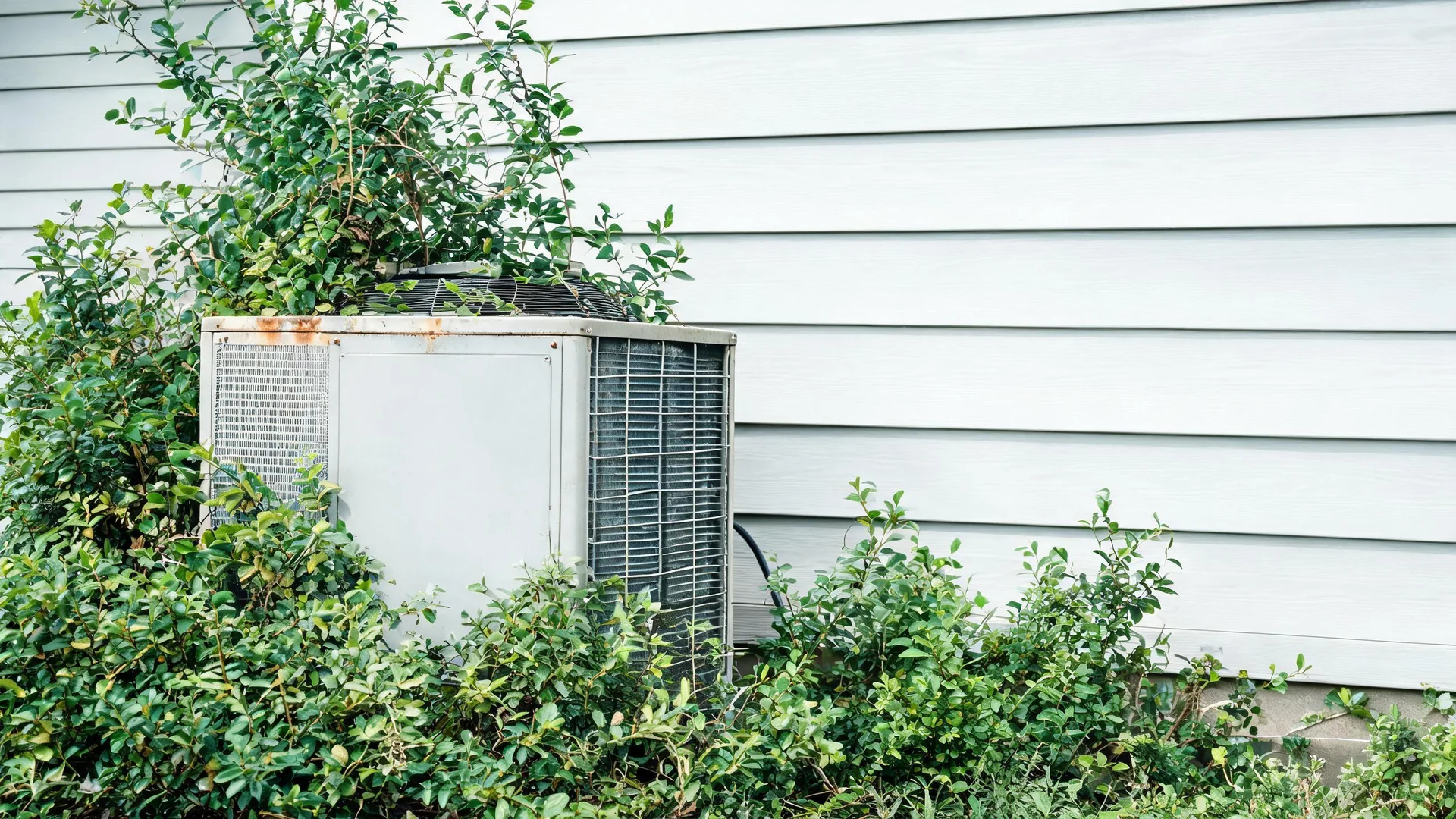
Outside of the reversing valve, a heat pump fails the way any compressor-driven system does. A capacitor weakens and can't start the motor. A contactor pits and stops closing clean. The refrigerant charge drops slowly through a small leak. These parts wear out on a schedule that has nothing to do with how hard the system is working this week, so a breakdown often lands on a mild day for no reason connected to the weather at all.

A heat pump that's icing up or short cycling will keep trying to do its job until something bigger gives out. Ice on the coil blocks airflow, so the system pulls harder to move the same amount of air, and that strain lands on the compressor. A refrigerant leak works the same way. A system low on charge runs longer to hit the same temperature, and a compressor built to run at the right pressure wears fast when it's not getting it. Even a dirty filter can end there, since restricted airflow makes the whole system work against itself every hour it's on. Shutting the system off when something looks wrong doesn't fix it, but it keeps a small failure from spreading into the compressor.

A diagnostic visit starts outside, at the unit itself. A technician hooks up gauges to check the refrigerant pressure on both the high and low side, because that reading tells him right away whether the charge is low, and a low charge almost always means a leak somewhere in the line. He'll check the capacitor and contactor next, since those parts fail often and mimic bigger problems when they go bad. Then he runs the system in both heating and cooling to see whether the reversing valve actually switches when it's told to. He'll pull the cover off the air handler and look at the coil and the blower wheel, since a coil caked in dust or a wheel clogged with debris chokes airflow the same way a dirty filter does. None of this takes guesswork once he's standing there with gauges on the lines. The pressures either match what the system should be running at, or they don't.