




A large outdoor air-conditioning unit mounted beside a vinyl-sided house, surrounded by mulched garden beds and green shrubs.

Heat Pump Repair in Elkton, MD

Tell us about the job

Takes about a minute. No obligation.

RepairHeat PumpCecil County, MD
Step 1 of 2

What ZIP code is the job in?

Zone 4A means Elkton asks for real heating and real cooling, but it is not extreme either way. Your heat pump isn't fighting single-digit nights for weeks on end or straining through months of heavy humidity. Winter lows here average 27°F, cold enough to lean on the system but not the kind of deep freeze that wears out a compressor fast. That's a moderate load over its life, year after year. So when something goes wrong, age or a specific worn part is usually the reason, not a machine that's been pushed too hard for too long. That's worth knowing before you decide whether a repair makes sense.

7 months
October through April, your system heats
4 months
June through September, it cools
27°F
the average winter night it heats against
85°F
the average summer afternoon it cools against
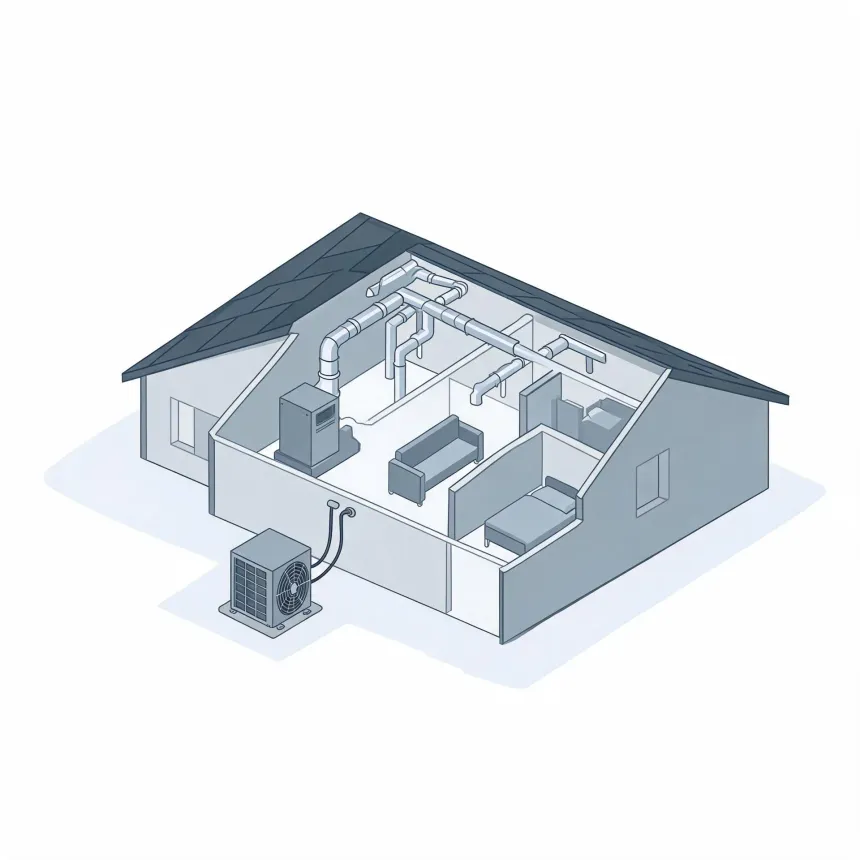
Isometric cutaway illustration of a single-story house showing interior rooms with furniture, an attic duct network connected to a furnace or air handler, and an outdoor condenser unit linked by lines outside the wall.
Your system heats October through April and cools June through September.

NOAA nClimDiv, 1991–2020 normals

Half the homes in Cecil County were built in 1987 or later.

A heat pump that came with a newer house still has years in it, and that favors repair over replacement.

October and June are when a weak heat pump gets found out

Cooling runs June through September
Heat runs October through April
175 damaging wind events from 2015 to 2024

A moderate load means repair is usually the right call

A heat pump that hasn't been overworked year after year is usually a good candidate for repair when something breaks. Get the problem looked at and fixed rather than written off.

Find a contractor
A white mini-split heat pump outdoor unit mounted on a concrete pad beside a gray-sided house, surrounded by gravel and green shrubs.

A newer system has time on its side

If your heat pump came with the house and the house is from the last couple decades, check the install date on the unit before you assume the worst. A compressor or board issue on a system that young is usually a repair, not a replacement. Years of running get stacked up slowly, day into night, season into season, and a newer system just hasn't put in enough of them yet to be worn out.

A heat pump that won't heat isn't always low on refrigerant

A heat pump stuck blowing room-temperature air often gets blamed on refrigerant, but a stuck reversing valve or a failed capacitor can cause the same complaint. The outdoor unit running constantly without warming the house points at the valve or the compressor itself, not necessarily a leak.
Short cycling wears out the parts that start the system

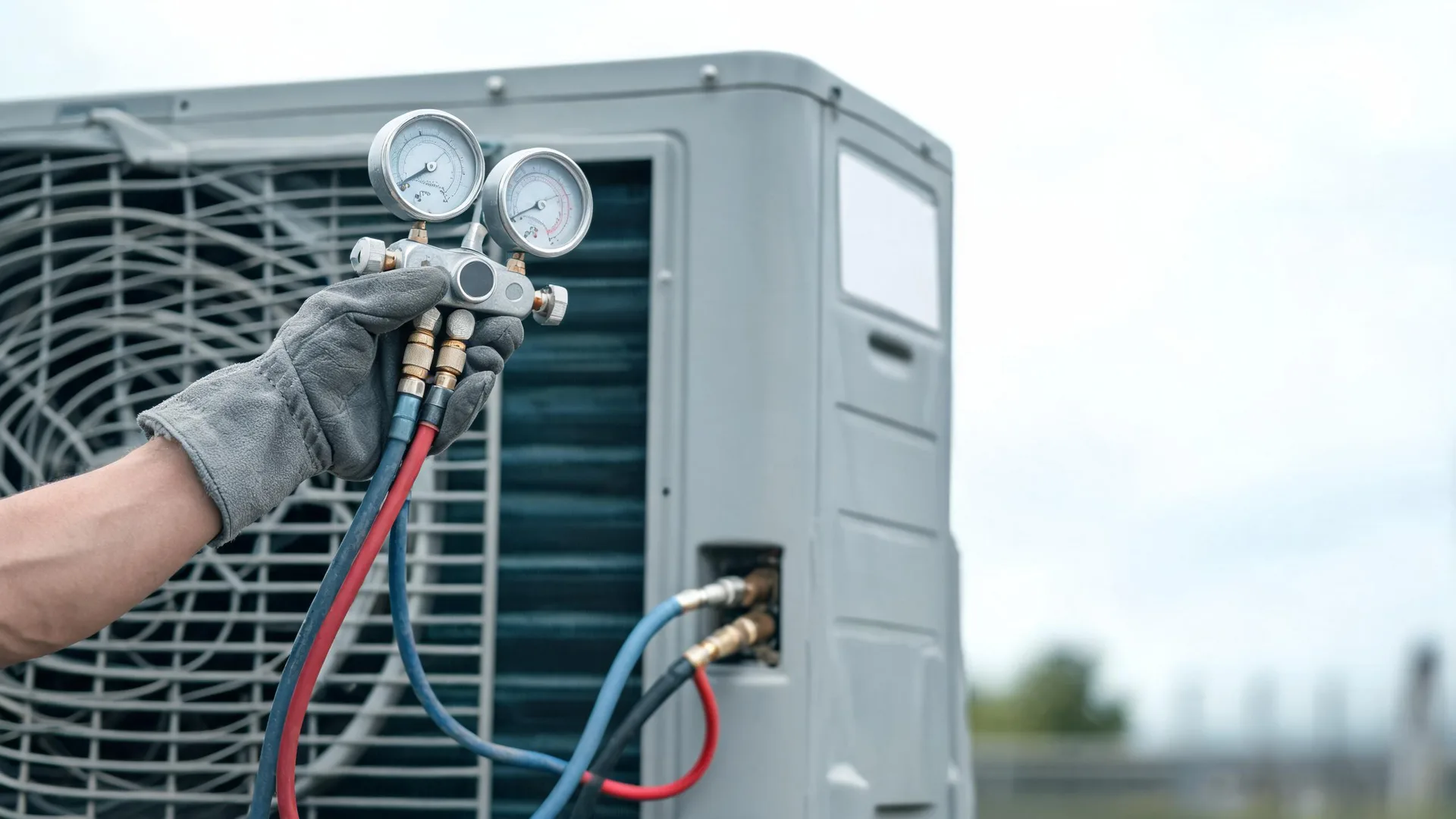
A heat pump that kicks on, runs a couple minutes, then shuts off and starts again is short cycling, and it's hard on the capacitor and contactor every time it happens. A dirty outdoor coil, a failing thermostat sensor, or a refrigerant charge that's off can all cause it, and the parts taking the daily hit are the ones that get the system started.

A heat pump that's struggling still runs, which is what makes it easy to put off. A reversing valve that's starting to stick will often keep switching, just slower, or only some of the time, and the system compensates by running longer to make up the difference. That extra runtime puts more hours on a compressor that's already working around a bad valve. Ice on the outdoor coil behaves the same way. If the defrost cycle isn't clearing it fully, a little ice turns into a lot of ice, and a coil that's mostly blocked makes the compressor pull harder to move heat through it. Left alone, a problem that started in one part starts loading the part next to it.

A repair is worth doing when the failure is in one part and the rest of the system is sound. A reversing valve, a defrost control board, a capacitor, these fail on their own schedule and swapping one out brings the whole unit back to normal. Replacement starts making more sense when failures stack up, one part fixed this year and another next year, because that pattern usually means the system as a whole is wearing out rather than one component having bad luck. The compressor is the exception worth knowing about. It's the most expensive part to replace and the one hardest to justify swapping on its own, so a compressor failure is the point where a lot of homeowners start asking about a new unit instead of a repaired old one. Short of that, most heat pump problems are a single part doing the complaining, not the whole machine.