





A single-story light gray house with dark shingled roof and black shutters, viewed from a low angle across a green lawn with blurred shrubs in the foreground and trees under an overcast sky.

Heat Pump Repair in Hagerstown, MD

Tell us about the job

Takes about a minute. No obligation.

RepairHeat PumpWashington County, MD
Step 1 of 2

What ZIP code is the job in?

Heat pumps in Washington County switch over to heat in October and run through April. The first cold snap in September or early October is when a weak part finally gets tested. A capacitor or contactor that was barely getting by in the cooling months often gives out once the system has to work harder for heat. Problems that show up in week one of the season usually aren't new. They were there all along, waiting for the load that would expose them.

7 months
October through April, your system heats
3 months
June through August, it cools
25°F
the average winter night it heats against
85°F
the average summer afternoon it cools against
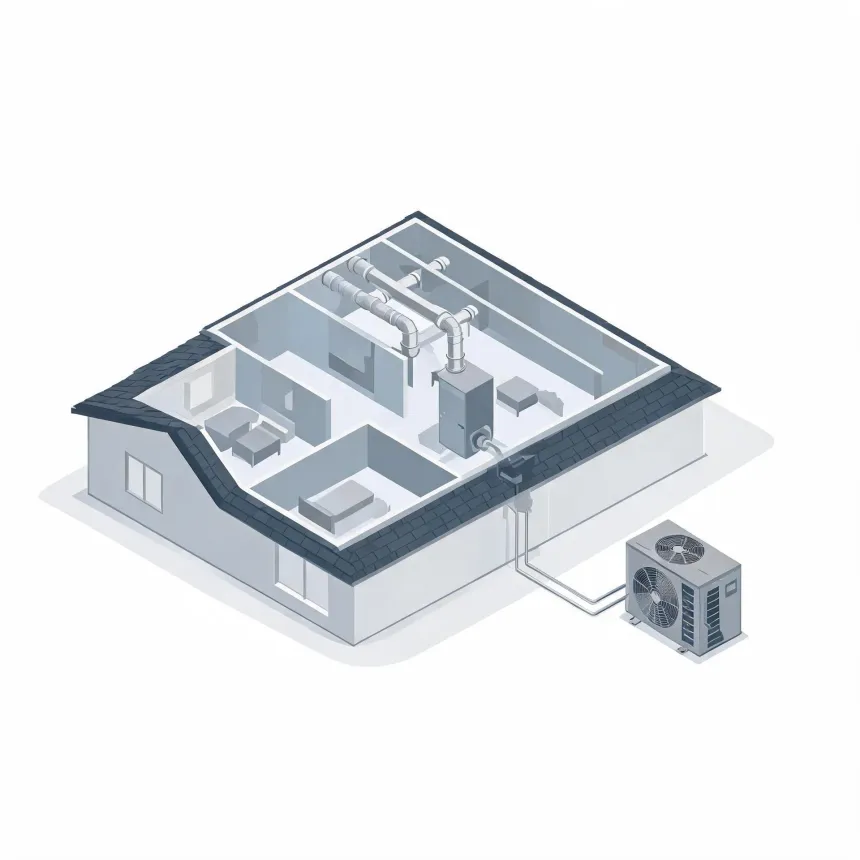
Isometric cutaway illustration of a single-story house showing interior rooms with ductwork, a furnace or air handler, and refrigerant lines running outside to a condenser unit on a pad.
Your system heats October through April and cools June through August.

NOAA nClimDiv, 1991–2020 normals

Warm air blowing from the vents when the thermostat is set to heat means the system is stuck in the wrong cycle.

A reversing valve that won't switch is a repair, not something to wait out.

A heat pump that's struggling costs more here every month it runs that way

Power costs 17.86 cents a kWh statewide
148 damaging wind events from 2015 to 2024
31 hail events from 2015 to 2024

Half the homes in Washington County were built in 1974 or earlier, and half in 1974 or later. That split doesn't point to one likely cause here. A heat pump in an older house can run fine on its original ductwork. One in a house built last year can still throw a bad capacitor in its first winter. The age of the house tells a contractor very little about why a heat pump is struggling. What matters is what the unit is actually doing. Short cycling, warm air, not hitting temperature. That's where the diagnosis starts.

Most heat pump problems here have an ordinary cause

Washington County has seen its share of wind and hail over the years, but that's spread across the whole county, not one house. None of it adds up to unusual strain on a heat pump. When one starts short cycling or blowing warm air, the cause is almost always a part wearing out on schedule, not the weather. A contractor can diagnose that and fix it.

Find a contractor
A man in a dark sweatshirt and tan work pants, seen from behind, climbs porch steps toward a red-orange door while carrying a worn canvas duffel bag.
A gray heat pump outdoor unit mounted on a concrete pad next to a residential house with lap siding and stone accents.

Running on a bad part doesn't rest it. It wears it out faster.

A heat pump that's struggling still has to run. The thermostat calls, and the system answers, even when it isn't fixing the problem. A weak capacitor won't stop the compressor from trying to start. It just makes it try harder, drawing more amperage each time, until the overload cutout trips or the start winding fails for good. A low refrigerant charge works the same way. The system can't move enough heat, so it runs longer chasing a setpoint it won't reach, and a compressor that runs longer than it was built to runs hotter than it was built to. Short cycling does its own kind of damage. Every stop and start loads the contacts and the start components, and a unit cycling on and off wears those parts down far faster than one running a normal cycle and shutting off clean. None of this fixes itself by waiting. The part that's failing keeps failing a little more each time the system runs, until the breakdown that was building for weeks shows up all at once, usually on the coldest night of the stretch.

What you can check safely

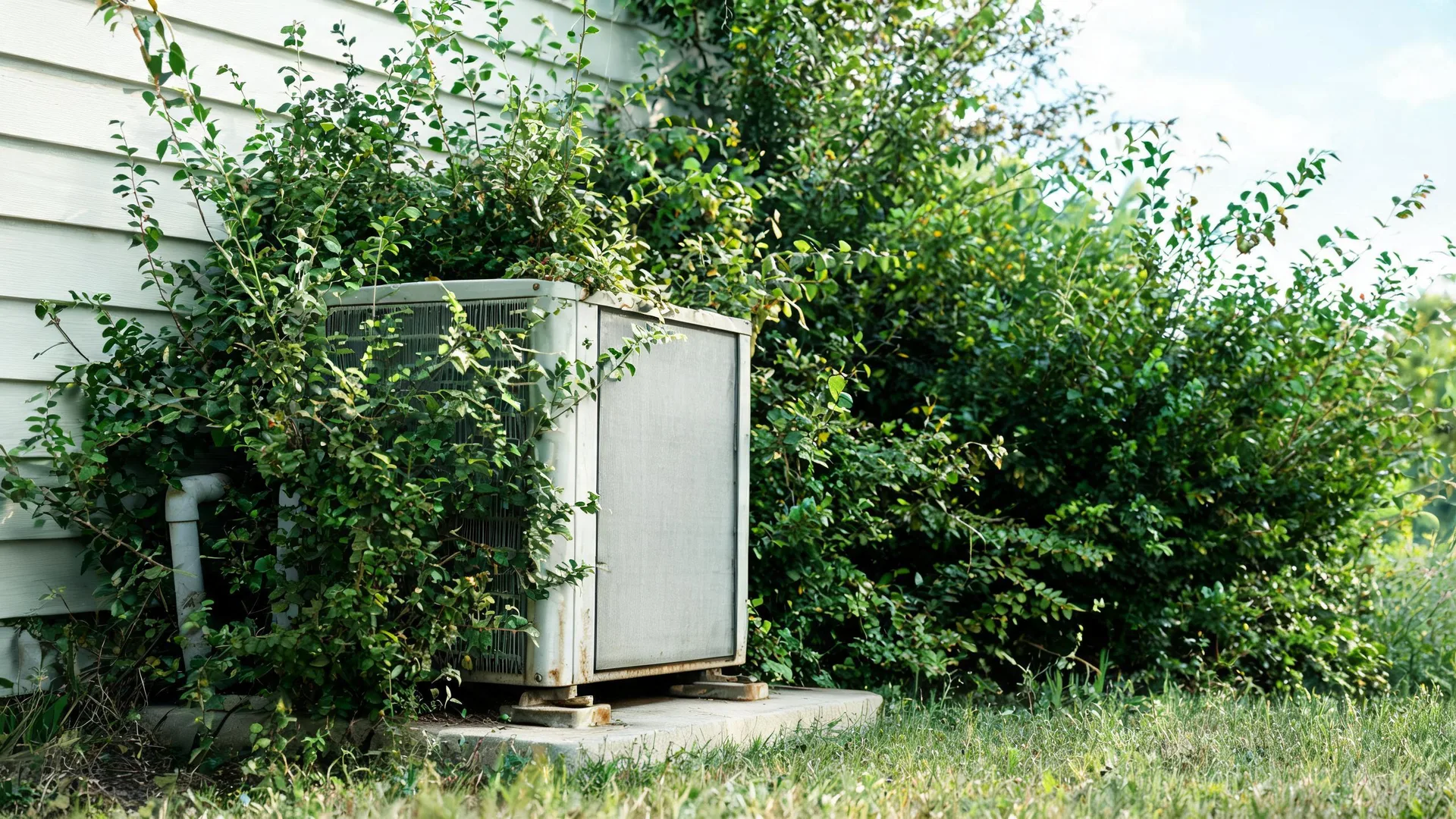
Look at the outdoor unit and clear away leaves, grass clippings or ice so air can move through the coil. Check that the air filter inside isn't clogged, since restricted airflow can make a heat pump struggle the same way a bad part does. Make sure the thermostat is set to heat and the setpoint is actually above room temperature. Walk around the house and check that supply vents are open and not blocked by furniture or rugs.
What to leave alone

Don't open the outdoor unit's cabinet or touch anything inside it. Refrigerant lines, electrical connections and the compressor itself need a gauge set and training to work on safely. If the outdoor coil is coated in ice beyond a light frost, don't chip at it. That's a sign of a problem with the defrost cycle or airflow, and it calls for a contractor, not a scraper.

Most heat pump failures trace back to a handful of parts that do the most work. The capacitor gives the compressor and fan motors the jolt they need to start, and it weakens with age until one day it can't deliver it. The contactor is the switch that sends power to the outdoor unit every time the thermostat calls, and after enough cycles its contacts pit and burn until they stop making a clean connection. The reversing valve is what switches the system between heat and cooling, and when its coil fails or the valve sticks, the unit keeps running but stops doing what the thermostat told it to do. Refrigerant doesn't get used up, so a low charge almost always means a leak somewhere in the lines or coil, slow enough that it takes a while to show itself. The defrost control board and its sensor decide when to melt the frost off the outdoor coil, and when they fail, ice builds up until the coil can't pull in enough air to work. Each of these parts fails on its own schedule, not because of one bad night of cold.

A diagnostic visit starts outside, not at the thermostat. A contractor looks at the outdoor unit first. The coil, the fan, the frost pattern, all before touching anything electrical. Gauges go on the lines to read the refrigerant charge and pressures, since that tells a different story than the symptoms alone do. The capacitor gets checked under load, not just by looks. A capacitor can look fine and still be too weak to start the compressor. The contactor's contacts get inspected for pitting. The reversing valve gets switched between heat and cooling to see if it actually responds. Each test rules something in or out. The part that fails the test is the part that gets replaced.