White colonial houses with lit windows photographed at dusk along a tree-lined residential street.

Heat Pump Repair in Leonardtown, MD

Tell us about the job

Takes about a minute. No obligation.

RepairHeat PumpSt. Mary's County, MD
Step 1 of 2

What ZIP code is the job in?

Zone 4A asks for real heating and real cooling

St. Mary's County sits in mixed climate zone 4A, which means winter and summer both put demands on a heat pump instead of just one or the other. Overnight lows here average 29°F through December, January and February. That's cold enough for a heat pump to work, but not the brutal, sustained cold that wears down a compressor season after season.


A unit in decent shape is usually worth fixing

A heat pump that hasn't been run ragged by extreme load is more likely to have years left in it when something goes wrong. If yours is acting up, the cause is more often a part that failed from age, a thermostat issue, or something that got missed in maintenance, not a system that's been pushed past what it can take.

7 months
October through April, your system heats
4 months
June through September, it cools
29°F
the average winter night it heats against
86°F
the average summer afternoon it cools against
Isometric cutaway illustration of a single-story house showing interior rooms with ductwork, an indoor air handler unit, and an outdoor condenser unit connected by lines along the exterior wall.
Your system heats October through April and cools June through September.

NOAA nClimDiv, 1991–2020 normals

Half the homes in St. Mary's County were built in 1992 or later.

A heat pump installed with a newer house usually hasn't used up what it's got, so fixing it is the first thing to look at.

Electricity here runs 17.86 cents a kWh, so a heat pump limping along is burning money every day you wait

Power costs 17.86 cents a kWh statewide
146 damaging wind events from 2015 to 2024
25 hail events from 2015 to 2024
Heat pump trouble shows up fast once the weather turnsCooling starts in June and heat starts in October here, and the first weeks of each are when a weak part gives out.

A heat pump that's short cycling, iced up, or running its backup heat strip more than it should is pulling extra power every single day you leave it alone. At 17.86 cents a kWh, that difference shows up on the bill before it shows up as a breakdown. Get a contractor to look at it now, while it's still a repair. Waiting usually doesn't save you anything, it just adds a few more weeks of paying extra for a system that isn't working right.

If the house is newer, the fix is probably worth it

Get a repair looked at before you think about replacing. A system that went in when the house was built still has working life in it, and most of the houses here are newer than people assume.

Find a contractor
A gray heat pump outdoor unit mounted on a concrete pad next to the stone-accented exterior wall of a house.

It's logged the hours, not the abuse

Year-round running time is what wears a heat pump down, more than any one cold snap. A compressor that cycles on through a mild winter and a normal summer logs its hours without ever getting pushed to its limit. That's the case here. So when one starts acting up after running this way for years, it's rarely the system giving out from strain. More often it's a capacitor, a contactor, or a sensor that reached the end of its life on its own schedule. Worth having someone check before you assume the whole unit is done.

Outdoor and indoor parts fail for different reasons

The outdoor unit takes the weather directly, so its fan motor, capacitor and contactor wear from heat, cold and moisture over years of cycling. The indoor coil and blower stay more sheltered, so when something fails in there it's more often a sensor, a clogged drain, or airflow choked off by a dirty filter.

The reversing valve is the part unique to a heat pump

A straight air conditioner never has to switch direction. A heat pump does it every time it moves between heating and cooling, and that valve can stick from corrosion or a failed solenoid. When it sticks, the system can get locked into one mode or blow air that doesn't match what the thermostat is asking for.

Before you call anyone, go outside and look at the unit. If the outdoor coil has ice on it, flip the system off so it can thaw instead of running itself harder. Check the thermostat batteries and make sure it's actually set to heat or cool, not sitting in some in-between mode. Go to the air handler and pull the filter. If it's gray and clogged, swap it, that alone causes a lot of calls that aren't really heat pump failures. Look at the outdoor unit itself and clear away any leaves, mulch or snow stacked against it, it needs open air on all sides to move heat. If the system is blowing air that feels cool when it should be heating, that can be normal for a heat pump and not a sign anything's wrong. If you check all that and it's still icing up, short cycling, or not keeping up, stop troubleshooting and get a contractor out.

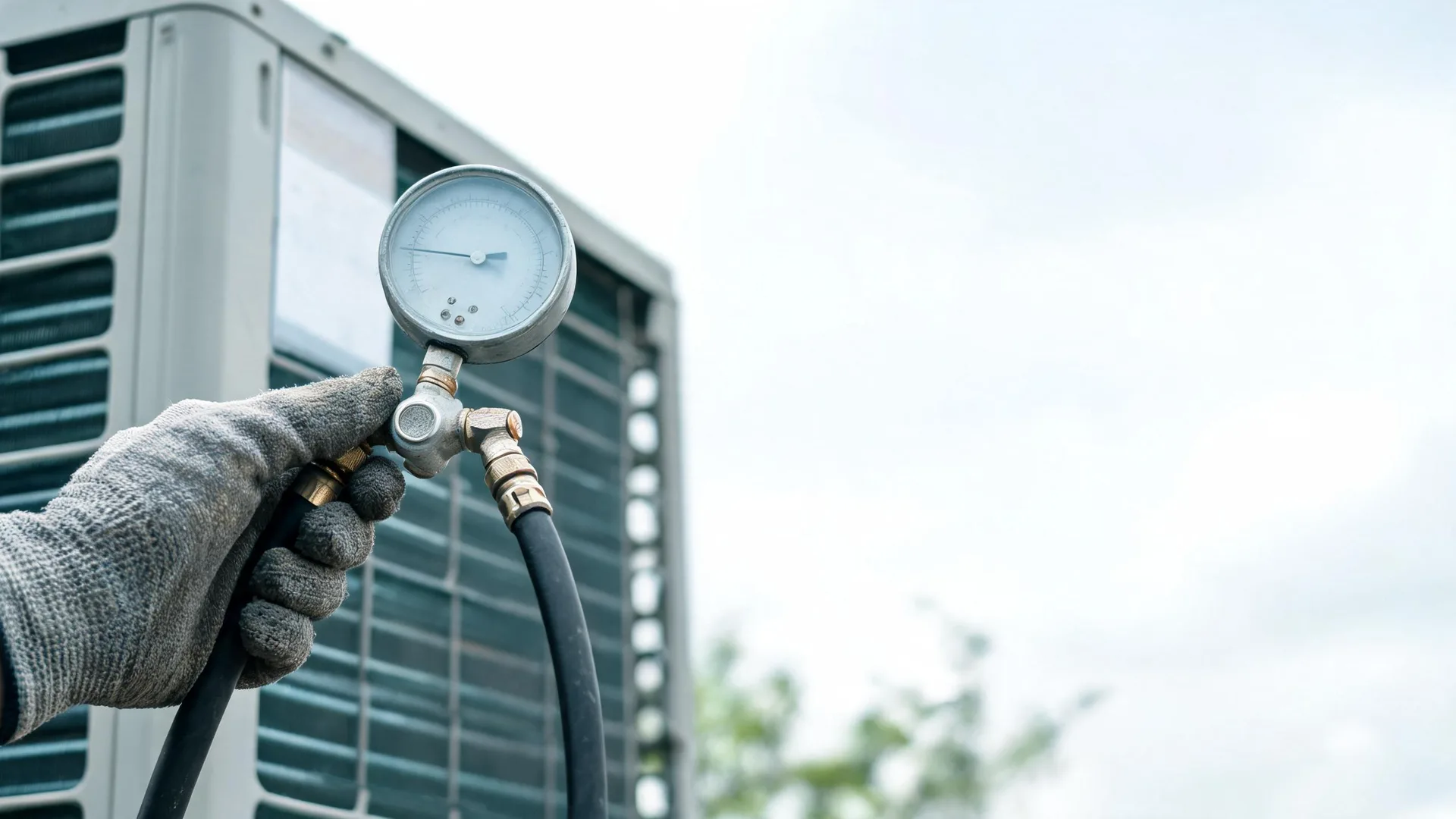
A diagnostic visit starts outside at the unit, checking refrigerant pressure and the amp draw on the compressor while it runs. That shows a tech whether it's low on charge or straining to start. From there it's the reversing valve, the part that switches the system between heating and cooling, since a stuck valve can look like several other problems at once. Inside, the air handler gets checked for airflow, because a system starved for air will ice up or short cycle no matter what shape the compressor is in. Electrical parts get tested directly rather than guessed at, since a capacitor or contactor can look fine sitting still and still be the reason the unit won't start. The goal isn't just naming what's wrong. It's making sure nothing else is about to fail right behind it.