





White colonial-style houses with lit windows photographed at dusk along a tree-lined street.

Heat Pump Repair in Mountain Lake Park, MD

Tell us about the job

Takes about a minute. No obligation.

RepairHeat PumpGarrett County, MD
Step 1 of 2

What ZIP code is the job in?

Garrett County's housing is split right down the middle, half built in 1982 or later. If your place falls on that side, the heat pump in it isn't old by the standards of the trade. A system that age has a wiring issue or a worn part behind most calls, not a cabinet that's done. That's the kind of thing a repair fixes for good. The county does have a fair number of mobile homes too, and heat pumps in those work the same way, so age and setup both matter when you're deciding what a repair call is really telling you.

9 months
September through May, your system heats
2 months
July through August, it cools
21°F
the average winter night it heats against
78°F
the average summer afternoon it cools against
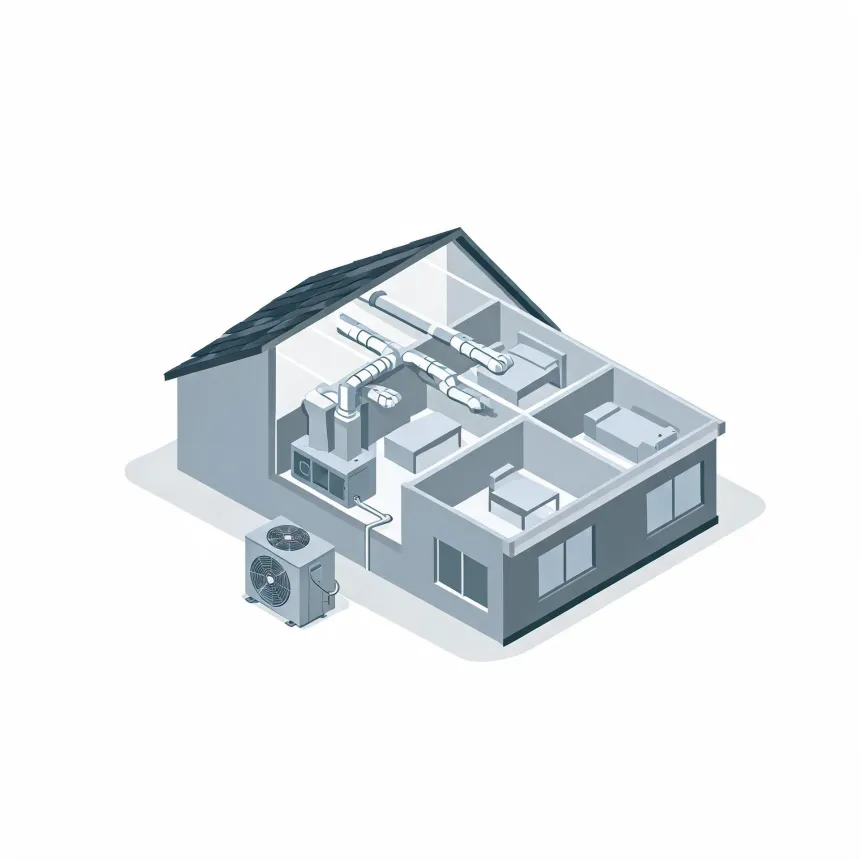
Isometric grayscale illustration of a cutaway house showing interior rooms, ceiling ductwork connected to an indoor air handler, and an outdoor condenser unit beside the exterior wall.
Your system heats September through May and cools July through August.

NOAA nClimDiv, 1991–2020 normals

Garrett County heating load is heavier than its cooling load, and winter nights average 21°F.

A heat pump here works steadily through a long cold season, not in hard bursts, so repair is usually the right call.

August is when a weak part gets found, before nine months of heat lean on it

Cooling runs July through August
Heat runs September through May
63 damaging wind events from 2015 to 2024

A heat pump that keeps needing calls isn't automatically on its way out, as long as each call is for a different part. A contactor, a capacitor, a reversing valve, a fan motor, these wear on their own schedule and get swapped without touching the rest of the system. The compressor is the one part that changes the math. It sits at the center of the system, and when it fails, the labor to get to it and replace it often runs close to the cost of a new unit, which is why a contractor may steer you toward replacing the system instead of just that part. Outside of the compressor, what matters is what actually failed, not how long the system has been running. A unit with a bad capacitor just needs the capacitor. Ask what broke before you ask whether the whole system is worth keeping.

Get the part fixed, not the system replaced

If your heat pump came with a house built in 1982 or later, it's not old enough to write off over one repair call. Have the broken part looked at and fixed before anyone talks about a new system.

Find a contractor
A man in a cap, gray t-shirt and brown work pants climbs porch steps toward an orange front door, carrying a canvas and leather tool bag.
A residential heat pump outdoor unit mounted on a concrete pad next to a house with gray vinyl siding.

A long cold season, not a hard one

Winters here run long and steady in the cold, not brutal. A heat pump sized for 21°F nights isn't getting pushed past what it was built for, call after call. That steady load is also why a repair tends to hold. Fix the part that failed and the system goes back to doing the same job it was already doing fine.

A failing part doesn't stay contained

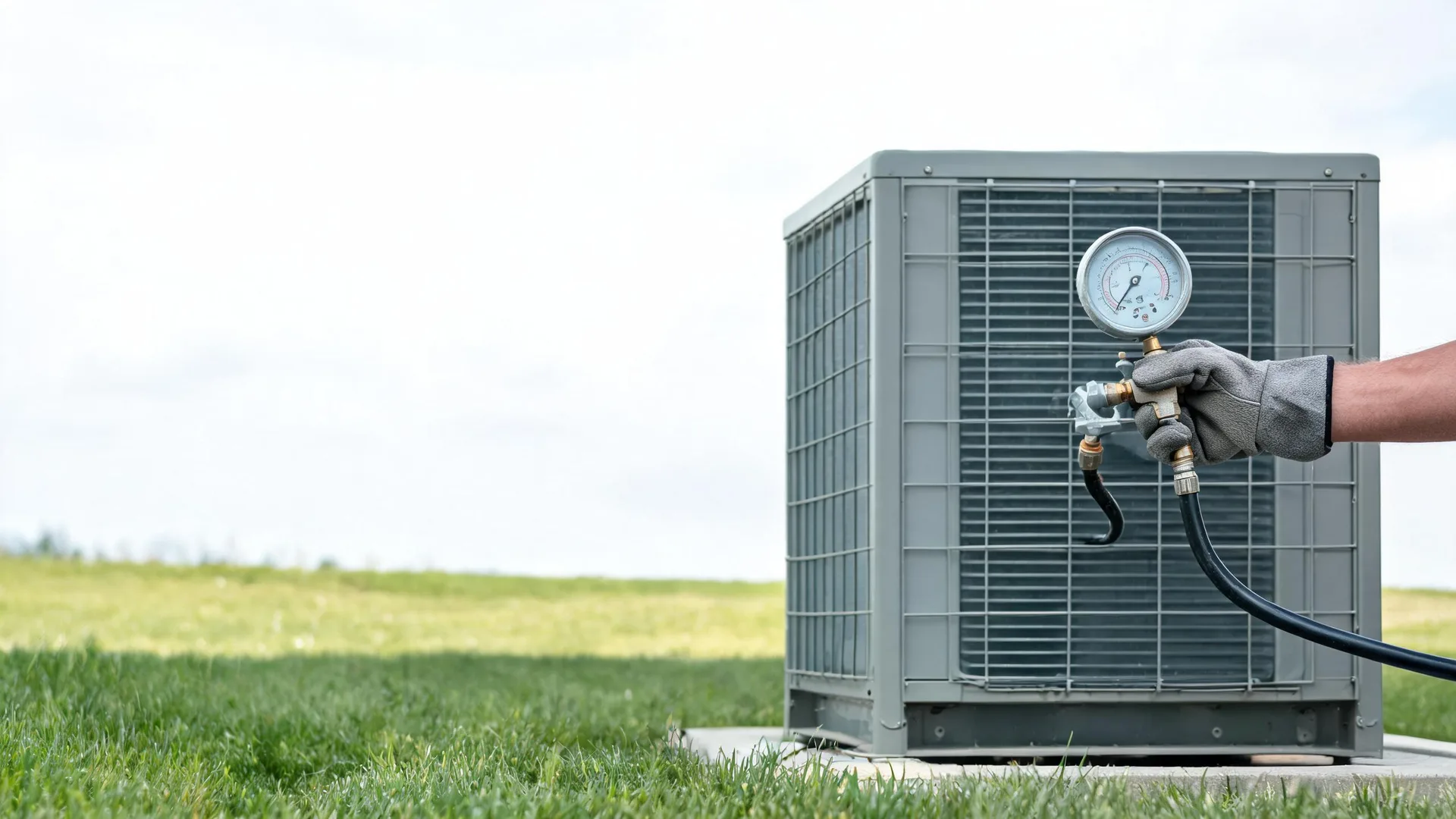
A weak capacitor makes the compressor pull harder to start. A low charge makes the compressor run hotter than it should. Leave either one alone and the strain lands on the compressor, the one part that's hard to reach and harder to replace. The small fix now keeps the problem small.
Ice and water spread the damage

A heat pump that can't defrost properly builds ice on the outdoor coil. Keep running it like that and the coil loses its ability to pull heat from the air at all, so the system runs constantly and still falls short. A clogged drain backs up the same way, sending water where it doesn't belong instead of out the line. Both start as a small fix and turn into a bigger one if the system keeps cycling.

Most heat pump failures start small and electrical, not big and mechanical. A contactor pits and sticks from years of arcing every time it closes. A capacitor loses its charge slowly until the compressor or fan motor can't get started on a cold morning. A reversing valve coil burns out and the system gets stuck heating when it should cool, or the other way around. Sensors drift out of calibration and the defrost cycle runs too often or not often enough. None of these have anything to do with how old the unit is, they fail because they're the parts doing the work every time the system cycles on. The compressor almost never fails on its own. It fails because something upstream, a low charge, a bad capacitor, a stuck valve, made it work harder than it was built to for too long.

A diagnostic call starts outside, at the unit itself, before anyone touches a wire. The tech checks that the outdoor fan spins freely and the coil isn't caked in ice, then moves to the electrical panel to test the capacitor and contactor with a meter rather than guessing by sight. Refrigerant pressure gets checked next, since a low charge shows up as high head pressure or a compressor straining to start, not as an obvious leak you can see. Inside, the tech checks the air handler, the thermostat signal, and whether the system is actually switching between heating and cooling when it's told to. Every reading gets compared against what that unit should show when it's healthy, not against a guess. The part that's out of range is the part that gets replaced, and everything else gets left alone.