






An outdoor HVAC condensing unit on a concrete pad next to a beige single-story house with a dark shingle roof.

Heat Pump Repair in Princess Anne, MD

Tell us about the job

Takes about a minute. No obligation.

RepairHeat PumpSomerset County, MD
Step 1 of 2

What ZIP code is the job in?

Half the homes in Somerset County were built in 1986 or later. If yours is one of them, your heat pump likely isn't old enough to be the problem on its own. A system installed with a newer house still has years of working life in it, and a repair now is usually enough to get it back on track. That changes if your home came with an older system that was swapped in at some point, so it's worth checking the age of the unit itself rather than the age of the house.

7 months
October through April, your system heats
4 months
June through September, it cools
30°F
the average winter night it heats against
86°F
the average summer afternoon it cools against
Isometric line illustration of a cutaway house showing interior rooms with furniture, ceiling ductwork under a dark shingled roof, and an outdoor condenser unit connected by lines on the right.
Your system heats October through April and cools June through September.

NOAA nClimDiv, 1991–2020 normals

Somerset County sits in a mixed climate zone, humid enough that summer cooling and winter heating both put real demand on a heat pump.

A heat pump that holds up through both seasons here usually has less wear on it than the calendar suggests, and that makes repair the right call.

At 17.86 cents a kWh, a heat pump that's struggling costs you more here than it would elsewhere

Power costs 17.86 cents a kWh statewide
11 winter storms from 2015 to 2024
Climate zone 4A
September is when a weak heat pump shows itselfHeat here starts in October, and the parts barely holding on in May often give out the first cold week after.

Check the nameplate on the unit before you decide anything. If the heat pump itself dates to when the house was built, a repair call is the right next step, not a replacement quote. A tech can tell you in minutes whether what's wrong is a worn part or something that points to the system actually being older than the house. If your home is a mobile home, that's worth mentioning when you call, since the setup can differ from a standard install and it helps the tech bring the right parts the first time.

Worth fixing, most likely. Get it looked at.

Get the unit checked before you spend money assuming the worst. A heat pump that's kept up with both the summer heat and the winter cold here has done real work, but that's different from being worn out. Most of what goes wrong is a specific part failing, not the system giving up.

Find a contractor
A gray heat pump outdoor unit mounted on a concrete pad next to a residential house with lap siding and stone accents.

A small problem left running becomes a bigger one

A heat pump low on refrigerant will keep running if you let it. The compressor doesn't know the difference between a full charge and a weak one, so it keeps working to move the same heat, and that extra strain is what wears a part down before its time. A failing capacitor behaves the same way. It can still start the compressor and the fan motor for weeks after it starts going bad, each start a little rougher than the last, until one day it can't. A clogged filter restricts airflow across the indoor coil, and running the system against that restriction can ice the coil over. Once ice builds up, the system is heating or cooling less for the same effort, so it runs longer to do less, and a simple filter change turns into a coil replacement. None of this happens all at once. A part that's struggling now is usually the part that quits once the next season leans on it.

It won't switch between heating and cooling right

A heat pump that's stuck in one mode, or won't reverse when you switch from heat to cool, usually points to the reversing valve. The valve can stick or fail outright, and either way the system keeps running, just not doing the job you set it to do.
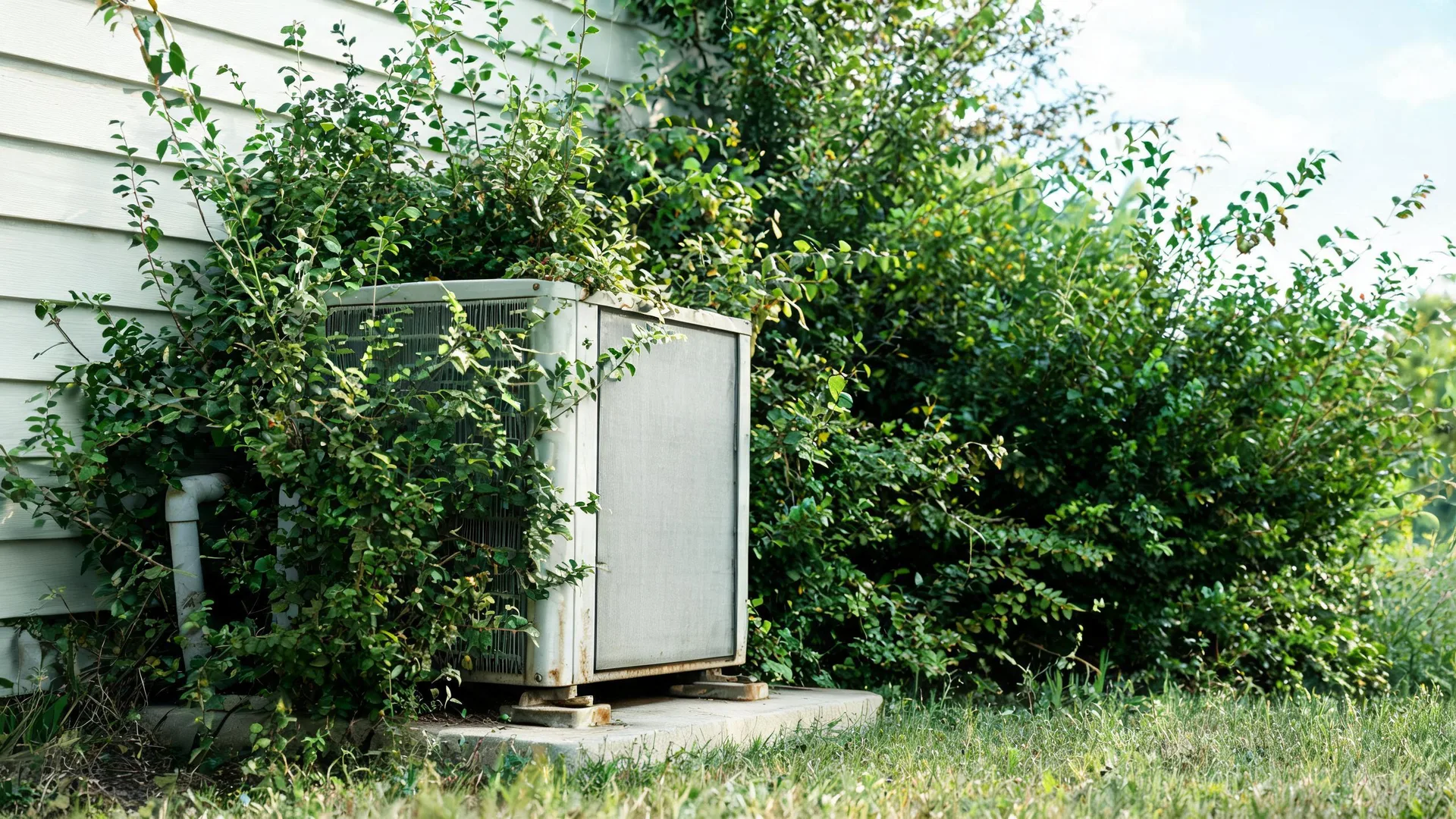
Ice on the outdoor unit in the middle of winter

Some frost on the outdoor coil during a heating cycle is normal, and the system should clear it through a defrost cycle on its own. If ice is building up and staying there, the defrost control or a sensor isn't telling the system to run that cycle, and the coil can't pull heat from the air through a layer of ice.

Most heat pump failures start with one part, not the whole system. A run capacitor weakens over time and starts struggling to get the compressor and fan motor going. A contactor's points burn down from the arc of switching on and off, and eventually it won't make contact at all. Outdoors, the fan motor bearings wear from sitting out in all weather, and the coil picks up dirt that makes the whole system work harder to move the same heat. Indoors, a weak blower motor or a dirty filter does the same thing from the other side, restricting airflow until the system is straining to keep up. Thermostats and control boards fail too, and when they do, the system can act like something major has let go when it's really just not getting the signal it needs.

A tech who's done this a while can usually tell repair from replace before the panel's even off, just from how the system is acting. A clean, single-part failure (a bad capacitor, a stuck valve, a failed sensor) stays a repair no matter how old the unit is, because the rest of the system isn't part of what broke. What changes the answer is seeing a part fail that already got replaced once before, or finding more than one thing wrong at the same time. That pattern means the system's wearing out generally, not failing at one point, and a repair just buys a few months before the next part goes. Short of that, fixing the part in front of you is the right call almost every time.