Send the form and the heat pump tune-up stops being something to remember.
A heat pump in Bowie earns its keep both ways. It carries the house through muggy summers and it carries the house through cold winters, switching between the two every year without a break. That means twice the wear a furnace or an AC alone would see, and twice the reason to have someone look at it before it has to work hard.
Most heat pumps run fine for months with a problem already started inside them. A coil losing its charge, a reversing valve sticking, a thermostat sending the wrong signal. The system keeps running. The power bill goes up. Around here, where electricity already costs more than most of the country, a heat pump working harder than it should costs real money every month it goes unchecked.
A tune-up is a chance to catch that early. A contractor checks the refrigerant charge, the electrical connections, the outdoor coil, the defrost cycle, the thermostat calibration, before any of it turns into a breakdown in July or a cold house in January.
Finding someone to do that work is its own chore. Looking up contractors, calling a few, explaining the system and the symptoms again to each one, waiting on quotes that come back different ways. That's the part this page takes off your hands.
Send the form once and the search for who's going to do the work is done. No more comparing names you don't recognize or waiting on callbacks that don't come. A licensed contractor in the Bowie area gets your information and the finding-someone part of this is over.
What's left is the actual tune-up, the part that keeps a heat pump running the way it's supposed to through another Prince George's County summer and the winter after it.
A heat pump tune-up means a contractor checks refrigerant charge, cleans the outdoor coil, tests the defrost cycle, and makes sure the system switches cleanly between heating and cooling. In Bowie, that defrost check matters more than it would on a furnace. Cold snaps here force the outdoor unit to frost over, and it has to shift into defrost mode and back without losing its place. A unit that is low on refrigerant or has a dirty coil struggles through that cycle, and you feel it as a house that takes longer to warm up or never quite gets comfortable. Because the same system runs all year, small problems don't get a season off to go unnoticed. A tune-up before winter catches what summer's humidity left behind, and a tune-up before summer catches what winter's defrost cycles wore down. Skipping it doesn't break the system outright, but it means whatever is already weak keeps working against itself until it fails on the day you need it most.
Clean coil, clear path around the unit, nothing fighting the system to keep the house comfortable either season.
Grime on the coil and months of neglect make the unit work harder to move heat in January and in July.
Why does a heat pump in Bowie work harder than one somewhere else?
Winter nights average 28°F
Overnight lows near 28°F all winter mean the heat pump is pulling warmth out of cold air for hours on end, every night, for months.
Heat runs October through April
Heat runs from October through April here, about seven months. That is most of the year asking the same unit to keep the house warm.
Cooling runs June through September
Cooling runs June through September on top of that heating stretch, so the same coil and compressor switch jobs and keep working almost year round.
NOAA nClimDiv 1991-2020
Running the way it should
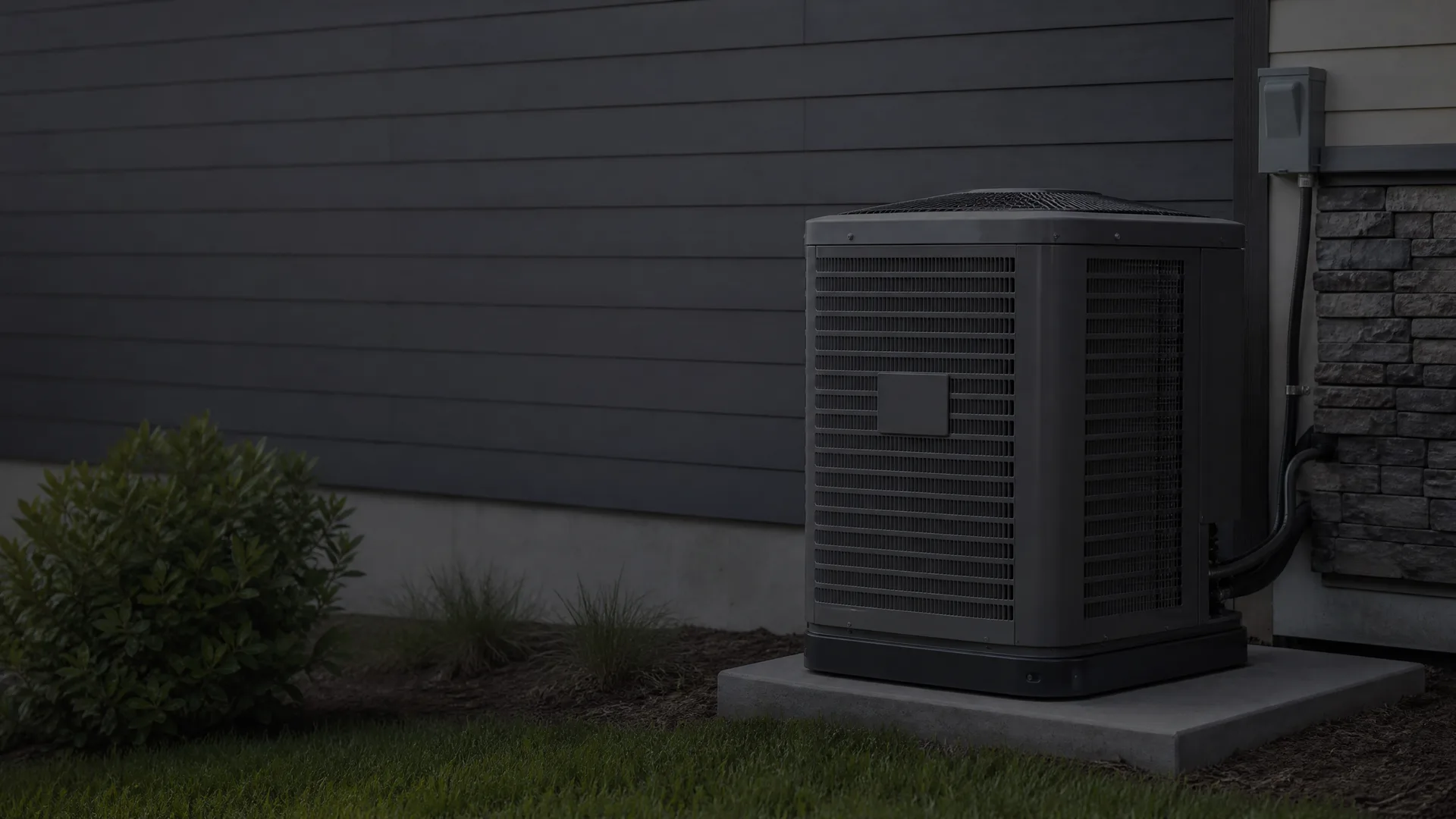
The lines and wiring run clean from the unit to the disconnect box, and the grille stays clear. Air moves through it without a fight, in July and in January, which is what keeps the compressor from working harder than it has to.
Running dirty
Dust and debris have built up on the grille until the coil underneath can't breathe. The unit still runs, but it pulls harder to move the same heat, and that strain carries through both the cold months and the muggy ones.
A heat pump that runs cold or skips its defrost check doesn't announce it right away. It just costs more to run every month until the day it doesn't start at all, usually on the coldest night of the year or the first hot week of summer. Finding someone to look at it before that happens means calling around, explaining the same thing to three or four contractors, and comparing quotes you don't have the background to judge. Send the request instead and that work is off your plate. One contractor gets it, not five, and you're not the one chasing them down. With power costs here among the highest in the country and the system working double duty from the cold months straight into the muggy ones, a tune-up now is cheaper than the alternative. Your part ends with the form.
What a Tune-Up Settles
A heat pump tune-up in Bowie covers refrigerant charge, coil condition, and the defrost cycle, the three things that decide how hard it works all year.
A unit that switches cleanly between heating and cooling and runs with a clean coil costs less to run through both the muggy months and the cold ones.
A unit left unchecked works harder every night of winter and every sticky afternoon of summer, and that shows up on the power bill before it shows up as a breakdown.
Finding a contractor who services heat pumps, not just furnaces or standalone AC units, is the hard part, not the tune-up itself.
Skipping the search, the phone calls, and the repeat explanations means the only thing left to do is let someone qualified take the unit from here.
Where the house stands after a tune-up is simple: a heat pump working the way it was built to, through the next summer and the next winter alike.
A heat pump in Bowie has two jobs, not one, and a tune-up is how a contractor confirms it can still do both. Refrigerant charge, coil condition, the defrost cycle: these are the things that separate a unit working the way it should from one quietly working harder than it needs to. Get those right and the system moves between heating and cooling without a fight, through a muggy July afternoon and a cold January night alike. Leave them unchecked and the strain doesn't announce itself. It shows up first as a higher power bill, then eventually as a system that won't start on the one night or the one afternoon you need it most.
None of that is the hard part, though. The hard part is finding a contractor who actually services heat pumps rather than one who mainly handles furnaces or window units and treats a heat pump as an afterthought. That's the search that takes time: looking up contractors, calling a few, explaining the same system and the same symptoms more than once, then trying to sort through quotes that don't quite compare. Sending the form here replaces all of that with one step. Someone qualified takes it from there.
What's left after the tune-up is straightforward. A heat pump that switches cleanly, runs with a clean coil, and holds its charge is a heat pump ready for whatever Bowie's weather does next, in either direction.
It's off your list after this
One form instead of hunting for a pro who does heat pump tune-ups.