

How many mini split zones a Maryland home needs

A white wall-mounted mini-split air conditioner indoor unit with a dark horizontal air outlet vent, shown against a plain light gray background.
Skip the calls

How many mini split zones do I need for my house?

You want to size this right before you commit, not after. A zone is whatever one indoor head covers, so the real question is how many separate head units your house needs and where they go. Get it wrong and you end up with a bedroom that never cools down in August or a living room system working overtime while the power bill climbs.

Most Maryland homes need one zone per room or open area with its own heating and cooling need

A bedroom, a living room, a finished basement, each one usually gets its own head. Open floor plans can sometimes share a zone if the space is one continuous area with no doors to close it off. The number comes down to layout, not square footage. A rancher with four defined rooms might need four zones. A home with an open main floor and three bedrooms upstairs might only need two or three. Summers here get sticky enough that a room left out of the plan will show it by July. And since most Maryland homes heat with electricity, a system sized to the actual rooms rather than guessed at keeps the winter bill from running higher than it needs to.

  1. A contractor measures each room's square footage and ceiling height.

  2. They check window placement, sun exposure, and insulation in each room.

  3. They calculate the BTU load your home needs room by room.

  4. They decide how many indoor heads and zones that load requires.

One Zone or Several

Single Zone

  • One outdoor unit tied to one indoor head works for an addition, a converted garage, or a single room that your main system can't reach well.
  • It costs less to install than a multi-zone setup because there's only one indoor unit and one line set to run.
  • If that one zone covers a sunroom or a finished attic in Maryland, it still has to carry the space through a humid July on its own.
  • A single zone gives you no backup. If it needs service, that room has no other way to heat or cool while you wait.
  • It won't help with rooms on the other side of the house that run hot or cold for reasons the main system never solved.

Multi-Zone

  • One outdoor unit can run two, three, or more indoor heads, each with its own thermostat, so you set each room separately.
  • A multi-zone system can replace electric baseboard or resistance heat room by room, which matters since most Maryland homes heat with electricity and power here isn't cheap.
  • Bedrooms you keep cool at night and a living room you use during the day can run at different settings instead of one setting for the whole house.
  • More indoor heads means a bigger outdoor unit and a longer job, with more line sets and more wall penetrations to plan for.
  • If one head needs service, the rest of the zones keep running, so you're not without heat or cooling in the whole house at once.
  • Getting the zone count and placement right the first time matters more here, since adding a head later usually means a bigger outdoor unit than the one you have.
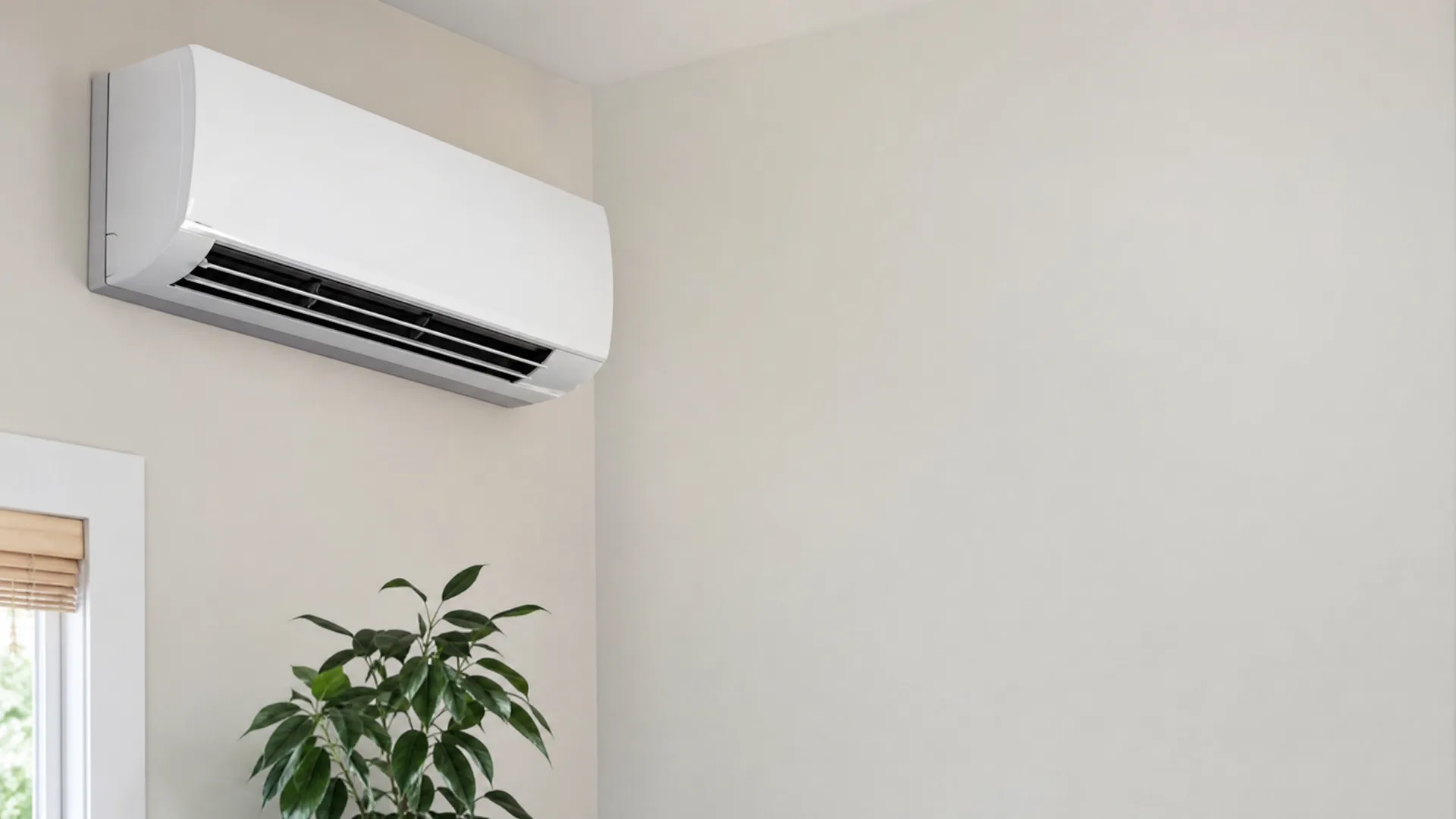
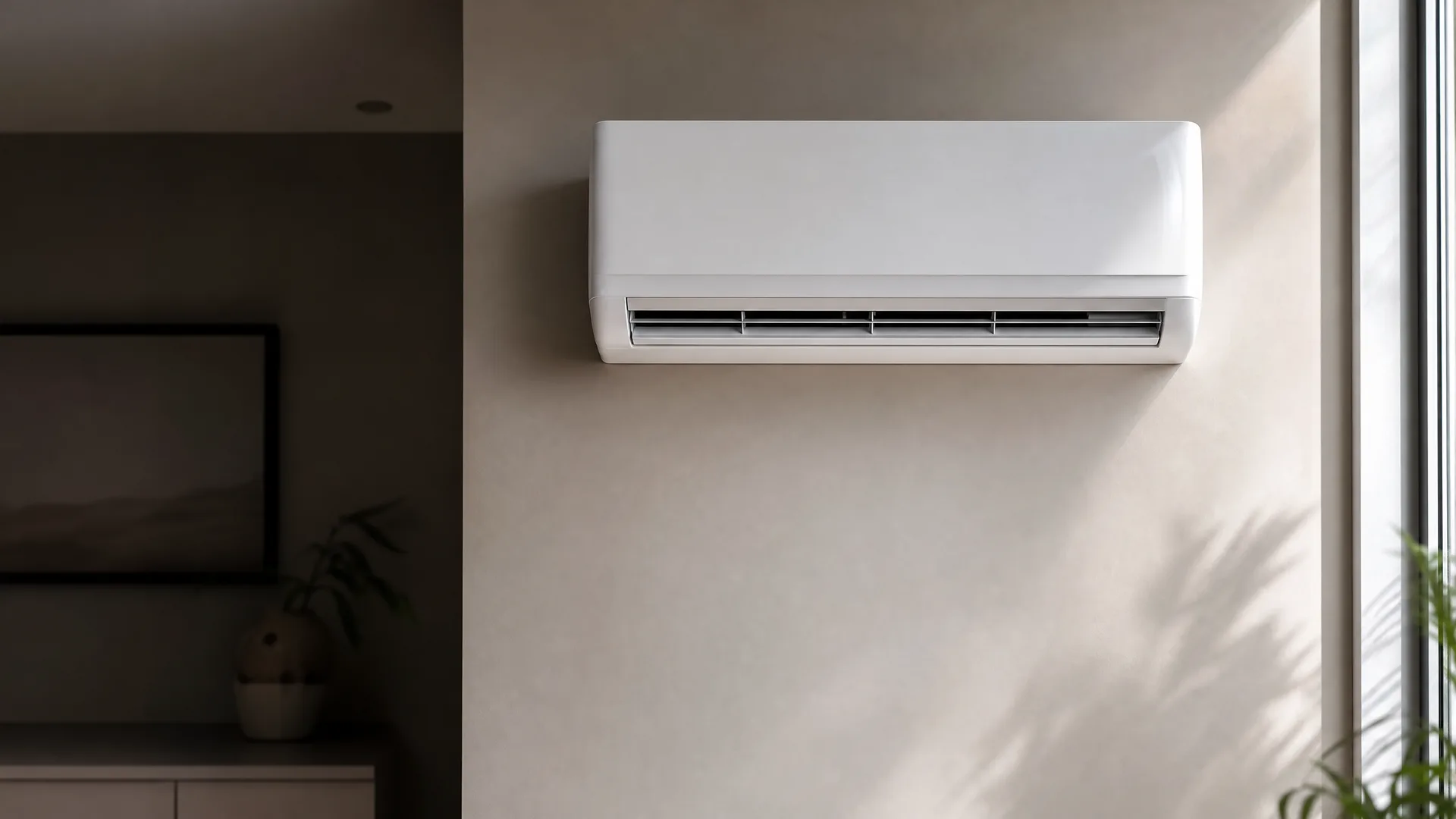
A white wall-mounted mini-split air conditioner installed high on a beige interior wall near the ceiling, with a white-framed window at the left edge.

Zoned right

Each room gets its own head, sized to that room's load. The bedroom stays cool at night, the living room handles the afternoon sun, and nobody's fighting over the thermostat. Maryland summers push humidity hard, and a unit matched to its space pulls that moisture out the way it's supposed to.


A dusty, stained wall-mounted mini-split air conditioner indoor unit near the ceiling on a plain beige wall, with visible lint buildup at its intake grille.

Undersized or wrong zones

One head trying to cover too much square footage runs constantly and still can't keep up when it's sticky out. That strain shows up as dust and grime building up fast, dark streaks across the casing, a filter that clogs before its time. Electric heat here already costs enough without a mini split working overtime.

A man with gray hair and a beard wearing a dark green shirt jacket over a navy top sits on a gray sofa in a living room, looking to the side, with a window, potted plant and shelving in the background.
A gray-haired man in a navy button-up shirt over a white tee sits on a light gray sofa in a living room, looking off to the side, with a window, houseplant, framed picture and shelving behind him.
A man with gray hair, a beard and glasses, wearing a dark green sweater, sits on a gray sofa in a sunlit living room with a potted plant, table lamp and wooden sideboard behind him.
A man with grey hair and stubble in a dark sweater sits on a grey sofa indoors, looking off to the side, with a potted plant and a sunlit window behind him.

Undersized a room pays for

A head too small for its room runs flat out on the muggiest July afternoons and still can't pull the humidity down. It short cycles instead, switching on and off without ever finishing a full dehumidifying run. The room feels cool but damp. Running flat out that often also wears the compressor faster than a unit sized to the load would. Since Maryland summers push humidity hard, a head matched to the room's actual square footage and sun exposure is what keeps the air dry, not just cold.

Oversized wastes power every cycle

A head too big for its room cools the air fast, hits the thermostat setting, and shuts off before it has run long enough to wring the moisture out. You get a cold room that still feels sticky. It also cycles on and off more often than a correctly sized unit, and with electric heat already the main cost in most Maryland homes, power that expensive is worth not wasting on a unit working against its own size. Getting the BTU count right for each room avoids both problems.

A woman with shoulder-length blonde-grey hair in a light knit cardigan sits in a grey upholstered armchair, looking toward a window, with a bookshelf and a small potted plant behind her.
A woman with her hair in a bun sits wrapped in a gray knit blanket on a couch, eyes closed, with a young boy asleep against her shoulder, beside a lit table lamp in a dim room.
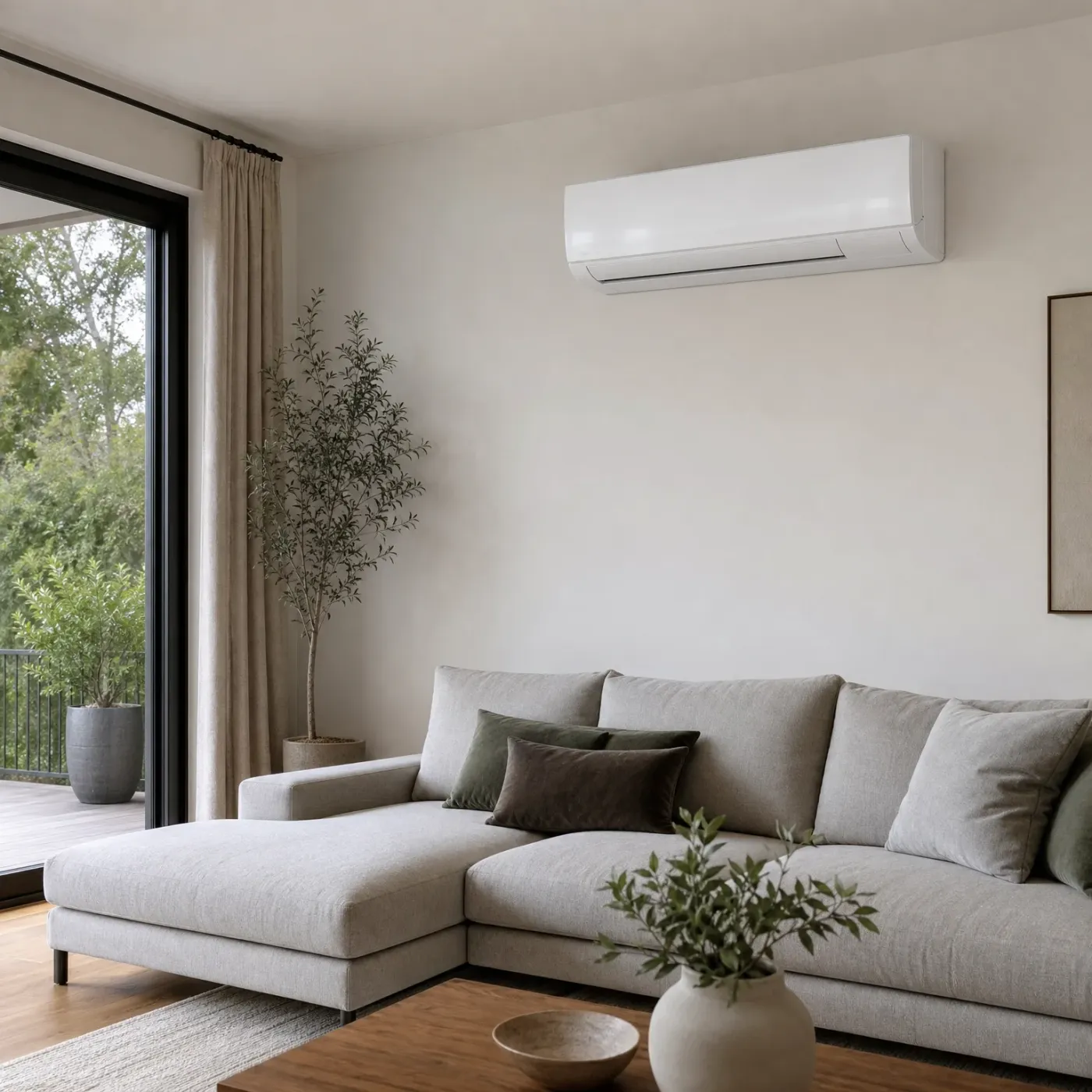
Living room with a grey sectional sofa, wall-mounted white mini-split air conditioner above it, a potted tree beside sliding glass doors with beige curtains, and a wooden coffee table with a vase of foliage in the foreground.

Skip the calls to every shop

One installer gets your project, so there's no bidding war over it.

Describe the project once instead of to every installer.

Answer a few questions

You only hire the pro if you want to.

A white wall-mounted mini-split air conditioner indoor unit installed near a textured ceiling on a plain beige wall, with visible dust and discoloration on its casing and vent.
Before you get your mini split installation
A white wall-mounted mini-split air conditioner indoor unit on a light gray wall above a white baseboard and wood-look floor.
After you get your mini split installation
A white wall-mounted mini-split air conditioner installed near the ceiling on a beige interior wall, with a window and bamboo blind at the left edge showing green foliage outside.

One head, right for its room

This head sits near the ceiling and covers the room it was sized for. Set the temperature and it holds it, even when the afternoon sun comes through that window. The panel stays clean because it isn't straining to keep up.

A wall-mounted mini-split air conditioner indoor unit with discolored casing and dusty vents, installed near the ceiling on a plain light-colored wall.

One head, covering too much

This is what happens when one zone gets stretched over space it was never sized for. It runs long and hard trying to cover rooms beyond its reach, and the dust and grime building up on the panel and louvers show a unit that never gets a break.

Power costs 19.53 cents per kilowatt-hour statewide

At that rate, every zone running harder than it should shows up on your bill fast. A head sized wrong for its room, too small or too big, cycles more and costs more to run all summer. Getting the zoning right the first time matters more here than somewhere with cheaper power.

EIA-861 2025 statewide residential average

What Getting It Wrong Looks Like at Home

  • A mini split with too few zones leaves some rooms fighting the thermostat all summer while others stay cold.
  • Running one oversized head to cover rooms it wasn't sized for drives up an electric bill that's already high in Maryland.
  • A bedroom over an attached garage or a sunroom off the back of the house often needs its own zone to stay comfortable.
  • Guessing at zone count means a contractor may have to add a line set or relocate an outdoor unit after the fact.
  • A home with rooms on different sides of the house usually needs separate zones because the sun load differs room to room.
  • Skipping a proper room-by-room load calculation is how homeowners end up with a zone that short cycles through every muggy July.

Most of the trouble with mini split zoning shows up in rooms, not on a spec sheet. A guest room over the garage that never quite cools, a home office on the sunny side of the house that needs the door shut and a fan running just to stay bearable in August. These are the rooms a whole-house load calculation catches and a guess misses. Maryland electric rates mean a mismatched zone doesn't just feel wrong, it runs longer to chase a temperature it can't hold, and that shows up on the bill every month it's hot. Since most homes here heat with electricity too, an undersized zone works overtime in January as well as July. The layout of your house matters as much as its size. A room facing west with afternoon sun carries a different load than one on the north side, even if the two rooms are the same square footage. Treat them the same and one will always be fighting its thermostat. There's also a practical cost to guessing low. If a contractor sizes for three zones and your house needs four, adding one later can mean a new line set or a second outdoor unit, work that costs more done twice than done right the first time. A contractor who measures each room before quoting a zone count is working from your house, not an assumption about it.

A white wall-mounted mini-split indoor unit on a beige interior wall, with a potted leafy plant at the left and a curtain edge at the right.
A clean head cycles the way it was sized to, holding the room steady without straining.
A dusty, discolored wall-mounted mini-split air conditioner indoor unit near the top of a plain light-colored interior wall below a white molding strip.
Dust packed across the vents blocks airflow, so the head runs longer to do the same job.
A two-story house with beige siding, a covered front porch and dark shingled roof, set behind a mown lawn with a wet concrete walkway leading from the street curb, flanked by large green trees and shrubs.

A dew point of 64°F is where the air starts to feel heavy instead of just warm, and that's the summer average across Maryland. Each zone in your home has to wring that moisture out of its own room, not just cool it. A head sized right will do that quietly, holding the room steady through a sticky July afternoon. One sized wrong, or asked to cover more than its room, cools the air but leaves it damp, and you'll feel that the second you walk in. Source: regional summer average, June through August.

NASA POWER T2MDEW county cells weighted by homes

Why does one room never feel right?

You can probably point to the room. The bedroom that's stuffy by morning even with the head running all night. The living room that cools fine but stays damp, air sticky even after the thermostat hits its number. Maybe the sun porch nobody uses in August because the single head serving that side of the house can't keep up. If a room is consistently off, warmer, colder, or just clammy compared to the rest of the house, that's not a thermostat problem. It usually means that room isn't its own zone, or the zone covering it was never sized for what that room actually needs. Left alone, that room keeps costing you on the electric bill without ever getting comfortable.

A white wall-mounted mini-split air conditioner near the ceiling of a beige interior corner, with a green houseplant and a curtained window at the lower left.

Finding someone on your own

You could start calling around, explaining the same layout to every contractor who picks up, then sitting on a handful of quotes trying to tell a fair bid from a lowball one. Some outfits size by square footage alone and skip the room by room load calculation entirely. You'd have no way to check their math until the heads are already on the wall and one room still won't hold its temperature.

A white wall-mounted mini-split air conditioner indoor unit on a plain light gray wall, positioned to the right of frame.

Matched with one contractor

Request the work here and it goes to one licensed contractor local to Maryland, not a list of five competing for your callback. Someone who installs these systems every summer in homes with the same sticky air and the same electric rates knows which rooms tend to get shorted on zones and which don't need their own head at all. You explain the house once, to the person who's actually going to size it.

The number of zones comes down to how many rooms in your house hold heat, sun, or moisture differently, and the layout tells you that, not a rule of thumb. A contractor who works on these systems every Maryland summer has seen which rooms usually get shorted, the one over the garage, the one with the west window, and sizes for that instead of guessing. You get matched with one licensed local contractor, so you're not fielding calls from three different companies trying to sell you three different setups. Get the zoning right and the house holds steady through the humidity without any one room working harder than it should, and your electric bill reflects a system sized for what your home actually needs, not for what was easiest to install.

A white wall-mounted mini-split air conditioner on a plain beige interior wall, with a framed picture and potted plant in the dim left background and sunlit window with foliage at right.

Skip calling around

New system or replacementMini-splitMaryland
Step 1 of 2

What ZIP code is the job in?