
Where to put a mini split in a Maryland home

A white wall-mounted mini-split air conditioner indoor unit shown straight-on against a plain light gray background.
Request a pro

The indoor unit goes on an interior wall where air can move freely across the whole room, not tucked behind a door or above a cabinet where it gets trapped in a corner. The outdoor unit needs a spot with clearance on all sides, out of direct afternoon sun if you can manage it, since a unit that is already hot from the sun has to work harder to cool your home through a Maryland summer. Keep it off the ground on a pad or bracket, high enough that it stays clear when snow piles up in the yard. Placement also decides how far the line set has to run between the two units, and a shorter run keeps the system working the way it was designed to. Where you put each piece affects how evenly the room cools, how much noise you hear from outside, and how the system holds up through the humidity and the cold here.

A white wall-mounted mini-split indoor unit installed high on a gray interior wall, with a window at left and part of a light gray sofa with a dark cushion at lower right.
Mounted where the room can actually use it, this one moves air evenly from wall to wall.
A white wall-mounted mini-split air conditioner indoor unit with visible dust and staining along its lower vent, installed on a plain pale wall.
Blocked by a bad spot or just never cleaned, the vents clog and the unit struggles to keep up.
A gray-haired bearded man in a dark coat and scarf dusted with snow stands smiling in a dimly lit entryway with a white front door, a side table with a lit lamp, an oval mirror, and a patterned rug.
An older bearded man in a dark snow-dusted coat and gray scarf stands just inside a dimly lit home entry, with a framed picture, lit table lamp, and an adjoining room with a fireplace behind him, and snow visible through the open door.
A gray-haired, bearded man in a dark snow-dusted coat stands smiling in a dimly lit entry hall with a staircase, a lit table lamp, a framed picture, and a living room visible through a doorway.
An older man with gray hair and a beard, wearing a dark jacket dusted with snow, stands smiling in a dimly lit hallway with lamps and a living room visible behind him.
A woman in a cream sweater and jeans stands in the open doorway of a white stucco house, holding the dark door, while a man in a dark quilted jacket seen from behind walks toward the entry past potted plants.

Placement decides how hard it works all summer

A mini split mounted wrong fights your house instead of cooling it. Put the indoor head where furniture or a half wall blocks the airflow and one end of the room stays warm no matter what the thermostat says. Put the outdoor unit where the afternoon sun hits it straight on, or where siding and shrubs crowd the sides, and it has to work harder to dump heat on the muggiest days, which shows up on a power bill that's already high because most homes here run on electric heat and cooling both.

You can see the room and the wall. What you can't always judge from the floor is clearance distances, condensate drainage, or whether the spot you have in mind lines up with where the line set can actually run. Instead of pulling permits, calling around, and sorting through installers to find someone who'll look at your actual walls, you can get matched with a contractor who installs mini splits in Maryland homes and have them reach out to you directly.

A gray upholstered sofa with a matching cushion sits beside a potted plant and a wooden table holding a small green plant in a stone pot, near a curtained window.
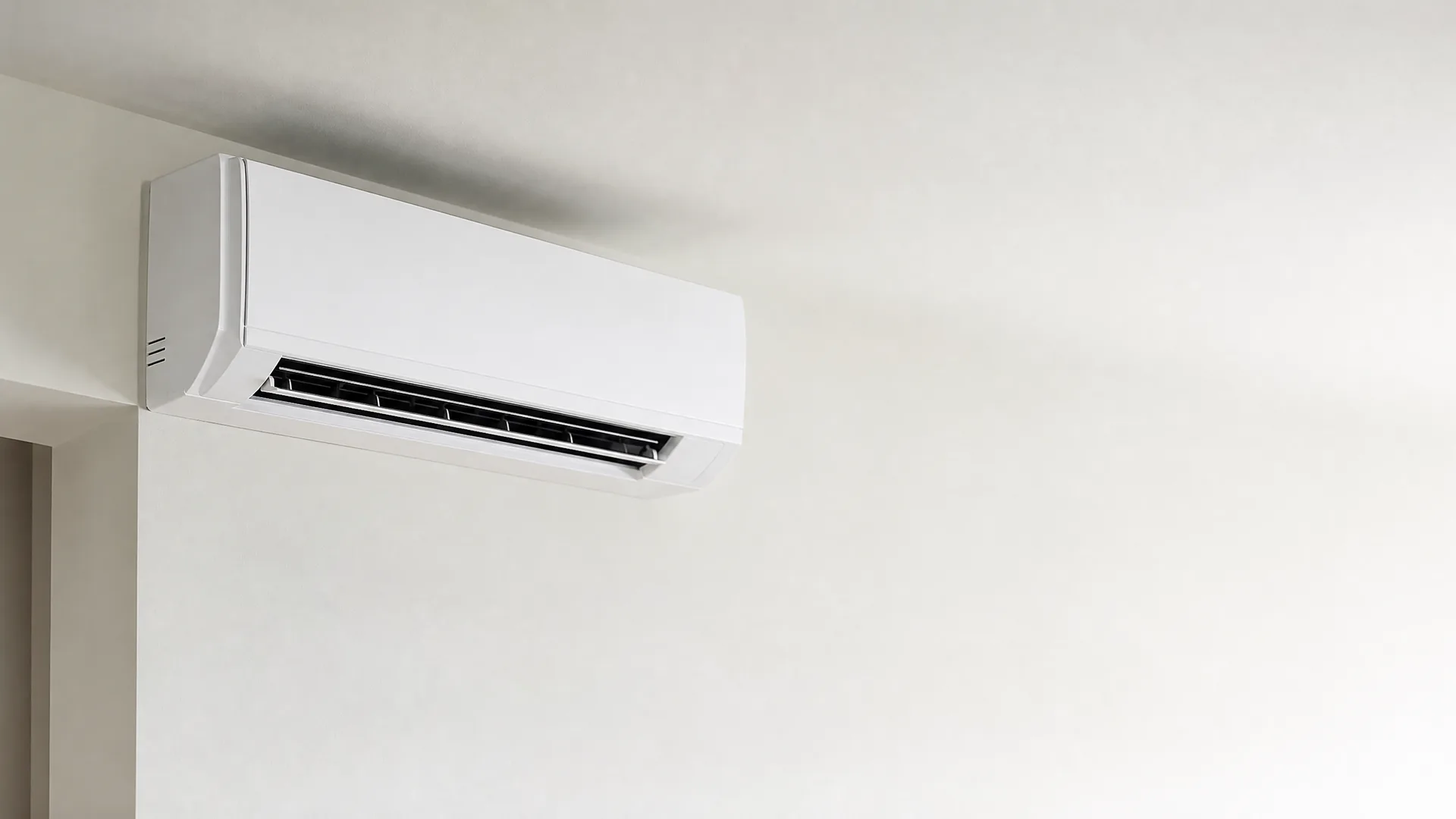
A white wall-mounted mini-split air conditioner unit near the ceiling on a plain light-colored interior wall with open space to the right.

Why the outdoor unit needs shade

The outdoor unit pulls heat out of your house and dumps it outside, and that's harder work when the unit itself is sitting in direct sun all afternoon. A spot with some shade, or shade from a wall or roofline later in the day, gives it cooler air to work with. In a Maryland summer, that difference shows up on the compressor and on the bill.

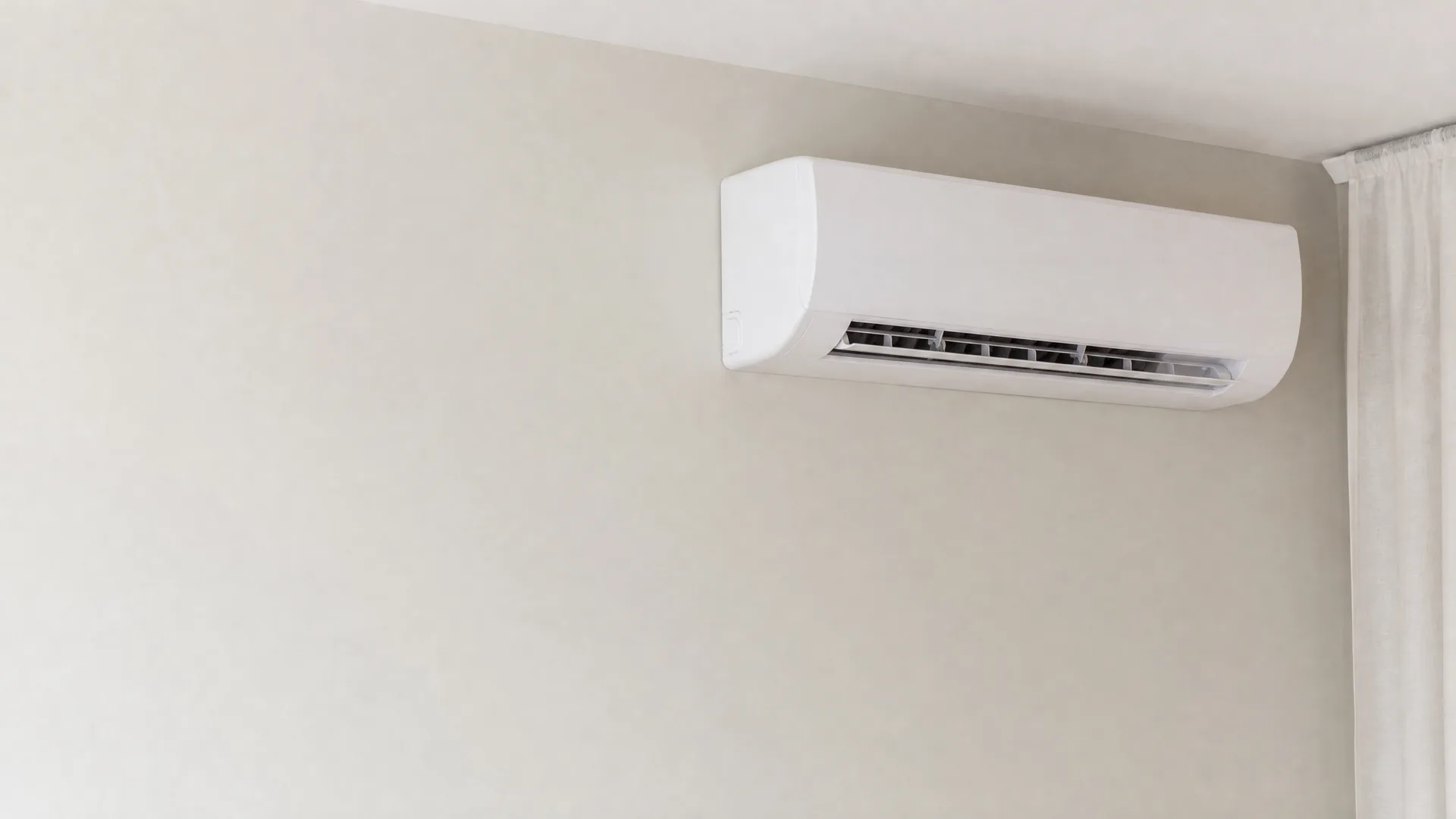
A white wall-mounted mini-split air conditioner unit installed near the ceiling on a plain beige interior wall, with a light curtain at the right edge.

What a short line run buys you

The line set connecting the indoor head to the outdoor unit carries refrigerant, and the farther it runs, the more the system loses efficiency moving heat through it. Keeping the indoor and outdoor units reasonably close, with a fairly direct wall or roof path between them, keeps that loss small. A long, winding line run doesn't ruin the system, but it gives up capacity you paid for.

Why does the indoor unit need to be mounted high on the wall?

You've seen the mounting brackets that come with a mini split and noticed the indoor unit sits well above head height, usually near the ceiling. Before an installer puts a hole in the wall, it's worth knowing why that height is part of the design and not just how it looks in showrooms.

It throws cool air across the whole room instead of just the ceiling

Cool air sinks on its own. Mounted near the ceiling, the unit throws air out and lets it settle down through the room as it cools, covering the space evenly. Mounted lower, that same air drops fast and pools near the unit, leaving the far side of the room warm while the thermostat reads the temperature right next to the head. The height also keeps the unit clear of furniture, curtains and anything else that would block the airflow or get rattled by the fan. In a Maryland summer, with the unit running for hours most days, that even coverage is what keeps the whole room comfortable instead of just the wall it's mounted on.

A white wall-mounted mini-split air conditioner installed high on a light gray interior wall below a white crown molding and ceiling with a recessed light.

Mounted right

This indoor unit sits on an open wall with nothing in front of it. Air reaches every corner of the room, so the thermostat setting actually matches how the room feels. In a Maryland summer, that's the difference between a room that cools down and one that never quite gets there.


A dusty, discolored white wall-mounted mini-split air conditioner unit installed on a plain beige interior wall below a molding strip.

Neglected and blocked

Dust has built up on the casing and the vents haven't been cleared in a long time. Even open, vents like these push air into a space that's already working against the unit. Add a bad placement on top of that and the unit runs longer to do less, which costs you on a Maryland electric bill.

A dusty, discolored white wall-mounted mini-split air conditioner unit installed high on a plain interior wall below a white ceiling molding.
Before you get your mini split installation
A white wall-mounted mini-split air conditioner on a beige interior wall, with a cream curtain and window at left, a potted plant on a ledge at right, and a wood floor below.
After you get your mini split installation
A two-story house with gray and light gray siding, white-trimmed windows and a white front door, flanked by deciduous trees, with a partly browned lawn in front under a clear blue sky.

Maryland summers average a dew point of 64°F across June, July and August, that's according to regional climate data, and that's the number that makes the air feel heavy even when the thermostat says the room should be comfortable. A mini split doesn't just cool that air, it has to wring the moisture out of it first, and where the indoor head sits changes how well it can do that. Mounted where air moves freely, it pulls that damp air across the coil and the room actually feels dry. Boxed in behind furniture or a half wall, the moisture lingers and the room feels sticky even at a low temperature. Getting the spot right matters more here than in a drier state, and it's worth having someone who installs these full time walk the room with you instead of guessing at it yourself.

NASA POWER T2MDEW county cells weighted by homes

A pro who works on mini splits

You already know where the sticky air sits in your house and where the money goes every summer when the electric bill comes. Getting the placement right the first time matters more in Maryland than almost anywhere, because a unit fighting bad airflow runs longer, and electricity here isn't cheap to begin with. Most homes in this state heat with it too, so a mini split that's doing double duty needs to be hung where it can actually do the job both ways. Figuring that out yourself means walking your own walls, guessing at clearances, then calling around to find someone who'll actually look at the room before quoting you a number. That's the part worth handing off. Instead of tracking down installers one by one and repeating the same details about your house to each of them, you describe it once and a contractor who works in your area follows up to look at the actual room.

A white wall-mounted mini-split air conditioner near the ceiling of a room with light gray walls, white crown molding, and a beige curtain at the left edge.

Clean wall, clear path

This indoor unit sits high on an open wall with nothing crowding it. Air moves out across the room and down to where you sit, so the thermostat number and how the room feels match.

A dusty beige wall-mounted mini-split air conditioner indoor unit installed high on a plain light-colored wall below the ceiling.

Caked vents, a stain on the wall

Dust has built up across the face of this unit and the wall above it has darkened. A unit mounted where it never gets checked or cleaned ends up working through buildup like this instead of cooling the room.

Power costs 19.53 cents per kilowatt-hour statewide

At that rate, a mini split placed wrong doesn't just leave a warm corner in the room, it runs longer to chase a temperature it can't reach and the extra hours show up on your bill. Getting the placement right the first time is what keeps that cost down.

EIA-861 2025 statewide residential average

One wall, one mounting day

An installer looks at the room once and sets the bracket height, the clearance, the angle of the louvers. After that the indoor unit stays where it went in. Nobody climbs back up to move it a foot to the left because the couch is in the way of the airflow. The outdoor unit gets leveled on its pad, set back from the wall enough to pull air through the coil, and that spot doesn't change either. The work of finding the right wall happens once, before the line set is run and the hole is cut, which is the only time it's cheap to change your mind.

Years of running on a bad spot

A unit mounted over a doorway or jammed in direct sun outside doesn't get easier to live with over time. It still has to move the same amount of heat out of the room, now across a worse path, and it does that every day from April through October, in Maryland's humidity, for as long as the system lasts. The warm corner you noticed the first July is still there the fifth July. A thermostat that never quite matches the room becomes something you stop mentioning to anyone, including yourself, and the extra running time it takes to get close keeps showing up on the bill the whole time the unit is in that spot.

A woman wrapped in a cream textured blanket sits in an armchair beside a lit lamp and a dark window, with an open book in the foreground.
A smiling older woman with gray hair in a cream knit sweater stands in a dimly lit kitchen beside a window showing snow outside, with a round loaf of bread on the counter in the foreground.

Where the mini split goes, settled

  • The indoor head needs open wall space above head height, and the outdoor unit needs clearance and shade, not direct afternoon sun.
  • Get the spot right once and the system cools the room evenly all summer without running longer than it has to.
  • Get it wrong and you end up with a warm corner, a higher bill, and a unit working harder against your own house.
  • An installer who knows Maryland homes sets the bracket, the clearance and the angle correctly on the first visit.
  • You don't have to track down contractors, explain your house over the phone to each one, or sort through quotes to find someone who gets placement right.

Placement is the whole answer. An indoor head on open wall space, high enough to throw air across the room, paired with an outdoor unit that has room to breathe and shade from the worst of the afternoon sun. That combination is what lets a mini split keep up with a Maryland summer instead of straining against it. Get it right and the room cools evenly, the thermostat number matches how the air actually feels, and the system isn't running extra hours just to fight its own corner.

Get it wrong and you live with it all season: a spot by the window that never quite cools, a unit that runs longer than it should, a bill that reflects the extra work. None of that gets fixed by adjusting the thermostat. It gets fixed by moving the equipment, which is why the mounting day matters more than people expect going in.

This is exactly the kind of judgment call that depends on someone having done it in houses like yours before, not on a general rule that applies everywhere. Instead of calling around to find out who actually knows Maryland houses, describing your walls and your room layout to three different companies, and weighing quotes that may or may not be pricing the same job, you can skip to the part where someone who's seen this before looks at your wall and gets it right the first time.

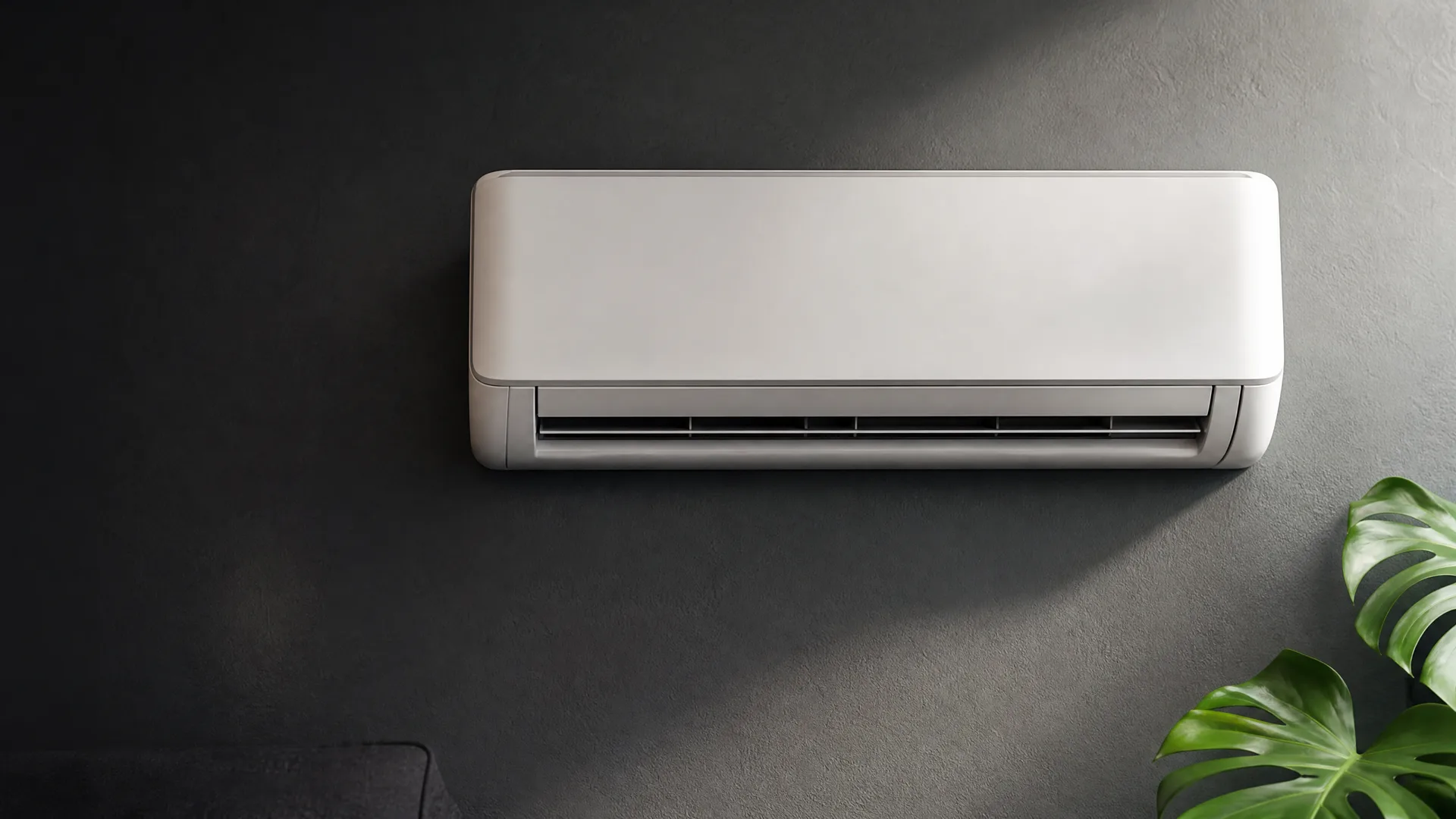
A white wall-mounted mini-split air conditioner on a dark grey textured wall, with a monstera plant leaf at the lower right corner.

Get your mini split to the right pro

New system or replacementMini-splitMaryland
Step 1 of 2

What ZIP code is the job in?