
A standard heat pump, in a Maryland winter
It heats fine most days, but once temperatures drop toward freezing, electric strips carry more of the load. Those strips are what push a winter electric bill up.

The right pro for this job
Maryland winters aren't brutal, but they're not mild either, and a heat pump has to keep working once the temperature drops toward freezing. With most homes here heating on electricity and power costing what it does, a cold-climate model is worth looking at closely. This page gets into how they hold up, what changes in summer humidity, and what to weigh before you put one in. If you want to skip the research, a local contractor can walk through your home and tell you what fits.
Get matchedYes, for most homes in Maryland. A standard heat pump starts losing its grip on heating somewhere in the 30s, and leans harder on backup electric strips to make up the difference. Those strips are what drive up a winter power bill, since straight electric heat costs more to run than a heat pump moving warmth from outside. A cold-climate heat pump keeps pulling heat from the air well below freezing without falling back on strip heat as often, so it holds the house warm through a Maryland January without the bill spiking the way it does with an older system. Summers here get sticky too, and the same unit that holds its output in the cold also handles the humidity once the heat and mugginess settle in. If your home heats on electricity, the difference shows up most on the days it's actually cold, not the mild ones.




The difference comes down to the compressor. A standard heat pump runs at one speed and shuts off when it can't keep up, leaning on backup strips to fill the gap. A cold-climate model has a variable-speed compressor that just ramps up instead, pulling more refrigerant through a vapor injection circuit to keep heat moving even when the air outside is cold enough to make that hard. The outdoor coil is built bigger too, so there's more surface area to pull heat from thin, cold air. The control board watches coil temperature closely, so it only runs a defrost cycle when frost has actually built up, not on a timer. Backup strips are still wired in, but on most Maryland homes the compressor does the work on its own. If you want to compare units, check the spec sheet for the rated output at 5 degrees. That number tells you what the compressor can still deliver when it's cold out, and it's the clearest way to tell a cold-climate model from a standard one.



You're out checking the mail in late March, and you stop at the side yard where the outdoor unit sits. Rust has crept along the base, the kind that's been building a few winters now. It kicked on fine all season, but you noticed the strips running more than they used to, and the bill showed it. Power in Maryland isn't cheap, and a unit that leans on electric heat instead of the compressor is spending more than it needs to. You crouch down, run a hand along the rust, and figure it's worth having someone look at whether this one's still doing its job or costing you more each month than it should. A contractor who knows these units could tell you which it is.
Skip the round of in-home estimates for a new heat pump.
You only hire the pro if you want to.
A standard heat pump's output drops as the air outside gets colder, right when a Maryland home needs it most. A cold-climate model holds most of its rated capacity down into the teens and single digits.
That matters in January and February here, when a standard unit would already be leaning on backup electric heat to fill the gap. A cold-climate heat pump keeps doing the job itself instead of handing it off to the strips.


It heats fine most days, but once temperatures drop toward freezing, electric strips carry more of the load. Those strips are what push a winter electric bill up.
It keeps drawing heat from outside air well into the teens and single digits, so the strips stay off longer and your electric bill doesn't carry that extra load.
You notice it most in the room you sit in longest. The air coming out of the vents feels cool rather than warm, even though the thermostat says the system is running. The unit cycles on more than it used to, and it seems to run longer each time without quite catching up. If you go outside, the outdoor unit may be working hard with frost built up on the coil. Inside, you might hear the system switch to a different sound, a lower hum, as the backup heat kicks in to cover the gap. That's the strips carrying the load a standard heat pump can't, and it's what shows up on the power bill once the month ends. A cold spell that runs a week or more makes this harder to miss, not easier.

The weather above has focused on winter so far, but a cold-climate heat pump works both directions. Summers here run humid, with the dew point averaging 64°F across June, July and August according to NOAA climate normals for Maryland. Air that heavy makes a system work harder to pull moisture out, not just to cool the room. A cold-climate heat pump's variable-speed compressor can run longer at low output instead of shutting off and on, which pulls more water out of the air over the course of a muggy day. You'd notice it as a house that feels dry and even, not just cold with a damp edge to it.
NASA POWER T2MDEW county cells weighted by homes



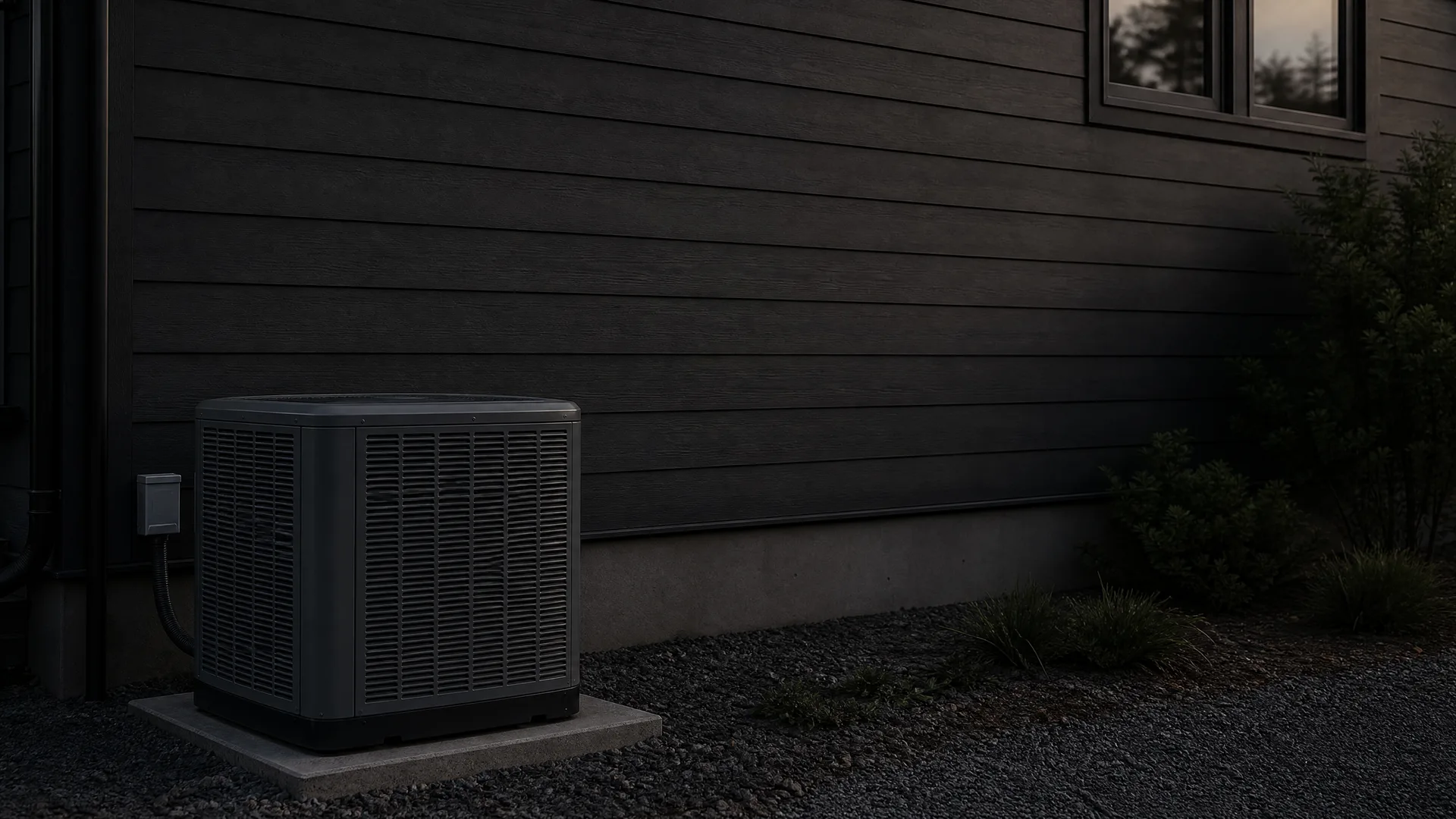
The unit cycles on, sits steady, and the lines stay frost-free in the mulched bed where it's planted. No rust streaking down the cabinet, no ice building on the coil. It's doing its job quietly, keeping the house even through whatever the thermostat is set to.

The same kind of unit, but the lines running to the disconnect box show the strain, coil caked instead of clean, cabinet showing rust at the base. It's still running, but it's leaning harder on backup heat to get there, and that shows up on the bill before it shows up as a breakdown.
At 19.53 cents per kilowatt-hour, every degree those backup strips add costs more here than in most states. A cold-climate heat pump leans on the compressor instead of the strips when it's cold out, so less of your winter heating comes from the most expensive source.
EIA-861 2025 statewide residential average
For most homes in Maryland, a cold-climate heat pump is worth the look. The reason comes down to what happens once the temperature drops toward freezing. A standard unit hands more and more of the job to electric strips, and at 19.53 cents per kilowatt-hour, that's the most expensive heat in the house. A cold-climate model keeps the compressor doing the work down into the teens and single digits, which is exactly when a Maryland winter asks the most of it. The same equipment carries over into summer, when the humidity sits heavy for months, so you're not trading one season's comfort for the other's.
The signs are worth paying attention to before another winter passes. A unit that short-cycles, vents that blow cool air while the thermostat says it's running, rust creeping up the cabinet, ice on the coil. Any one of those points to a system losing its grip on the cold rather than one working the way it should.
If you've gotten this far, you already know more than you did when you searched. What's left is finding someone who installs these systems and can look at your house specifically, instead of spending an afternoon calling around, repeating the same symptoms to three different companies, and sorting through quotes that don't line up. That part is the one this page can take off your plate.
Answer a few questions instead of calling shop after shop.