









Is a heat pump enough for winter in Gaithersburg, MD

Your new heat pump project goes to an installer who works in Montgomery County.

Get my match

A heat pump can heat your home through a Gaithersburg winter, but it needs help on the coldest days. Below about 35 degrees, the unit starts pulling less heat from the outside air, and most systems switch over to backup heat strips to keep up. That backup heat works, but it costs more to run than the heat pump itself. If yours is sized and set up right for this area, it should keep the house warm through January without much strain. If it's struggling, running constantly, or the backup heat seems to be carrying most of the load, that usually points to a system that isn't matched to winters here, or one that needs a look.

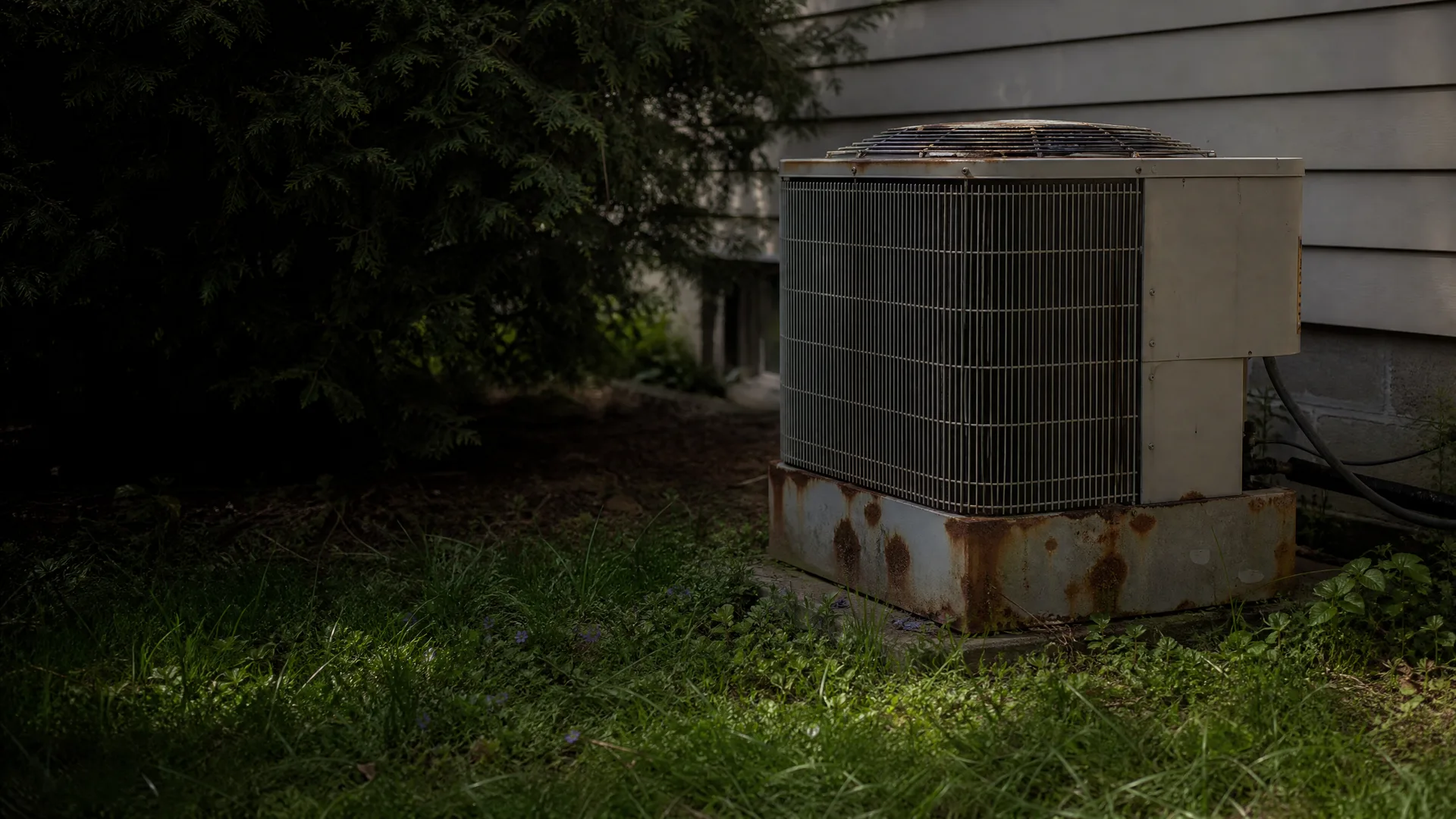
An outdoor air conditioner or heat pump condenser unit sits on a rusted concrete pad beside a house with horizontal siding, surrounded by grass and dark evergreen foliage.

You walk out to the side yard in March to coil up the garden hose and you see it: the outdoor unit, rust creeping along the base where the panel meets the pad. It is still running fine. It kept the house warm all winter, even on the nights it dropped into the teens and the strips kicked on to help it along. But the rust is new since last spring, and the unit has sat through a few more Montgomery County winters than it used to have left. You crouch down, knock a flake of it loose with your thumbnail, and figure you will mention it next time someone is out here looking at the system.

Can a heat pump keep up with a Gaithersburg winter?

  • Winter nights average 27°F

    Nights here average 27°F in December, January and February. That's cold enough that your heat pump will lean on backup heat strips more nights than not.

  • Heat runs October through April

    Heat runs about seven months a year, October through April, longer than most places. Your system works through a lot more cold weather than its size alone suggests.

  • Cooling runs June through September

    Cooling only runs June through September. The same unit that struggles on the coldest nights has an easier four months ahead each summer.

NOAA nClimDiv 1991-2020

How your heat pump actually works

  • A heat pump moves heat instead of making it, pulling warmth out of outside air even when that air feels cold.
  • The reversing valve is what switches the system between heating and cooling by changing which direction the refrigerant flows.
  • As outdoor air drops, the refrigerant carries less heat per cycle, so the unit has to run longer to deliver the same warmth.
  • The defrost cycle briefly reverses the system to melt frost off the outdoor coil, which can feel like the heat shutting off for a few minutes.
  • A thermostat set to emergency heat skips the heat pump entirely and runs the backup strips alone, which costs more to run.
  • Auxiliary heat kicks in automatically through a second stage on the thermostat, not through a separate switch you have to flip.

A heat pump doesn't burn anything to make heat. It moves heat that's already in the outside air into your house, using a refrigerant that absorbs warmth outdoors and releases it indoors. The reversing valve is what makes this possible both ways. Flip the system to cooling and the valve sends refrigerant one direction. Flip it to heating and the valve reverses that flow, so the same equipment that cooled your house in July can heat it in January.

The colder it gets outside, the harder the system has to work. Refrigerant pulls less heat out of 30 degree air than it does out of 50 degree air, so on a cold night the compressor runs longer and more often to put out the same warmth. You'll also notice the system pause and seem to blow cool air for a few minutes at a time. That's the defrost cycle, where the system briefly reverses itself to melt frost building up on the outdoor coil. It's normal and it passes.

Backup heat is built into the thermostat, not a separate system you turn on. When the heat pump alone can't keep up, a second stage on the thermostat brings on electric heat strips automatically, working alongside the heat pump rather than instead of it. There's a separate setting called emergency heat, which cuts the heat pump out entirely and runs the strips by themselves. That setting is for when the heat pump has failed, not for a cold snap, and it costs more to run.

An older man with gray hair and a beard, wearing a dark coat flecked with snow, stands smiling in a dimly lit home hallway with lamps, a framed picture, and a wooden door.
A gray-haired, bearded man in a dark coat dusted with snow stands just inside an open door of a warmly lit home, looking off to the side.
An older bearded man in a dark snow-dusted coat and gray scarf stands just inside a dimly lit home entry, with a framed picture, lit table lamp, and an adjoining room with a fireplace behind him, and snow visible through the open door.
A gray-haired bearded man in a dark coat and scarf dusted with snow stands smiling in a dimly lit entryway with a white front door, a side table with a lit lamp, an oval mirror, and a patterned rug.

Heat pump alone versus heat pump with gas backup

A heat pump by itself keeps the house warm through most of a Gaithersburg winter, but it leans on electric strip heat whenever the outdoor temperature drops into the 30s and below. Strip heat warms the air by resistance, the same way a toaster does, and it draws a lot of power to do it. Since Montgomery County power rates run high, those nights show up on the bill. A heat pump paired with a gas furnace switches over to gas once outdoor temperatures drop past a set point, instead of switching to strip heat. Gas costs less to run than strip heat does, and most homes in this area already have a gas line, since most homes here heat with gas.

What changes if you pair it with gas

A dual fuel setup still runs on the heat pump most of the time. It only calls for gas on the coldest nights, so you get the lower operating cost of a heat pump for most of the winter and the cheaper backup for the rest. The tradeoff is the system itself: it costs more to install than a heat pump alone, since it needs the furnace, the gas connection and the controls that switch between the two. If your home already has a gas furnace, a contractor can tell you whether it can pair with a heat pump as is, or whether it needs to be replaced as part of the switch.

An outdoor air conditioner condenser unit on a concrete pad beside a house with horizontal lap siding, with refrigerant lines and a gray electrical disconnect box on the wall, surrounded by bare dirt.
Before you get your heat pump installation
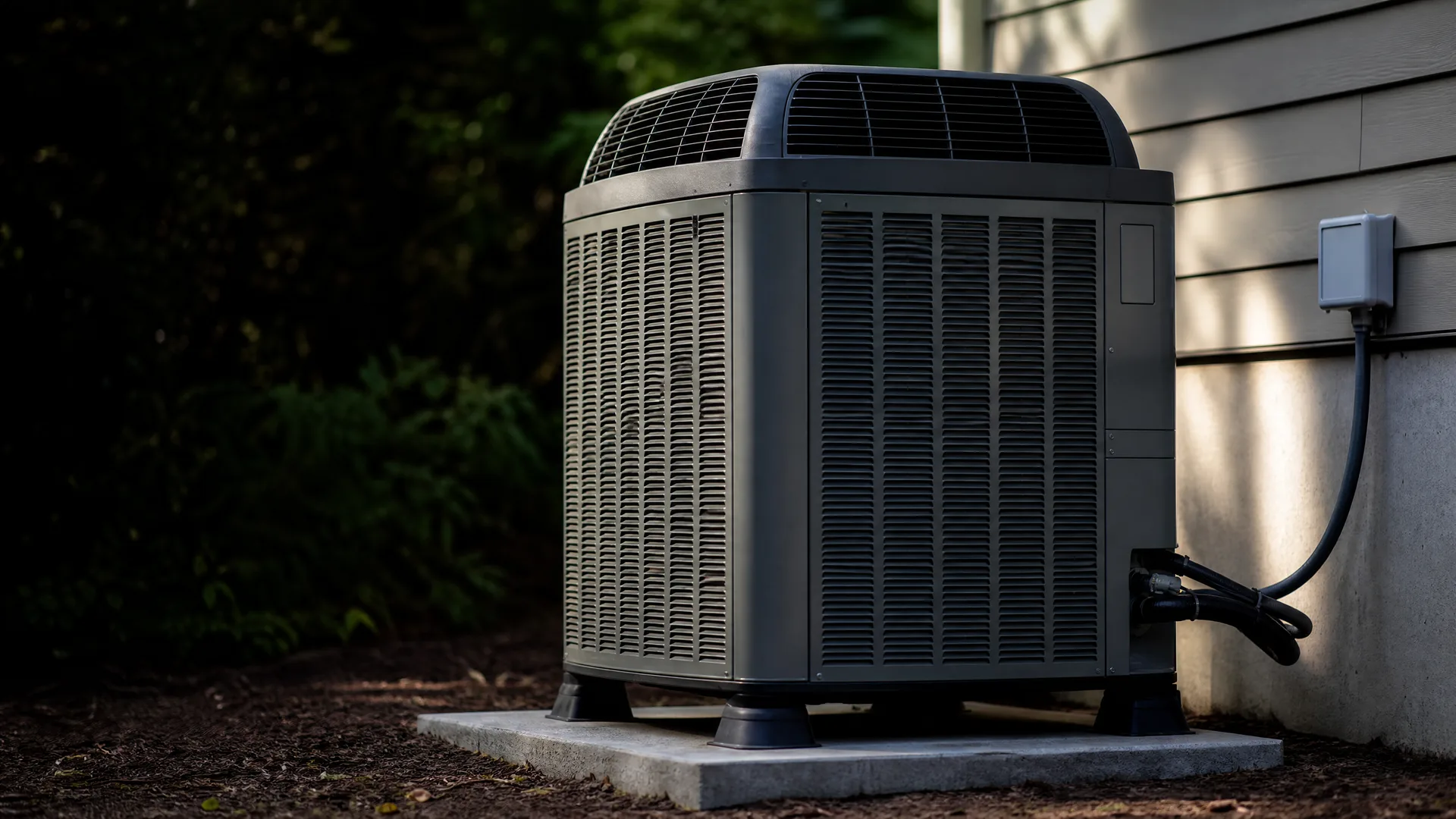
A gray outdoor condenser unit on a concrete pad beside a house with horizontal lap siding, with an electrical disconnect box and insulated refrigerant lines on the wall, gravel in the foreground and a planting bed at left.
After you get your heat pump installation

Is your heat pump actually keeping up this winter

Walk through the house on a cold night and put your hand over a supply vent. If the air feels cool instead of warm, that's not a problem by itself. It's probably strip heat cycling on to cover the gap, and that's normal once it gets cold enough. What's worth paying attention to is how long the system runs to hold the temperature, and whether a room or two stays chilly no matter what the thermostat says. A unit that runs almost constantly, or a house that never quite reaches the set temperature on the coldest nights, is telling you it's falling behind. Left alone, that usually shows up as a higher power bill before it shows up as anything else.

A woman wrapped in a thick cream knit blanket sits in a chair with an open book on her lap, beside a lit table lamp and a frost-covered window at night.
A woman in a cream knit sweater sits with eyes closed in an armchair beside an open window showing orange and yellow autumn foliage, with a mug and books on a small side table.

Get matched with a heat pump pro in Montgomery County

Skip collecting and comparing quotes for the new heat pump.

It costs nothing to send, and you don't have to hire anyone.

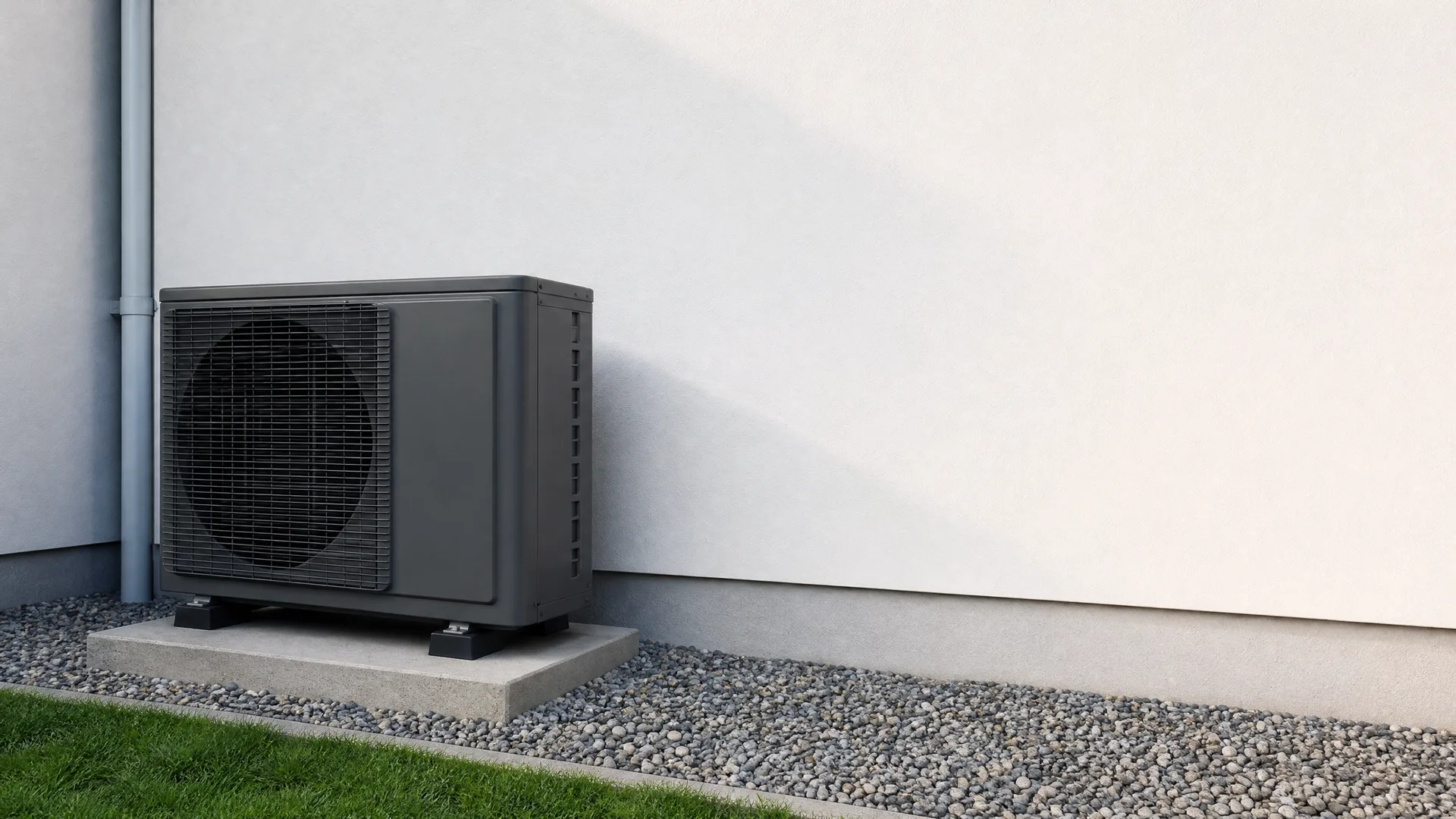
A dark grey air-source heat pump unit on a concrete pad beside a light-coloured rendered wall, surrounded by gravel with a strip of grass in the foreground and a downpipe at the left.

How the system decides to switch

A thermostat set up for a heat pump reads both the indoor temperature and how far the system is from reaching it. When the gap gets too wide for the heat pump alone to close in a reasonable time, the thermostat calls for backup heat strips to kick in alongside it. That call has nothing to do with the calendar. It happens on any night cold enough to trigger it, whether that's December or a cold snap in April.

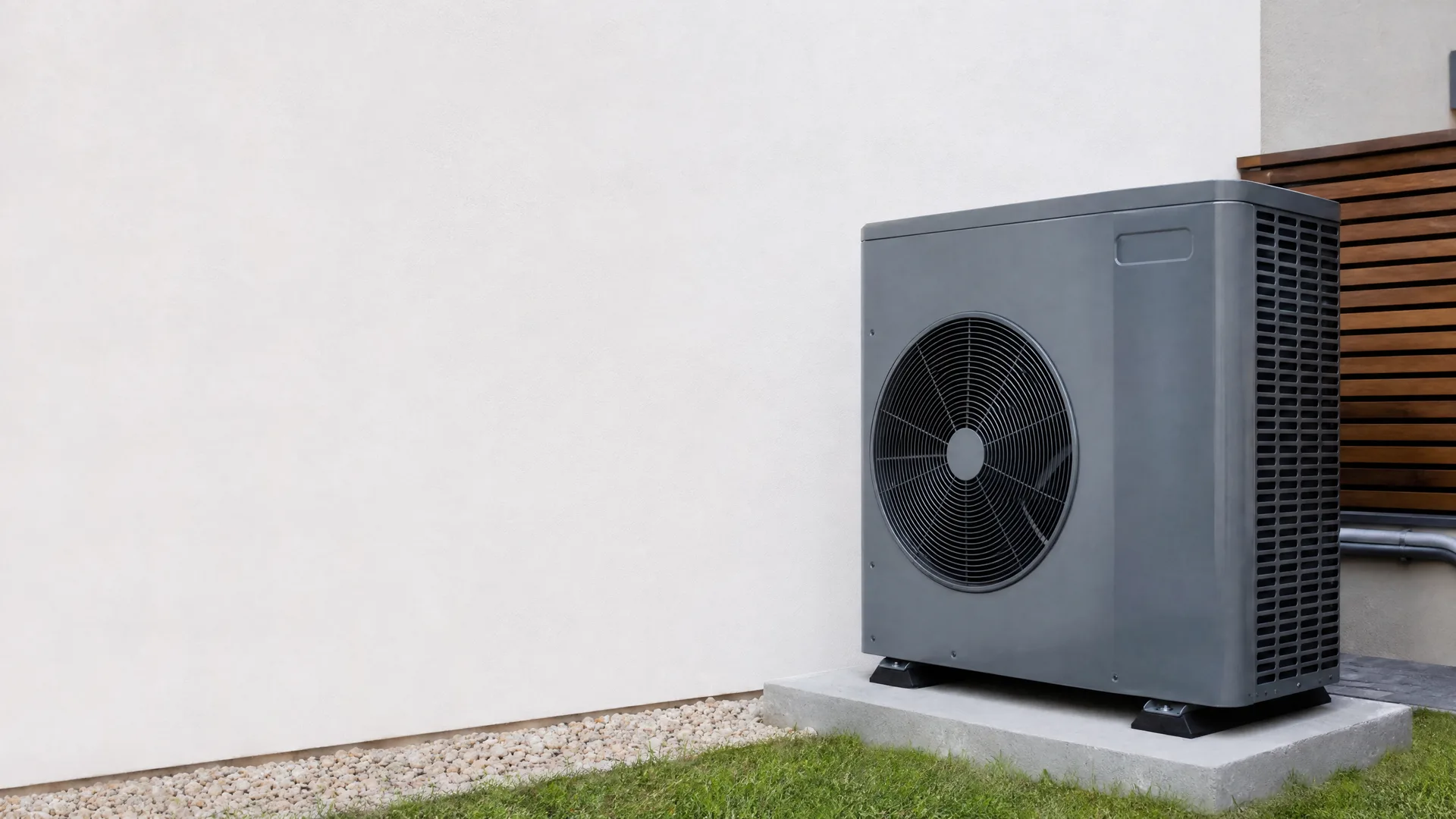
A gray outdoor heat pump unit on a concrete pad beside a white stuccoed wall, with gravel and grass in front and a wooden slat screen behind.

Why the coil frosts over

On a cold, damp night the outdoor coil can pick up a layer of frost, the same way a freezer does. Left alone, that frost blocks airflow and the unit can't pull heat from the air anymore. So the system runs a defrost cycle: it reverses briefly, sends warm refrigerant to the outdoor coil to melt the frost, and switches back once it clears. You may notice the outdoor fan stop and steam rise off the unit. That's the defrost cycle working, not a malfunction.

Heat Pump Alone or With Gas Backup

Heat pump only

  • Covers the house down into the 30s without any help, which is most of a Gaithersburg winter.
  • Below about 35 degrees it pulls less heat from the outside air, so recovery after a setback takes longer.
  • On the coldest nights, in the teens and single digits, it can fall behind and leave the house a few degrees under the thermostat setting.
  • Electric strip heat is built into the air handler as a backup, so the system does not need a second fuel source to get through those nights.
  • Running strips often adds to the power bill, since electric rates here are among the highest in the country.
  • No gas line or furnace to maintain, just the one system handling both summer and winter.

Heat pump with gas backup

  • The furnace takes over once outdoor temperatures drop low enough that the heat pump alone cannot keep up.
  • Gas heat recovers faster after a cold night than strip heat does, since it is not limited by how cold the outside air is.
  • Most homes in the area already heat with gas, so the furnace side often uses ductwork and a gas line already in place.
  • Two systems means two things that can need service instead of one, the heat pump and the furnace both.
  • The thermostat has to be set up to switch between the two at the right point, usually somewhere in the 30s.
  • Gas tends to cost less to run on the coldest days than electric strip heat does for the same job.
A gray outdoor air conditioner condenser unit on a concrete pad beside a house with horizontal lap siding and a stone veneer base, with a conduit running to a wall-mounted disconnect box and shrubs and evergreen trees to the left.

Running clean

This is a heat pump keeping up. The pad is clear, the lines are intact, and the disconnect box is doing its job off to the side. A unit kept clear of leaves and mulch buildup moves air the way it's supposed to, which matters more once overnight temperatures drop into the 20s.


An outdoor air conditioner condenser unit with rust spots on its top grille sits on a concrete pad beside a house with light horizontal siding, with conduit lines and an electrical box on the wall and a mulch bed to the right.

Falling behind

Rust on the fan grille and dirt packed around the base won't stop a heat pump from running, but they're signs it's working harder than it should. A unit in this shape is more likely to lean on backup heat strips sooner in the night, and for longer, than one that's been kept clean.

Power here costs 21.03 cents per kilowatt-hour

At 21.03 cents per kilowatt-hour, every hour your heat pump leans on backup strip heat shows up on the bill fast, since strip heat runs on pure electric resistance with none of the efficiency the compressor gives you. A thermostat set a few degrees lower overnight cuts into how often that backup kicks in.

EIA-861 2025

  1. Thermostat calls for heat and the reversing valve sets the system to heating mode.

  2. The outdoor coil pulls heat out of the outside air.

  3. The compressor concentrates that heat and sends it inside as warm refrigerant.

  4. The indoor coil releases the heat into air moving through the ducts.

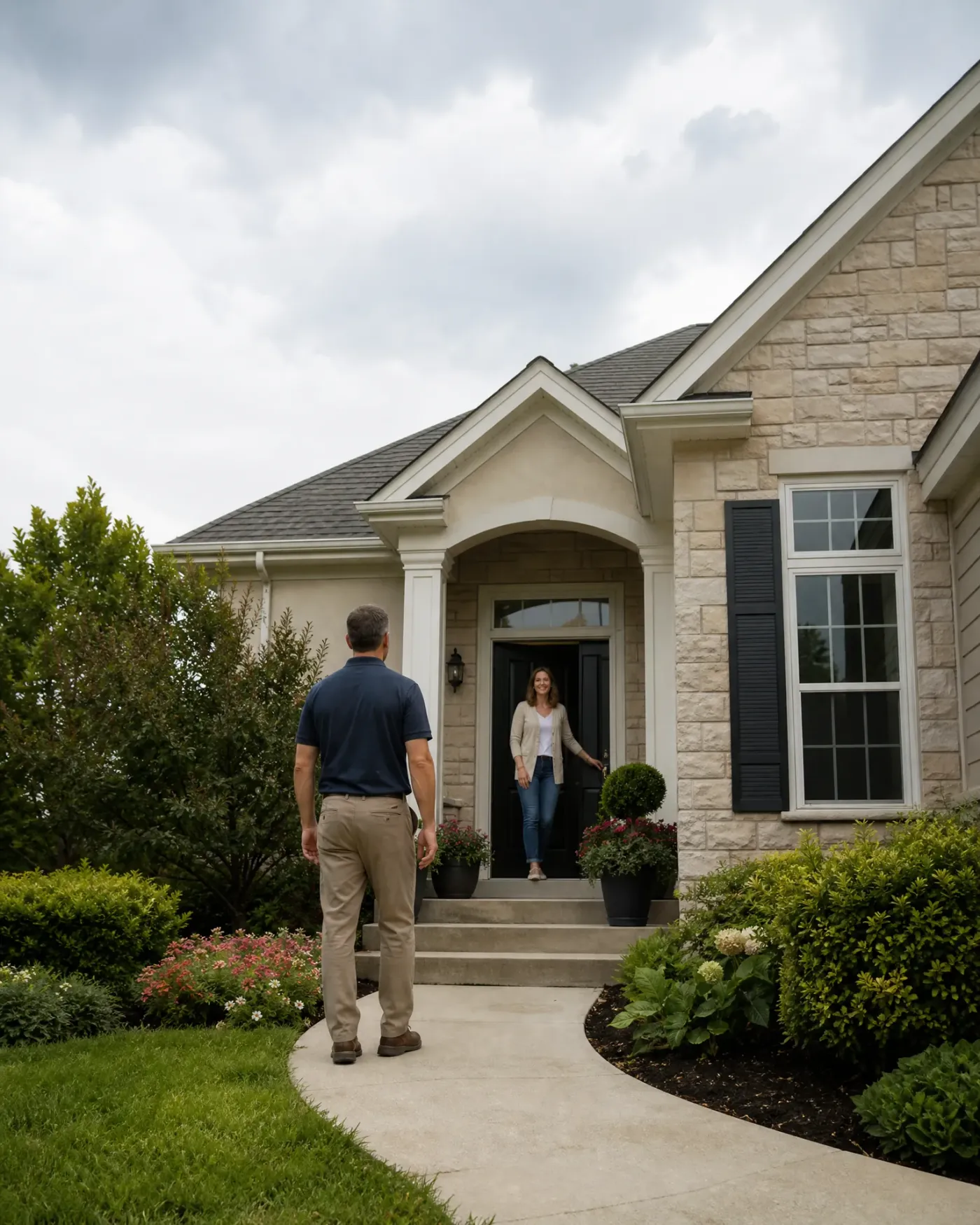
A man in a navy polo and khaki pants walks up a curved concrete path toward a stone-faced house where a woman stands in the open front doorway, with shrubs, flowers and potted plants flanking the entry steps under a cloudy sky.

So, is a heat pump enough for winter here

It is, most nights. A heat pump handles a Gaithersburg winter on its own through the 30s and leans on backup heat strips when it drops into the teens and below. That's not a sign anything is wrong. It's how the system was designed to work in this climate.

What matters now is whether your setup is sized and installed to do that well, and that's not something you can answer by looking at the unit in your side yard. Every house has different duct runs, different heat loss, different quirks that decide how much backup heat it needs and how often. A contractor who installs these systems in Montgomery County can look at your specific house and tell you where you stand, instead of you guessing from a number on a thermostat.

A gray upholstered sofa with a beige cushion and knit blanket beside a curtained window, with a white mug and a book on a dark wooden table in the foreground and a lit lamp in the background.
An outdoor air conditioning or heat pump condenser unit on a concrete pad beside a house with horizontal siding, with a wall-mounted disconnect box and refrigerant lines, and dark shrubs to the left.

Find a heat pump installation pro in Montgomery County

New system or replacementHeat PumpMontgomery County, MD
Step 1 of 2

What ZIP code is the job in?