Profile view of a bearded man wearing a dark baseball cap and a dark gray T-shirt against a plain off-white background.

Is a mini split worth it in a Maryland home

New system or replacementMini-splitMaryland
Step 1 of 2

What ZIP code is the job in?

Is a mini split actually worth it in Maryland?

You already have the mini split installed, and now you're wondering if it was the right call, or if you're deciding whether to keep it running hard through another Maryland summer instead of falling back on something else. Between the humidity in July and electric heat bills in January, you want to know the unit is actually earning its keep, not just sitting there.

Yes, especially if your home heats with electricity

A mini split earns its place in a Maryland home because it does two jobs at once: it pulls humidity out of the air all summer, and it heats efficiently all winter without the cost of electric resistance heat. Most homes here heat with electricity, and that's the expensive way to do it. A mini split moves heat instead of generating it, so it uses less power for the same warmth. In summer, it runs steadily through the sticky months, which keeps moisture down in a way a system that cycles on and off can struggle to match. For a home already set up this way, that combination is worth keeping.

A white wall-mounted mini-split air conditioner installed high on a beige interior wall near the ceiling molding, with a light curtain and curtain rod at the left edge.

Running clean and quiet

A mini split that's keeping up looks like this: steady airflow, no strain, rooms that cool down fast even when it's humid outside. The coil stays clean, the fan sounds normal, and it holds the temperature you set without the compressor cycling on and off all day.

A wall-mounted mini-split air conditioner indoor unit with a discolored cream plastic casing and dusty outlet vanes, installed high on a plain light-colored interior wall near the ceiling.

Struggling through summer

A yellowed casing and dust buildup usually mean years of hard running without a filter cleaning or a coil check. Once a mini split looks like this, it's often pulling more power to do the same job, and Maryland summers give it little chance to rest and catch up.

Is Yours Earning Its Keep

Mini split pulling its weight

  • In a room that runs on electric heat now, a mini split moves heat instead of making it, so it costs less to run through a Maryland winter.
  • On the worst August days it drops humidity fast because the coil stays cold and keeps pulling moisture even after the room hits your set temperature.
  • Each head answers to its own thermostat, so the room where someone naps or works stays at the temperature that room needs, not the whole house's average.
  • A mini split sized right for its room reaches that temperature in minutes, not the slow creep you get from a system fighting rooms it was never meant to cover.
  • Filters in the indoor unit are easy to reach and clean, so the air moving through a nursery or a bedroom stays cleaner without extra work.

Mini split falling short

  • A mini split chosen too small for its room runs constantly through July and August and still leaves the room warmer than the thermostat says.
  • If it was installed to cover more square footage than one head can handle, back bedrooms stay muggy while the room with the unit feels fine.
  • A clogged outdoor coil cuts how much heat the system can move, so on the coldest Maryland mornings a baseboard heater ends up carrying the load instead.
  • Ice building up on the outdoor unit in winter means the system is working harder than it should, and the room it serves cools off instead of warming up.
  • A mini split that short cycles, kicking on and off every few minutes, wears the compressor faster and never gets the room properly dry in the summer humidity.
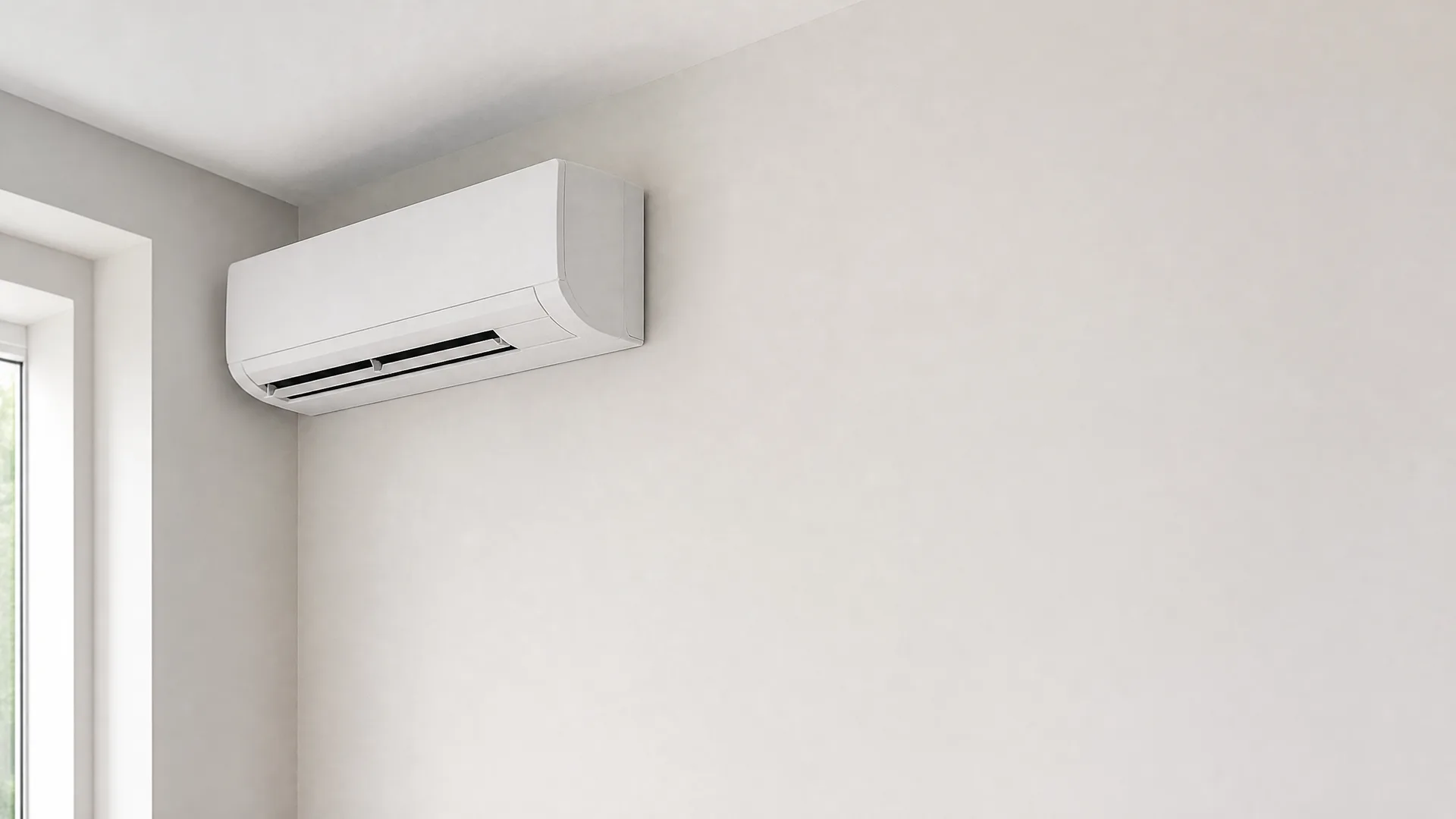
A white wall-mounted mini-split air conditioner installed high on a plain light-colored interior wall near a corner, with a window frame at the left edge.

Why electric heat costs so much

Baseboard or a resistance furnace makes heat by running electricity through metal. Every watt that goes in comes out as heat, nothing more. A mini split moves heat from the outside air into the room instead of generating it, so it delivers more heat per watt than resistance heat does. That difference shows up every month power is expensive, from the first cold night through the end of winter.

A white wall-mounted mini-split air conditioner installed near the top of an interior corner wall, with large blank light-colored wall space to the left.

What the sticky air is doing

A mini split's indoor coil runs cold and stays cold while the unit is on, so moisture in the air condenses on it and drains away. That's separate from the thermostat reading. A room can hit 72 and still feel damp if the coil cycles on and off too fast to pull the moisture down. A properly sized mini split keeps running long enough to dry the air out, not just cool it.

Power costs 19.53 cents per kilowatt-hour statewide

At that rate, every kilowatt your mini split moves instead of generates is money kept out of the bill. A baseboard heater makes you pay for every watt it burns. A mini split that's sized and installed right only has to pay for the heat it moves, not the heat it makes.

EIA-861 2025 statewide residential average

A woman in a gray sweatshirt with her hair pinned up sits in a living room looking off to the side, with a pale sectional sofa, cushions, a potted plant, framed wall art and a large window behind her.
A woman with long wavy brown hair in a gray top and dark cardigan stands near a window, looking to the side, with a living room, fireplace and round mirror blurred behind her.
A woman with curly dark hair in a grey long-sleeved top sits on a grey couch with patterned cushions, looking off to the side in a softly lit living room.
A woman in a gray knit sweater with her hair in a bun sits on a couch indoors, smiling and looking off to the side, with a dining area and framed picture blurred in the background.

Send one request and you're done looking

A mini split earns its keep in a Maryland home, but only when it's running the way it should. If yours short cycles, freezes up, or can't pull the humidity down on a sticky July afternoon, it's not doing the job it was bought to do, and that gap shows up on the electric bill either way. Same thing in winter: a unit that's struggling to keep a room warm is leaning on backup heat, and backup heat here is expensive. Worth it isn't a one-time answer. It depends on whether the system was sized right for the room, whether the install was done well, and whether it's been serviced since. A local contractor who works on these units all year, through the humid stretch and the cold snaps both, can tell you quickly whether yours is actually paying you back or just running up power bills while you wait for it to fail outright.

What it comes down to

  • A mini split that holds its set temperature through a muggy Maryland afternoon is earning its keep.
  • In a home that heats with electricity, a mini split that moves heat instead of making it costs less to run all winter.
  • Short cycling, freezing up, or weak humidity control on a sticky day means it is not performing the way it was bought to.
  • Whether it is worth it in your home comes down to how it was sized and installed, not just the brand on the unit.
  • A unit matched to the room and set up right will outperform one that was undersized or installed to cut corners.
  • The answer is in how the system runs right now, not in what it promised when it went in.

A mini split is worth it in a Maryland home when it runs the way it was designed to. That's the whole answer. Everything else is detail that either supports that or explains why it isn't happening in your house. If the unit holds its set temperature through a muggy afternoon without running constantly, and your winter electric bill reflects moving heat instead of generating it, the install did its job. If it's short cycling, freezing up, or leaving the air damp on a sticky day, something in the sizing or the setup is working against you, and no brand name fixes that on its own.

This isn't a judgment on mini splits as a technology. A unit sized to the room and installed with the lines charged correctly will outperform a bigger, more expensive model that was rushed in or matched poorly to the space. The equipment itself isn't what decides whether you got your money's worth. The installation is.

So the real question isn't whether mini splits work in Maryland. They do, in homes across the state, through both the humidity and the electric heating months. The question is whether yours is one of them right now. Look at how it's actually performing this week, not at what the brochure said when it went in. That's where the answer to "was it worth it" actually lives, and it's the only place worth looking.

A woman with her hair in a bun sits wrapped in a beige knitted blanket on a couch, holding a sleeping child against her chest in a warmly lit room with a lamp and houseplant in the background.
A smiling older woman with gray shoulder-length hair in a cream cable-knit turtleneck sweater stands behind a wooden board holding a round loaf of bread, in a warmly lit kitchen with a dark window and shelves behind her.

Finding a pro stops being your job

A mini split is worth it in a Maryland home when it's installed to match the room and the install is done right. That's what lets it cut your electric heat bill in the winter and pull the humidity down fast in a muggy summer. A local contractor who installs these year-round can size it correctly, catch the mistakes that cause short cycling or weak cooling, and get it running the way it's supposed to. Send the request and one licensed installer near you takes it from there.

Let a pro reach out

The pro who reaches out is licensed in Maryland.

There's no charge for the request.