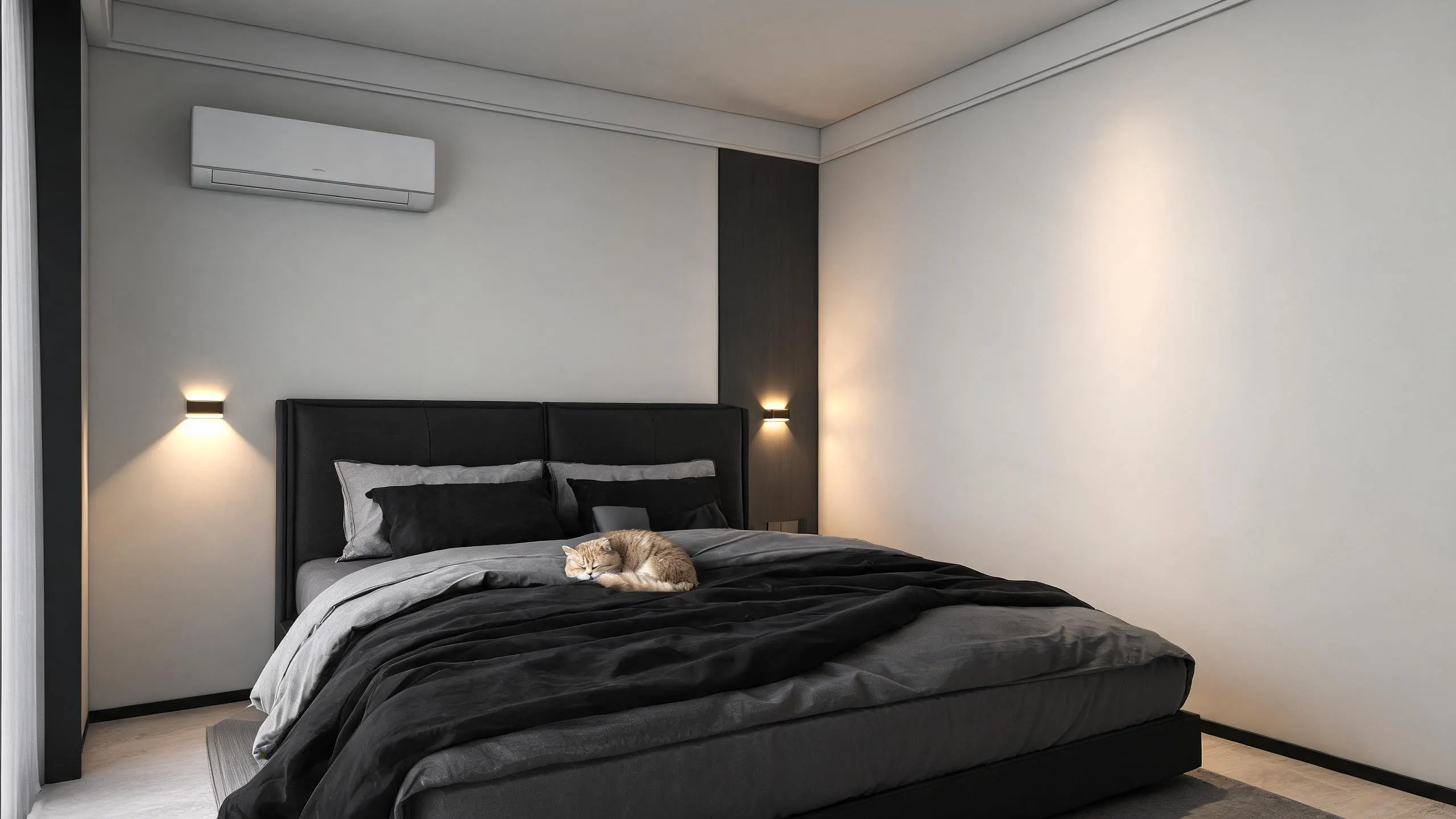





An orange cat sleeps on a neatly made bed with dark grey bedding in a minimalist bedroom with wall sconces and a mounted air conditioner.

Mini Split Installation in Gaithersburg, MD

Tell us about the job

Takes about a minute. No obligation.

New system or replacementMini-splitMontgomery County, MD
Step 1 of 2

What ZIP code is the job in?

Maryland electricity ran 17.86 cents per kilowatthour in 2024. A mini split spends most of its life running in low gear to hold a temperature, not blasting at full output, and it moves heat rather than generating it the way a space heater or electric baseboard does. That matters more as the rate per kilowatthour climbs, because every point of efficiency compounds against a higher number. The efficiency rating on the unit you choose is what decides how much of that rate you pay, month after month, for as long as it heats and cools this house.

7 months
October through April, your system heats
4 months
June through September, it cools
27°F
the average winter night it heats against
85°F
the average summer afternoon it cools against
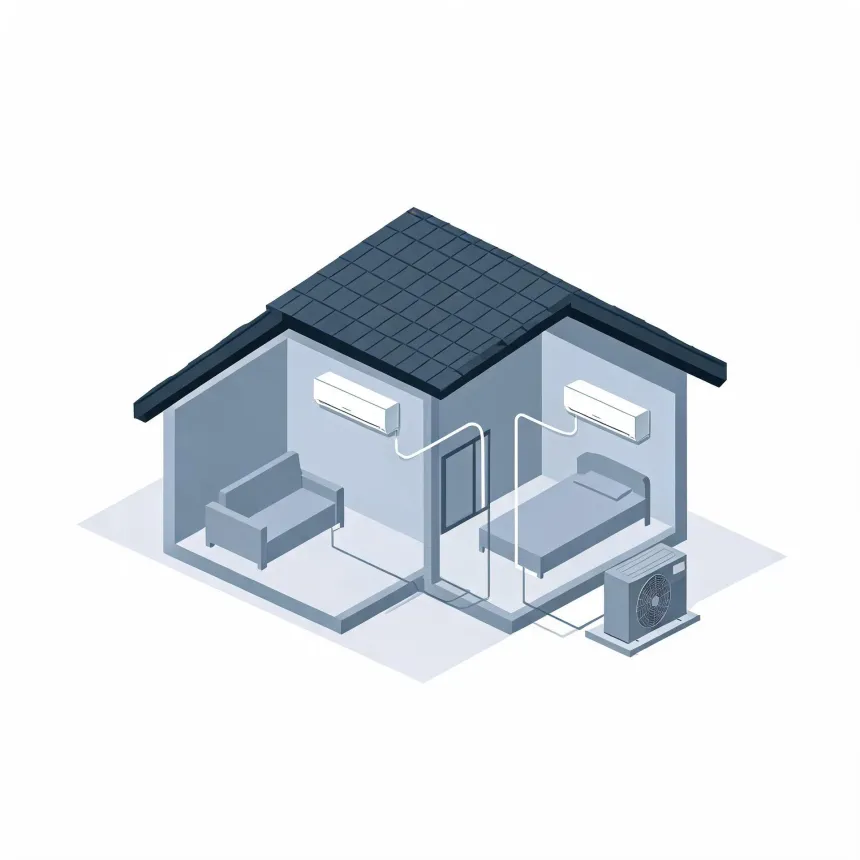
Isometric illustration of a cutaway house with two rooms, showing two wall-mounted indoor air conditioning units connected by lines to a single outdoor condenser unit outside the building.
Your system heats October through April and cools June through September.

NOAA nClimDiv, 1991–2020 normals

Gas heats 53.1% of homes in Montgomery County, more than any other fuel.

A mini split works alongside that furnace or replaces electric heat, not the other way around.

May is the month to put in a mini split, before June asks it to work

Cooling runs June through September
Summer afternoons average 85°F
443 damaging wind events from 2015 to 2024
Weather here is no reason to size up a mini split443 damaging wind events in Montgomery County between 2015 and 2024, and none of them call for going bigger than this house needs

Gaithersburg sits in climate zone 4A, which asks real work of a system both in winter and in summer. Any ductless heat pump installed here falls under the same federal rule as other split systems, so a unit manufactured from 2023 on has to hit at least 14.3 SEER2 for cooling and 7.5 HSPF2 for heating. That floor is what you're comparing against when a contractor quotes you a unit's rating. Going above it is your choice, but nothing sold new can legally go below it.

Efficiency pays here

Power costs more here, so an efficient system pays you back on every bill.

Find a contractor
A white outdoor air conditioner condenser unit mounted on metal wall brackets against gray horizontal siding, with a blue sky and white clouds behind it.

The old system has to come out before the new one goes in

If the old system is a window unit or electric baseboard, removal is simple, there's nothing connected to the house beyond a plug or a line to the breaker. If the old system is a furnace and central air paired with ductwork, the ducts usually stay. A mini split doesn't use them, so they either get capped off or left in place for a backup heat source. An old central air condenser gets disconnected from its refrigerant line and hauled off, and that line set is either reused or replaced depending on its condition. Any system being retired that uses refrigerant has to be recovered by a licensed technician before the unit is removed, that refrigerant can't just be vented to the air. If the old equipment runs on gas, the gas line serving it gets properly capped, not just left open. None of this is work a homeowner does alongside the installer, it happens as part of the same job.

How many zones you're running

A single indoor head connected to one outdoor unit is the simplest install there is. Add a second or third zone off the same outdoor unit and the job grows. More line set, more mounting, more wall penetrations, and a bigger outdoor unit to drive all of them. Pricing a mini split means pricing the number of rooms it has to cover, not just the equipment itself.
What the line set has to cross

The refrigerant line runs from the outdoor unit to each indoor head through a wall, and sometimes through an attic or a crawlspace to get there. A short, straight run through one wall is quick work. A run that has to snake through finished space, go up a level, or cross brick or stone takes longer and asks more of whoever is installing it. Where the outdoor unit can sit, and how far it sits from the indoor heads, shapes the labor more than the equipment does.

Sizing a mini split comes down to the heat load of the room it's covering, not the square footage alone. A contractor works through how many windows a room has, which way it faces, how high the ceiling runs, and what's on the other side of each wall. That calculation is what decides the output of the indoor head, measured against the outdoor unit's capacity to match it. Go too big and the unit cools the room fast, shuts off, and starts again a few minutes later, cycling on and off all day without ever running long enough to pull the moisture out of the air. Go too small and it runs constantly, straining to hold a temperature it can't quite reach. Either mistake shortens the life of the compressor. The right size runs long, steady stretches at low output, which is where a mini split is both quietest and most efficient.

Install day starts outside, not in. The outdoor unit gets mounted on a pad or brackets, leveled, and given clear space around it to pull air through. Inside, each indoor head goes up on the wall it was measured for, and the line set runs between them through a single hole drilled for that purpose. Once the lines are connected, the system gets evacuated with a vacuum pump to pull out moisture and air, because any left behind damages the compressor once refrigerant starts moving. Only after it holds vacuum does the installer release refrigerant into the lines and run the system through its paces, checking temperatures at each head before calling the job done. A single zone can wrap up in a day. More zones, or a line set that has to cross framing or climb a level, stretches it longer.