


Running clean
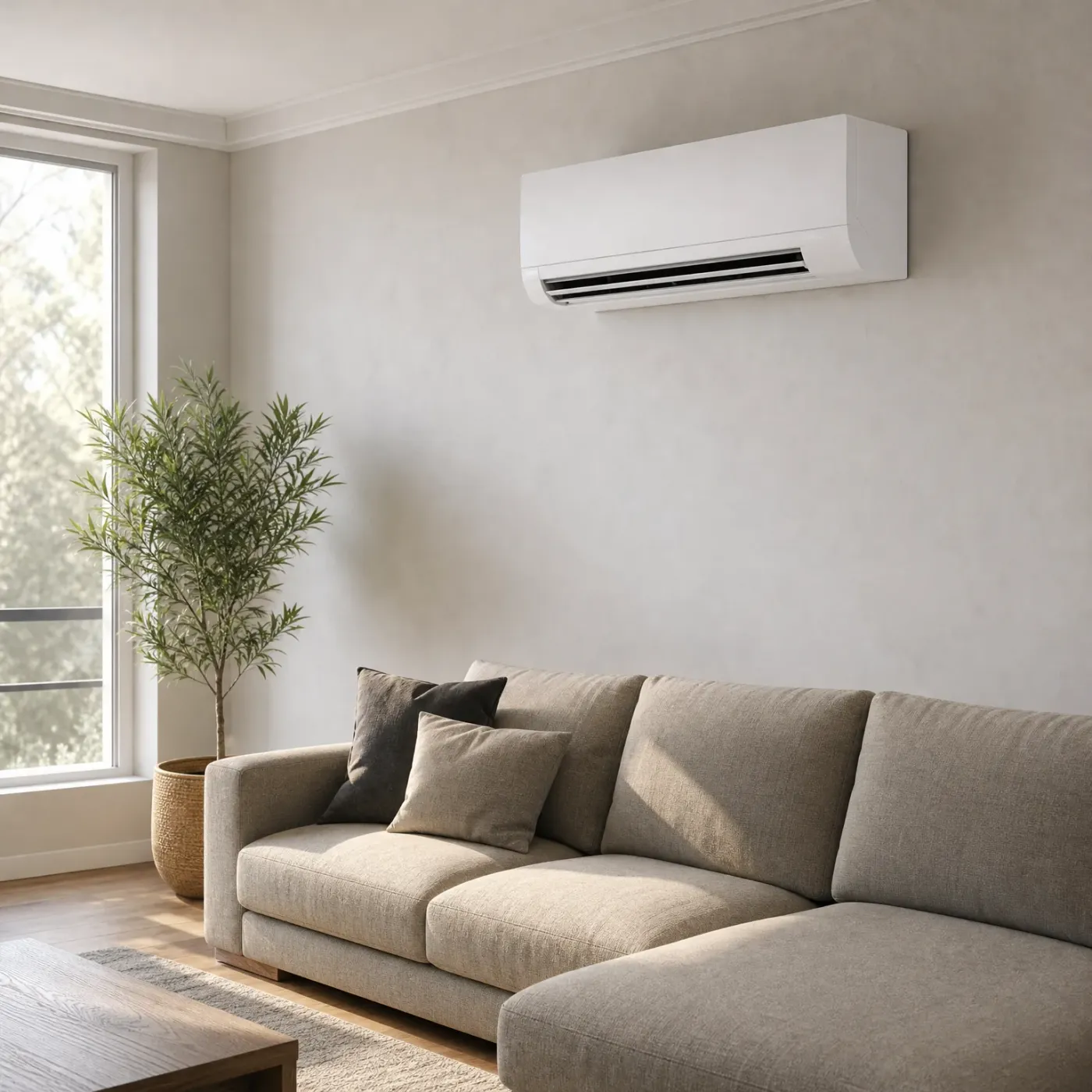
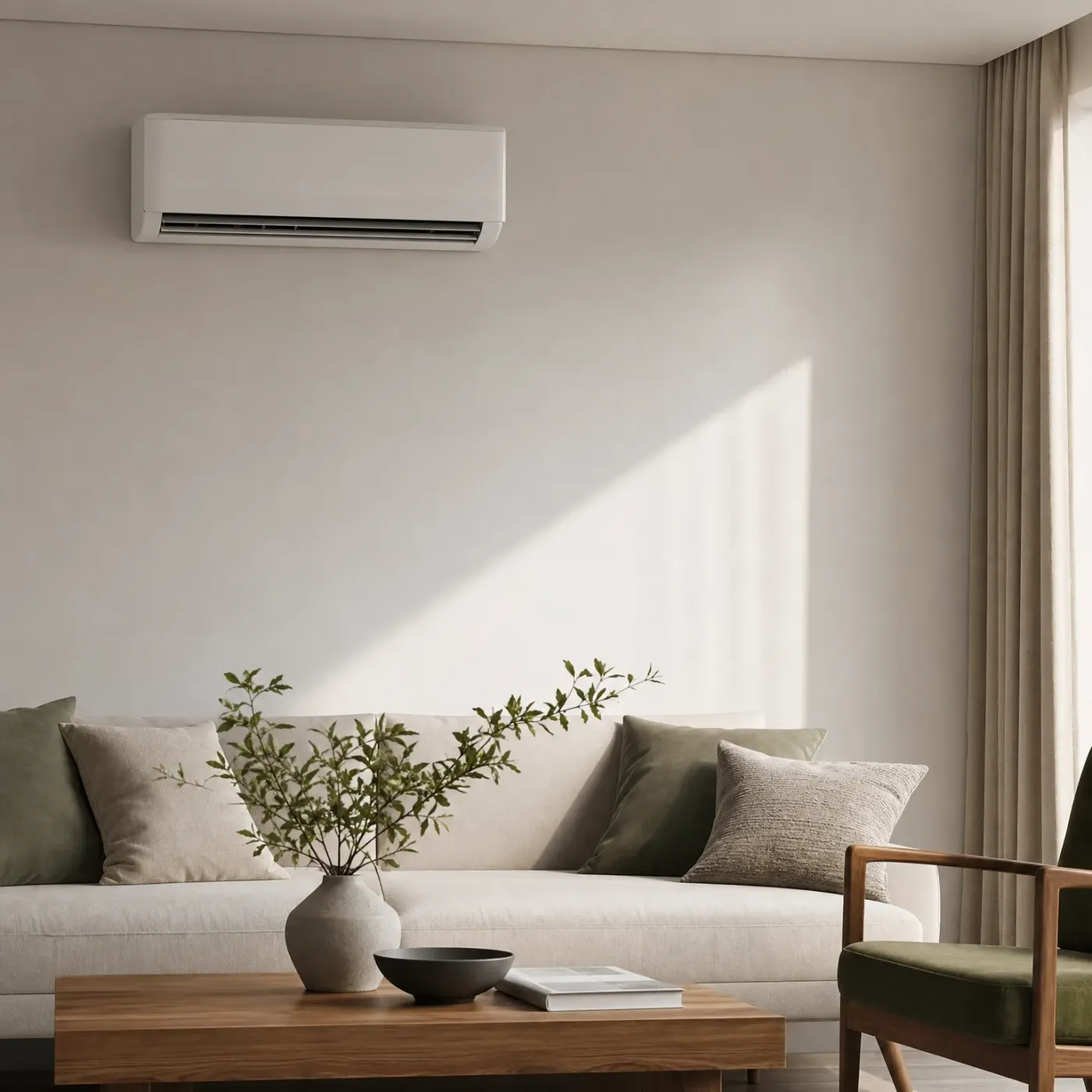
A mini split that's heating well looks plain: a clean white case, warm air coming steady from the vents, no streaking down the wall below it. Nothing about it calls attention to itself, inside or out, through a cold Bowie night.
A mini split that won't heat is usually stuck in defrost or losing the fight against the cold outside. Below about 30 to 35 degrees, the outdoor unit has to run a defrost cycle to clear frost off its coil, and while it's defrosting it blows cool air or no air at all, not heat. On a cold Bowie night that can mean long stretches where the indoor head just runs fan with no warmth behind it. It can also mean low refrigerant, a failing defrost sensor, or a reversing valve stuck in the wrong position, any of which keeps the system from ever switching back to heat mode. If the outdoor unit is caked in ice and staying that way, or the indoor head is blowing room-temperature air for more than twenty minutes at a stretch, something beyond normal defrosting is wrong. A system that can't shake the cold once winter sets in needs a technician to find which part failed before the house gets any colder.
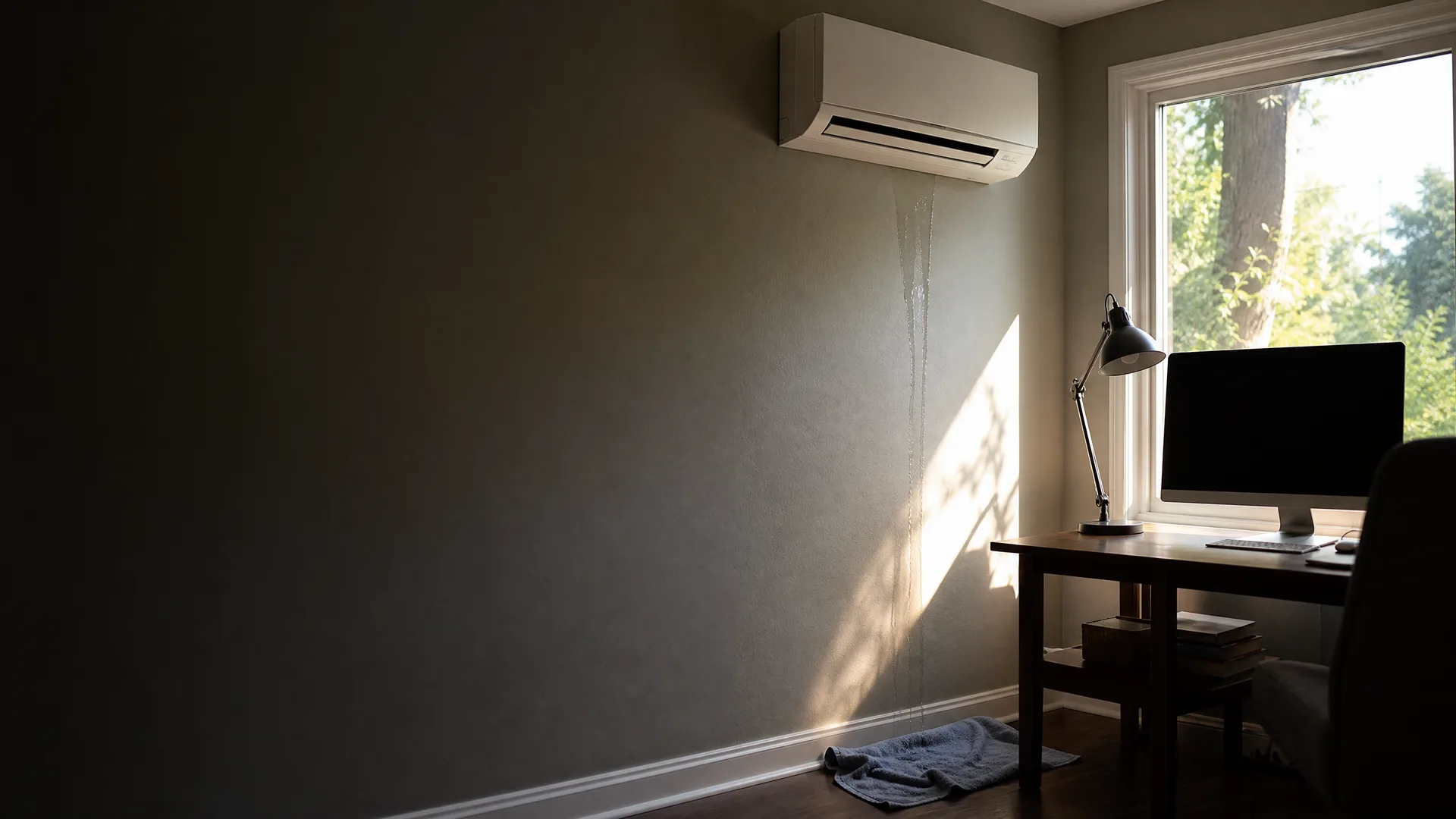
You're at the desk going through email when you notice the carpet feels wrong under your socks. Damp. You look up and there's a dark streak running down the wall below the indoor unit, soaking into the drywall above the baseboard. It's July, the kind of sticky Prince George's County afternoon where you need the unit working, and instead it's dripping. You grab a towel and lay it along the wall, then another for the puddle forming on the floor. The unit still hums along above you like nothing's wrong, air moving but barely cool, water finding its way out from somewhere inside it.
Cooling runs June through September
Cooling runs June through September, so a mini split here sits unused most of the year, and faults can go unnoticed until a hot day exposes them.
Heat runs October through April
Heat runs October through April, seven months where a mini split that can't keep up or won't start leaves the house cold for most of the year.
Power here costs 20.91 cents per kilowatt-hour
Power here costs 20.91 cents per kilowatt-hour, so a mini split stuck running flat out or short-cycling to make heat shows up fast on the bill.
NOAA nClimDiv 1991-2020 · EIA-861 2025
A mini split doesn't make heat the way a furnace does. It moves heat from outside air into your house, using a reversing valve to flip the refrigerant cycle from cooling to heating. That works fine down into the 30s and 20s, but the colder it gets outside, the harder the outdoor unit has to work to pull any warmth out of that air. On a 20 degree day in Bowie, it's running close to flat out just to keep up.
Below about 30 to 35 degrees, frost starts forming on the outdoor coil, the same way frost builds on the inside of a freezer. The system has to stop and run a defrost cycle to melt it off, usually by briefly reversing back into cooling mode. That's why the indoor head sometimes blows cool air, or no air at all, for several minutes at a stretch during a cold snap. It's not a malfunction by itself. It only becomes a problem when it happens too often or lasts too long.
That's usually a sign something is making defrost work harder than it should. A dirty outdoor coil holds frost longer and needs more frequent defrost cycles to clear. A low refrigerant charge does the same thing, and it also cuts into how much heat the system can move even when it isn't defrosting. And if the reversing valve itself sticks, the system can get stuck running in cooling mode no matter what the thermostat says, which in January is obvious fast.




The thermostat calls for heat and the system switches into heating mode.
The reversing valve shifts refrigerant flow to carry heat indoors.
The outdoor unit pulls heat from the cold air outside.
The indoor unit blows that heat into the room.


Explain the mini split problem once instead of to every shop in Prince George's County.
A Prince George's County pro who repairs mini splits gets your request.
No fee to send it, and nothing to sign.


A mini split that's heating well looks plain: a clean white case, warm air coming steady from the vents, no streaking down the wall below it. Nothing about it calls attention to itself, inside or out, through a cold Bowie night.

Dust and dark grime across the case and filter usually mean the unit hasn't been cleaned in a long time, and a dirty filter makes it work harder to push air through. A unit left like this is more likely to be the one struggling on a cold morning.

Either the system is caught in a normal defrost cycle and will come back on its own in a few minutes, or something inside it has actually failed. A reversing valve that won't shift, a low charge, a frozen outdoor coil that never clears. One of those fixes itself. The other doesn't, and running the system for weeks with people at home while it blows cold air is how a small problem turns into a bigger repair.
You don't have to figure out which one it is. A contractor who works on mini splits in Bowie can tell within minutes whether the unit is defrosting normally or stuck, and whether the reversing valve, the charge, or something else is the reason heat isn't making it into the room. Submit your information once and you'll be matched with a contractor suited to this problem, who will reach out to you directly. No calling around to find someone who services mini splits, no explaining the streak on the wall and the cold air twice over to different companies.

Skip calling shops to ask who repairs mini splits in Prince George's County.
Sending the form costs nothing.