
Mini split light blinking in Bowie, MD

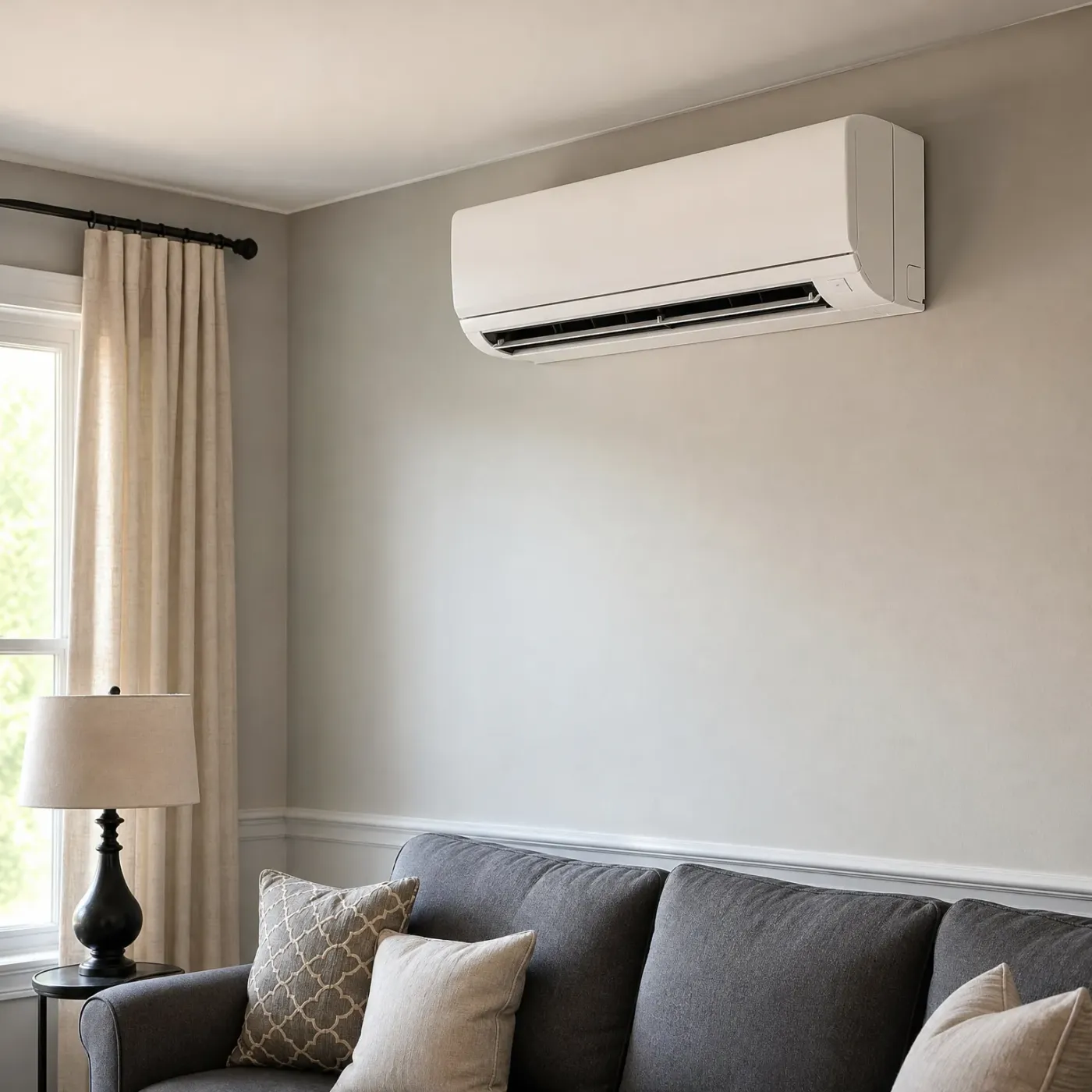
A white wall-mounted mini-split air conditioner indoor unit on a plain light gray wall.
Let a pro reach out

Why is the light on my mini split blinking?

A blinking light on a mini split usually means the unit is trying to tell you something specific, not just that it's on or off. In a Bowie home running the system hard through a sticky summer or a cold winter, that blink is the indoor unit's way of flagging a fault it caught on its own. The pattern of the blinks, not just the fact that it's blinking, is what points to the cause.

It's signaling an error code, and the pattern of blinks tells you which one

Mini splits use the indoor unit's light to report faults because most models don't have a screen. The number of blinks, or a sequence of long and short flashes, corresponds to a specific problem the system detected, like a frozen coil, a drainage issue, or a communication error between the indoor and outdoor unit. Manufacturers each use their own codes, so the same blink pattern means something different on a Mitsubishi than on a Fujitsu or a Daikin. With power here among the priciest in the country, a system stuck mid-fault can run inefficiently without you noticing right away, since Prince George's County summers push these units hard for months. Checking the pattern against your unit's manual narrows down the cause, but diagnosing and fixing what triggered it takes someone who works on that brand regularly.

A white wall-mounted mini-split air conditioner indoor unit on a light gray wall above a white baseboard and wood-look floor.

Blinking but running fine

If the mini split is still blowing cold air and the blink pattern repeats the same way every time, it's often a routine signal, like a reminder to clean the filter. The unit below still looks and runs the way it should. Nothing here demands you shut it off.


A white wall-mounted mini-split air conditioner indoor unit installed near a textured ceiling on a plain beige wall, with visible dust and discoloration on its casing and vent.

Blinking with a problem

Dust caked on the housing and a vane that won't close all the way point to something past a simple reminder. Paired with a blinking light, this is the unit telling you a part needs a look, not just a filter rinse. That's worth having a local tech read the code and check it out.

Why does my mini split run so much in Bowie?

  • Cooling runs June through September

    Summer here runs June through September, and a mini split that blinks during a long hot stretch is one that rarely gets a break to cool down.

  • Heat runs October through April

    Heat runs October through April here, about seven months, so a blinking light in winter often shows up on a unit that's been working steadily for a while.

  • Power here costs 20.91 cents per kilowatt-hour

    At 20.91 cents per kilowatt-hour, power here costs more than in most of the country, so a mini split blinking a fault code is worth sorting out before it runs inefficiently.

NOAA nClimDiv 1991-2020 · EIA-861 2025

What the blink pattern means

Mini splits use the indoor unit's light to flash a code. A set number of blinks, a pause, then the same number again points to one part: the coil sensor, the drain float switch, or the communication line to the outdoor unit. Some brands mix in color changes, like amber instead of green. The pattern repeating the same way each time is what makes it a code and not a glitch. A contractor who works on these year-round can usually match the count and color to the brand and read it on sight, since manufacturers don't use the same pattern for the same problem.

Why it needs a real diagnosis

Two different problems can produce blink counts that look close enough to confuse from memory alone, and guessing wrong means paying for a part that was never the issue. A frozen coil from a dirty filter blinks differently than a refrigerant leak, but both can stop the unit from cooling. The only way to know is to open the panel and check the code against the manual for that model, then test the part it points to. That is why the fix starts with someone who has the manual and the gauges on hand, not with swapping parts based on a guess.

A woman with dark shoulder-length hair in a beige knit sweater stands in a living room looking off to the side, with a sofa, lamp, houseplant and window behind her.
A woman with dark hair in a bun and a green button-up shirt looks off to the side in a living room with a gray sectional sofa, cushions, a woven pendant lamp, and a wall shelf with plants and a picture frame.
A woman with dark hair in a loose updo, wearing a white top and cream cardigan, sits on a light sofa with cushions and looks off to the side in a bright living room with white shelving, a mirror, a lamp and a large potted plant.
A woman with dark hair in a loose bun and a light grey sweatshirt sits near a curtained window, looking to the side and smiling slightly, with a blurred living room and sofa behind her.
A white wall-mounted mini-split air conditioner installed high on a gray interior wall above a dark gray sofa with patterned cushions, next to a window with beige curtains and a table lamp.

Hand off the mini split problem

A licensed pro who repairs mini splits in Prince George's County gets your request.

After you send the request, you're done searching.

Find a licensed pro

Asking costs nothing, and the choice to hire stays yours.

Blinking Light: Call Now or Watch It

Call now

  • A blinking light paired with the unit no longer blowing cold air or heat means the system has stopped working, not just that it needs a filter clean.
  • If the blink repeats a different number of times than usual, or a steady code turns into a fast, erratic flash, that's a change worth getting looked at.
  • Water pooling under the indoor unit alongside the blink points to a blocked drain line or a failed float switch, and it can damage flooring or drywall if it sits.
  • A burning smell, a breaker that trips when the unit tries to restart, or a blink that won't clear after a power cycle all mean the problem is electrical, not routine.
  • Through a stretch of 95 degree days or a hard freeze, losing the system isn't something to sit on, since the indoor temperature swings fast once it's down.

Watch it

  • A single steady blink pattern that repeats the same way every time, with the unit still cooling or heating normally, is usually just a maintenance reminder.
  • If the code matches a filter reminder and the filter hasn't been cleaned in a while, clearing it and checking the light afterward is a reasonable first step.
  • A blink that shows up only right after a power outage often clears on its own once the outdoor unit finishes its restart sequence.
  • If the airflow, temperature, and sound from the unit all seem normal and only the light has changed, there's less urgency to act right away.
  • Keeping a note of when the blink started and whether it lines up with anything, a storm, a filter change, a thermostat adjustment, helps if it does need a look later.
A white wall-mounted mini-split air conditioner installed near the ceiling on a beige interior wall, with a window and bamboo blind at the left edge showing green foliage outside.

Running clean

A mini split that looks like this is doing its job. The panel is clear, the vents are open, and air moves through the louvers the way it should. If the light blinks but the room still hits the temperature you set, the unit is working.

A wall-mounted mini-split air conditioner indoor unit with discolored casing and dusty vents, installed near the ceiling on a plain light-colored wall.

Dirty panel, blocked airflow

Dust and grime like this build up on the front panel and louvers over months of steady use. A coil or filter buried under that much dirt can't move air the way it needs to, and that's often when the light starts blinking a different pattern than usual.

A dusty, discolored wall-mounted mini-split air conditioner indoor unit near the top of a plain light-colored interior wall below a white molding strip.
Before you get your mini split repair
A white wall-mounted mini-split indoor unit on a beige interior wall, with a potted leafy plant at the left and a curtain edge at the right.
After you get your mini split repair

The indoor unit is checking itself constantly. Temperature sensors, the coil, the float switch, the line to the outdoor unit, all of it gets read on a loop, and when something comes back wrong, the board turns that into a blink count. That count isn't random. It maps to a code in the manual, and the same number of blinks always means the same part is flagging a problem. A steady pattern that never breaks usually points to the indoor and outdoor units losing their signal to each other. A pattern that starts and stops, or changes after you've cleared a clog or reset the breaker, often means water backing up in the drain line and tripping the float switch. Sometimes the fault clears on its own but the board still remembers it happened, so you get one blink on startup and then nothing. The outdoor unit itself has no screen at all. Whatever it senses gets passed back and shown through the one light indoors, which is why that single blink pattern is doing more work than it looks like.

How the blink actually works

  • The indoor unit reads its sensors on a loop and uses the light to report whatever it finds out of range.
  • Each blink pattern ties to a fault code printed in the owner's manual, so the same count always points to the same problem.
  • A communication fault between the indoor and outdoor unit often shows as a steady blink that never changes pattern.
  • A clogged drain line can trip the float switch, and the light will blink until the water has somewhere to go.
  • Some boards hold the code in memory even after the fault clears, so the light can blink once on restart before going quiet.
  • The outdoor unit has no display, so whatever it detects gets reported back through the indoor light alone.
A woman with her hair in a bun holds a sleeping child against her chest, both wrapped in a grey knit blanket on a sofa in a dimly lit room with a lamp and houseplant behind them.
An older woman with short gray hair in a cream knit sweater smiles while looking to the side, standing behind a wooden board holding a round loaf of bread, with a dark window and lamp-lit interior behind her.

Ignore the blink long enough in a Bowie summer and the mini split can lock itself into a fault state, shutting the compressor off while the indoor fan keeps running room-temperature air.

That leaves the room getting warmer while the unit still sounds like it's working, so the first sign of trouble is often the thermostat reading climbing, not the system going quiet.

Cooling runs June through September

Four months of cooling means your mini split runs almost nonstop from June through September. A unit that only gets short breaks overnight has more chances to trip a sensor fault, so a blink you notice in July is worth checking rather than waiting out.

NOAA nClimDiv 1991-2020

A blinking light is the mini split telling you something specific, and the pattern is the clue, not a reason to guess. If the unit still cools or heats the way it should, you likely have time to get it looked at. If the air has stopped or the blink pattern has changed from what you usually see, that time is gone. Either way, the next step is the same: get someone to read the code and check the part behind it. A contractor local to Bowie who works on mini splits through the long cooling months and the long heating months has seen most of these fault codes before and knows what tends to fail first in a system run this hard. Send the request once and it goes to that one contractor, so you are not fielding calls from several companies while you are trying to figure out why a light is blinking. You know what the unit is doing right now. That is enough to act on.

A dark-shingled two-story house photographed at dusk, with a lit gabled front porch, wooden front door, two potted plants flanking white steps, illuminated windows, and a concrete walkway leading to the entry.

Mini Split Repair

Send one request and you're done looking

RepairMini-splitPrince George's County, MD
Step 1 of 2

What ZIP code is the job in?

  • A beige upholstered armchair with a green throw pillow and cream knit blanket sits on a shag rug beside a lit table lamp, a potted plant, and a woven basket.
    • Get matched with a pro who fixes mini splits in Prince George's County.
    • A Prince George's County pro who repairs mini splits gets your request.
  • A ceramic table lamp with a round speckled base and tapered linen shade sits on a wooden table beside a small shallow bowl holding pine cones, with a leafy plant and bright window to the left and a framed picture on the wall behind.
    • Send the request and finding a pro stops being your problem.
    • After this form, you can stop searching for a mini split pro.
  • Interior corner with a light wood built-in shelving unit holding a woven basket, a plant in a stone bowl and a dark vase, beside a window showing green trees, a beige upholstered sofa with a textured pillow and cream throw, a stone wall, and a large stone vase in the foreground.
    • Explain the mini split problem once instead of to every shop in Prince George's County.
    • Explain the job once and skip repeating it on every call.
  • A large matte ceramic vase holding leafy green branches stands on a wood floor beside a light upholstered sofa, with a window and gray wall in the background.
    • A licensed pro who works in Prince George's County gets your request.
    • Your request goes to one pro, not a list of companies.