
Why your mini split isn't heating in a Maryland winter

RepairMini-splitMaryland
Step 1 of 2

What ZIP code is the job in?

Why is my mini split not heating in the winter?

Your mini split keeps blowing cold or weak air right when Maryland turns cold, and you want to know what's wrong before it gets worse. A system that heated fine in November and now can't keep up in January usually has a specific cause, not a mystery one.

It's likely frozen outdoors, low on refrigerant, or stuck in the wrong mode

Mini splits pull heat from the outdoor air, and below a certain temperature the outdoor unit can ice over faster than its defrost cycle clears it. On a night in the 20s, a thick coat of frost on that unit means it's working harder for less heat, sometimes none at all. A low refrigerant charge does the same thing from a different angle, starving the system of what it needs to move heat indoors. Less often, the thermostat or remote has quietly switched to fan-only or the wrong setting. Since most Maryland homes heat with electricity, a mini split that's struggling means the backup heat strip or baseboard is picking up the slack, and that shows up fast on the bill.

A white wall-mounted mini-split air conditioner near the ceiling of a room with light gray walls, white crown molding, and a beige curtain at the left edge.

Running right

This is what a mini split looks like when it's keeping up. Warm air comes out steady at the vent, the unit cycles on and off instead of running nonstop, and the wall around it stays clean. If yours still looks and feels like this, the cold snap probably isn't the problem.


A dusty beige wall-mounted mini-split air conditioner indoor unit installed high on a plain light-colored wall below the ceiling.

Struggling to heat

Dust and grime built up like this on the coil make the unit work harder to move heat, and staining on the wall above it often means condensate isn't draining where it should. Either one can show up as weak heat or a system that runs constantly without warming the room.

Why does the room feel colder than the thermostat says

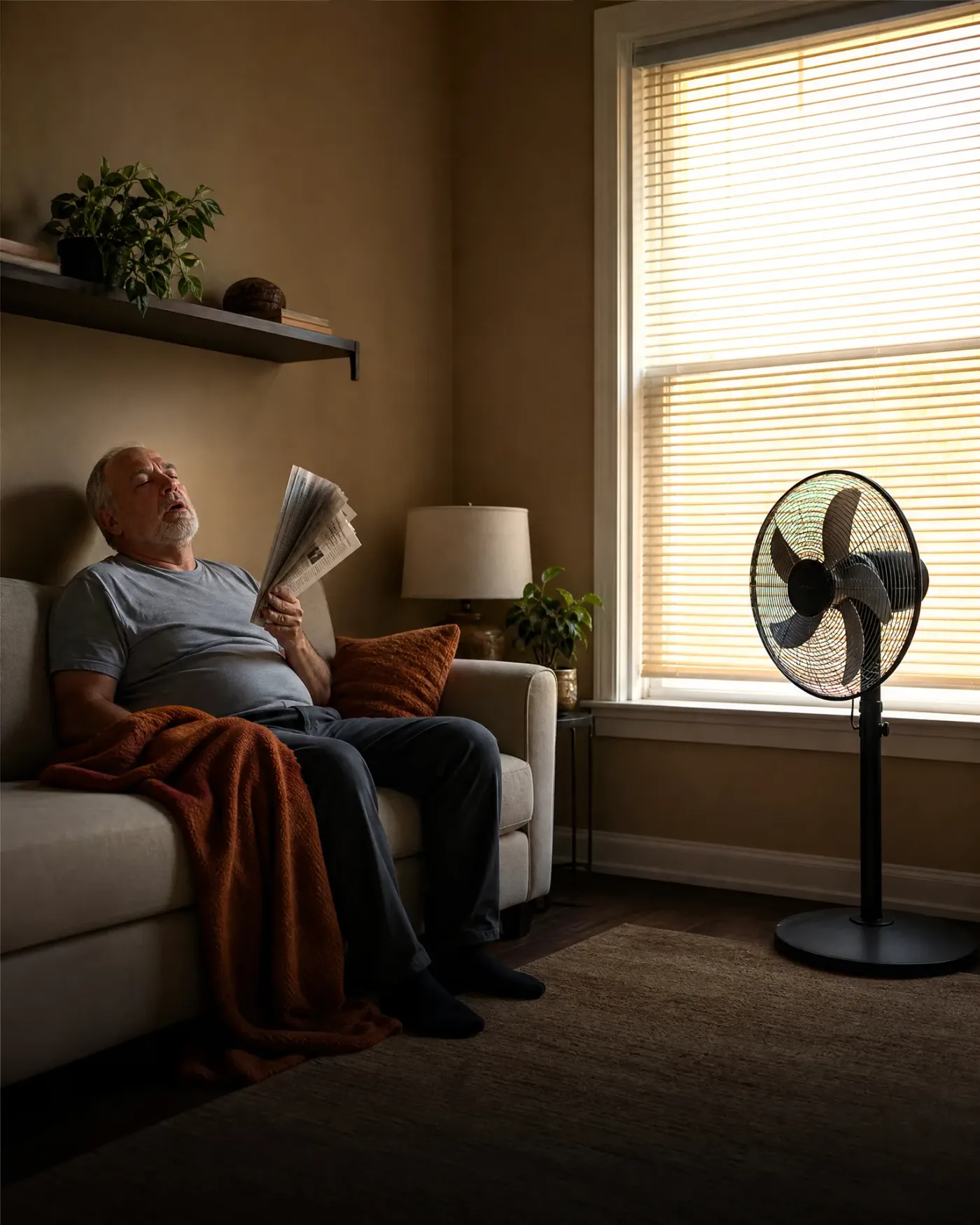
You set it to 70 and the air coming out barely feels warm. The outdoor unit runs and runs without shutting off, or it shuts off and starts again a few minutes later. Frost builds up on the outdoor coil and stays there instead of melting off during a defrost cycle. The indoor blower sounds like it's working hard but the vent only puts out air that's a few degrees above room temperature. Meanwhile the electric bill climbs because the system is drawing power nonstop trying to catch up. Left alone through a Maryland winter, a mini split stuck like this won't warm the room, and the strain on the compressor running that long without rest can turn a small problem into a failed unit.

A woman in a cream turtleneck sweater stands beside a multi-pane window looking out at falling snow, with a dimly lit living room containing a lamp, sofa and shelves behind her.
A woman in a beige turtleneck sweater stands by a large window with snow-covered trees outside, in a living room with a lit lamp, sofa with cushions, and a wood stove with visible flames.
A woman with long dark hair in a beige knit turtleneck sweater stands beside a window with snow outside, looking off to the side, with a warmly lit living room containing a sofa, lamps and a coffee table behind her.
A woman with shoulder-length brown hair in a beige knit sweater stands near a window looking outside at falling snow and snow-covered evergreens, with a dimly lit living room, sofa, lamp, bookshelf and framed landscape painting behind her.

Wait It Out or Call Someone

Keep running it

  • A mini split that struggles in a Maryland cold snap and runs nonstop is pulling more power to make less heat, and electricity here isn't cheap.
  • Frost that builds up faster than the defrost cycle can clear it means the outdoor coil is losing its fight with the cold, and that gets worse as winter goes on.
  • Short cycling puts more wear on the compressor every time it starts back up, so a problem that's electrical or mechanical doesn't fix itself by waiting.
  • If the room stays cold enough that you turn to space heaters or supplemental electric heat, you're paying twice for the same square footage.
  • A refrigerant leak or a failing reversing valve doesn't improve with another cold week, it just means less heat moves into the room each time it runs.

Have it looked at

  • A local contractor who works on mini splits all winter has seen which parts fail first in Maryland cold and checks those before anything else.
  • Getting matched with one contractor instead of several means one visit, one diagnosis, and no juggling calls from companies competing for the job.
  • A licensed tech can tell you whether the issue is refrigerant charge, a defrost sensor, or the reversing valve, rather than you guessing from the vent.
  • Catching the problem now, while it's one part, costs less in the long run than letting a small fault take down the compressor.
  • Someone who services this equipment regularly knows what a normal defrost cycle looks like versus one that's stuck, which isn't obvious from the thermostat alone.
  1. Indoor thermostat calls for heat, signaling the outdoor unit to start

  2. Outdoor compressor pulls in refrigerant and starts the heating cycle

  3. Reversing valve switches the system into heat mode

  4. Outdoor coil pulls heat from the outside air into the refrigerant

A white wall-mounted mini-split air conditioner indoor unit installed near the ceiling on a plain light-colored wall, with its horizontal outlet vent and louvers visible.
Before you get your mini split repair
A white wall-mounted mini-split air conditioner on a beige interior wall, with a curtained window on the left and wood flooring with a light rug below.
After you get your mini split repair

A local pro for your mini split repair

Your request goes to one pro, not a list of companies.

No charge to send it. You decide if you hire them.

How your mini split makes heat

  • The reversing valve is a sliding part that routes refrigerant one way for heat and the other for cooling.
  • A reversing valve stuck mid-slide can leave the system blowing room-temperature or cold air with no warning sound or error.
  • Below freezing, a mini split heats a Maryland room using heat pulled from the outside air, not from an electric element.
  • The defrost cycle briefly runs the system backward to melt coil frost, which is why outdoor air can feel cold near the unit for a few minutes.
  • A low refrigerant charge makes the whole heating cycle run longer and weaker without ever shutting the system down.
  • The outdoor fan has to move air across the coil constantly, and a failing fan motor shows up first as reduced heat on the coldest days.

A mini split doesn't make heat the way a space heater does. It moves heat. Refrigerant inside the outdoor unit pulls warmth out of the outside air, even when that air is cold, and carries it inside through the coil. The reversing valve is what makes this possible in both directions. In summer it routes refrigerant one way to cool your home. In winter it slides the other way so the same system can heat it. That valve has to move cleanly every time the system switches modes, and when it sticks halfway, the system can end up running without producing real heat, with no error code to tell you why.

The colder it gets outside, the harder the outdoor unit has to work to pull heat from the air, which is normal. What isn't normal is ice building up faster than the defrost cycle can clear it. Defrost runs the system backward for a few minutes to melt frost off the outdoor coil, so feeling cold air near the outdoor unit briefly isn't a problem by itself. It becomes one when the coil stays frosted longer than it clears. A low refrigerant charge makes this worse in a different way: the system keeps running, keeps trying, and never shuts off, because it can't reach temperature. And since the outdoor fan has to keep air moving across that coil the whole time, a fan motor that's starting to fail often shows up first as weak heat on the coldest Maryland days, before it shows up any other way.

A bearded man in a plaid flannel shirt over a gray tee looks out a frosted multi-pane window with snow outside, a steaming dark mug on the sill beside him and shelves of dishware behind.
A bearded man in a dark gray T-shirt sits smiling on a light gray couch, with a houseplant and a framed picture on the wall behind him.
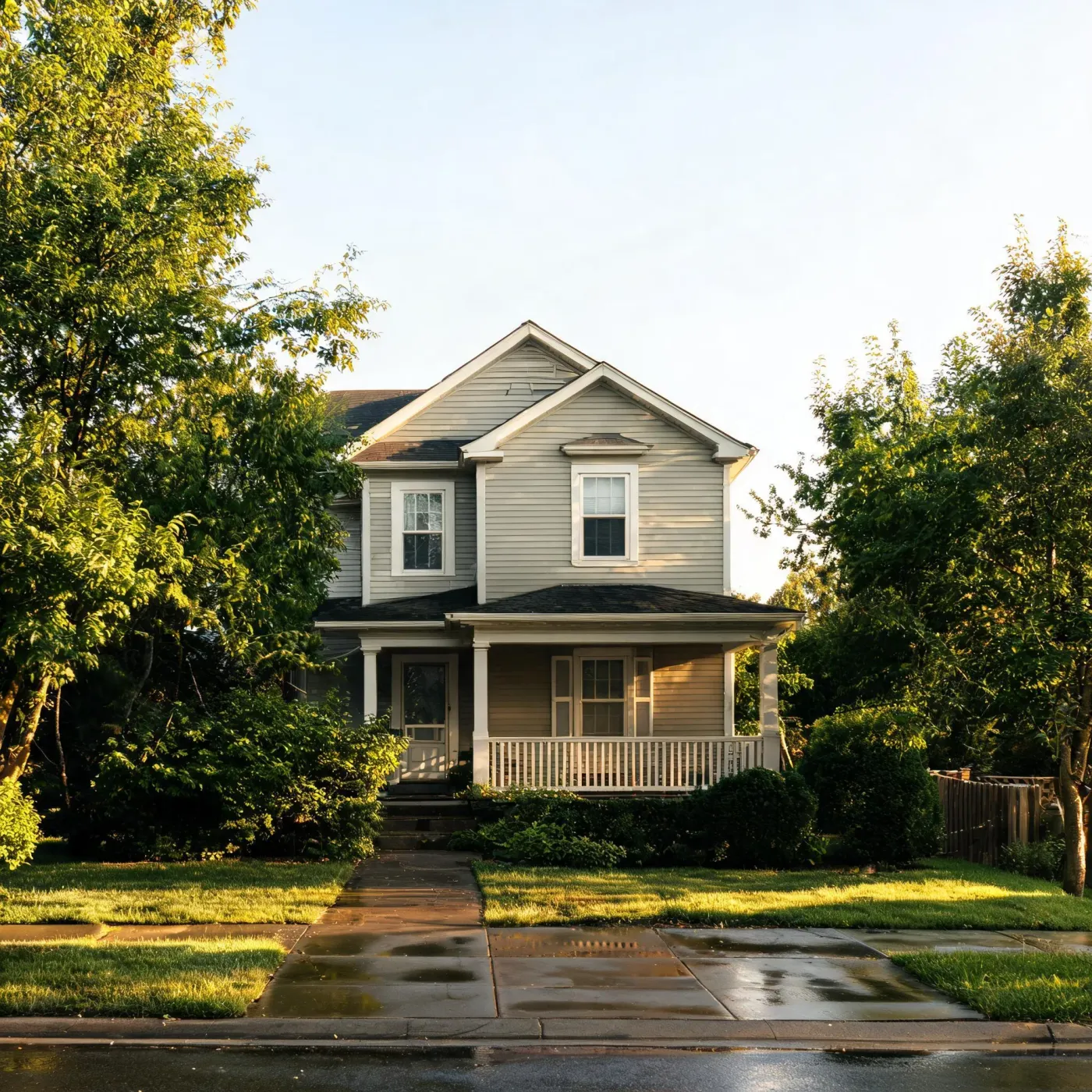
A two-story light-colored house with horizontal siding, a covered front porch with white railings and columns, flanked by green trees and shrubs, with a concrete walkway leading to a wet sidewalk and street.

Summer here is part of why a mini split earns its keep in the first place. Average dew point across the summer runs 64°F, per NOAA climate data for Maryland, the kind of heavy air that makes a mini split run long hours pulling moisture as well as heat out of a room. That workload matters once winter comes. A compressor and reversing valve that spent all summer cycling hard don't get a break before they're asked to switch over and run in reverse. If a part was already wearing down from the summer load, cold weather is often when it finally gives out and the unit stops heating.

NASA POWER T2MDEW county cells weighted by homes

A mini split that won't heat in a Maryland winter usually comes down to one part failing to do its job: a stuck reversing valve, a frost cycle that can't keep up, a compressor straining to pull heat from air that's near freezing. None of that gets better by waiting it out, and running the unit hard while it struggles just adds to a power bill that's already high. The contractor who looks at your system will be local and licensed, someone who works on mini splits through every Maryland winter and has seen which part usually gives out first in weather like this. You'll be matched with one contractor, not a handful of companies competing for the job, so you can explain what the unit is doing once and let them take it from there. Your thermostat setting isn't the problem. Something between the indoor unit and the outdoor coil isn't finishing the job it's built to do, and that's what gets fixed.

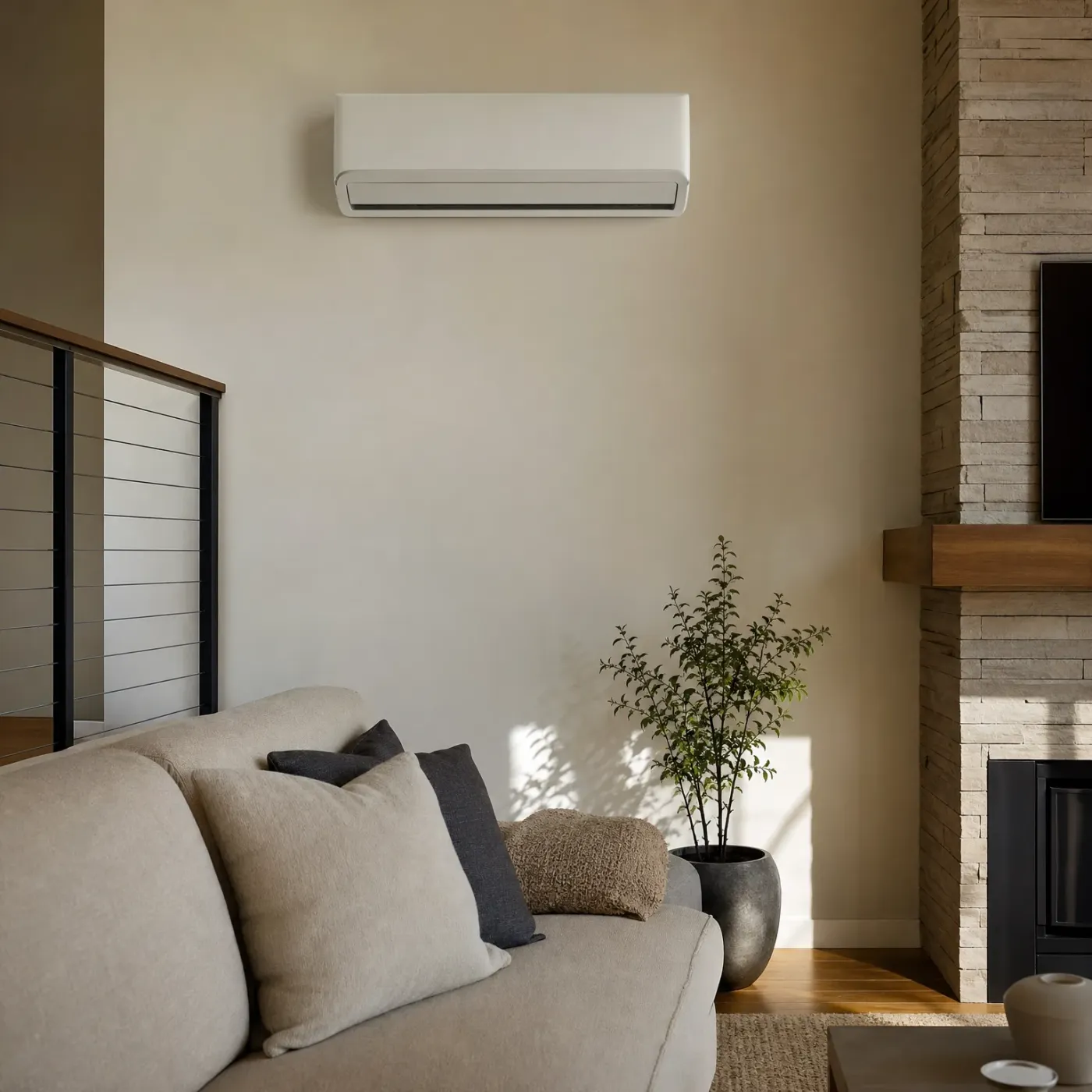
Interior living room with a white wall-mounted mini-split air conditioner high on a beige wall, a light gray sofa with cushions, a potted small tree, a stacked-stone fireplace with wood mantel and mounted TV, and a cable railing at left.

Get the right pro for your mini split

Find a licensed pro

The pro who reaches out is licensed in Maryland.

There's no charge for the request.