









Signs your AC is low on refrigerant in Maryland

Send the request today and let an air conditioner pro reach out to you.

Send it today

Why is my AC running but not cooling the house in Maryland?

Your AC is running, the air is moving through the vents, but the house just isn't getting cold. In Maryland, once the humidity sets in, that gap between the unit running and the house actually cooling down gets noticed fast. You check the thermostat, the filter looks fine, and the unit still sounds normal, so it's not obvious what's wrong. Low refrigerant is one of the most common reasons this happens.

Your AC is likely low on refrigerant

Refrigerant is what actually pulls heat out of your house. When the level drops, usually from a leak somewhere in the coil or line set, the system keeps running but can't move enough heat to bring the temperature down. You'll notice the air at the vents feels warmer than it should, the unit runs longer than usual, and the outdoor coil may ice over even on a hot day. In Maryland, with summer humidity pushing your AC harder for months, a system that's already low on refrigerant struggles more than it would somewhere drier. Since most homes here rely on electricity for heating and cooling both, a system working this hard also shows up on your power bill before you notice anything else.

A smiling man in a navy long-sleeve shirt sits at a wooden table in a kitchen and dining area, with a ceramic mug, a potted plant, and a sliding glass door behind him.
A smiling bearded man in a green henley shirt stands at a kitchen island with a gray mug, looking off to the side, with a dining area and shelves blurred behind him.
A smiling bearded man in a navy sweater sits at a white kitchen island with a ceramic mug, with open shelves, potted plants and a range hood behind him.
A smiling man in a dark olive long-sleeve shirt sits in a kitchen beside a counter with a dark mug, with a dining table, sideboard and hallway visible in the blurred background.

Why does my house feel muggy even with the AC running

You might notice the air coming out of the vents feels cool but not cold, or the house just stays sticky no matter how long the system runs. Sometimes there's a hissing sound near the indoor unit, or ice forming on the copper line outside. The vents blow, but the air doesn't carry the chill it used to. Low refrigerant means the system is moving air without moving much heat out of it, so it runs longer to do less. In Maryland, with the humidity most summers bring, that difference shows up fast as damp air indoors even on a day the thermostat says it hit the set temperature. Left alone, the compressor keeps working harder than it should, and that's the part you don't want to replace.

  1. A slow leak lets refrigerant escape from the copper lines over time.

  2. The indoor coil gets less refrigerant than it needs to absorb heat.

  3. Low pressure in the coil causes moisture on it to freeze.

  4. Ice builds up and blocks airflow across the coil.

A gray outdoor air conditioning condenser unit sits on a concrete pad beside a house with horizontal siding, connected by insulated lines to a wall-mounted disconnect box, with a shrub and gravel bed to the right.
A system with a full charge runs steady, and the coil stays clear so cold air keeps reaching every room.
An outdoor air conditioning condenser unit sits on a concrete pad beside a house with horizontal vinyl siding, with a gray electrical disconnect box and insulated refrigerant line on the wall above, surrounded by bare mulched ground.
Grime packed into the coil fins blocks heat transfer, and a unit in this shape is often the one losing refrigerant.
A two-story cream-colored house with a covered front porch and gray shingled roof, fronted by a concrete walkway crossing a green lawn, with large leafy trees on both sides in late-day light.

Summers in Maryland hold a dew point around 64°F, averaged over the state through June, July and August, according to NOAA. Air that heavy makes your AC's coil work harder to pull moisture out before it can pull heat out. A system that's low on refrigerant was already struggling to get the coil cold enough. Add thick air on top of that, and the coil loses ground fast, freezing over or just not keeping up. You'll notice it as a house that stays sticky even on a day that isn't especially hot, because the humidity alone is enough to expose a weak charge.

NASA POWER T2MDEW county cells weighted by homes

Low Refrigerant or Just a Dirty Coil

Low Refrigerant

  • The coil frosts over even though the thermostat is set low and the system keeps running.
  • Vents blow air that feels cool but never cold, no matter how long you let it run.
  • A hissing sound near the indoor or outdoor unit points to refrigerant escaping through a leak in the line.
  • The house takes much longer to cool down than it used to, even on a mild day.
  • Energy bills climb because the system runs longer to make up for what the coil can't absorb.
  • The problem keeps coming back after a recharge because the leak itself was never found and sealed.

Dirty Coil

  • Airflow drops because grime on the coil fins blocks heat from transferring out of the air.
  • The coil can frost over the same way a low charge does, so the two get mixed up often.
  • A full refrigerant charge is still in the system, nothing has leaked out of the copper lines.
  • Cleaning the coil restores cooling without touching the refrigerant at all.
  • Dust and pet hair build up faster in homes that run the AC most of the summer.
  • A tech can tell the difference by checking pressures against the coil's actual condition.
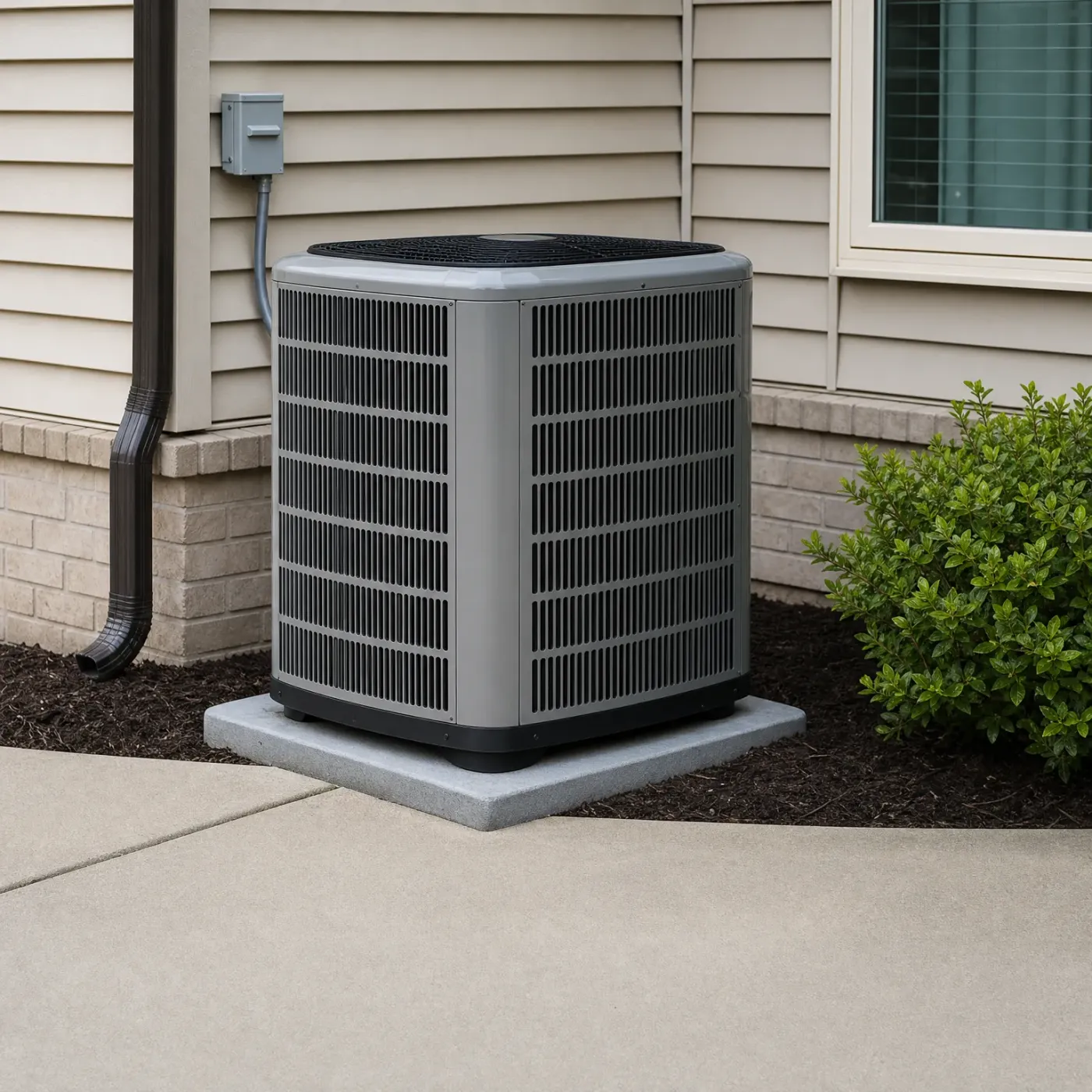
A gray outdoor air conditioning condenser unit on a concrete pad beside a house with horizontal vinyl siding, a brick foundation, downspout, electrical disconnect box, mulch bed and a green shrub.

Running Normally

A unit like this one sits clean on its pad, fins open and clear. Refrigerant moves through a closed system, so a properly charged unit shouldn't lose any over the years it runs. Airflow stays steady and the coil inside does its job pulling heat and moisture out of the house.
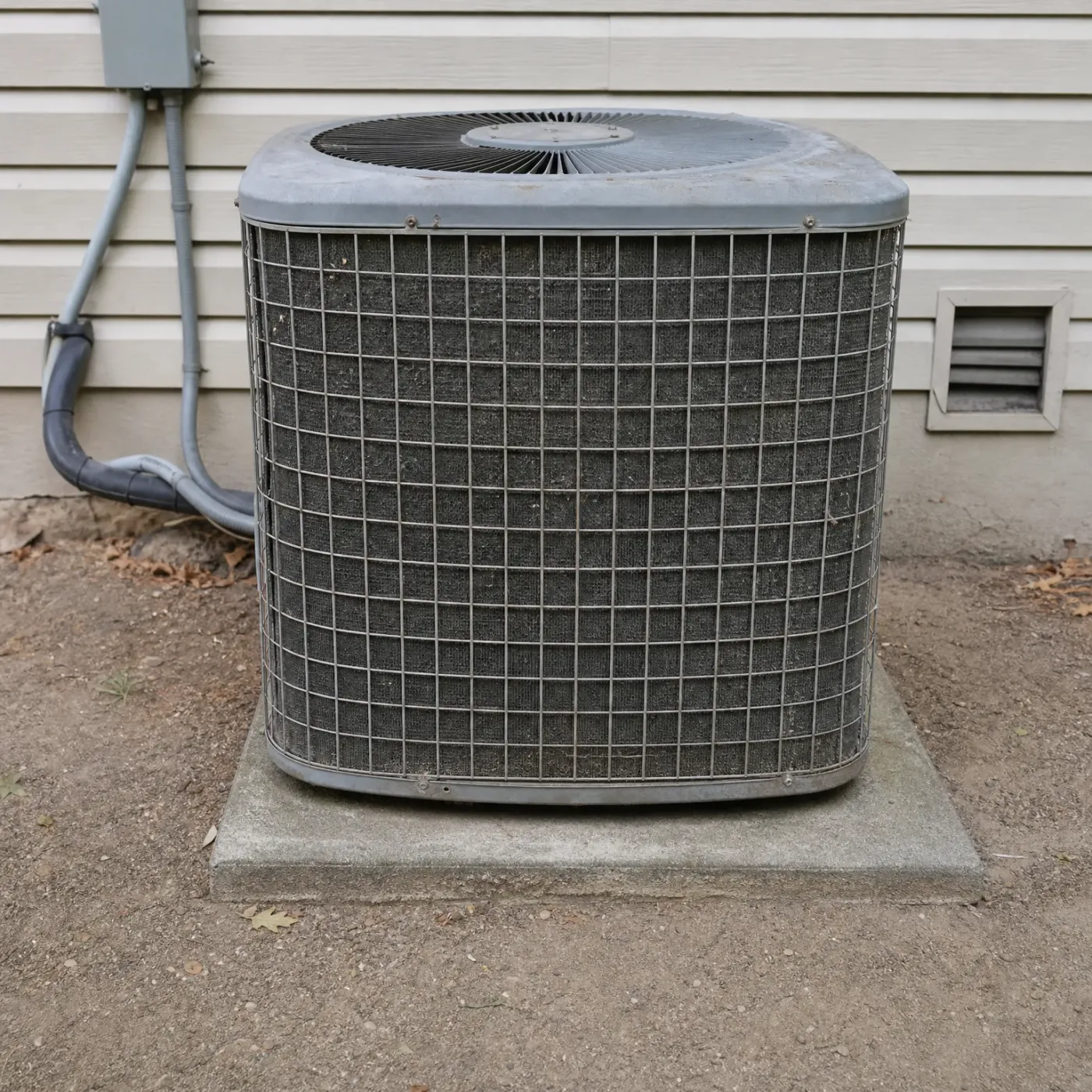

An outdoor air conditioning condenser unit with a dirty mesh coil guard sits on a concrete pad beside a house with horizontal lap siding, a wall vent, and conduit running to an electrical disconnect box.

Losing Its Charge

Dirt packed into the fins like this traps heat against the coil and makes the system work harder than it should. That strain stresses the copper lines over time, and a joint can start to seep. Once refrigerant starts leaking out, the unit won't catch back up on its own.

An outdoor air conditioning condenser unit on a concrete pad beside a house with light blue horizontal siding, with a shrub to the left and a conduit and disconnect box on the wall to the right.
Before you get your air conditioner repair
An outdoor air conditioning condenser unit on a concrete pad beside a house with horizontal lap siding, with a gray electrical disconnect box and conduit on the wall, mulch bed and shrub to the right, and mown grass in the foreground.
After you get your air conditioner repair

Hand off the search today

A low refrigerant charge doesn't fix itself, and running the system while it leaks only pushes the compressor harder in heat it was never built to handle. In Maryland, a sticky August with a struggling AC is more than a comfort problem, since electric heat and air here already make up a big share of the bill, and a system losing refrigerant pulls more power while doing less cooling. Finding the leak means getting into the lines and the coil, work that calls for gauges and someone who's done it on units like yours before. A contractor local to your area sees this exact failure every summer and knows where these leaks tend to start. Send the request and that search becomes someone else's job. You stop guessing at hissing sounds and frosted coils, and get back to a house that actually cools when the AC runs.

Refrigerant doesn't get used up the way fuel does. A system that's properly sealed holds the same charge for as long as it runs, so any drop in level means it's leaking out somewhere along the copper lines or at the coil.

That's why topping it off without finding the leak first just means doing it again next summer, and every month spent low on charge is a month the compressor runs harder pulling moisture out of Maryland's thick air.

A bearded man in a navy T-shirt sits on a light-colored couch indoors, smiling while looking down at a laptop screen in the foreground, with a framed picture and a potted plant blurred behind him.
A bearded man in a plaid flannel shirt stands indoors looking out a window at snow-covered conifers, with a ceramic mug on the wooden sill and wooden cabinets behind him.

Left alone

The leak keeps feeding on itself. The compressor strains harder in the August heat, your electric bill climbs, and the coil risks icing over until it stops cooling at all.

Hand it over

Found and sealed

A licensed contractor near you finds where the line is losing refrigerant, repairs it, and recharges the system to the level it was built to run on.

Hand it over

Power costs 19.53 cents per kilowatt-hour statewide

At 19.53 cents per kilowatt-hour, every extra hour your AC runs low on refrigerant shows up fast on your bill. A system straining to cool with a weak charge pulls more power for less comfort, and in a Maryland summer that strain doesn't let up until the leak is fixed.

EIA-861 2025 statewide residential average

A hissing sound, a coil that frosts over, air that never gets past cool. Those are the signs, and once you've caught one of them, the fix isn't something to put off through another humid week. A low charge means a leak, and a leak only gets worse the longer the system runs on it. You don't need to figure out where the line is leaking or how much refrigerant is left. A contractor who works on AC systems in your part of Maryland every summer has seen this same pattern on plenty of other units and knows where to look first. Submit your information and you'll hear back from one licensed local contractor, not a handful of companies competing for the job. That's one call to schedule, one visit to get the charge checked and the leak sealed, and your house back to actually cooling instead of just running.

A single-story stucco house at dusk with a lit paver walkway lined by low path lights, desert plants and boulders in front, and distant mountains under an orange and blue sky.

Air Conditioner Repair

Let someone else find the pro

RepairCentral ACMaryland
Step 1 of 2

What ZIP code is the job in?

  • A ceramic vase holding leafy green branches and a shallow wooden bowl sit on a wooden window ledge beside a sunlit window, with a cream upholstered chair and knit throw in the foreground.
    • Tell a local repair pro what your air conditioner is doing.
    • Say what's going on with your air conditioner, and a pro who works on them reaches out.
  • Sunlit living room corner with a beige upholstered sofa, a round wooden side table holding a ceramic vase of olive branches, linen curtains at a window, a floor vent in the baseboard, and a woven jute rug on hardwood flooring.
    • After this form, you can stop searching for an air conditioner pro.
    • One request and the search for a pro is handled.
  • A wooden side table with a single drawer holds a shallow carved wood bowl and a white ceramic vase of green eucalyptus stems, beside a window and an upholstered chair draped with a cream knit throw.
    • Describe what your air conditioner is doing once, in one form.
    • Describe your air conditioner job once, to one pro.
  • Corner of a house with horizontal siding, a white-framed window and stone veneer base, beside a covered entry with wooden steps, a potted plant, mulched beds of green shrubs and a flagstone path.
    • The pro who reaches out is licensed in Maryland.







