






Why your AC keeps turning on and off in Maryland

Once you send the form, finding a pro is off your list.

Hand off the search

Why does my AC keep turning on and off in Maryland?

You've noticed the AC kicks on, runs for a few minutes, then shuts off, then starts right back up again. It never settles into a normal run. With how muggy Maryland summers get, that's not a pattern you want to ignore, since a unit that won't stay running isn't pulling the moisture or the heat out of the house the way it should, and it's using power to do it.

It's short cycling, and it usually points to one specific problem

This is called short cycling, and it almost always traces back to one cause. A dirty air filter or blocked return can starve the system of airflow, which makes the coil freeze and trips it off early. A low refrigerant charge does the same thing. A thermostat in the wrong spot, like near a sunny window, can also read the room wrong and cycle the unit on and off too fast. An oversized system cools the air quickly without running long enough to pull the humidity out, so it shuts off, the house feels sticky again fast, and it fires back up. With Maryland summers as humid as they are, that cycle wears on the compressor and runs up your electric bill without actually keeping the house comfortable.

A smiling man in a dark green sweater sits at a wooden table with a light gray mug in a kitchen with white tile backsplash, pendant lights, and an adjoining living room visible.
A smiling man in a dark gray sweater stands indoors looking to the side, with a kitchen counter holding a ceramic mug and open wooden shelves behind him and a living area in the background.
A smiling man in a dark blue button-up shirt stands at a white kitchen island, with open shelving, a gas range, a potted plant and a window in the background.
A smiling man with dark wavy hair and a beard, wearing a dark green knit sweater, sits in an open-plan living room and kitchen with a brown sofa, large windows, and a counter holding a mug and a wooden bowl.
A closed laptop and a ceramic mug on a wooden table in front of a kitchen with green cabinets, marble counter, black pot, cutting board, wooden bowl, and a white vase with greenery.

What short cycling does to your house

A unit that won't settle into a steady run isn't pulling the moisture out of your air the way it should. You'll feel it before you can name it: the house feels damp and heavy even with the thermostat set where you like it. Maryland summers already push humidity into every room, and a system that shuts off after a few minutes never runs long enough to catch up. Meanwhile the compressor is absorbing the stress of starting and stopping over and over, which is the part most likely to fail next and the most expensive part to replace.

Left alone, this is the kind of problem that turns into a dead system on the hottest week of the year. You could spend your evening calling around to find someone licensed who can actually come look at it, explaining the on-off pattern to three different answering services, then waiting on quotes to see who seems honest. Send this one form instead and that search is off your plate. A contractor who handles this in Maryland takes it from here.

A gray upholstered sofa with a textured cushion sits beside a dark round side table holding a vase of green foliage, with a table lamp and sheer-curtained window behind.
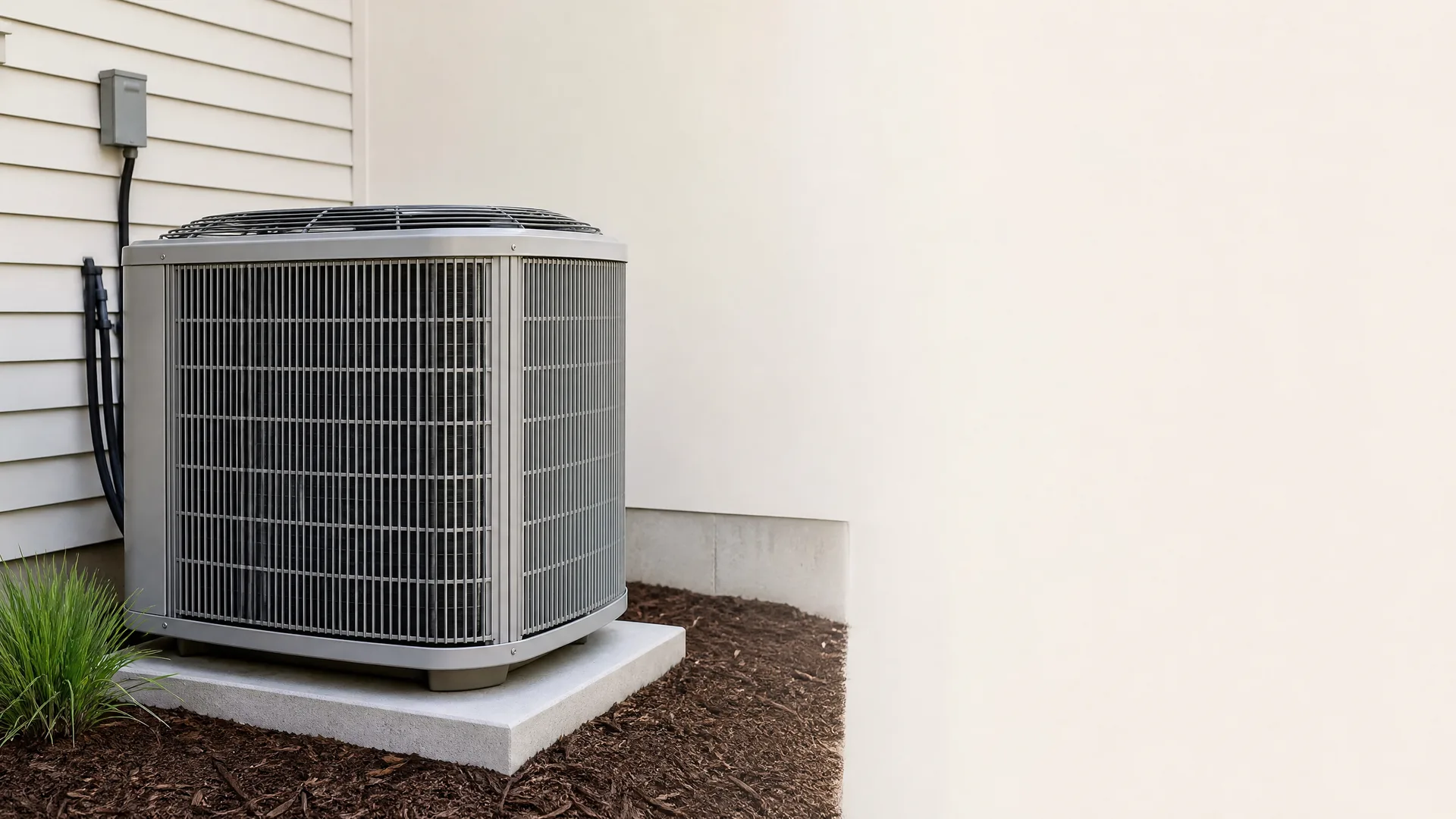
An outdoor air conditioning condenser unit on a concrete pad beside a house with horizontal lap siding, with an electrical disconnect box and conduit on the wall and a green shrub to the right.

Running the way it should

A healthy unit starts up and stays on for a stretch, long enough to pull the humidity down and cool the house through, then shuts off until the thermostat calls again. You can stand next to it and hear one steady cycle, not a string of starts.
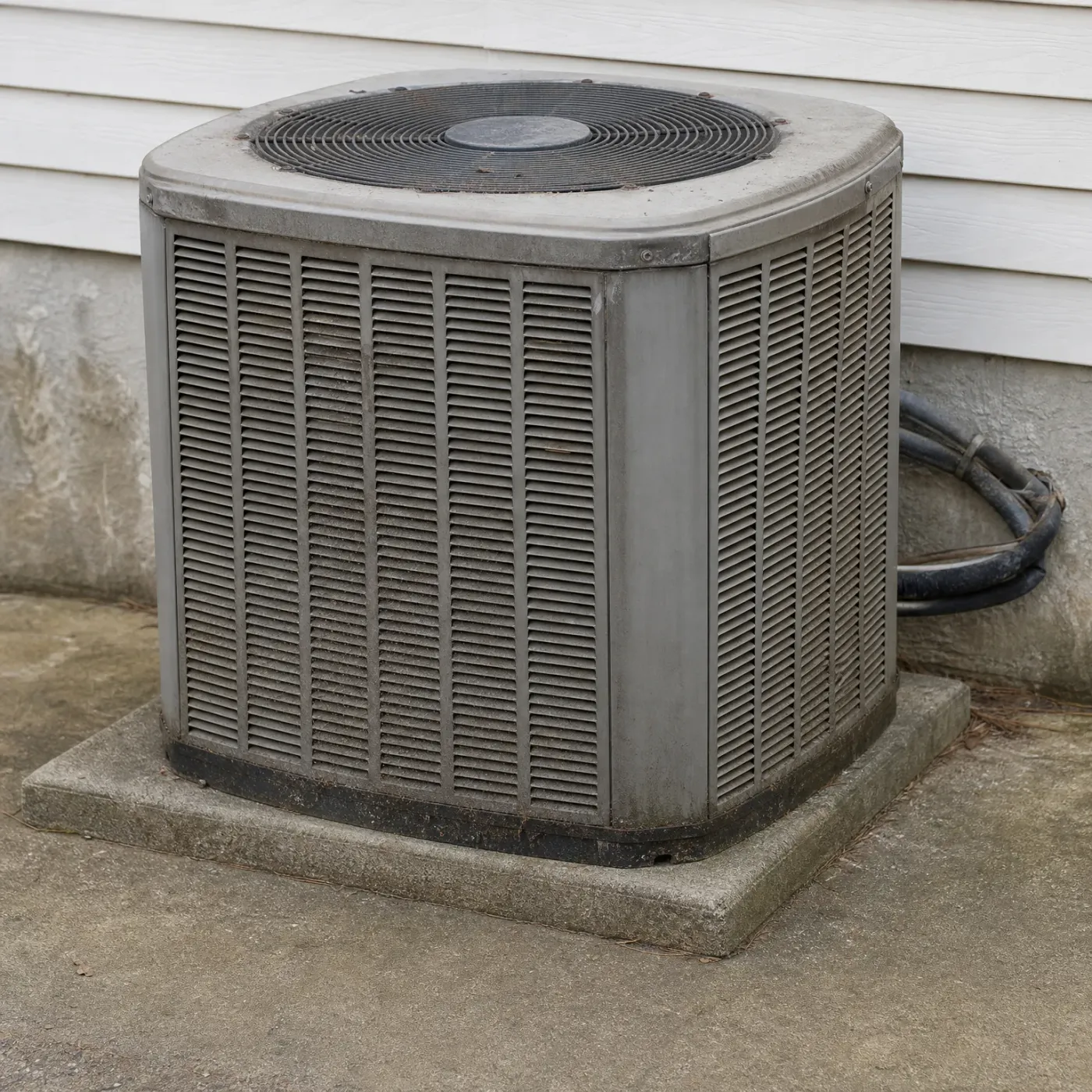

An outdoor air conditioner condenser unit on a concrete pad beside a house with horizontal siding and a lower concrete foundation wall, with coiled refrigerant lines at right.

Short cycling

Dirt built up on the louvered panels and the fan grille blocks the airflow the unit needs to shed heat, so it shuts off early and starts again a few minutes later. The refrigerant lines keep working but the unit never gets the runtime it needs, and in a Maryland summer that shows up fast.

What you can check, what needs a pro

Causes you can rule out first

  • A dirty air filter chokes airflow across the coil, and the coil ices up, which trips the unit off before it finishes a cycle.
  • A thermostat set too close to the room temperature or placed near a vent can call for cooling and cut it off within minutes.
  • Outdoor condenser fins packed with grass clippings or cottonwood keep the unit from shedding heat, so it shuts off to protect itself.
  • A breaker that's loose or a disconnect that's not seated all the way can cause power to drop out mid cycle.

Causes that need a technician

  • A failing capacitor can't keep the compressor and fan motor running steady, so the unit starts, stalls, and tries again.
  • Low refrigerant from a slow leak drops the pressure in the system low enough that the compressor cuts out before the house cools.
  • An oversized unit cools the air fast without running long enough to pull the humidity down, which is its own kind of short cycling.
  • A failing run or start relay can send the compressor an on signal and an off signal within the same minute.
  • Electrical contacts that have arced or pitted inside the control board can send a false shutoff signal to the compressor.
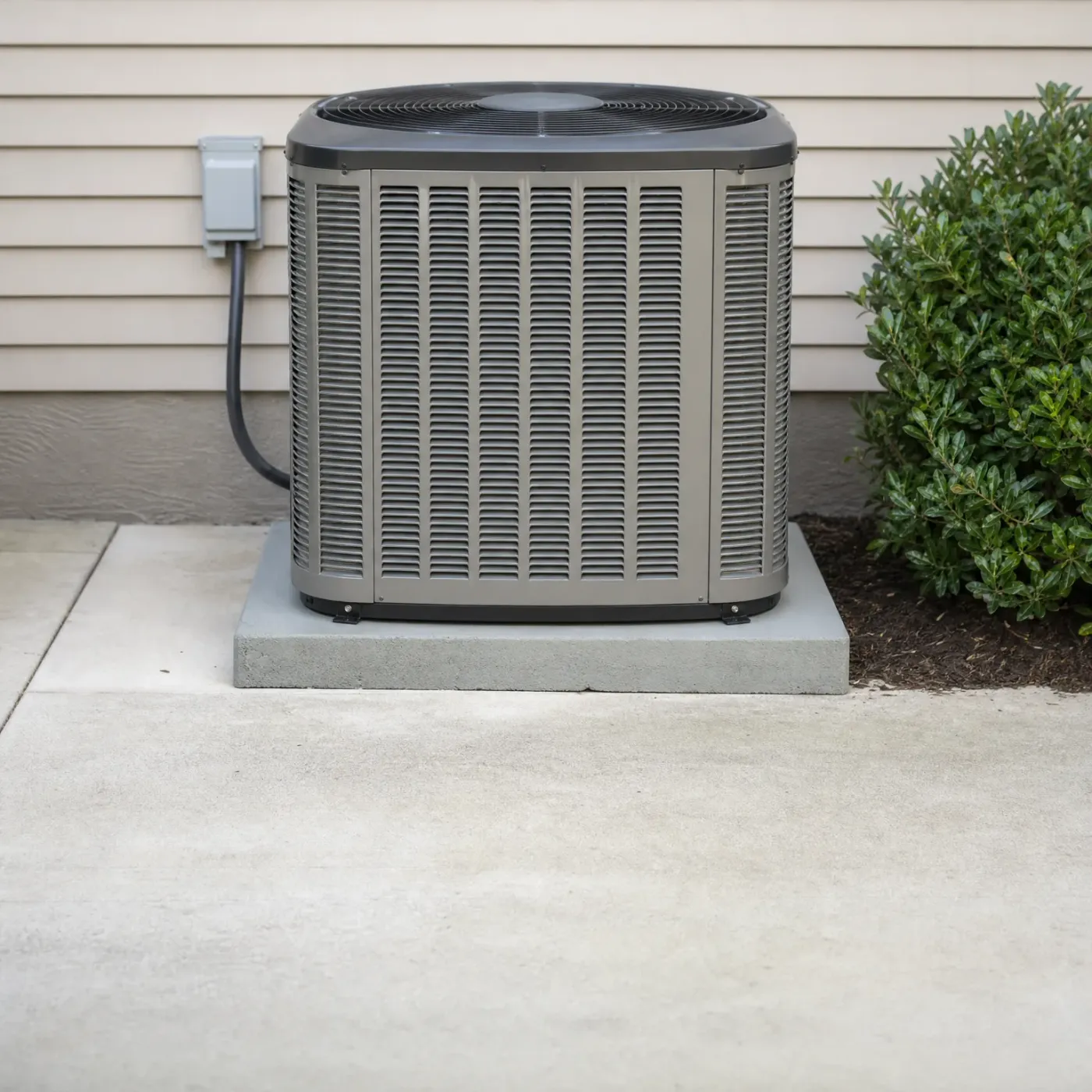
A gray outdoor air conditioning condenser unit on a concrete pad beside a house with horizontal lap siding, with a wall-mounted electrical disconnect box and refrigerant lines, shrubs, mulch and lawn around it.
A unit sized and maintained right cycles on its own schedule, not the one a failing part forces on it.
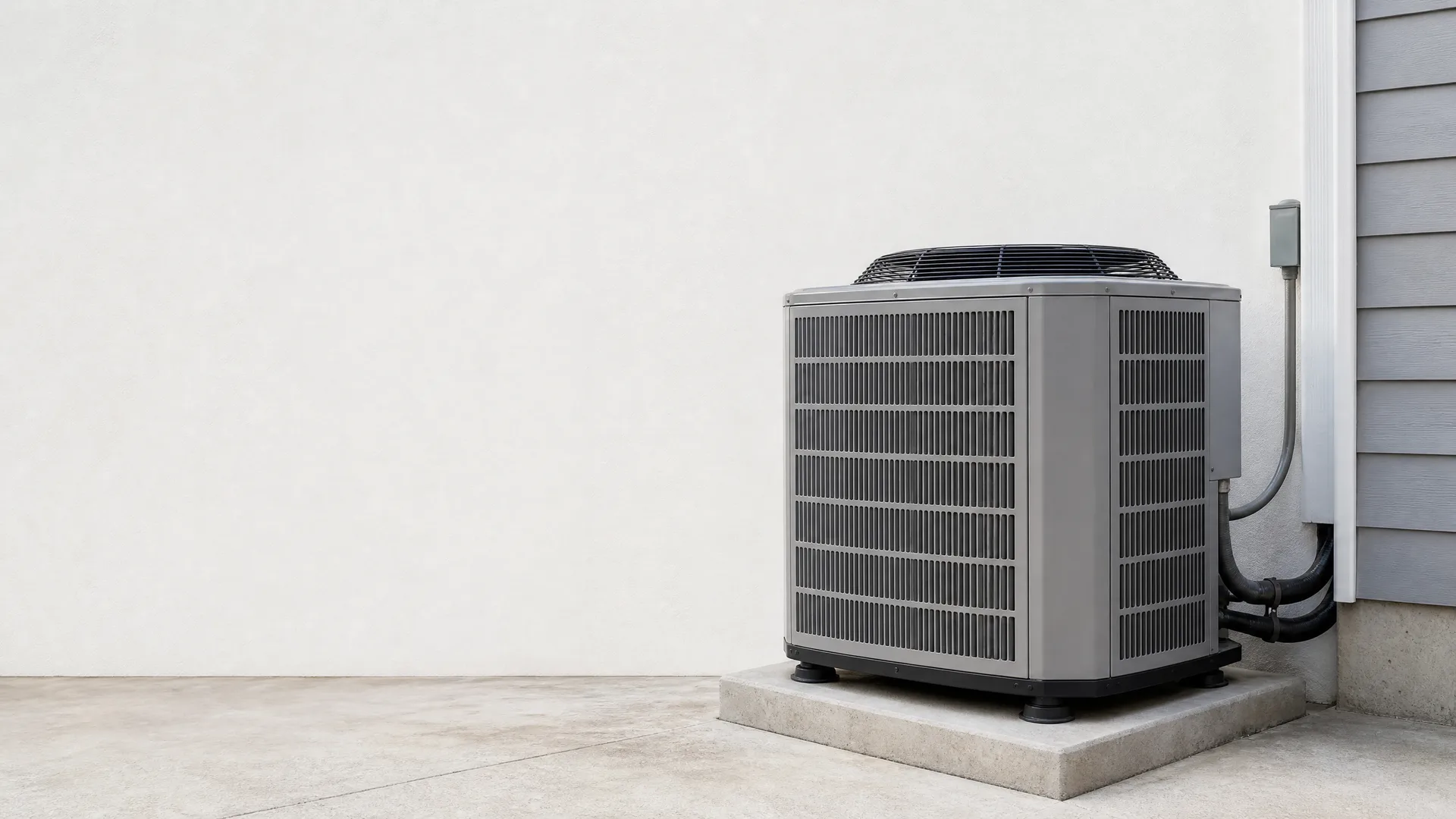
An outdoor air conditioner condenser unit on a concrete pad beside a house wall with stucco lower section, horizontal siding above, and a white downspout to the right.
Dirt packed into the fins blocks the airflow the unit needs to finish a normal cooling cycle.
A bearded man in a navy t-shirt sits on a beige sofa, laughing while looking toward a laptop screen visible in the lower foreground, with a houseplant, shelves, and a framed picture behind him.
A man with graying hair and a beard in a plaid flannel shirt stands indoors looking out a frosted window at snow-covered trees, with a ceramic mug on the sill.

Hand off the air conditioner problem

A unit short cycling in July isn't going to fix itself, and every cycle it runs half-finished is a cycle that ran your compressor without doing its job. That adds up on a Maryland power bill fast, especially with the humidity making the system work harder to begin with. The part behind it could be a failing capacitor, a low refrigerant charge, a dirty coil, or a thermostat in the wrong spot, and most of those aren't something to diagnose by guessing. Finding a contractor who answers, shows up, and actually knows what they're looking at usually means calling around, explaining the problem over and over, then sitting with a stack of quotes trying to tell them apart. None of that gets your house dry and cool any faster. Send the request once and that work is off your plate, while the short cycling keeps wearing on a unit that's already struggling to keep up with a Maryland summer.

An outdoor air conditioner condenser unit on a concrete pad beside a house with horizontal lap siding and a light stucco wall, surrounded by dark mulch and an ornamental grass.

What a short cycle costs the compressor

Every time the compressor stops and restarts, it draws a hard jolt of current just to get moving again, far more than it needs once it's running steady. A unit that cycles every few minutes is making the compressor do that start-up draw over and over instead of settling into the lower, steady draw of a normal run. That's where the extra cost on a Maryland summer bill comes from, not the cooling itself.

An outdoor air conditioning condenser unit on a concrete pad beside a light stucco wall, with a disconnect box and refrigerant lines running to adjacent lap siding.

Why the part matters more than the brand

A capacitor, a relay, a low refrigerant charge, a blocked condensate line, any one of these can force a unit off before its cycle finishes, no matter how new or expensive the equipment is. The symptom looks the same from the thermostat no matter which part is behind it. That's why a contractor checks the parts in order rather than guessing from the make of the unit or how old it is.

Power costs 19.53 cents per kilowatt-hour statewide

At 19.53 cents per kilowatt-hour, every half-finished cycle your AC runs is drawing that hard startup jolt for nothing cooled. A unit short cycling through a Maryland summer racks up that cost dozens of times a day, all without pulling the humidity down.

EIA-861 2025 statewide residential average

A unit that short cycles isn't going to sort itself out. It's a dirty filter, an iced coil, a bad capacitor, a thermostat in the wrong spot, or a unit that was never sized right for your house, and each of those needs someone to look at it and say which one it is. Left alone, it keeps cutting off before it pulls the humidity down, and it keeps running your compressor through hard restarts on a Maryland power bill that's already high in July. You don't have to spend your evening searching contractor listings, calling around to see who answers, explaining the on off on off pattern to three different people, and sorting through quotes to figure out who's worth having out. Send the form once and that search is off your plate. Someone who works on these units will have what you told them and get in touch, and from there it's a straightforward call: what's wrong, what it takes to fix it, and your AC running the way it's supposed to.

A dark-clad house with large windows beside a gravel driveway lined with in-ground path lights, ornamental grasses and hydrangeas, with distant hills and an orange sunset sky.

Air Conditioner Repair

Send one request and you're done looking

RepairCentral ACMaryland
Step 1 of 2

What ZIP code is the job in?

  • A pale ceramic vase holding leafy green branches sits on a wooden side table beside a linen-covered chair with a throw blanket, below a wood-framed window.
    • Tell a local repair pro what your air conditioner is doing.
    • Say what's going on with your air conditioner, and a pro who works on them reaches out.
  • A large woven basket with rope handles holding a draped cream fringed blanket stands in a room corner on a wood floor, with sunlight from a nearby curtained window and a dark wood cabinet at right.
    • Send the request and finding a pro stops being your problem.
    • After this form, you can stop searching for an air conditioner pro.
  • A leafy green plant in a woven basket sits in a sunlit corner beside a beige sofa with a knit throw, sheer curtains, a window, and a wooden coffee table.
    • Describe what your air conditioner is doing once, in one form.
    • Answer a few questions instead of calling shop after shop.
  • A ceramic vase holding olive branches and a wooden bowl sit on a wooden windowsill beside a white-framed window, with a framed picture leaning against the grey wall.
    • Only one pro gets your request, so you hear from one company.
    • Your request stays with one local pro.