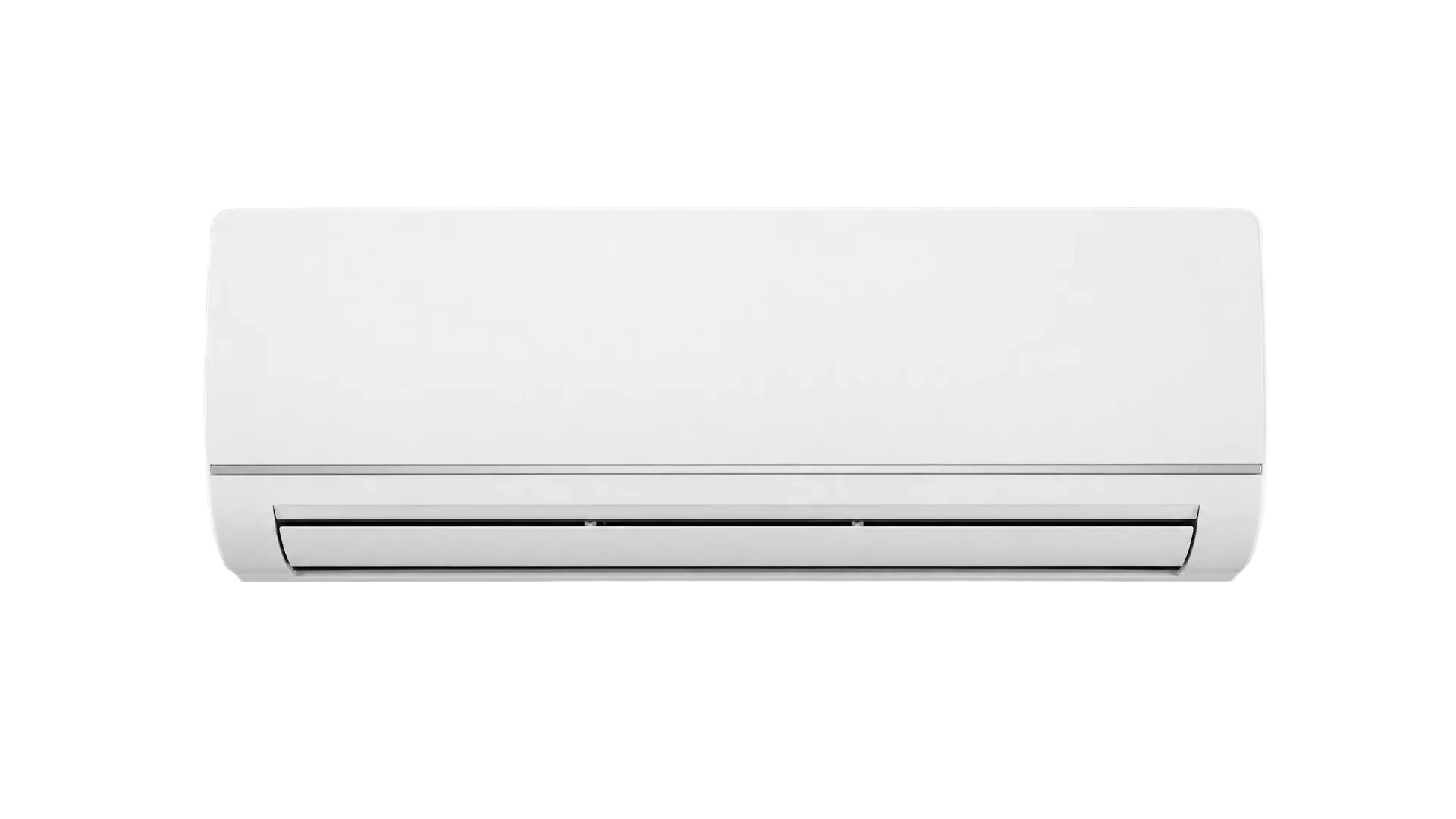
That musty smell is mold or mildew growing inside the indoor unit, usually on the evaporator coil or in the drain pan. A mini split pulls moisture out of the air every time it cools, and in Maryland's humid summers it's pulling a lot of it. That water needs to drain away fully between cycles. When it doesn't, maybe the drain line is clogged, maybe the filter is dirty and slowing airflow across the coil, the moisture sits there instead and mold starts growing on it. Run the unit a few hours later and that smell is the air passing over what's already growing in there. It will keep coming back each time the unit runs until whatever's holding the moisture gets cleaned out. Left alone, it doesn't stay a smell. Mold on the coil and in the drain pan can spread into the ductless unit's housing and start affecting the air actually moving through your home.
A clean mini split drains condensation as fast as it collects it, so no water sits around for mold to grow in.
Dust on the housing and dark residue at the vents mean the coil behind them is likely growing mold already.
Every time your mini split cools the air, the evaporator coil gets wet. That's normal. It's supposed to drip into the drain pan and run out through the condensate line. The trouble starts when that line gets clogged with algae or dust, because then the water has nowhere to go. It sits in the pan, and in Maryland's summer humidity it doesn't take long for mold to start growing in it. The coil itself stays damp for hours after the unit shuts off, so mold gets time to take hold there too, especially if the filter behind the front panel is dirty and slowing the air down. Once mold is growing on the coil, the blower wheel does the rest of the work for it, pushing that air straight into the room every time the fan runs. Running the unit on a low fan speed or a mild setting makes it worse, since less moisture gets pulled out of the air to begin with, and the coil never really dries out between cycles.
How the mold actually gets there
The indoor unit's evaporator coil stays wet for hours after the mini split shuts off, which gives mold time to take hold between cycles.
Condensation is supposed to drip off the coil into a drain pan and out through a small condensate line to the outside.
A clogged drain line backs water up into the pan, and standing water starts growing mold within days in sticky weather.
The blower wheel behind the front panel moves damp air across the coil, so mold growing there gets blown straight into the room.
Mini splits that run on a low fan speed or a mild setting pull less moisture out of the air, leaving the coil damper longer.
A dirty air filter slows airflow across the coil, so it cools unevenly and stays wetter in spots where mold grows fastest.
A local pro for your mini split maintenance
One request and finding someone for the tune-up is handled.
Describe your mini split job, and a local pro who handles it gets in touch.
No charge to send it. You decide if you hire them.
Is this smell going to keep coming back?
You notice it most when the unit first kicks on, a damp, sour smell that fades after a few minutes and comes back the next time. You might see a dark film creeping across the vent fins or feel air that's cooler but still feels heavy. Some rooms hold onto it worse than others, usually wherever the unit runs the longest. Left alone, the mold keeps feeding on the moisture the coil can't fully drain, and it spreads further into the housing each summer. The smell is the first sign. Reduced airflow and a coil that can't cool as well tend to show up after, along with air that's circulating through that growth every time the system runs.
Running clean
Air comes out even and the coil stays out of sight behind the vents, doing its job. No smell when it starts up, no film on the louvers, just cool air. This is what a mini split looks like when condensation is draining the way it should.
Mold taking hold
The dust across the casing and the dark staining near the vents aren't just cosmetic. They tell you air has been moving through a dirty coil for a while, and what's growing back there is what you're smelling every time the unit kicks on.
Before you get your mini split maintenanceAfter you get your mini split maintenance
What the filter has to do with it
The filter sits in front of the coil and catches dust before it gets there. When it's clogged, air has a harder time moving through, and the coil behind it runs colder than it should. A coil that's too cold doesn't just collect condensation, it can frost over, and when that ice melts it adds even more water than the system was built to drain. A filter that's rinsed or swapped on a regular schedule keeps airflow steady and the coil at the temperature it's designed to run at, so the drain pan only ever sees normal condensation.
Why a yearly check catches it early
A maintenance visit flushes the condensate line, checks the drain pan for standing water, and looks at the coil itself for the dark film that means mold has already started. Catching it there means cleaning a coil, not replacing one. Left alone, a blocked line backs water up into the unit or past the pan entirely, and by the time it's dripping from the housing or running down a wall, the coil usually needs more than a wipe-down. A line that drains freely come spring is one less thing working against you by August.
Power costs 19.53 cents per kilowatt-hour statewide
At 19.53 cents per kilowatt-hour, a mini split working harder to push air through a moldy coil costs you more every billing cycle. Clearing the coil and drain line lets it cool the way it's supposed to, without straining to move air that isn't flowing right.
EIA-861 2025 statewide residential average
A musty mini split won't clear itself
The smell is mold on the coil or standing water in the drain pan, and it comes back every time the unit cycles until someone clears it out and gets the condensate draining the way it should. Maryland's summers keep pulling moisture into that unit faster than most places, so the coil behind your vents dries slower and the mold gets more chances to grow. A filter change helps for a while. It doesn't reach the coil or the drain line, and that's where the smell is actually coming from.
You don't have to track down who handles this or figure out what to ask for. Send the form and a contractor who works on mini splits gets matched to you and reaches out, already knowing it's the coil and drain line that need attention. That part becomes someone else's job the moment you submit it, not another thing on your list before fall.
Get the right pro for your mini split
Send the form, and lining up the mini split tune-up stops being yours to chase.