
Mini split smells musty in Baltimore, MD

A white wall-mounted mini-split air conditioner indoor unit with a horizontal air outlet vent, centered against a plain light gray background.
Get matched

A musty smell from a mini split almost always means mold or mildew growing on the evaporator coil or inside the drain pan, and Baltimore's humid summers make this common. The indoor unit pulls moisture out of the air all summer long, and if the coil stays wet between cooling cycles, or the condensate drain gets slow or clogged, that moisture sits there and grows mold. The smell is usually strongest right when the unit kicks on, because that first blast of air passes straight over the coil. A dirty filter makes it worse by slowing airflow and keeping the coil wetter longer than it should stay. This isn't dangerous to the equipment right away, but it means the coil and drain need cleaning, and it's worth checking before summer humidity builds the smell back up again.

Why does a mini split in Baltimore get musty in the first place?

  • Cooling runs June through September

    Your mini split cools from June through September, and every one of those months it's pulling moisture out of the air across that coil, giving mold time to settle in.

  • Heat runs October through April

    Heat runs October through April here, so the system sits idle right after summer with a damp coil and pan inside it, which is when the smell tends to set in.

  • Power here costs 20.22 cents per kilowatt-hour

    At 20.22 cents per kilowatt-hour, a coil caked with mold makes the unit work harder to move air, and you pay more to run a system that isn't cleaning the air it circulates.

NOAA nClimDiv 1991-2020 · EIA-861 2025

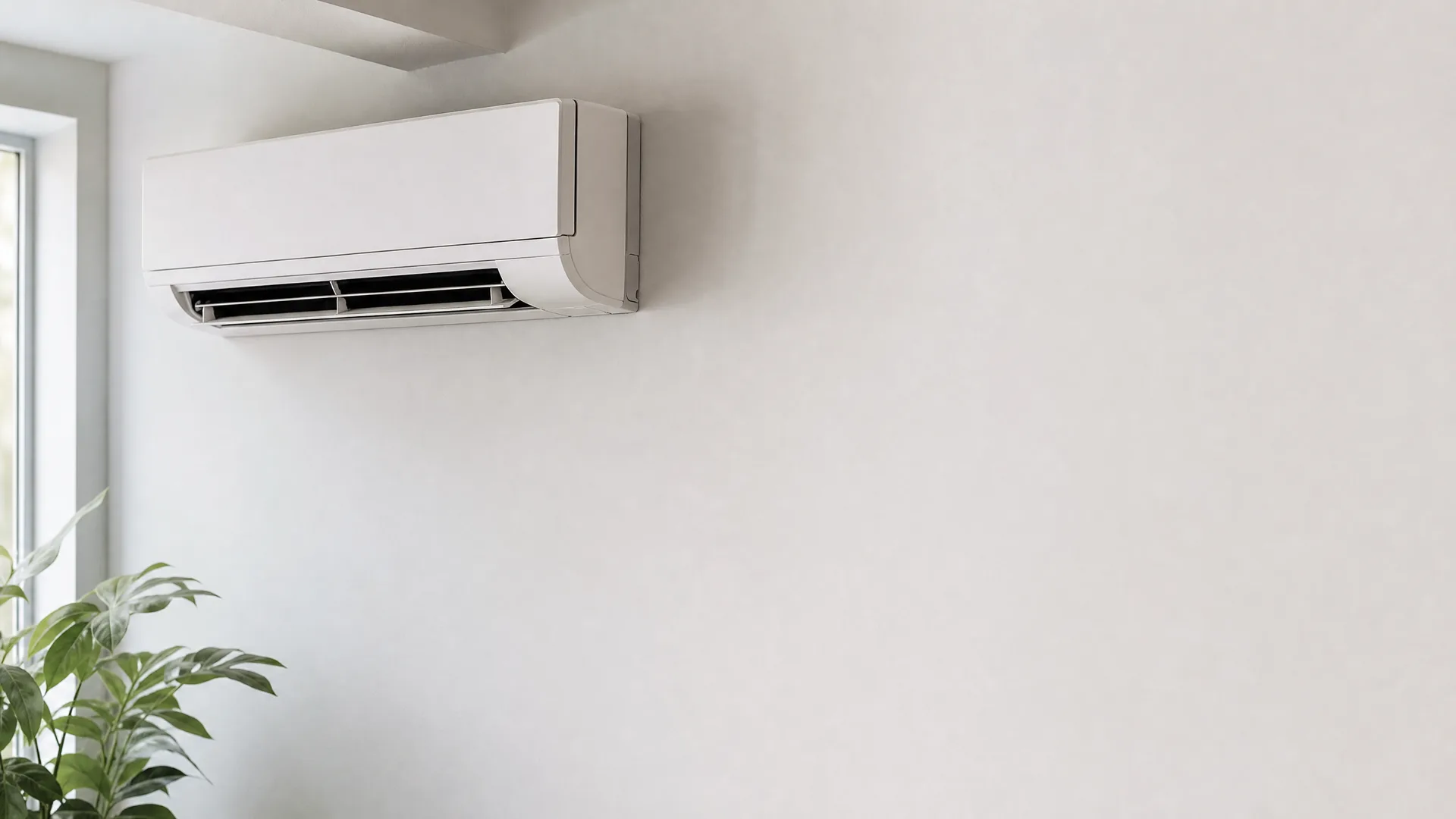
A white wall-mounted mini-split air conditioner installed near the ceiling on a light-colored interior wall, with a window and green foliage visible at the left edge.

Clean and running right

This is a mini split with a clear coil and an open drain line. Air moves through it without picking up anything, so the room gets cool air with no smell. A unit kept this way through a Baltimore summer just does its job quietly.


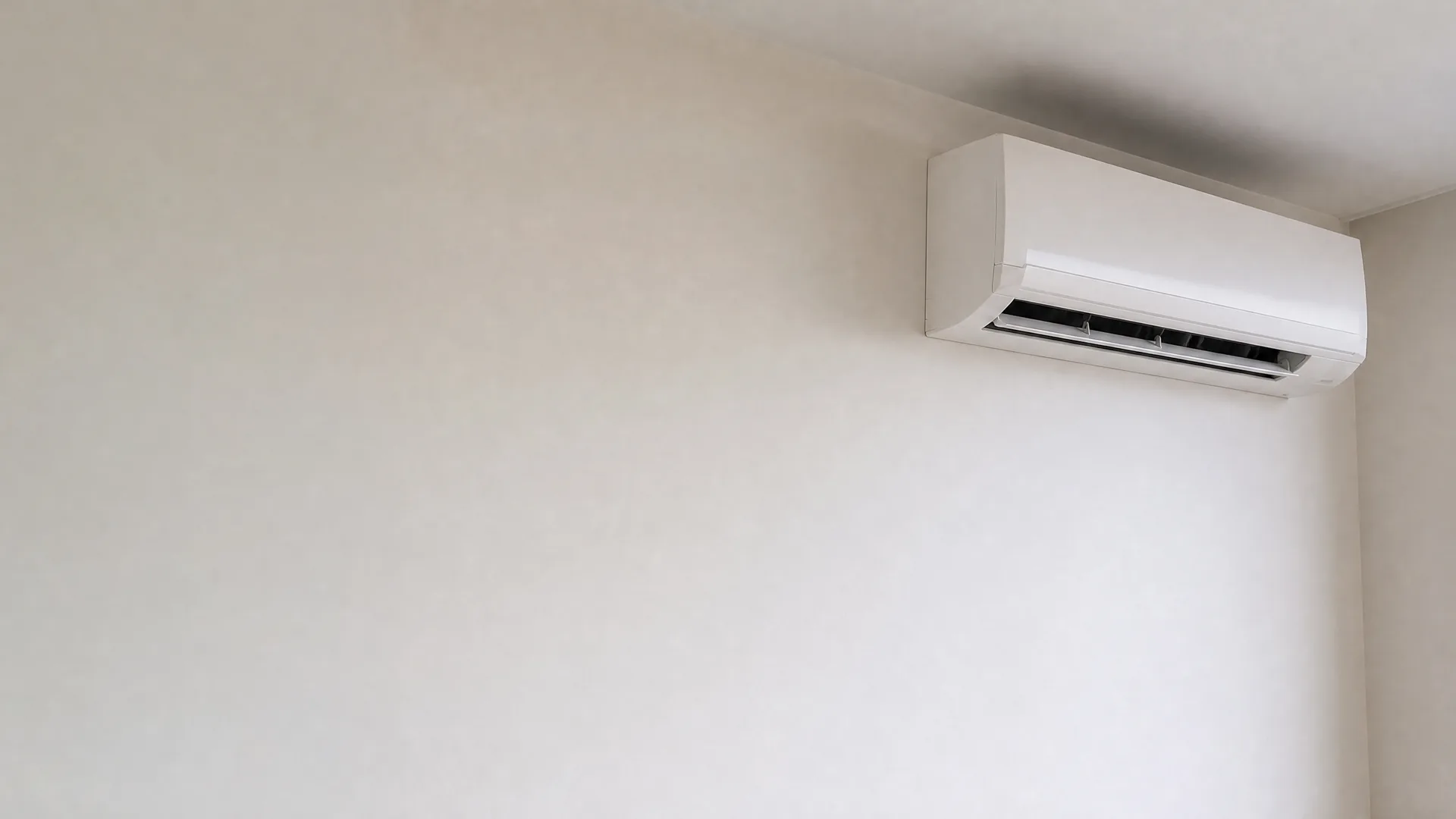
A dusty white wall-mounted mini-split air conditioner indoor unit installed high on a beige interior wall below a white ceiling and trim.

Dust built up on the coil

Grime like this across the vents and intake grille gives mold somewhere to hold on, especially with the coil wet most of the summer. Once it's packed in like that, the musty smell comes back every time the unit kicks on, no matter how long it runs.

A woman in a gray turtleneck sweater sits on a couch under a blanket indoors, looking out a window toward orange autumn foliage, with a bookshelf and plants behind her.
A woman with gray shoulder-length hair in a cream knit sweater sits in an armchair under a blanket, looking out a window at orange autumn foliage, with a living room, houseplant and wooden table behind her.
A woman with gray hair in a cream knit sweater sits on a light sofa by a large window, looking out at trees with autumn foliage, with a dark mug on a wooden side table nearby.
A gray-haired woman in a dark knit sweater sits on a couch with a cream blanket and patterned pillow, looking out a window toward yellow and orange autumn trees, with wooden shelves and plants in the room behind her.

The coil is only part of it. Behind it sits the blower wheel, and its blades curve just enough to hold a film of mold that the airflow passing over it can't shake loose. That film builds up quietly, cycle after cycle. Below the coil, the drain pan collects the water the unit pulls out of the air, and if the drain line is slow or blocked, that water sits instead of draining out. Standing water in a closed-up wall unit turns in days. Because a mini split pulls the same room air across that coil again and again, with no return duct bringing in air from elsewhere, any spores sitting on the coil get picked up and spread right back into the room. The filter adds to the problem rather than solving it. It traps dust and skin cells, and that debris feeds the mold once it lands on a wet coil. Run the fan on low to dehumidify and the coil stays damp longer after each cycle, which only helps the mold along. That's why the smell often hits hardest the moment the unit kicks on.

What's Actually Growing in There

  • The blower wheel sits right behind the coil, and its curved blades collect a mold film that the airflow can't dislodge on its own.
  • A clogged drain line backs condensate up into the pan, and standing water there will sour within days in a closed-up wall unit.
  • Mini splits don't cycle air through a return duct like a central system, so the same room air passes the coil over and over, redepositing spores on it.
  • The long-life filters in most mini splits trap fine dust and skin cells that feed mold once that dust sits on a damp coil surface.
  • Running the unit on a lower fan speed for dehumidifying slows airflow across the coil, which lets it stay wet longer after each cycle.
  • The smell usually gets stronger right when the unit starts up, because that first blast of air picks up whatever grew on the coil while it sat idle.
A white wall-mounted mini-split air conditioner on a light gray wall in an empty room with dark wood flooring, white baseboards, a tray ceiling with recessed lights, and a window at the left.
A dry coil and a clear drain line, so the unit only ever puts out cool, clean air into the room.
A wall-mounted mini-split air conditioner indoor unit with a yellowed plastic casing and dark horizontal vent louvers, installed on a plain light-gray wall.
Dust caked on the housing and dark residue around the vents, a sign mold has already taken hold inside.
  1. Warm room air pulls through the filter and across the coil.

  2. Moisture in that air condenses on the cold coil surface.

  3. Dust and skin cells settle into that film and feed mold.

  4. Mold spores spread across the coil and onto the blower wheel.

A wall-mounted mini-split air conditioner indoor unit with a dusty, discolored cover, installed near the ceiling on a plain light-colored wall.
Before you get your mini split maintenance
A white wall-mounted mini-split air conditioner unit installed high on a light gray interior wall below crown molding, with a bamboo-shaded window at the lower left.
After you get your mini split maintenance
A white wall-mounted mini-split indoor unit high on a light beige interior wall above a gray sectional sofa with beige cushions, with a potted green plant and a window at left.

Get matched with a mini split pro in Baltimore

A licensed local pro takes the request for your mini split tune-up.

Get matched with a pro who does mini split tune-ups in Baltimore.

Get a licensed local pro

No fee to send it, and nothing to sign.

Does that smell hit you when the mini split kicks on?

You probably notice it most in the first minute after the unit starts, a damp, sour smell that fades a little but never fully clears. It might be strongest in whichever room that indoor unit serves, and it can settle into curtains or bedding nearby if the room stays closed up. Some people notice a faint dark spotting around the vents, or a musty smell that's stronger on humid days. None of this means the unit is broken. It still cools. But mold on the coil or in the drain pan doesn't go away by running the unit harder, and left alone through another Baltimore summer, it spreads across more of the coil and the blower wheel, and the smell it puts into the air gets harder to ignore.

A white wall-mounted mini-split air conditioner on a plain light-colored interior wall, with a window at left and a green leafy plant in the lower left corner.

The filter only does so much

The filter catches dust before it reaches the coil, but it doesn't stop moisture, and moisture is what starts the mold. Even a clean filter won't keep a coil dry if the unit sits unused for days with condensate still in the pan. That's why a musty smell can show up even in a home that changes filters on schedule. The filter and the coil do different jobs, and only one of them is where the smell starts.

A white wall-mounted mini-split air conditioner installed near the ceiling on a plain beige interior wall, with empty wall space to the left.

Why a closed-up unit holds it in

A mini split's indoor unit is a sealed housing with narrow passages around the coil and blower wheel. Once mold sets in, there's little airflow to dry it out between cycles, especially on a muggy Baltimore night when the air coming in is already damp. That closed space is also why the smell is hard to chase out on your own. Without opening the housing and reaching the coil directly, wiping down the vents or the wall around the unit won't touch where the smell is actually coming from.

A man seen from behind raises his hand to wave at a woman standing in the open front doorway of a single-story house with gray shingle siding, white columns and a gabled porch entry.

A musty mini split is a maintenance problem, not a broken one

The smell is the coil and drain pan telling you what's been growing there since summer started. Nothing about the unit is failing. A coil clean and a drain line cleared will take the smell out, because that's what's actually causing it. You don't need a new mini split. You need the one you have serviced before the humidity builds back up.

Baltimore has plenty of licensed contractors who work on mini splits all season and know this exact complaint on sight, the sour smell on startup, the damp film on the coil, the pan that never quite drains. Getting matched with one means someone local looks at your unit specifically, not a general service call. You'll hear from one contractor, not a handful competing for the job, so you can ask what they find and go from there.

A light-colored ceramic vase holding green leafy branches sits on a round wooden table, with a wooden-framed armchair draped in a cream throw, a tripod floor lamp, and sheer curtains blurred in the background.
A white clapboard house at dusk with a lit pedimented portico, wooden front door, potted ferns, stone walkway, lawn, and illuminated hydrangea shrubs.

Mini Split Maintenance

Find a mini split maintenance pro in Baltimore

Tune-up, service, or cleaningMini-splitBaltimore city, MD
Step 1 of 2

What ZIP code is the job in?

  • A brown leather and wood armchair with a cream knit throw sits in a corner beside a woven basket holding a dark cushion, under a framed mountain photograph, with a wood-trimmed window showing yellow and green foliage.
    • Your request goes to a Baltimore pro who takes mini split jobs.
    • Get matched with someone who does this kind of work in Baltimore.
  • A dark wood dresser against a pale wall holds a ceramic vase of eucalyptus branches, a stack of books with a wooden bowl, and a woven basket, with a framed landscape painting above and a woven basket holding a knit blanket on the floor beside a window.
    • Send the form and the mini split tune-up stops being something to remember.
    • Send the form, and lining up the mini split tune-up stops being yours to chase.
  • A window seat with beige linen and brown textured cushions, a chunky knit blanket, and an open book, beside a window showing blurred yellow autumn foliage.
    • One form instead of hunting for a pro who does mini split tune-ups.
    • Fill out one form instead of calling around for a mini split tune-up.
  • A cream upholstered armchair with a rust-colored pillow and knit fringed throw sits beside a window with a ceramic vase of orange-leafed branches on the sill, overlooking autumn trees and leaf-covered ground.
    • The pro who gets in touch is licensed in Maryland and works in Baltimore.
    • Your request stays with one local pro.