
32 degrees and below
A heat pump pulls less heat from colder air, so below freezing it has to run longer stretches just to hold the temperature you set.
Cold mornings here and the heat pump outside never seems to shut off. You notice the sound running through dinner, through the night, still going when you get up. It's not cycling the way the furnace used to, and that makes you wonder if something's wrong or if this is just how a heat pump handles a Maryland winter.
A heat pump pulls heat from outside air, and the colder that air gets, the longer it has to run to keep your house at temperature. On a 30 degree day in Maryland, hours-long runs are normal. But if it never cycles off at all, even on milder days, or the house still feels cold while it runs, the unit is losing a battle it should be winning. A frozen outdoor coil, a low refrigerant charge, or a failing defrost control can all force it into constant operation. Since most homes here heat with electric heat pumps, and power costs real money, nonstop running with no gain in comfort is worth having a contractor look at before the next cold stretch.




A heat pump pulls less heat from colder air, so below freezing it has to run longer stretches just to hold the temperature you set.
Each time frost builds on the outdoor coil, the system pauses to melt it off, then picks heating back up where it left off.

You'll feel it first in the bill. A heat pump that runs most of the day in January is pulling power the whole time it's on, and in Maryland that power isn't cheap. You might also notice the house still feels a few degrees cooler than the thermostat says, especially in rooms farthest from the air handler. That's the system working at its limit, not necessarily failing, but it's worth paying attention to.
If the runtime keeps climbing, or the outdoor unit is icing up and not clearing on its own, that's a sign something needs a closer look rather than just cold weather doing what cold weather does. A contractor who works on heat pumps in this area can check the refrigerant charge, the defrost board, and the airflow and tell you which one is behind what you're seeing. If you'd rather have someone take a look than keep watching the bill climb, you can get matched with one here and they'll reach out about your specific setup.


A clean unit like this one can run for hours in cold weather and still hold the house at temperature. The fins are clear, air moves through them the way it should, and the long runtime is just the system doing its job in the cold.

Dust and grime packed into the fins block the airflow the unit needs to pull heat from outside. It runs the same long stretches, but now it's working harder to move less heat, and the house falls behind no matter how long it stays on.
Walk out and look at the outdoor unit. If the fins are caked with ice past what a normal defrost clears, or if you hear it straining with a sound that's new, that's not just cold weather doing its thing. Check the vents too. If air is still coming out warm and steady, the long runtime is the system keeping up, same as the other homes on your street this week. If the air has gone cool or weak, or the house is slowly losing ground no matter how long it runs, you're looking at a unit working against something broken inside it, not just the cold outside. Left alone, that's strain on a system that's already working as hard as it can.

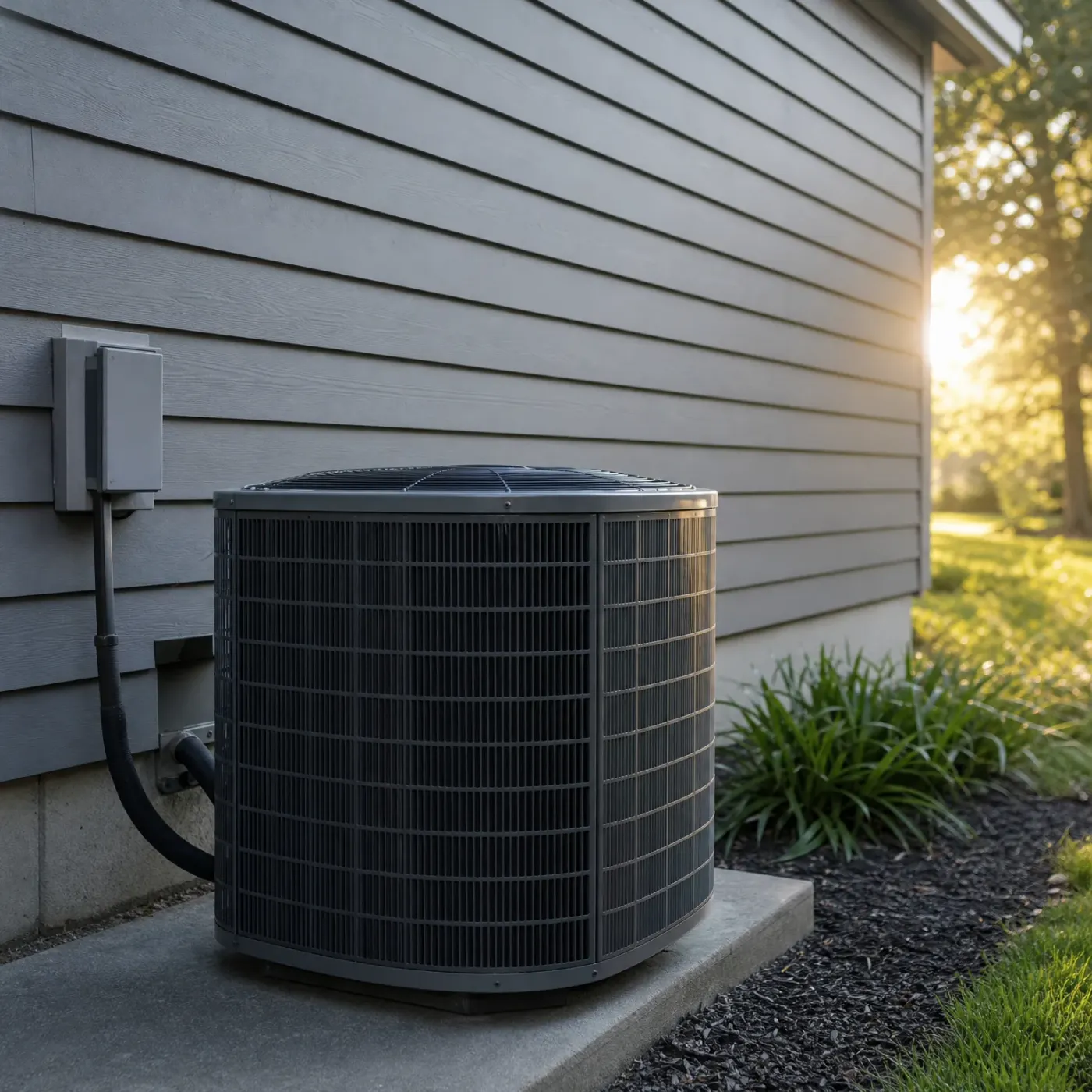
This outdoor unit sits clear of debris, with open space around the coil and mulch kept back from the cabinet. Air moves through the fins without resistance, so even on a long run the heat pump isn't fighting anything extra to hold the house at temperature.

Grime on the grille and leaves piled against the base choke off airflow before the heat pump can even start working. The longer this goes, the harder the unit has to run for the same result, and that strain is what turns a cold day into a repair call.


Send the request and finding a pro stops being your problem.
No fee to send it, and nothing to sign.
A heat pump that runs long in a cleared, open space is doing what the colder air demands of it. Nothing about the setup is fighting the system, so the extra runtime goes straight into keeping the house at temperature.
The same cold air hitting a unit that's boxed in by fencing, shrubs, or stacked firewood forces it to run just as long, or longer, without the same result. The airflow it needs to shed frost and pull heat isn't there, so the runtime stops paying off the way it should.


Most systems here have a backup heat strip built in for mornings when the heat pump alone can't keep up. It kicks in on the coldest stretches, or right after a defrost cycle when the air coming out feels cool for a minute. You might see it marked "aux" or "emergency heat" on the thermostat. Short bursts of it during a hard freeze are normal. It's electric resistance heat, so it draws more power than the heat pump does on its own, and that shows up on the bill if it's running more than it should.
If the aux light is on for hours at a stretch, or the thermostat seems to call for it even on a mild afternoon, the heat pump isn't carrying the load it's supposed to. That can mean low refrigerant, a failing component, or a thermostat setting that's calling for backup heat too soon. A homeowner who watches that light come on constantly through a Maryland winter is paying for electric resistance heat instead of a heat pump doing the work it was installed to do.
At that rate, every hour your heat pump runs long on a cold day shows up on the bill. A unit already working hard against freezing air costs more to run here than the same system would in a state with cheaper power.
EIA-861 2025 statewide residential average

Six-thirty, still dark, and you pull the kitchen curtain back before the coffee's done. The side yard is blue with frost and the outdoor unit is a block of ice, thick white crust over every fin, icicles starting at the bottom edge of the cabinet. It's been running since you went to bed. You can hear it now through the window glass, that steady low drone that didn't stop once overnight. Your breath fogs the glass. Somewhere past the fence a dog barks and the sound carries the way it does when it's this cold. You let the curtain fall back and go check the thermostat, already guessing what it's going to say.
Summer here isn't just hot, it's heavy. Average dew point across June, July and August runs 64°F, per NOAA climate data, and that's the number that tells you how much moisture the heat pump is wringing out of the air all summer, not just how high the temperature climbs. That same system runs the house in winter, and a unit that spends summer pulling moisture out of thick air is already working a long season before the cold ever sets in. Coils that stay wet that often collect more dirt, and a dirty coil moves less heat in both directions. That's part of why it's working harder by the time January's cold mornings show up.
NASA POWER T2MDEW county cells weighted by homes
A heat pump running long on a cold Maryland morning isn't necessarily broken. That's what the cold asks of it. What tells you something is wrong is ice past what a defrost clears, air that stays cool at the vents, or a sound that wasn't there before. If that's what you're hearing or seeing, the runtime isn't the problem by itself, it's a sign something underneath it needs a look. You don't have to figure out which part it is. Send in what you've noticed and a contractor who works on these systems in Maryland will take it from there, checking the coil, the defrost board, whatever it turns out to be. Once that's sent, it's off your plate. No more standing out by the unit at six-thirty guessing whether the ice is normal. Someone whose job this is will reach out and work through it with you.
After this form, you can stop searching for a heat pump pro.
Sending the form costs nothing.