








Why your AC smells musty in sticky Maryland summers

RepairCentral ACMaryland
Step 1 of 2

What ZIP code is the job in?

Why does my AC smell musty in the summer?

You walk in from the heat and the air coming out of the vents smells like a wet basement. It's not just unpleasant. You keep the house shut up tight against the humidity outside, and now the system that's supposed to make the air better is the thing making it smell off. You want to know if this is normal for a Maryland summer or if something's actually wrong.

It's mold or mildew growing on the evaporator coil or in the drain pan

Your AC pulls moisture out of the air every time it runs, and that water has to drain away through a condensate line. When the line is slow or clogged, or the coil stays wet between cycles, mold starts growing right where the air passes over it. Every time the system kicks on, it blows that smell through the house. Maryland summers push the system to run for hours at a stretch pulling humidity out of thick, sticky air, so there's more moisture moving through the unit than in drier climates. That gives mold more chances to take hold on the coil, in the drain pan, or inside the ductwork near the unit.

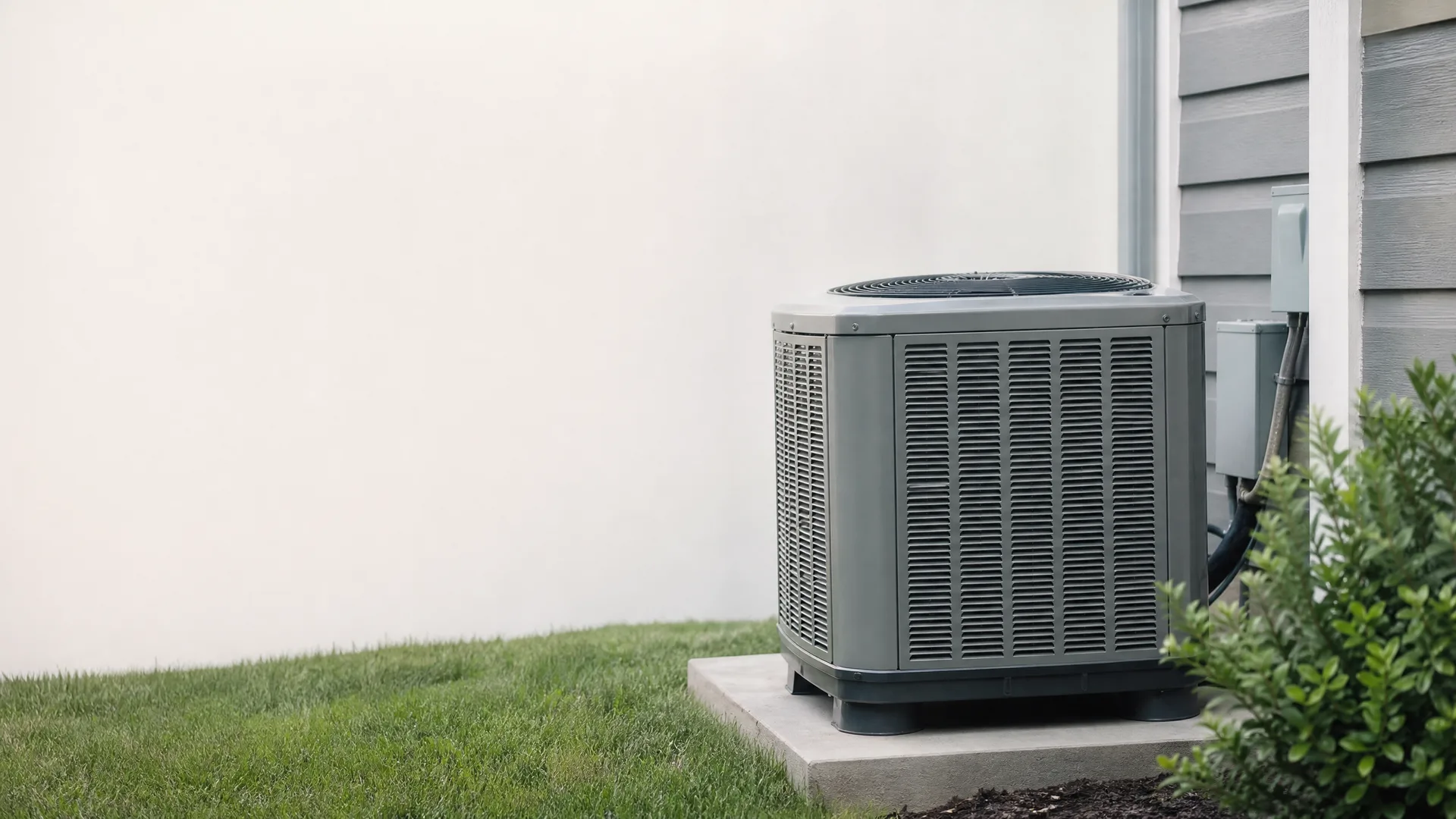
A gray outdoor air conditioner condenser unit on a concrete pad beside a house corner with lap siding and a stucco wall, surrounded by mown green grass.

Where the smell starts

Air passes over the evaporator coil before it reaches your vents, and that coil stays wet for a while after the system shuts off. In a Maryland summer, the air it's pulling in is already heavy with moisture, so the coil has more water sitting on it than it would somewhere dry. That water needs somewhere to go. It drains off through a condensate line, and if that line is clean and sloped right, the coil dries out between cycles. If it isn't, the water sits.

An outdoor air conditioning condenser unit on a concrete pad beside a house with light stucco and lap siding, with mown grass to the left and a green shrub to the right.

What grows in standing water

Mold needs moisture, something to feed on, and a few days. A coil that stays damp between cycles, or a drain pan with an inch of water sitting in it, gives mold both. The dust and skin cells that pass through your return air are enough to feed it. Once it takes hold on the coil or in the pan, every cycle pushes a little of that smell through the ductwork and into the room, even when the air itself is cool and dry by the time it reaches you.

Musty Smell: Normal or a Problem

Musty smell, system runs fine

  • The smell shows up mostly at startup, then fades within a few minutes once air has moved through the ducts.
  • Your thermostat holds the temperature you set, and the system cycles on and off the way it always has.
  • The coil looks wet but not coated or slimy when you check it near the indoor unit.
  • The condensate line is draining, you can hear or see water moving out through the drain when the system runs.
  • Nothing smells like it's coming from the ductwork itself, just from the vents nearest the indoor unit.

Musty smell, something's wrong

  • The smell is constant now, not just at startup, and it's gotten stronger over the past week or two.
  • The system is cooling slower than it used to, or it's running longer to hit the temperature you set.
  • You've noticed water stains on the ceiling or around the indoor unit, or a drip you can't explain.
  • The condensate pan has standing water in it, or the drain line is clogged and backing up.
  • Humidity inside the house feels higher than it should even with the AC running most of the day.
  • There's visible growth, black or green spots, around the vents, the coil, or inside the ductwork you can see.
A smiling bearded man in a dark blue henley shirt sits leaning back on a light grey sofa in a living room, with a bowl of popcorn on a wooden coffee table and a large window behind him.
A bearded man in a dark quarter-zip sweater sits smiling on a brown sofa in a dimly lit living room, with a bowl of popcorn and a mug on a table in the foreground and a potted plant near a window behind him.
A smiling man with graying dark hair and a beard, wearing an olive sweater, sits on a sofa in a living room beside a bowl of popcorn on a wooden table.
A smiling man in a dark green henley shirt sits on a gray sofa in a living room with a lit table lamp, wooden shelving unit, and a bowl of popcorn in the foreground.
A gray outdoor air conditioner condenser unit on a concrete pad beside a house with horizontal lap siding, with a flowering shrub at left and a disconnect box with conduit on the wall at right.
A clean coil drains as it should, so moisture never has time to sit and grow something that smells.
An outdoor air conditioner condenser unit on a concrete pad beside a house with light horizontal vinyl siding, surrounded by bare dirt, gravel and dry leaves, with refrigerant lines and conduit running along the wall.
Dirt and leaves piled against the unit trap moisture against it, which is how a musty smell gets started.
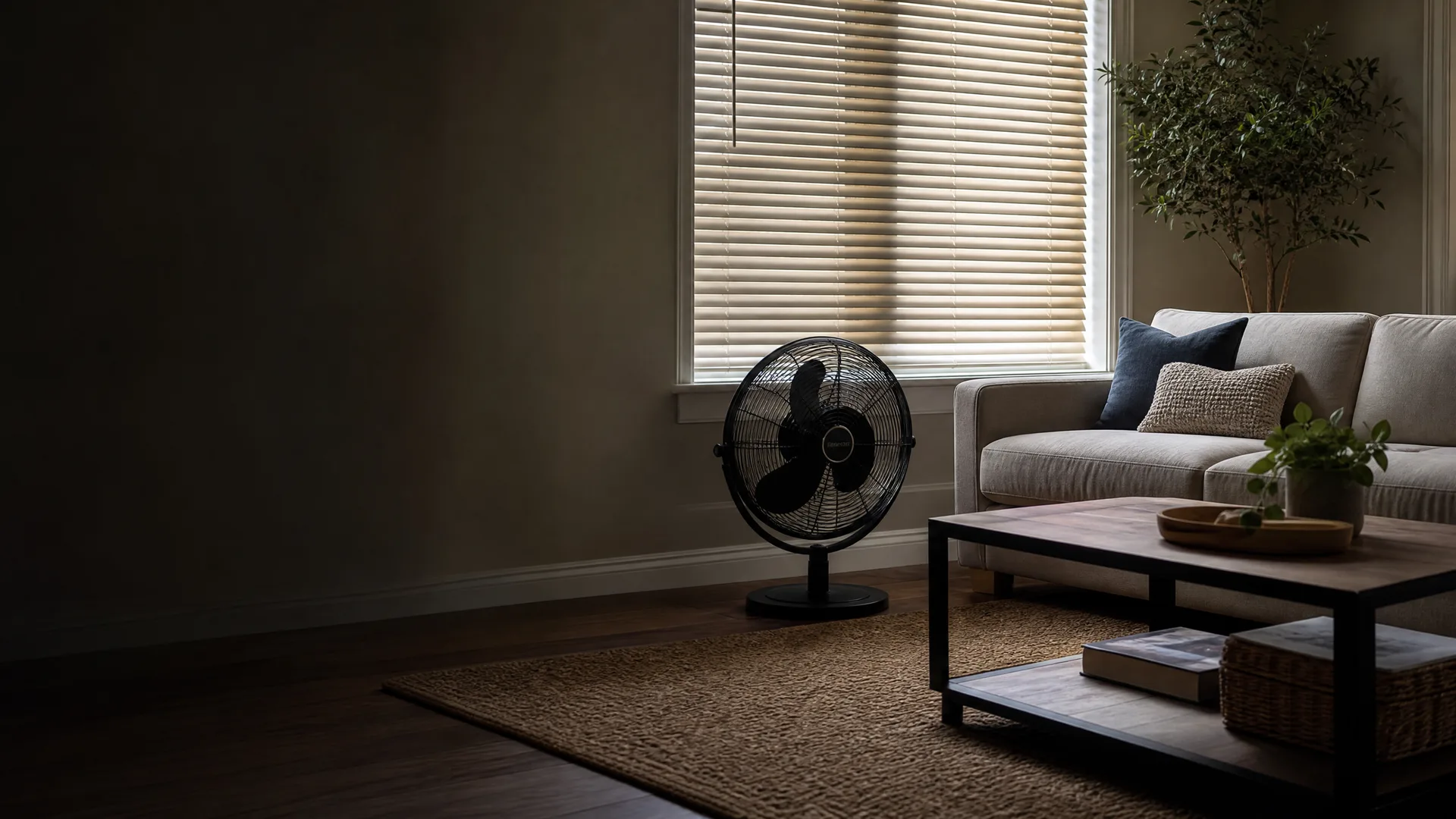
A dimly lit living room with a black table fan on the wood floor near a window with closed blinds, beside a light-colored sofa with cushions, a wooden coffee table, a woven rug, and a potted tree.

The blinds are down against the afternoon and the fan is going beside the couch, moving air around more than cooling it. You've had the AC on since morning and the house still feels thick, the kind of close air that makes you check the thermostat twice. Every time the system kicks on, that smell comes through the vents again, faint and damp, gone after a few minutes but back at the next cycle. You've stopped mentioning it out loud. Outside the sun is flat and white and the grass has that beaten-down look July gives it in Maryland, and you're not going out in it, so you sit with the fan and wait for the air to turn over and clear.

Get your air conditioner to the right pro

That musty smell coming through your vents isn't going to clear up on its own, and in Maryland's humidity it usually gets worse before it gets better. A coil that's staying wet too long, a clogged drain line, growth sitting in the ductwork, these need someone to look and say which one it is. Guessing with a store-bought cleaner or an air freshener just covers the smell while the moisture problem keeps feeding it. Meanwhile your system is running hard against the heat and humidity outside, and electricity here isn't cheap, so a system working harder than it should is costing you more every week you wait. You don't have to track down who handles this or sit on hold trying to get someone out. Once you send the request, that part is off your plate, and you can get back to a house that doesn't smell like it needs fixing every time the AC kicks on.

Let the smell ride it out

You run the system as usual and figure the smell will clear once the air gets moving. Some days it fades enough that you forget about it until the next humid stretch brings it back. Meantime the coil keeps drying slow and the ductwork keeps catching whatever's in that moist air. Nothing forces your hand, so it's easy to let a July smell turn into an August one. You're not losing cooling and the thermostat still holds, so there's no clear sign telling you today is the day. It just sits there, low enough to ignore, every time you walk past the vent.


Get the coil and drain checked

Someone looks at the coil, the drain line, and the ductwork to find where the moisture is actually sitting and why it isn't clearing on its own. If the drain's clogged or the coil's staying wet longer than it should, that gets fixed instead of waited out. The smell doesn't come back because the thing causing it is gone, not just aired out for a few days. With Maryland humidity feeding it all summer, that matters more here than it would somewhere dry. Once it's handled, you stop noticing the air every time you walk in from outside.

An outdoor air conditioner condenser unit sits on a concrete pad beside a stucco wall, with refrigerant lines and conduit running to the wall and a shrub to the left.
Before you get your air conditioner repair
A gray outdoor air conditioner condenser unit on a concrete pad beside a house with dark horizontal siding and a stone base, surrounded by gravel, with a flowering shrub at left and a concrete walkway in front.
After you get your air conditioner repair
Single-story gray horizontal-siding house with multiple front gables, a white front door, white-trimmed windows, and a mown lawn under a clear blue sky.

A Maryland summer holds a dew point around 64°F on average across June, July and August, per NOAA climate data. That's heavy air, the kind that sits on you the second you step outside. Your air conditioner has to wring that moisture out before it can cool the house, and all that water has to go somewhere. It lands on the evaporator coil and runs down the drain line, and with air this wet, there's more of it and the coil stays wet longer between cycles. That's the setup for a musty smell. It's also why the smell tends to ease up some in a dry spell and come right back the next muggy week.

NASA POWER T2MDEW county cells weighted by homes

A woman in a cream knit sweater reclines on a beige couch with eyes closed and a slight smile, a gray hardcover book resting open on a textured blanket over her lap, with a lit table lamp and a leafy plant in the dim background.
A smiling middle-aged man in a dark green sweater sits at a candlelit table with a glass of red wine and a bowl of salad in the foreground.
A gray outdoor air conditioner condenser unit on a concrete pad beside a house with horizontal lap siding, with a wall-mounted disconnect box and conduit, mulch bed, shrub, and lawn nearby.

Running the way it should

This is a system draining as it goes. The pad underneath stays dry, the lines running up to the disconnect box do their job out of sight, and nothing around the unit is holding water against it. Air comes through the vents without that wet-basement edge.

An outdoor air conditioner condenser unit sits on a gray pad beside a light vinyl-sided wall, on a concrete slab next to a gravel bed.

Something's off here

Same kind of unit, same wall, but look at what's built up around the base and along the lines. Anything trapping moisture against the cabinet or blocking airflow around it gives mold a place to start, and that's often where the smell in your vents is coming from.

A woman stands in the open front doorway of a single-story house with a covered porch, stone column bases and a dormer window, facing a man in a dark cap and gray polo shirt seen from behind in the foreground.

What's actually growing in there

The musty smell is mold or bacteria living in a film on the evaporator coil, the drain pan, or the first few feet of ductwork past the coil. It grows because those surfaces are wet more often than they're dry. A coil that drains well and gets a few hours to dry between cycles doesn't build that film. One that drains slow, or sits in a system that short-cycles, stays damp enough for something to take hold.

Once it's established, running the fan longer or turning the temperature down doesn't clear it. You're just moving air across the same wet surface. A contractor can see which part of the system it's actually in, whether that's a clogged drain, a coil that needs cleaning, or growth that's worked its way into the duct liner, and that's the part you can't tell from where you're standing in the hallway. Getting matched with one means someone looks at your system specifically, not a general fix aimed at Maryland summers in general.

A dark ceramic vase holding a leafy green branch sits on a round wooden table, with a blurred cushioned wooden armchair, woven basket, window and shelving with pottery in the background.

Power costs 19.53 cents per kilowatt-hour statewide

At 19.53 cents per kilowatt-hour, every extra hour your AC runs fighting a wet coil or a clogged drain line shows up on the bill. A system working harder to push air through won't cool your house any faster, it just costs more to get there.

EIA-861 2025 statewide residential average

A musty smell from your vents means moisture is sitting somewhere it shouldn't, on the coil, in the drain line, or in the ductwork just past it. That doesn't clear up by running the fan more or waiting for a dry stretch, because Maryland summers don't give you one. A contractor can find exactly where the water is sitting and get it draining the way it's supposed to, so the air coming through your vents is just air again. Once you send the form, you're done hunting for someone to call. That part is off your plate, and the match moves forward on its own. You'll still have a sticky summer ahead of you, that's Maryland, but you won't have a house that smells like a wet basement every time the system kicks on.

A lit ceramic table lamp with a linen shade sits on a round wooden side table with a small vase of greenery and a dark shallow bowl, beside a beige upholstered sofa with a cushion and knit throw, below a framed artwork on a pale wall.
Corner of a beige linen sofa with a large woven cushion and a fringed knit throw, beside a potted leafy tree in a woven basket against a neutral wall.
Sunlit interior corner with a wood-framed armchair with beige cushions and a striped pillow, a leafy plant in a tall ceramic pot, a window with wood sill showing green foliage outside, and dark wood flooring.
A lit black path light beside a stone walkway leading to a dark front door of a white clapboard house, with shrubs and flowering plants in the bed at dusk.
A covered porch at dusk with a wooden front door, a lit lantern wall sconce on gray horizontal siding, a black rocking chair with a cream throw, a potted white flowering plant, a coir doormat, and a window showing a lit interior lamp.

The right pro for this job

One request and the search for a pro is handled.

Hand it off

Sending the form costs nothing.