






White colonial-style houses with lit windows photographed at dusk along a tree-lined street.

AC Installation in Annapolis, MD

Tell us about the job

Takes about a minute. No obligation.

New system or replacementCentral ACAnne Arundel County, MD
Step 1 of 2

What ZIP code is the job in?

Maryland electricity runs 17.86 cents per kilowatt-hour, well above what a lot of the country pays. An AC unit that sits there running all summer on a less efficient compressor will put that rate to work against you every single day. The SEER2 rating on a new system tells you how much cooling you get for the power you put in, and in Annapolis that number matters more than it would somewhere with cheaper power. Two systems can cool the same house and cost very different amounts to run, month after month, for as long as you own the place. Worth asking any contractor for the SEER2 rating on what they're proposing, not just the tonnage.

4 months
June through September, your air conditioner is on duty
86°F
the average summer afternoon it cools against
22 hail events
in ten years, and hail bends the fins on outdoor coils
13.4 SEER2
the federal minimum any new unit must meet
Isometric cutaway illustration of a small home interior with furniture and ducting, showing an indoor air handler connected by lines to an outdoor condenser unit on a pad.
Your air conditioner works hardest from June through August.

NOAA nClimDiv, 1991–2020 normals

Cooling in Annapolis runs June through September.

Get the new system in during May and it's already running before the first hot day asks anything of it.

Anne Arundel sees its share of storms, but that's a power question, not a sizing one

286 severe weather events from 2015 to 2024
11% of homes statewide lost power a day or more in 2024
248 damaging wind events from 2015 to 2024

Four months of cooling here, June through September, with afternoons averaging 86°F. That's a normal mixed-climate load, not an extreme one. A correctly sized system for a home this size handles it without needing anything beyond standard capacity. The sizing comes from the house itself, its square footage, its windows, how it's insulated, not from the county. A contractor doing a load calculation on your home will land on a standard tonnage. There's no case here for going bigger than that calculation says.

Any system installed here has to meet a minimum efficiency

Anne Arundel County falls in climate zone 4A, and any new split system installed here has to meet at least 13.4 SEER2. A federal tax credit is available on qualifying high-efficiency equipment. Worth asking a contractor which units on their list clear that bar.

Find a contractor
A man in a dark shirt, cap and tan pants, seen from behind, steps onto a porch toward a red door while carrying a canvas tool bag, with a potted shrub to the right.
A gray metal air conditioning condenser unit mounted on a concrete pad in a flat grassy field under a partly cloudy sky.

Taking out the old system is the easy part

The old system doesn't get switched off and hauled away in one step. A contractor disconnects the refrigerant lines, recovers whatever charge is left in them, and pulls the old condenser and coil out as a pair, since the new equipment is matched and sized together. If the line set is old copper with the wrong diameter for the new system, that gets replaced too, not reused. Whatever refrigerant comes out gets recovered and handled separately. It doesn't vent to the air, and a licensed contractor is set up to deal with it properly. The slab or pad outside gets reused if it's still sound. None of this is the slow part of the job. Sizing and planning take the time. Swapping the equipment itself is usually the fast part.

Ask what the load calculation found, not just the tonnage

A contractor should be able to tell you the square footage, window load, and insulation level that went into sizing your system, not just hand you a number. If they quote a tonnage without walking through how they got there, they probably skipped the calculation and matched the old system instead. The old system's size tells you what was installed before, not what the house actually needs.

Ask what happens to the ductwork

A new condenser and coil can still perform poorly if the ducts moving that air are undersized, leaky, or were sized for a different system entirely. Ask whether the contractor is checking duct capacity as part of the installation or just connecting new equipment to whatever is already there. Airflow problems show up as weak cooling in rooms far from the air handler, no matter how good the new unit is.

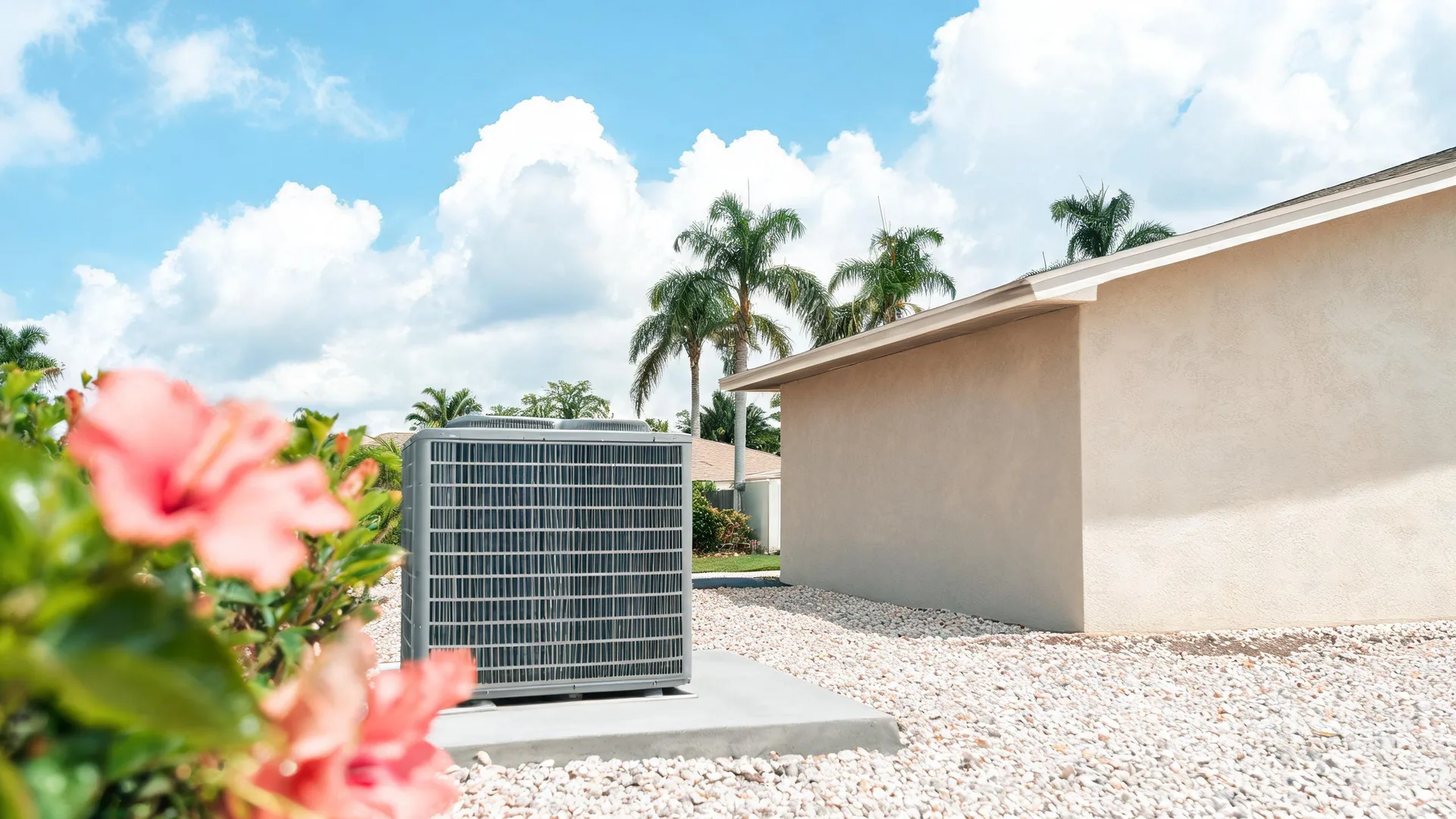
Overhead view of an air conditioning condenser unit on a concrete pad next to a house with asphalt shingle roofing and vinyl siding.

Going above the federal minimum saves little here, about $20 a year.

  • A higher-efficiency unit$320 a year
  • A new unit at the federal minimum, 14.3 SEER2$340 a year

Estimates for a typical Anne Arundel County home, from EIA household energy data, Maryland fuel prices and NOAA climate normals. Your home will differ.

Install day follows a pattern, whatever the house. The crew shuts down and tags out the old system first, so nobody's working near live power or a charged line. Setting the new condenser and coil usually goes faster than people expect, since most of the real work already happened during sizing and planning. What takes the time on site is everything around the equipment. New line set if the old one doesn't match. The electrical disconnect and breaker checked against what the new unit needs. The condensate drain confirmed to slope the right way. Once the equipment is in place, it gets charged with refrigerant to the manufacturer's spec and run through a startup check, airflow, pressures, temperature split. A system that's never been fired up and tested isn't finished. It's just installed.