Electricity here runs 17.86 cents per kilowatthour
Maryland's electric rates sit above the national average, and a central air conditioner is usually the biggest single draw on a summer bill. The rate is fixed. What you install is not.
Takes about a minute. No obligation.
Maryland's electric rates sit above the national average, and a central air conditioner is usually the biggest single draw on a summer bill. The rate is fixed. What you install is not.
A new system's SEER2 rating decides how many kilowatt-hours it takes to cool this house. At Maryland's rates, a higher-rated system earns back the difference on every bill it runs.
NOAA nClimDiv, 1991–2020 normals
Half the homes in Prince George's County were built in 1977 or earlier, half later.
Age alone doesn't call for a bigger or pricier system. Standard sizing cools either kind of house.




Prince George's County sees its share of rough weather, 222 damaging wind events and 16 hail events over the past decade, along with a couple of tornadoes and one tropical storm. None of that calls for a bigger condenser or a special coil. A standard system handles this county's summers the same way it would anywhere nearby. Power loss is the more common disruption, and most central air conditioners start back up on their own once power returns, no reset needed.
Maryland requires new central air conditioners to hit at least 13.4 SEER2, and systems in this region are commonly rated 14.3 SEER2 or higher. A federal tax credit is available for qualifying high-efficiency equipment. Installing now means getting a system that already clears the bar and getting the credit on this year's purchase.
Find a contractorA central air conditioner cycles on and off all day during the months it runs, and that cycling matters more than any single hot afternoon. Every start puts the heaviest draw on the compressor and the motors. A system sized right for the house reaches the temperature on the thermostat and shuts off, resting until it's needed again. One sized wrong, too big or too small, ends up cycling more than it should, and that shortens the life of the parts doing the work. When you're comparing systems, ask how the contractor arrived at the size they're proposing, not just the efficiency rating. A load calculation based on the house beats a guess based on the old unit's size. Ask too about the warranty on the compressor versus the warranty on labor, since those often run different lengths, and about what maintenance the manufacturer expects to keep that warranty valid.
An oversized air conditioner cools the air fast and shuts off before it pulls the moisture out of the house. The result is a house that feels cold and clammy at the same time. The right size runs long enough on each cycle to dry the air properly, which is part of what central air is supposed to do.
A contractor works out the size with a load calculation, which looks at the square footage, the windows, the insulation, and the layout room by room. It has nothing to do with what the old system was rated at. An old unit may have been sized wrong from the start, or sized for a house that's since had work done on it, so matching it just repeats whatever mistake was already there.
Estimates for a typical Prince George's County home, from EIA household energy data, Maryland fuel prices and NOAA climate normals. Your home will differ.
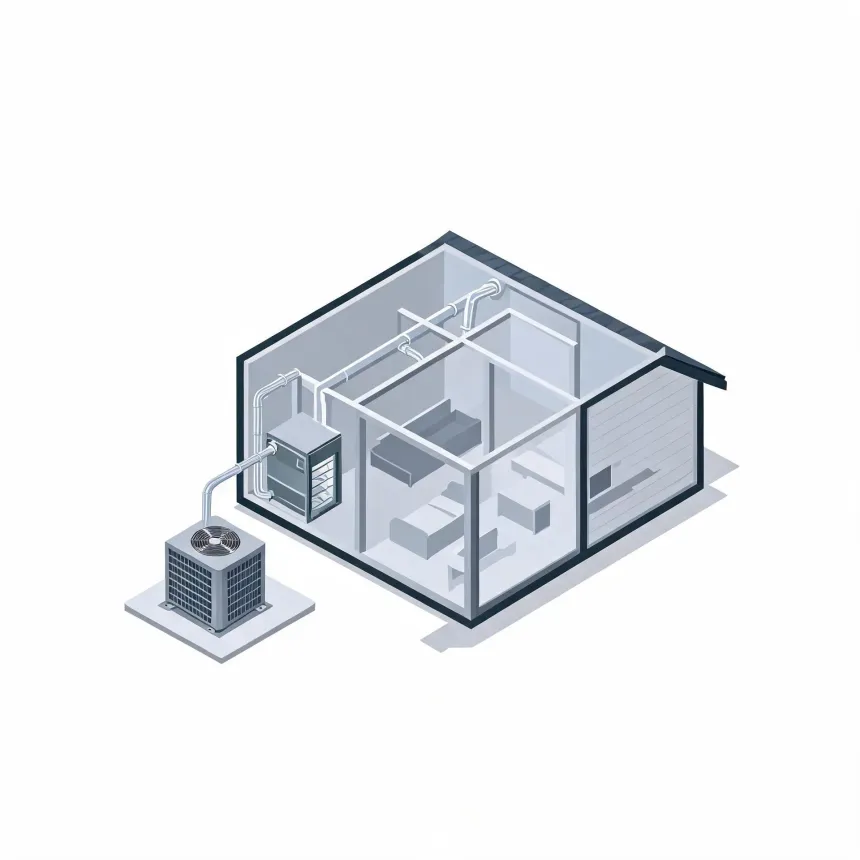
Installation day starts with the old system coming out, indoor and outdoor units both, along with the old refrigerant line if it's not being reused. The new condenser gets set on a pad outside, leveled so it drains properly and doesn't strain the lines over time. Indoors, the coil goes in above or beside the furnace, and the refrigerant lines get run and connected, then the whole system gets evacuated to pull out air and moisture before any refrigerant goes in. A good contractor checks the ductwork while they're in there, since a new system moving air through old, leaky, or undersized ducts won't perform the way it's rated to. Once everything's connected, it gets charged with refrigerant to the manufacturer's spec and tested, checking the temperature drop across the coil and the pressures on both sides of the system. The thermostat gets set up last, and the contractor should walk through what it's showing before they leave.