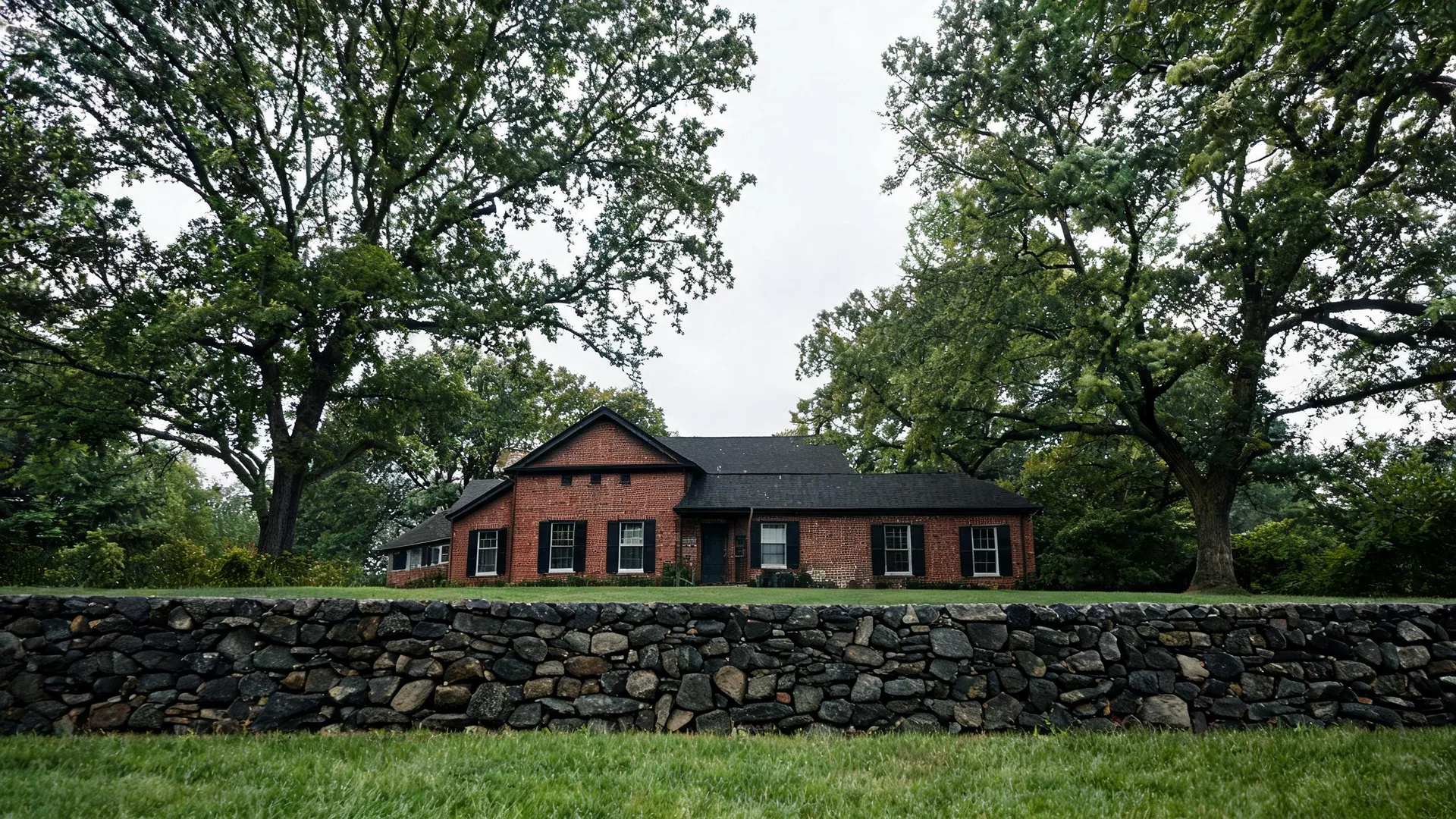
A single-story red brick house with a dark shingled roof and black shutters, set behind a lawn and a long dry-stone retaining wall, framed by large leafy trees under an overcast sky.

AC Installation in Centreville, MD

Tell us about the job

Takes about a minute. No obligation.

New system or replacementCentral ACQueen Anne's County, MD
Step 1 of 2

What ZIP code is the job in?

Electricity here runs 17.86 cents per kilowatt-hour

Maryland households paid that rate in 2024, higher than a lot of the country. An air conditioner that sits at a low SEER2 rating turns more of that expensive power into heat loss instead of cooling.


The SEER2 number on the new unit matters more than the price tag

Two systems that cost the same to install can run very differently on the power bill. When you're comparing quotes for a new install, ask what SEER2 rating each one carries, not just what it costs to put in.

4 months
June through September, your air conditioner is on duty
86°F
the average summer afternoon it cools against
10 hail events
in ten years, and hail bends the fins on outdoor coils
13.4 SEER2
the federal minimum any new unit must meet
Isometric line illustration of a cutaway house showing interior rooms with furniture, ceiling ductwork, an indoor air handler, and an outdoor condenser unit connected by lines.
Your air conditioner works hardest from June through August.

NOAA nClimDiv, 1991–2020 normals

Cooling runs June through September here.

May is the month to get a new AC installed, before that first hot stretch puts you in a rush.

Most homes here run on electricity, and that includes the AC

63.8% of homes heat with electricity
Cooling runs June through September
Summer afternoons average 86°F

Summers in Centreville run four months, June through September, with afternoons averaging 86°F. That's a normal cooling load, not an extreme one. A standard-size system at a standard efficiency rating handles it fine. You don't need to oversize the unit or chase the highest SEER2 number on the lot to get through a county summer. Where the weather here does matter is wind. Damaging wind hits this county often enough that it's worth asking your contractor how the outdoor unit will be secured and whether the disconnect and line set are protected from debris.

A new AC here has to clear a set efficiency floor before it goes in

Queen Anne's County falls in climate zone 4A, which asks real work of both heating and cooling. Any new split-system AC installed here has to meet at least 13.4 SEER2, the federal minimum for units under 45,000 Btu/h. That floor is already set before a contractor quotes you anything. A federal tax credit is available for qualifying high-efficiency equipment, worth asking about when you compare systems.

Find a contractor
A man in a cap, brown jacket and tan pants, seen from behind, carries a canvas tool bag up concrete steps toward an orange front door.
A gray metal air conditioning condenser unit mounted on a concrete pad in a flat grassy field under a partly cloudy sky.

The rating on the label is an average, not a guarantee

That SEER2 number is a seasonal average, not a constant. The unit hits it on a mild afternoon, not necessarily on the hottest day of the year, when it's working hardest and running closest to its limit. Over a full season, the compressor cycles on and off thousands of times rather than running flat out, and the rating reflects that mix of light and heavy load. A higher rating usually means a more efficient compressor and often a variable-speed one, which wears differently than a single-speed unit that's always either full on or off. None of that shows up on the label, only in how long the system lasts and how steady the cooling feels year after year.

The refrigerant comes out before anything else moves

A licensed contractor has to recover the refrigerant from the old system before disconnecting it. It cannot be vented into the air. That recovery step happens first, ahead of any cutting or hauling away.

The old line set usually doesn't carry over

A new compressor is matched to a line set sized for it, and the old one often isn't the right fit. The old pad can run into the same problem if the new unit's footprint or weight doesn't match it. Reusing either piece means the new system is running on equipment it wasn't matched to.

Overhead view of a gray outdoor AC condenser unit on a concrete pad beside a mulched garden bed and a house with vinyl siding.

Going above the federal minimum saves little here, about $20 a year.

  • A higher-efficiency unit$300 a year
  • A new unit at the federal minimum, 14.3 SEER2$320 a year

Estimates for a typical Queen Anne's County home, from EIA household energy data, Maryland fuel prices and NOAA climate normals. Your home will differ.

When you're comparing quotes, ask what stage the compressor runs. A single-speed compressor is either on at full output or off. A variable-speed compressor can throttle down and run longer at partial output, which holds the temperature steadier and puts less strain on the system at startup. Ask about the blower motor too. A variable-speed blower ramps up gradually and moves air more quietly than one that kicks on at full force. Ask how the system handles humidity, since a unit that runs longer at lower output pulls more moisture out of the air than one that cools fast and shuts off. And ask what the warranty covers on the compressor versus the rest of the parts, because those terms often differ and matter more than anything printed on the label.