Two white multi-story colonial houses with lit windows and black shutters photographed at night, fronted by a stone wall.

AC Installation in Chesapeake Beach, MD

Tell us about the job

Takes about a minute. No obligation.

New system or replacementCentral ACCalvert County, MD
Step 1 of 2

What ZIP code is the job in?

Electricity here runs 17.86 cents per kilowatthour

Maryland's electric rates sit above the national average, and a central air conditioner is one of the biggest draws on a summer bill. That rate does not change based on what you install, only how much the system needs to run to cool the house.


Efficiency decides what you pay every month after

Two systems that cool a house the same way can pull very different amounts of power doing it. At Maryland's rates, that difference shows up on every bill for as long as the system runs, not just the first one.

4 months
June through September, your air conditioner is on duty
85°F
the average summer afternoon it cools against
14 hail events
in ten years, and hail bends the fins on outdoor coils
13.4 SEER2
the federal minimum any new unit must meet
Isometric line illustration of a cutaway house showing interior rooms, ceiling ductwork, an indoor air handler unit, and an outdoor condenser connected by lines along the exterior wall.
Your air conditioner works hardest from June through August.

NOAA nClimDiv, 1991–2020 normals

Electricity heats 73.1% of homes in Calvert County.

A central air system here usually shares power with the furnace or heat pump it sits next to, so an AC installation often means matching equipment that already runs on electric.

May is the month to replace it, before June asks anything of it

Cooling runs June through September
Summer afternoons average 85°F
120 damaging wind events from 2015 to 2024

Calvert County falls under zone 4A, a mixed climate where summer cooling and winter heating both put in real work. That's why federal rule sets a region-specific floor for new equipment instead of one number for the whole country. Split-system air conditioners installed here have to hit at least 14.3 SEER2 below 45,000 Btu/h, higher than the 13.4 SEER2 baseline that applies in most of the country. A unit built to the lower national minimum can't legally go in here. It narrows what a contractor can offer, but it also means whatever gets installed is already built for a climate that asks something of it both ways.

Efficiency pays here

Power costs more here, so an efficient system pays you back on every bill.

Find a contractor
A man in a cap, dark T-shirt and work pants carries a worn canvas tool bag up wooden porch steps toward a red front door.
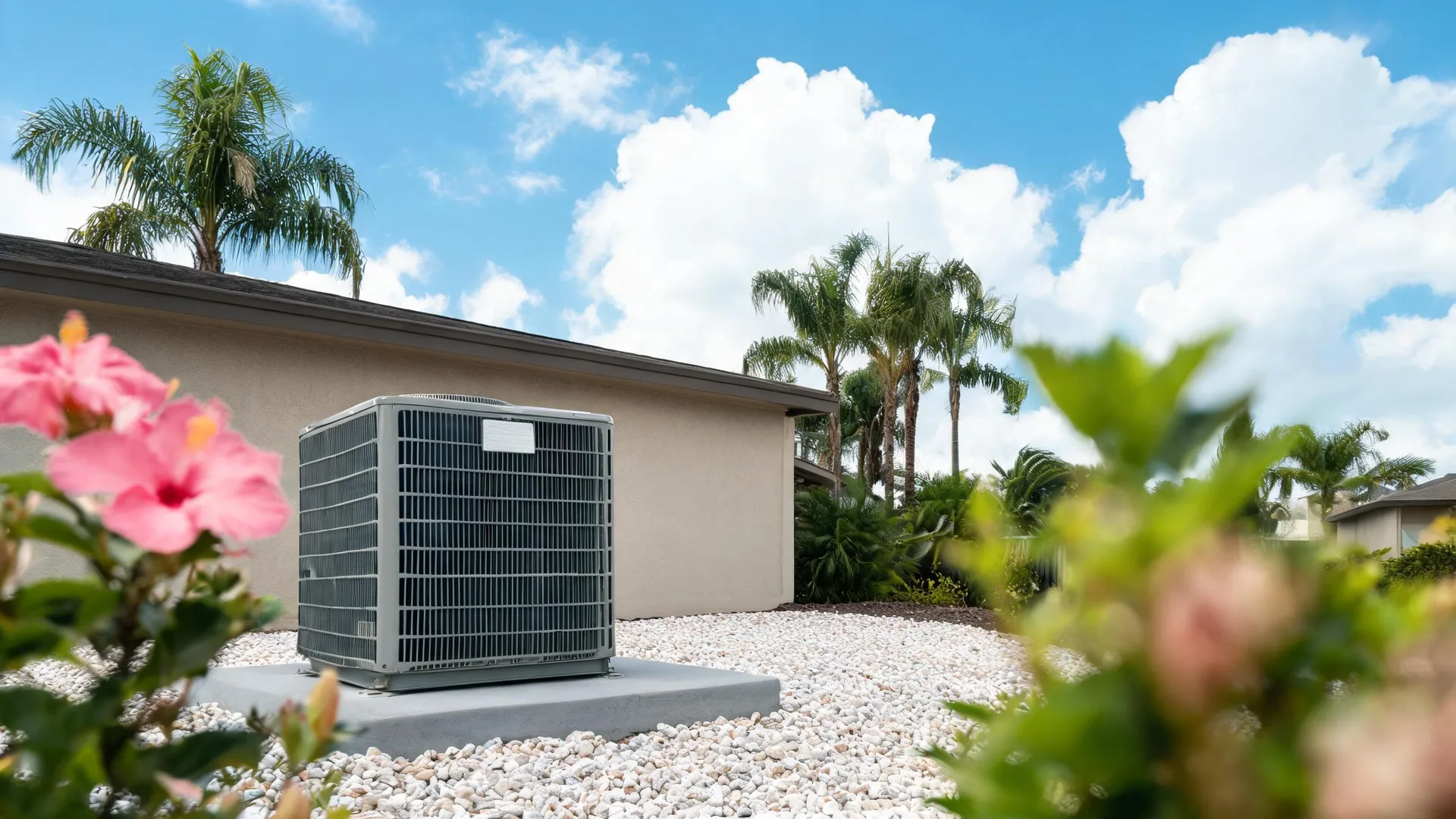
A gray cylindrical air conditioning condenser unit mounted on a concrete pad next to a light-colored vinyl-sided house exterior.

The number on the label is a seasonal average, not a single test

The SEER2 number on the label is a seasonal average, not a single test. It tells you how much cooling the system delivers for the power it draws, measured over a season of starts and stops rather than one moment running flat out. A higher number means the compressor and fan are doing more work with less draw. That matters because this machine does not run once and shut off. It cycles on and off all season, and every one of those cycles pulls power at whatever rate that rating describes. The rating describes the equipment alone, tested under set conditions. It does not account for a duct that leaks, a coil caked with dust, or a thermostat set colder than the house needs. So the number on the label is the starting point, not the whole answer. What you actually get depends on the rating and on everything the system is paired with.

The old system gets disconnected and hauled away

A contractor removing a central air system has to recover the refrigerant from the lines before anything comes apart. That refrigerant can't legally be vented into the air, so it gets pulled into a tank with a recovery machine first. After that the old condenser, coil and any line set being replaced come out, and the equipment gets hauled off along with the old pad or mounting bracket if it's not being reused.

What comes out has to match what goes in

A new system almost never bolts straight onto the old refrigerant lines and electrical whip without some adjustment. Line sets get flushed or replaced, the disconnect box gets checked against the new unit's rating, and the duct connections get resealed where the old coil comes out and the new one goes in. Skipping that fitting work is how a new system ends up running on old problems.

Overhead view of an outdoor AC condenser unit on a concrete pad next to a house with a dark shingle roof.

Going above the federal minimum saves little here, about $20 a year.

  • A higher-efficiency unit$310 a year
  • A new unit at the federal minimum, 14.3 SEER2$330 a year

Estimates for a typical Calvert County home, from EIA household energy data, Maryland fuel prices and NOAA climate normals. Your home will differ.

Ask what the contractor is sizing the system to, not just what size they quote. A unit too big for the house cools the air fast and shuts off before it pulls the moisture out, so the house feels clammy even at the right temperature. A unit too small runs constantly and never quite catches up on the hottest days. Getting this right means a room by room load calculation, not a match to whatever was there before. Ask how they arrived at the number, and ask what happens to the ductwork if the new system moves a different amount of air than the old one. A coil and condenser matched on paper can still underperform if the duct feeding them was sized for something else.