






White colonial houses with lit windows and dark shutters line a tree-lined street at dusk, bordered by dry-stacked stone walls.

AC Installation in Cumberland, MD

Tell us about the job

Takes about a minute. No obligation.

New system or replacementCentral ACAllegany County, MD
Step 1 of 2

What ZIP code is the job in?

Electricity in Maryland ran 17.86 cents per kilowatthour in 2024. An AC unit is one of the biggest draws on your power bill all summer, so that rate matters more than the sticker price when you're picking a system. A unit with a higher SEER2 rating costs more to install but uses less power to do the same job, and that difference shows up every billing cycle for as long as you own it. Worth asking your contractor to walk through the SEER2 options and what each one means for your situation before you decide.

3 months
June through August, your air conditioner is on duty
84°F
the average summer afternoon it cools against
7 hail events
in ten years, and hail bends the fins on outdoor coils
13.4 SEER2
the federal minimum any new unit must meet
Isometric cutaway illustration of a small house showing interior rooms, ductwork, an indoor air handler, and an outdoor condenser unit connected by lines, on a plain white background.
Your air conditioner works hardest from June through August.

NOAA nClimDiv, 1991–2020 normals

AC here runs June through August.

May is the month to get a new system installed, before the first hot week puts you on a waiting list.

Over half of homes here heat with gas, which is worth knowing before you pick an AC

50.4% of homes heat with gas
Cooling runs June through August
Summer afternoons average 84°F
Built for an older houseHalf the homes in Allegany County were built in 1959 or earlier, and a new AC has to match the ductwork and wiring already there.

When you sit down with a contractor, get the SEER2 options in writing next to each other, with what each one runs on a typical summer day in Cumberland. A higher rating costs more up front, and at 17.86 cents a kilowatthour, that gap closes over years, not months. Ask how that number was worked out for your home specifically, not a general estimate. If the contractor can't walk you through that math, get a second opinion before you sign.

A new system here has to meet 13.4 SEER2

Allegany County falls in climate zone 5A, where heating carries the bigger load but summers still bring humidity. Federal rules set the floor at 13.4 SEER2 for the size of unit most houses use. A federal tax credit is available on qualifying high-efficiency equipment, which is worth asking your contractor about when you compare models.

Find a contractor
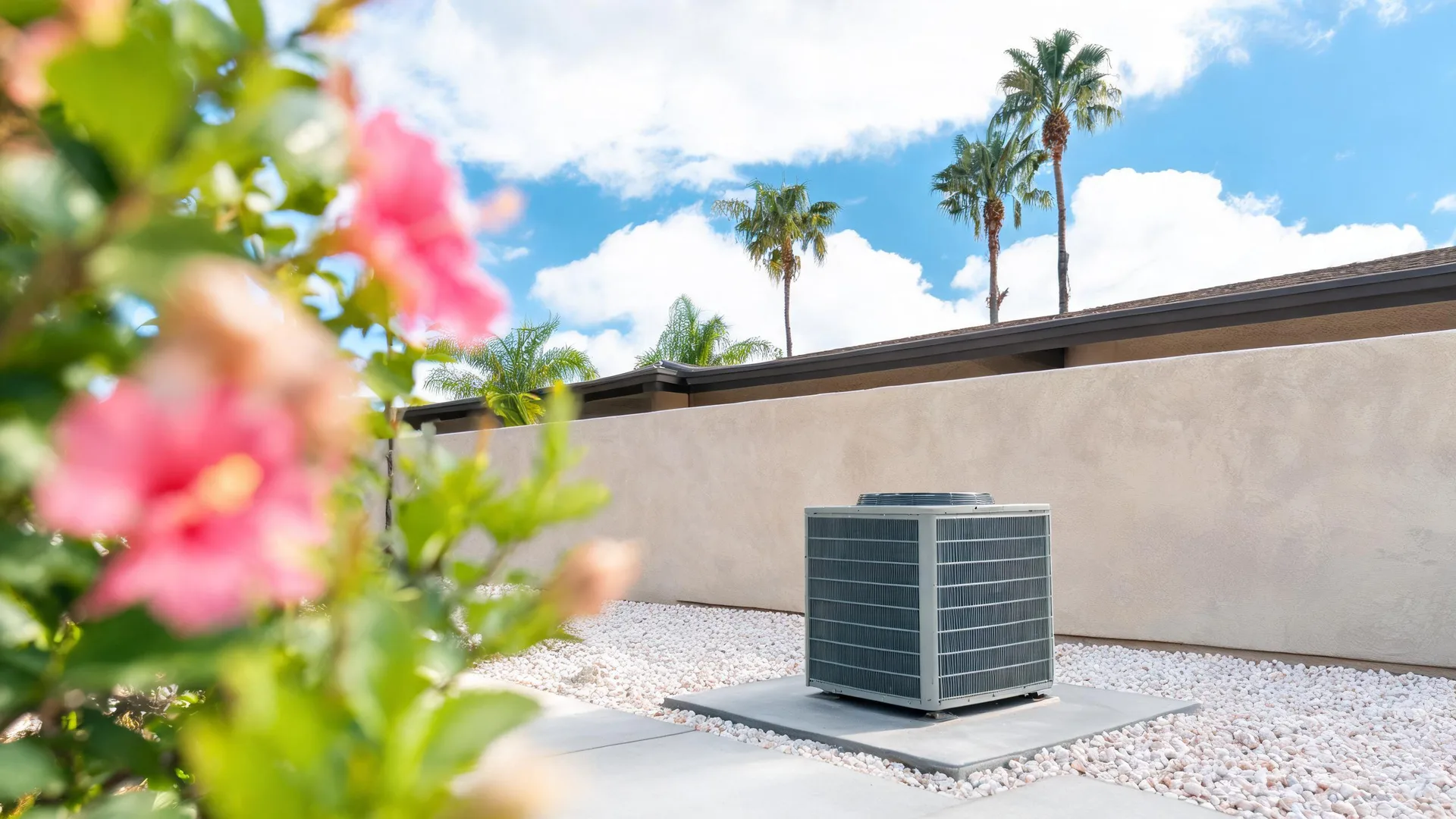
An outdoor air conditioning condenser unit mounted on a concrete pad surrounded by gravel, photographed against a partly cloudy blue sky.

Match the install to the house, not the other way around

Half the homes in Allegany County were built in 1959 or earlier. Whatever system a contractor sizes for a house that age has to work with the supply lines, returns and wiring already there, not the other way around. That's why a load calculation matters more here than a quick look at square footage. Ask what the contractor found when they checked the ductwork, and whether it needs any work before the new unit goes in.

The rating is an average, not a guarantee

SEER2 is measured across mild days and the hottest days mixed together. On the afternoons when the compressor is running flat out, the unit will not hit that number. It is a fair way to compare one model against another, but it is not a promise of what any single month's bill will show.

The rating only holds if the installation matches it

A high SEER2 unit paired with a refrigerant charge that is off, or ductwork too small for the airflow it needs, ends up running closer to a lower-rated system. The number on the label describes the equipment tested on its own. What the homeowner actually gets depends on the charge being set right and the ducts moving the air the system was built to move.

An outdoor air conditioning condenser unit mounted on a concrete pad next to a blue-sided residential house at sunset.

Going above the federal minimum saves little here, about $20 a year.

  • A higher-efficiency unit$180 a year
  • A new unit at the federal minimum, 14.3 SEER2$200 a year

Estimates for a typical Allegany County home, from EIA household energy data, Maryland fuel prices and NOAA climate normals. Your home will differ.

Installation day starts with the old system coming out. A tech disconnects the refrigerant lines, pulls the old condenser and indoor coil, and checks what the existing ductwork and electrical can actually handle before anything new goes in. The new condenser pad and unit go in first. Then the coil goes in on the indoor side, matched to the furnace or air handler already there. The lines get run, the system gets evacuated to pull out air and moisture, then charged with refrigerant to the weight the equipment calls for. Last comes startup. The tech checks airflow, checks the charge, and makes sure the thermostat is actually talking to the unit. A straightforward swap can wrap in a day. Anything that turns up wrong with the ducts or the electrical along the way tends to be what stretches it longer.