A row of similar single-story houses with gray shingled roofs and light siding behind a white picket fence, with mown grass in the foreground and leafy trees above.

AC Installation in Easton, MD

Tell us about the job

Takes about a minute. No obligation.

New system or replacementCentral ACTalbot County, MD
Step 1 of 2

What ZIP code is the job in?

The size has to match the house

An air conditioner that is too big for the space cools the air fast and shuts off before it pulls the moisture out, so the house feels clammy even at the right temperature. One that is too small runs long stretches and never quite catches up on the hottest days. Getting the size right means someone has to look at the square footage, the windows, the insulation and the layout, not just swap in the same tonnage that was there before.


The ductwork decides more than the unit does

A new condenser and air handler can only move air as well as the ducts let them. If the ducts are undersized, leaky, or routed poorly, the new system will struggle no matter how good it is, and that often means added work to seal or resize them before the install is really finished. Where the ducts are already in good shape, the job is mostly about the equipment itself.

4 months
June through September, your air conditioner is on duty
86°F
the average summer afternoon it cools against
4 hail events
in ten years, and hail bends the fins on outdoor coils
13.4 SEER2
the federal minimum any new unit must meet
Isometric cutaway illustration of a single-story house showing interior rooms, ceiling ductwork, an indoor air handler, and an outdoor condenser unit connected by lines, in gray and white tones on a white background.
Your air conditioner works hardest from June through August.

NOAA nClimDiv, 1991–2020 normals

Electricity heats 61.5% of homes in Talbot County.

Central air pairs with that setup directly, so an AC installation here often means working alongside an electric furnace or heat pump already in place.

May is the month to get this done, before June asks the new system to prove itself

Cooling runs June through September
Summer afternoons average 86°F
93 damaging wind events from 2015 to 2024
Four months of summer heat in EastonAfternoons average 86°F from June through September, four months of real work for a new system.

Talbot County sits in climate zone 4A, which asks real work of both your furnace and your AC, and the humid summers mean the system has to pull moisture out of the air, not just drop the temperature. Any split-system AC under 45,000 Btu/h sold here has to meet a federal minimum of 13.4 SEER2. That's the national floor, not a local rule. Homes in the Southeast face a higher bar, 14.3 SEER2 for the same size unit, so check which standard applies before you settle on a model. A federal tax credit is available for qualifying high-efficiency systems, worth asking about alongside the install itself.

Electricity here runs 17.86 cents a kilowatt-hour, so efficiency is part of the price tag

A new AC runs on that rate for as long as you own it. The SEER2 rating you choose now decides what every one of those summer bills looks like.

Find a contractor
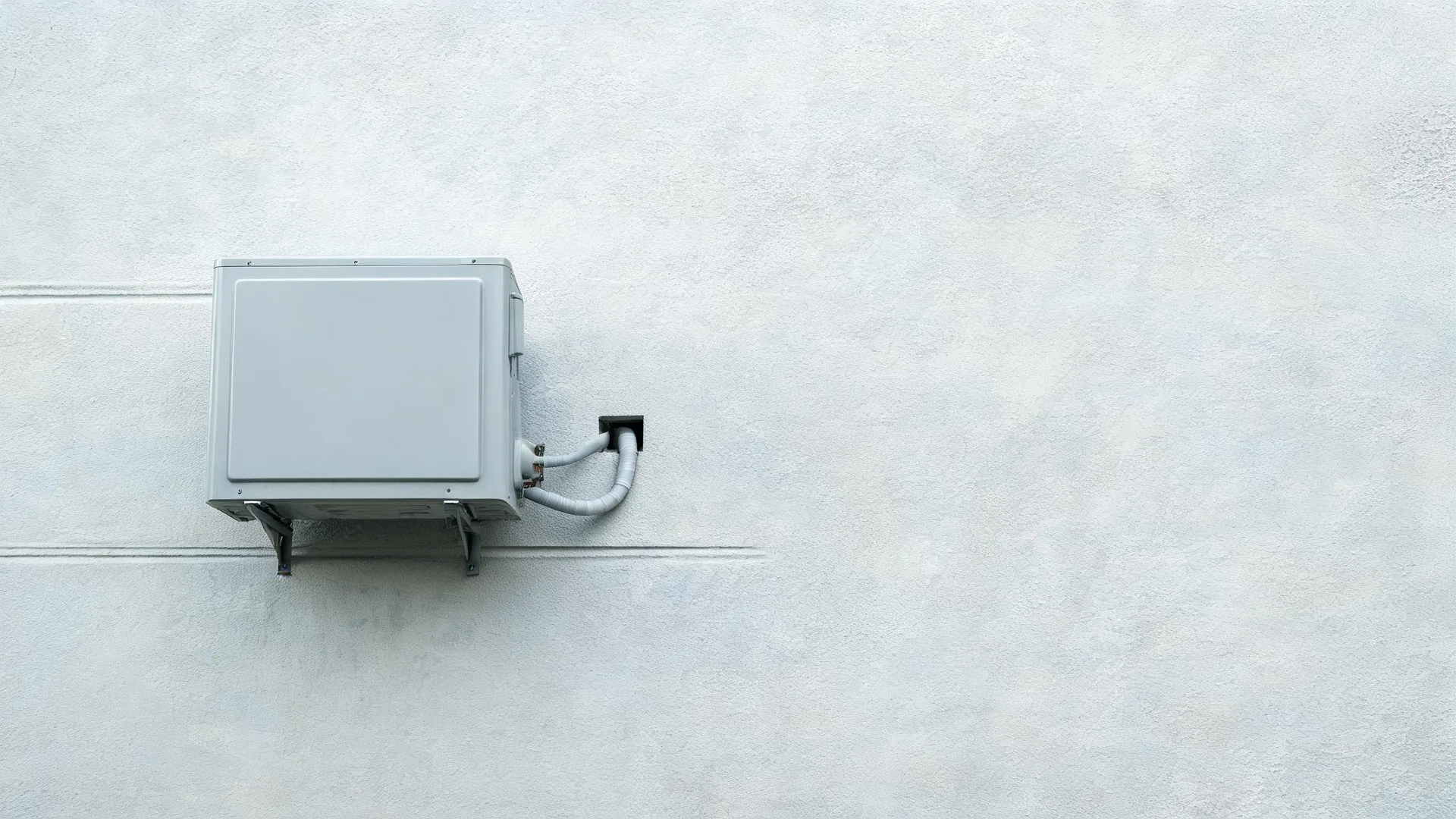
An outdoor air conditioning condenser unit mounted on a concrete pad beside a house, with electrical conduit running to a wall-mounted disconnect box.

The load calculation decides what runs for years

Sizing an AC comes from a load calculation, not a guess and not a match to the old unit. A contractor works through the square footage, the ceiling height, how many windows face the sun and which way, how much insulation is in the attic and walls, and how the rooms are laid out and used. Houses the same size on paper can need different tonnage once those details are counted. Once the system is running, size shows up fast. A unit sized right cycles on, runs long enough to pull the humidity down along with the temperature, then shuts off and rests. One that runs on and on without ever shutting off is often a sign it was undersized for the load it's facing. The compressor inside the condenser is built to run in cycles, and that resting is part of what lets it last.

SEER2 tells you the average, not the bill

The rating is a seasonal average, measured across a whole range of conditions, not a reading of what the unit draws on the hottest afternoon. A higher SEER2 unit still pulls more power on a hard day than it does on a mild one. What the rating promises is that over a full season, it moves the same cooling using less electricity than a lower rated unit would need to do the same job.

The rating only holds if the rest of the job is right

SEER2 is measured in a lab with the refrigerant charge exact and air moving across the coil the way the design calls for. A unit installed with a low charge, a kinked line, or ducts that choke the airflow will not deliver the rating on the sticker. The number on the label describes the equipment. What the homeowner actually gets depends on the installation matching it.

An overhead view of a residential air conditioning condenser unit mounted on a concrete pad next to a house with vinyl siding.

Going above the federal minimum saves little here, about $20 a year.

  • A higher-efficiency unit$320 a year
  • A new unit at the federal minimum, 14.3 SEER2$340 a year

Estimates for a typical Talbot County home, from EIA household energy data, Maryland fuel prices and NOAA climate normals. Your home will differ.

Installation day starts with the old equipment coming out, the condenser outside and the air handler or coil wherever it sits inside. Lines get disconnected, the refrigerant recovered rather than vented, and the pad or mounting checked before the new condenser goes in its place. Inside, the new coil has to match the condenser for the system to run at the rating it was sold on, so this is not a one piece swap even when the rest of the house stays the same. The line set gets replaced or flushed, because old oil and debris left behind can foul a new compressor fast. Once everything is connected, the technician pulls a vacuum on the lines to clear out moisture and air before any refrigerant goes in, then weighs in the charge to the amount the manufacturer specifies. The last part of the day is airflow and startup, checking static pressure in the ducts, setting the thermostat up, and running the system through a full cycle to see that it cools, drains condensate where it should, and shuts off on its own.