Two white multi-story colonial houses with lit windows and black shutters photographed at night, fronted by a stone wall.

AC Installation in Elkton, MD

Tell us about the job

Takes about a minute. No obligation.

New system or replacementCentral ACCecil County, MD
Step 1 of 2

What ZIP code is the job in?

Electricity here runs 17.86 cents per kilowatthour

Maryland's electric rates sit above a lot of the country, and an air conditioner is one of the biggest draws in the house through the summer. The efficiency rating on the new system matters more here than it would somewhere with cheaper power.

Sizing the job right pays off every month

A unit that's too big or too small for the house works harder than it needs to, and that shows up on the bill every time it runs. Getting the size and the SEER2 rating matched to the house is worth more in a state where every kilowatt-hour costs more.

4 months
June through September, your air conditioner is on duty
85°F
the average summer afternoon it cools against
9 hail events
in ten years, and hail bends the fins on outdoor coils
13.4 SEER2
the federal minimum any new unit must meet
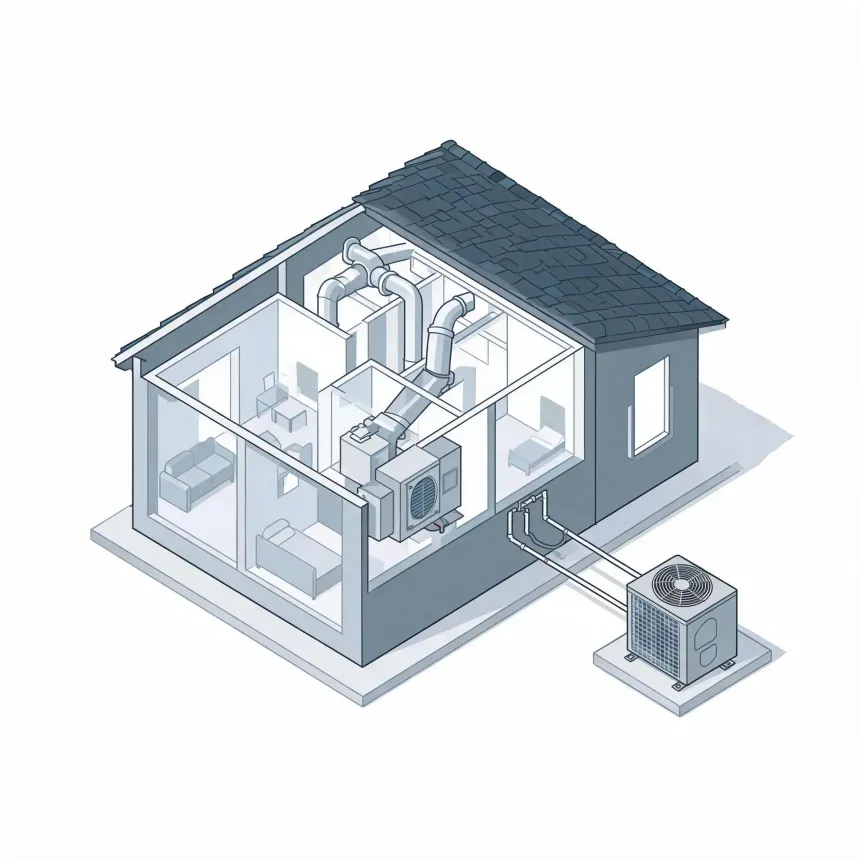
Isometric cutaway illustration of a small house showing interior rooms with furniture, an indoor air handler with ducts in the attic space, and refrigerant lines running to an outdoor condenser unit on a pad.
Your air conditioner works hardest from June through August.

NOAA nClimDiv, 1991–2020 normals

Cooling runs June through September in Elkton.

May is the month to put in a new system, before the heat sets in.

Weather here is rough on equipment, but the AC itself can still be a standard fit

197 severe weather events from 2015 to 2024
11% of homes statewide lost power a day or more in 2024
175 damaging wind events from 2015 to 2024
A standard system, built right inSummer here runs June through September, with afternoon highs averaging 85°F. That's a normal cooling load, nothing a standard size and rating can't handle.

Electricity heats 39.4% of homes in Cecil County, more than gas, propane or oil on their own. No other fuel comes close to that share here. With electric heat already this common, central air pairs with what a lot of these houses are already set up to run. If your home came with electric heat, the wiring and panel capacity for a new AC system are more likely to already be in place. That doesn't mean no electrical work is needed, but a licensed contractor can tell quickly what the existing setup will support.

Zone 4A sets the floor, not the ceiling

Elkton sits in climate zone 4A, and a new split-system air conditioner here has to clear 13.4 SEER2 at minimum. That's the national number. The Southeast requires 14.3, but Maryland isn't held to that higher mark, so the field of what can legally go in your house is wider here. A federal tax credit is available for qualifying equipment, on top of whatever the efficiency rating saves you month to month.

Find a contractor
A gray residential air conditioning condenser unit mounted on a concrete pad outdoors, surrounded by green grass under a partly cloudy blue sky.

The old unit doesn't just get unplugged

The old system doesn't just get unhooked and hauled off. A contractor has to recover the refrigerant from the lines before anything comes apart, since it's against the law to vent it into the air. Once that's done, the outdoor unit, the indoor coil, and the old lines or pad can come out. If the new system uses a different refrigerant, which is common when replacing an older unit, the lines usually need to be flushed or replaced rather than reused. A system that's run for years of summers has also had years for the coil to collect grime and the contacts and connections to wear, so expect the old equipment to look rough coming out even if it was still cooling the house right up until it was shut off.

Ask what the load calculation found

A contractor should size the system to the house using a room by room load calculation, not a guess based on the old unit's size or the square footage alone. The old system might have been wrong from the start, or the house may have gotten new windows or insulation since it went in. Ask to see the numbers, not just the recommendation.

Ask how the ductwork was checked

A new outdoor unit and coil can't fix ducts that are leaking air into the attic or sized wrong for the system going in. Ask whether the existing ductwork was inspected as part of the quote, not just assumed to be fine. A system matched to the house still underperforms if the air isn't getting where it needs to go.

An outdoor air conditioning condenser unit positioned on a concrete pad next to a blue-sided house, surrounded by green shrubs and flowering hydrangeas at sunset.

Going above the federal minimum saves little here, about $10 a year.

  • A higher-efficiency unit$270 a year
  • A new unit at the federal minimum, 14.3 SEER2$280 a year

Estimates for a typical Cecil County home, from EIA household energy data, Maryland fuel prices and NOAA climate normals. Your home will differ.

Installation day starts with the load calculation and sizing already settled, so the crew isn't figuring out what to install when they show up. The old outdoor unit and indoor coil come out first, after the refrigerant is recovered from the lines. Then the new coil goes in the air handler or furnace cabinet, the line set gets run or replaced, and the new outdoor unit gets set on its pad. Electrical and refrigerant connections come next, then the system gets evacuated to pull moisture and air out of the lines before refrigerant goes in. A new system also needs to be charged to the exact amount the manufacturer specifies, checked against the line length, not just filled until it seems full. Before the crew leaves, the system should run through a full cooling cycle so airflow and temperature drop can be checked at the vents, not just at the thermostat.