






A two-story red brick house with black shutters and a dark roof stands on a mown lawn behind a dry-stacked stone retaining wall, framed by large deciduous trees under an overcast sky.

AC Installation in Frederick, MD

Tell us about the job

Takes about a minute. No obligation.

New system or replacementCentral ACFrederick County, MD
Step 1 of 2

What ZIP code is the job in?

Maryland households paid 17.86 cents per kilowatthour for electricity in 2024. That's the rate your new AC runs against every month it's working. A higher SEER2 rating costs more up front, but it uses less power to put out the same cooling, and at that price per kilowatthour the gap between an efficient system and a worn-out one shows up on the bill fast. In a place where the AC runs hard for months at a stretch, that rating on the spec sheet is really a number about what you'll pay to stay cool.

4 months
June through September, your air conditioner is on duty
84°F
the average summer afternoon it cools against
20 hail events
in ten years, and hail bends the fins on outdoor coils
13.4 SEER2
the federal minimum any new unit must meet
Isometric cutaway illustration of a small home interior with furniture and ducting, showing an indoor air handler connected by lines to an outdoor condenser unit on a pad.
Your air conditioner works hardest from June through August.

NOAA nClimDiv, 1991–2020 normals

The old condenser and coil get disconnected and hauled off once the new system is set.

The refrigerant in that old unit has to be recovered first, not vented, so factor that step into the swap.

Four months of summer heat, sized the standard way

Cooling runs June through September
Summer afternoons average 84°F
276 damaging wind events from 2015 to 2024

Electricity heats 51.2% of homes in Frederick County, more than gas, oil or propane combined. Central air conditioning pairs with that setup without any extra wiring or fuel line, since the AC already runs on electricity and the furnace or heat pump next to it likely does too. If your home already has electric heat, a standard AC installation matches what's already there. Gas heats another 33.8% of homes here, and those systems pair with central air just as easily, since the AC itself still runs on its own electrical circuit regardless of what heats the house.

Put it in during May, before June asks anything of it

Cooling here runs June through September, so May is the month to get the new system in. Installed then, it's already running right when the heat shows up, instead of getting picked out in a hurry after the old one fails.

Find a contractor
A man in a dark shirt, cap and tan pants, seen from behind, steps onto a porch toward a red door while carrying a canvas tool bag, with a potted shrub to the right.
A gray metal air conditioning condenser unit mounted on a concrete pad in a flat grassy field under a partly cloudy sky.

What to ask before you pick one

Ask what size the contractor calculated for your house, not just what size the old unit was. An oversized system cools the air fast then shuts off before it pulls the humidity down, so the house feels clammy even at the set temperature, and all that starting and stopping wears on the compressor. An undersized one runs long stretches without ever catching up on the hottest days. Ask what happens to the line set, the copper running between the condenser outside and the coil in the attic or closet. Reusing it saves a step, but it only works if it's the right diameter for the new system and free of contamination from the old refrigerant. Ask who pulls the permit and who shows up for the inspection, because that inspection is what confirms the refrigerant charge and the airflow were actually set correctly, not just that the unit is sitting there connected.

The rating is measured over a whole season, not a single moment

SEER2 comes from testing the system across a range of outdoor temperatures and adding up the cooling against the power it drew the whole time. It's not the efficiency at any one moment on the hottest day of the year. A unit can run less efficiently when it's working hardest and still carry a strong seasonal rating, because the number averages in all the mild days too.

The rating only holds if the rest of the installation matches

SEER2 is measured with the coil, the line set and the airflow all matched to the condenser as a tested set. Put a high-rated condenser against a mismatched coil, a line set that's the wrong diameter, or a duct system that can't move enough air, and the installed system won't reach the number on the label. That number describes the equipment as a set, not the condenser on its own.

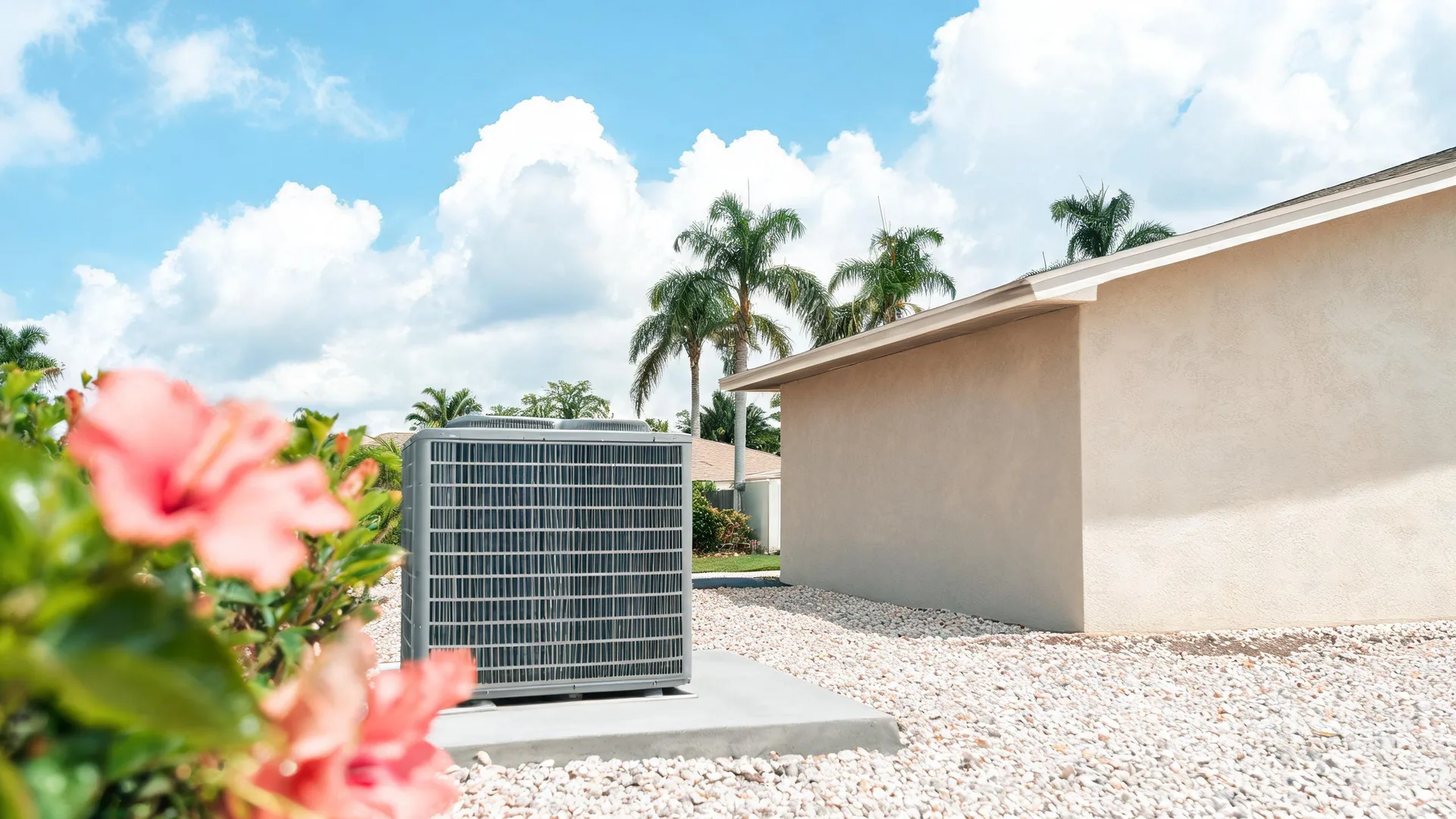
Overhead view of an air conditioning condenser unit on a concrete pad next to a house with asphalt shingle roofing and vinyl siding.

Going above the federal minimum saves little here, about $10 a year.

  • A higher-efficiency unit$230 a year
  • A new unit at the federal minimum, 14.3 SEER2$240 a year

Estimates for a typical Frederick County home, from EIA household energy data, Maryland fuel prices and NOAA climate normals. Your home will differ.

A full changeout usually runs one day, start to finish. The crew shuts down and recovers the refrigerant from the old system before anything gets disconnected, since that refrigerant can't just be released into the air. The old condenser comes out, the old coil comes out of the plenum, and whatever stays, usually the ductwork and sometimes the line set, gets checked before the new pieces go in. Once the new coil and condenser are set, the system gets evacuated to pull moisture and air out of the lines. Then it's charged with refrigerant to the weight the manufacturer specifies. Last comes the test. Airflow at the vents, the charge, the thermostat actually talking to the system. A system that looks installed but was never tested against its specs is a system nobody has actually confirmed works right.