



A long white picket fence runs along a mown grass lawn in front of a row of single-story houses with gray siding and shingled roofs, surrounded by large leafy trees.

AC Installation in Ocean City, MD

Tell us about the job

Takes about a minute. No obligation.

New system or replacementCentral ACWorcester County, MD
Step 1 of 2

What ZIP code is the job in?

Maryland homes paid 17.86 cents per kilowatthour in 2024, well above what a lot of states pay. That rate is what makes the SEER2 number on a new system worth looking at closely. A higher rated unit uses less electricity to produce the same cooling, and at this price per kilowatthour, that difference shows up on the bill. But the rating only holds if the install is done right. Refrigerant charge, duct connections, and airflow all decide whether the system actually runs at the efficiency it's rated for or falls short of it.

4 months
June through September, your air conditioner is on duty
85°F
the average summer afternoon it cools against
3 hail events
in ten years, and hail bends the fins on outdoor coils
13.4 SEER2
the federal minimum any new unit must meet
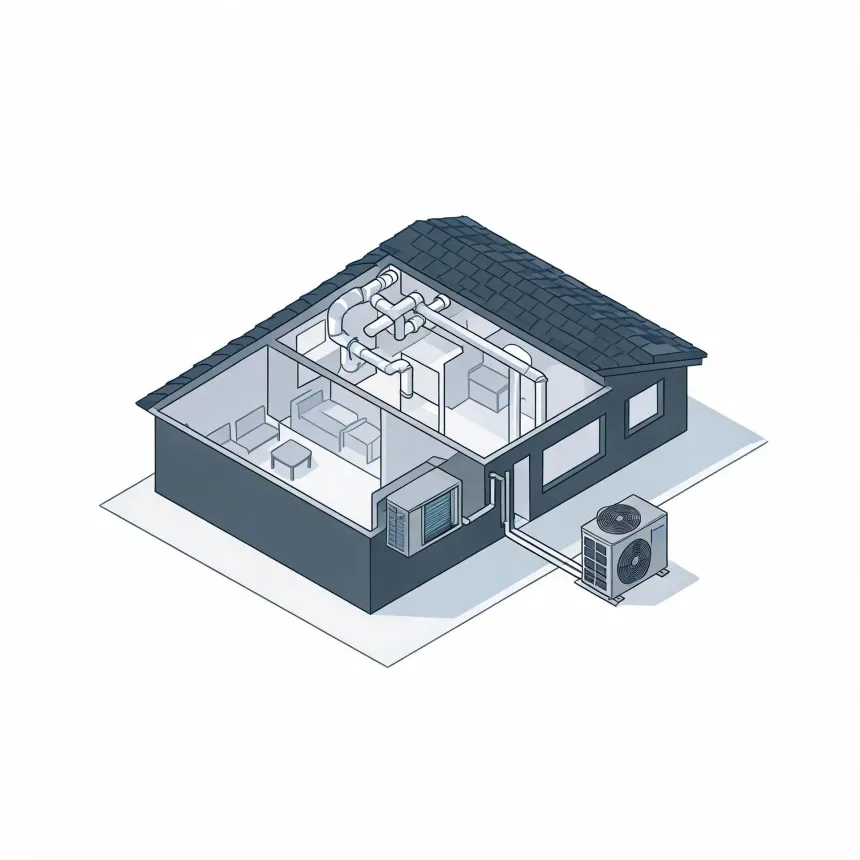
Isometric line illustration of a cutaway single-story house showing interior rooms with furniture, ceiling ductwork, an indoor air handler, and an outdoor condenser unit connected by lines along the exterior wall.
Your air conditioner works hardest from June through August.

NOAA nClimDiv, 1991–2020 normals

Cooling runs June through September in Worcester County.

May is the month to put in a new system, before the heat sets in.

Most homes here already run on electricity, and that is what a new AC pairs with

63.7% of homes heat with electricity
Cooling runs June through September
Summer afternoons average 85°F

Worcester County sits in climate zone 4A, which asks real work of both your furnace and your AC. The federal minimum for a new split system under 45,000 Btu/h is 13.4 SEER2, but that's a national floor, not a regional one. The Southeast requires 14.3 SEER2 for the same size unit, and some contractors here install to that higher mark even though Maryland isn't bound to it. Ask what SEER2 rating is going in, not just that the unit is new. A federal tax credit is available for qualifying high-efficiency equipment, worth checking before you settle on a system.

A correctly sized, standard system is the right call here

Four months of real cooling, afternoon highs around 85, is a normal load for a standard system sized and installed correctly. There's no case here for oversizing or chasing a rating past what the job calls for. Get the sizing and the install right and a standard unit handles what this county asks of it.

Find a contractor
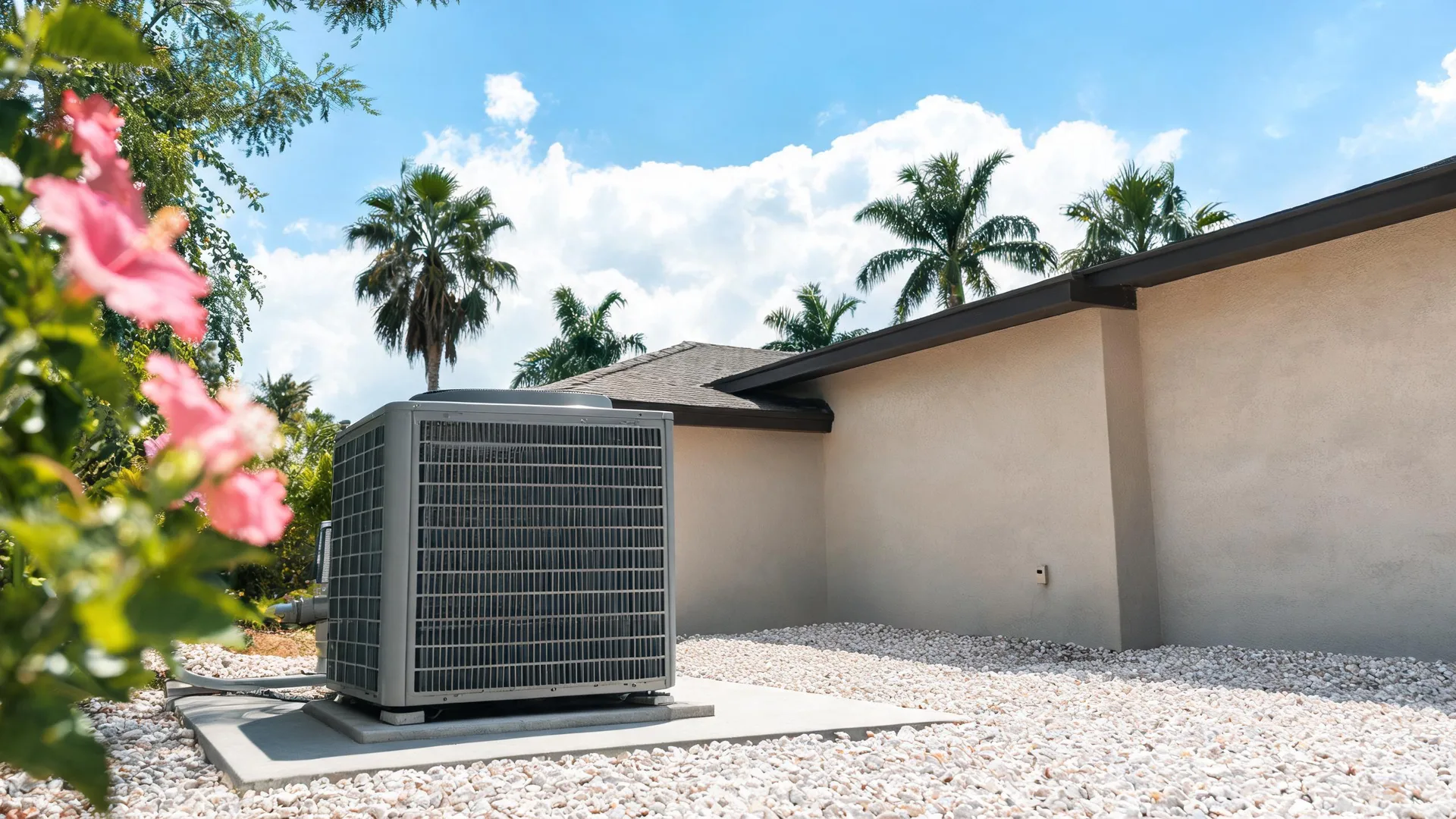
A gray residential air conditioner condenser unit mounted on a concrete pad in an open grass field.

Sizing is a calculation, not a guess

Sizing starts with a load calculation, not a tape measure on the old unit. A contractor works out how much heat the house gains through the walls, windows, and roof, and from the people and appliances inside it, then matches a system to that number. Square footage alone doesn't tell you that. Houses the same size can carry very different loads depending on insulation, window placement and how much sun hits them in the afternoon. An oversized unit cools the air fast and shuts off before it pulls the moisture out of it, so the house feels cold and clammy at the same time. It also cycles on and off more, and every start puts wear on the compressor. An undersized unit runs constantly trying to catch up and still won't hold the temperature on the hottest afternoons. Right sized, the system runs long steady cycles, strips the humidity properly, and the compressor isn't working harder than it has to. None of that shows up on a spec sheet. It shows up in how the house actually feels once the system is running.

The old unit gets disconnected and hauled off

A contractor recovers the refrigerant from the old system before touching anything else. That refrigerant can't legally be vented into the air, so it gets pulled into a recovery tank first. After that, the lines get disconnected, the old condenser and coil come out, and the equipment goes out with the contractor rather than sitting on the curb.

The line set and pad usually don't survive the switch

A new system rarely reuses the old refrigerant lines. Lines sized for one unit often don't match what the new one needs, and old copper can have contamination or wear inside it that causes problems down the road. The concrete pad outside may get reused if it's still level and in good shape, but a cracked or sunken one gets replaced along with everything else.

Aerial view of a square outdoor air conditioning condenser unit on a concrete pad beside a house wall with a sliding glass door.

Going above the federal minimum saves little here, about $20 a year.

  • A higher-efficiency unit$300 a year
  • A new unit at the federal minimum, 14.3 SEER2$320 a year

Estimates for a typical Worcester County home, from EIA household energy data, Maryland fuel prices and NOAA climate normals. Your home will differ.

Once the old equipment is out, the new condenser goes on the pad and the indoor coil goes in above or beside the furnace, depending on how the system is set up. New line sets get run and brazed, then the whole system gets pressure tested before any refrigerant goes in. That test matters more than anything else that day. A joint that leaks slowly can pass a quick look and still lose charge over the first year, and a system running low on refrigerant never hits the SEER2 number it was rated for. After the pressure test holds, the system gets evacuated to pull moisture and air out of the lines, then charged to the weight the manufacturer specifies, not just until the vents feel cold. Airflow gets checked last, because a coil can be sized right and still underperform if the duct connections feeding it are too restrictive. A tech who skips straight to charging it up and leaving is cutting steps that decide how the system runs for years, not just that first afternoon.