






Overhead view of a gray residential air conditioning condenser unit mounted on a concrete pad beside a house with asphalt shingle roofing.

AC Installation in Princess Anne, MD

Tell us about the job

Takes about a minute. No obligation.

New system or replacementCentral ACSomerset County, MD
Step 1 of 2

What ZIP code is the job in?

Maryland electricity ran 17.86 cents per kilowatthour in 2024. An air conditioner that is sized wrong or aging out runs longer to hit the same temperature, and every one of those hours gets billed at that rate. SEER2 tells you how much cooling you get per watt, and a higher number costs less to run over a summer, not just on the sticker. Princess Anne summers mean the unit put in now will run for months at a stretch, so the efficiency rating matters more here than it would somewhere milder. Worth asking any contractor for the SEER2 rating on what they're proposing, and sizing the system to the house rather than guessing.

4 months
June through September, your air conditioner is on duty
86°F
the average summer afternoon it cools against
2 hail events
in ten years, and hail bends the fins on outdoor coils
13.4 SEER2
the federal minimum any new unit must meet
Isometric cutaway illustration of a single-story house showing interior rooms, ceiling ductwork connected to an indoor air handler, and an outdoor condenser unit beside the exterior wall.
Your air conditioner works hardest from June through August.

NOAA nClimDiv, 1991–2020 normals

Cooling runs June through September here.

May is the month to put in a new system, before the heat gives you no choice.

Most homes here run on electricity, including the air conditioner

56.4% of homes heat with electricity
Cooling runs June through September
Summer afternoons average 86°F

Somerset County falls in climate zone 4A, which asks real work of both heating and cooling. Maryland isn't part of the Southeast region, so the system going into your house only has to clear the national minimum, 13.4 SEER2, not the higher Southeast standard some neighboring states require. That still sets a floor. Any split-system central air conditioner under 45,000 Btu/h installed here has to meet that number or better. A contractor can install above it, and given how many months this system runs, it's worth asking what's available above the minimum before you decide.

A correctly sized system is enough here

A standard system sized to your house is enough for Princess Anne. Summers here run June through September, with afternoon highs averaging 86 across June, July and August, and that's real work for a system but not unusual work. Nothing about this county calls for sizing up or paying for more than a unit correctly matched to the house.

Find a contractor
A man in a dark cap, dark shirt and brown pants, seen from behind, walks up porch steps toward an orange front door while carrying a brown canvas tool bag.
A gray residential air conditioner condenser unit mounted on a concrete pad in an open grass field.

The label tells you the ratio, not the bill

The SEER2 number on the label is a ratio, cooling output over electricity in. It only tells you something when you weigh it against another unit's number. It only pays you back while the system is running, so a unit left on through a long mild stretch earns back less than one working hard against real heat. That's the part the label can't show you. It also assumes the system was sized and installed right. An oversized unit cycles on and off before it ever settles into the efficiency the label promises. An undersized one runs flat out and never gets the break that number was measured under. The sticker describes the equipment. What you get out of it depends on whether a contractor matched it to the house.

Ask for the load calculation, not just a size

A contractor should measure the house, the windows and the insulation and come back with a number, not just look at the old unit and match it. Houses the same size on paper can need different sized systems depending on how they're built. If a contractor quotes a size before walking the house, that number is a guess.

Ask what happens to the ductwork

A new air conditioner only moves as much air as the ducts let it. If the ducts were sized for the old system, or they leak, or a run got pinched somewhere, the new unit inherits all of it. Ask whether the ducts were checked, not just the equipment swapped.

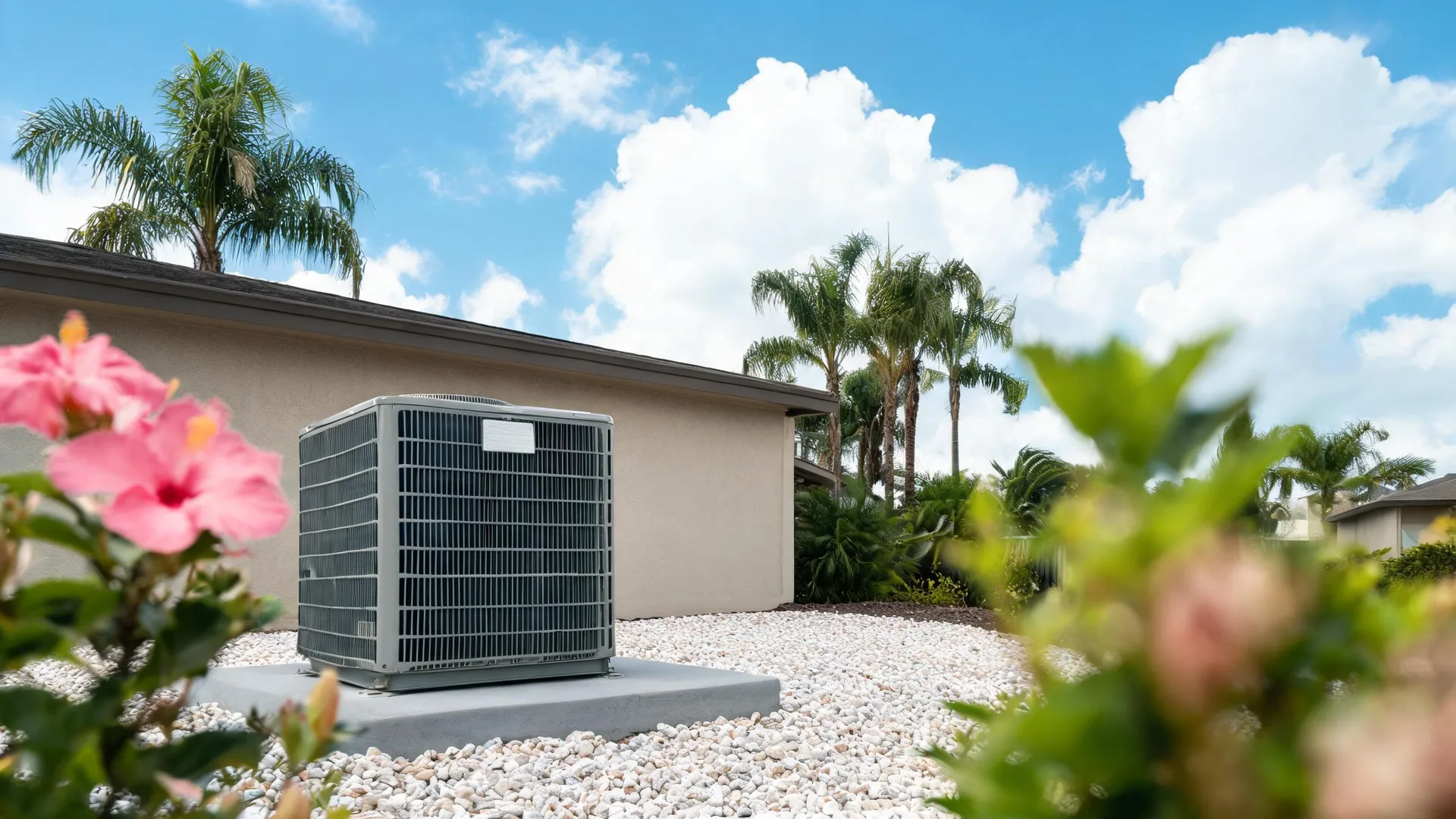
Overhead view of an outdoor AC condenser unit on a concrete pad next to a house with a dark shingle roof.

Going above the federal minimum saves little here, about $20 a year.

  • A higher-efficiency unit$330 a year
  • A new unit at the federal minimum, 14.3 SEER2$350 a year

Estimates for a typical Somerset County home, from EIA household energy data, Maryland fuel prices and NOAA climate normals. Your home will differ.

The old equipment comes out first. Power gets shut off, the lines get disconnected, and the house has no air conditioning until the new unit is running, usually a matter of hours. The outdoor unit needs a level pad and enough clearance around it for air to move freely. Inside, the coil and air handler connect to the existing ductwork, new refrigerant lines get run and sealed, and the system gets charged to the pressure that equipment calls for, not just topped off and left. Before the crew leaves, the system should run a full cycle while someone checks airflow at the vents and confirms the thermostat is actually controlling the new equipment. Skip that check and a bad connection or an undercharged line shows up weeks later instead of that day.