






A two-story brick house with black shutters and a covered porch stands on a mown lawn behind large deciduous trees, with a dry-stacked stone wall running across the foreground.

AC Maintenance in Annapolis, MD

Tell us about the job

Takes about a minute. No obligation.

Tune-up, service, or cleaningCentral ACAnne Arundel County, MD
Step 1 of 2

What ZIP code is the job in?

Electricity in Maryland ran 17.86 cents per kilowatthour in 2024, on the high side for the country. A dirty coil or a low refrigerant charge makes the compressor work harder to do the same job. That extra draw shows up on the bill every month the problem goes unfixed. A tune-up catches that early. The coil gets cleaned, the charge gets checked against what the system calls for, and the airflow gets confirmed. None of that costs much to do. Left alone, it's the power bill that pays for the neglect instead.

4 months
June through September, your air conditioner is on duty
86°F
the average summer afternoon it cools against
22 hail events
in ten years, and hail bends the fins on outdoor coils
248 wind events
in ten years, and wind drives debris into outdoor units
Isometric line illustration of a cutaway house showing interior rooms with ductwork, an air handler and furnace, connected by lines to an outdoor condenser unit on the ground outside.
Your air conditioner works hardest from June through August.

NOAA nClimDiv, 1991–2020 normals

AC here runs four months a year, June through September.

One tune-up before summer covers the season this system has to work.

June puts the system straight to work, so May is when to get it checked

Cooling runs June through September
Climate zone 4A
Power costs 17.86 cents a kWh statewide

Anne Arundel County sees its share of rough weather. Damaging wind hit the county 248 times between 2015 and 2024, with hail, a few tornadoes, and a tropical storm mixed in. Severe weather here doesn't just mean the system works harder, it means the power goes out and comes back. A tune-up won't stop a storm, but a technician checking the system once a year will catch a weak capacitor or a loose connection before an outage does the rest. A system already under strain is the one most likely to fail when the power cuts out.

Half the homes in Anne Arundel County were built in 1983 or later, so a lot of these systems still have working life ahead of them

A yearly check is what keeps a newer system newer longer. The coil, the charge, the airflow, all confirmed while the system is still in good shape, not after something wears down from being ignored.

Find a contractor
A man in a dark shirt jacket and tan work pants, seen from behind, carries a worn canvas duffel bag up stone steps toward an orange front door flanked by a potted shrub.
A gray residential air conditioner condenser unit mounted on a concrete pad in an open grass field.

A system with years ahead of it is worth keeping that way

Book the same check every spring, before the system starts its summer run. A newer system still wears, just slower, and a yearly look at the coil and the charge is what keeps it on that slower curve instead of catching up to an older one.

The system tells you before it quits

A warm room that used to get cold, a cycle that runs longer than it used to, a smell when the air kicks on. None of that is normal wear. It's the coil losing its grip on heat, or the charge running low, or the blower working around dust it shouldn't have to move through. Any one of those is worth a look before the part behind it fails outright.

A sound is a part asking for attention

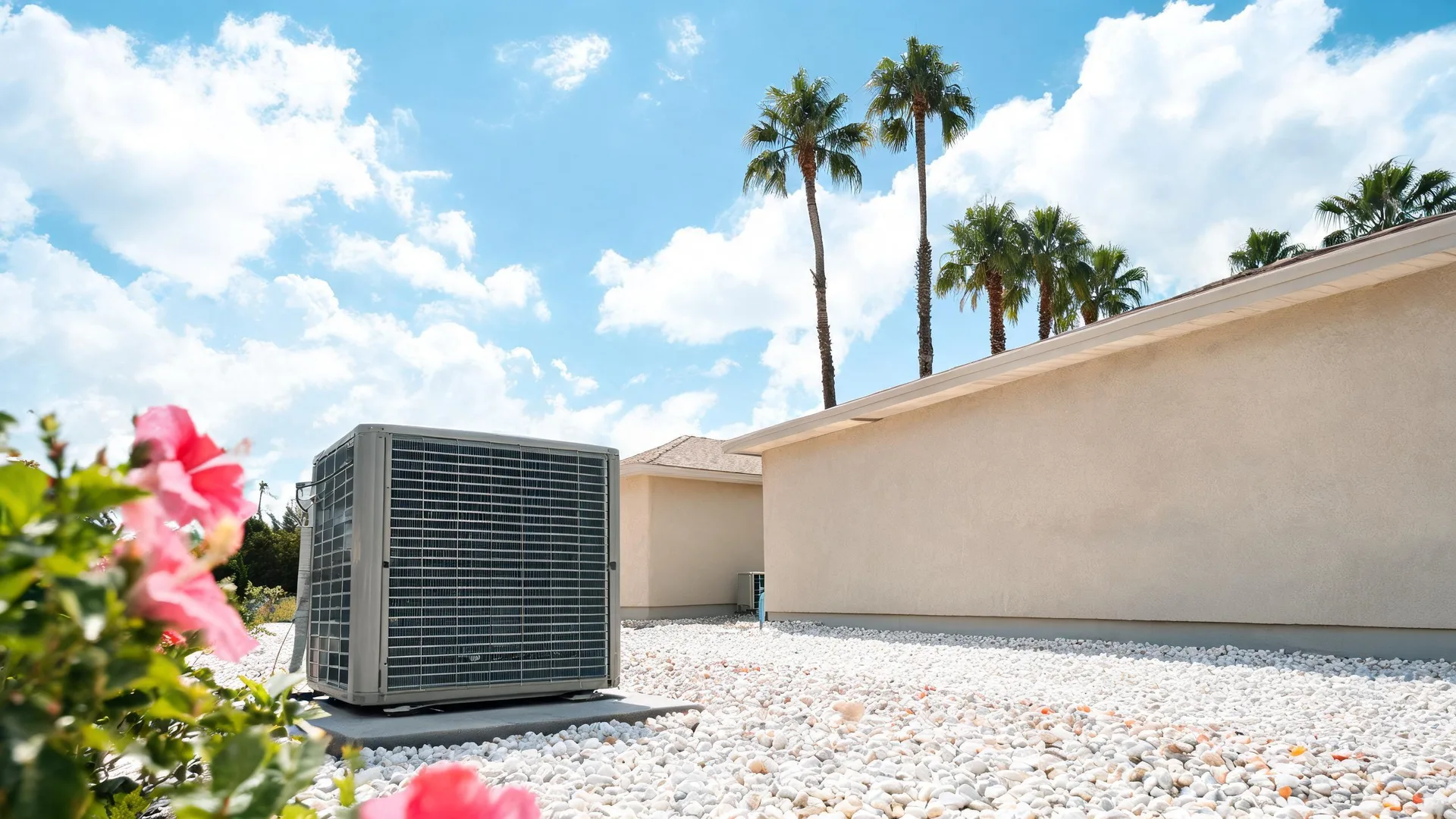
A click that wasn't there before, a hum before the compressor kicks on, a rattle from the outdoor unit. These usually trace back to one loose or worn part, a contactor, a fan blade, a mount that's shaken free. Caught early, it's an adjustment. Ignored, it's the part failing mid-summer and taking the compressor down with it.

An outdoor air conditioning condenser unit positioned beside a blue-sided house at sunset.

Book your AC tune-up in May, before homes here start needing cooling in June.

  1. Jan
  2. Feb
  3. Mar
  4. Apr
  5. May
  6. Jun
  7. Jul
  8. Aug
  9. Sep
  10. Oct
  11. Nov
  12. Dec

A tune-up checks the refrigerant charge, cleans the coils, tests the capacitor and tightens the electrical connections.

A tune-up starts outside, at the condenser. The technician cuts power, pulls the panel, and cleans the coil, because a coil caked with pollen and grass clippings can't give up heat the way it's supposed to and the compressor runs longer to make up for it. The fan blade gets checked for wobble, the motor bearings for play. Inside, the evaporator coil and the blower wheel get looked at, since the same dirt that collects outside builds up in here too and cuts down the airflow moving across it. The refrigerant charge gets checked against what the system calls for, not guessed at. Electrical connections get tightened and the capacitor and contactor get tested, since those are the parts most likely to wear out quietly and take the compressor with them when they finally go.