







A row of similar gray-sided houses with gabled roofs and front porches behind a new wooden picket fence, with grass and mature trees along the street.

AC Maintenance in Cambridge, MD

Tell us about the job

Takes about a minute. No obligation.

Tune-up, service, or cleaningCentral ACDorchester County, MD
Step 1 of 2

What ZIP code is the job in?

Maryland households paid 17.86 cents per kilowatthour in 2024, well above what a lot of the country pays. A dirty coil or a low refrigerant charge makes the compressor run longer to cool the same house, and every extra minute shows up on the meter. In a state where power already costs this much, that waste adds up fast. A unit that's been neglected for a year or two isn't just more likely to break. It's quietly costing more every single month it runs.

4 months
June through September, your air conditioner is on duty
86°F
the average summer afternoon it cools against
8 hail events
in ten years, and hail bends the fins on outdoor coils
58 wind events
in ten years, and wind drives debris into outdoor units
Isometric cutaway illustration of a single-story house showing interior rooms with furniture, overhead ductwork, an indoor air handler unit, and an outdoor condenser unit connected by lines at the side of the building.
Your air conditioner works hardest from June through August.

NOAA nClimDiv, 1991–2020 normals

A refrigerant leak can be too small to smell or see, but the gauges show it right away.

Catching it during a tune-up means the compressor gets fixed before it burns itself out trying to keep up.

June is when cooling starts here, so May is when it gets checked

Cooling runs June through September
Summer afternoons average 86°F
58 damaging wind events from 2015 to 2024
One visit a yearHalf the homes in Dorchester County were built in 1975 or earlier, half later. Either way, once a year covers it.

Cooling here runs about four months, June through September, with afternoon highs around 86 in the peak of summer. That's a real stretch of steady work for the system, but it's not year-round strain. One tune-up before the season starts covers it, checked before the heat sets in and left alone once it's running right. Dorchester County also sees its share of damaging wind, 58 events over the past decade, along with four tropical storms or hurricanes in that same span. A once-a-year check is also when a contractor can spot anything that storm season might have loosened or knocked loose before it turns into a bigger problem.

A tune-up pays for itself here

A neglected system uses more power, and power costs more here. A tune-up pays for itself.

Find a contractor
A man seen from behind in a dark jacket, tan work pants and boots climbs wooden porch steps toward an orange front door, carrying a waxed canvas tool bag, with a potted shrub beside the entry.
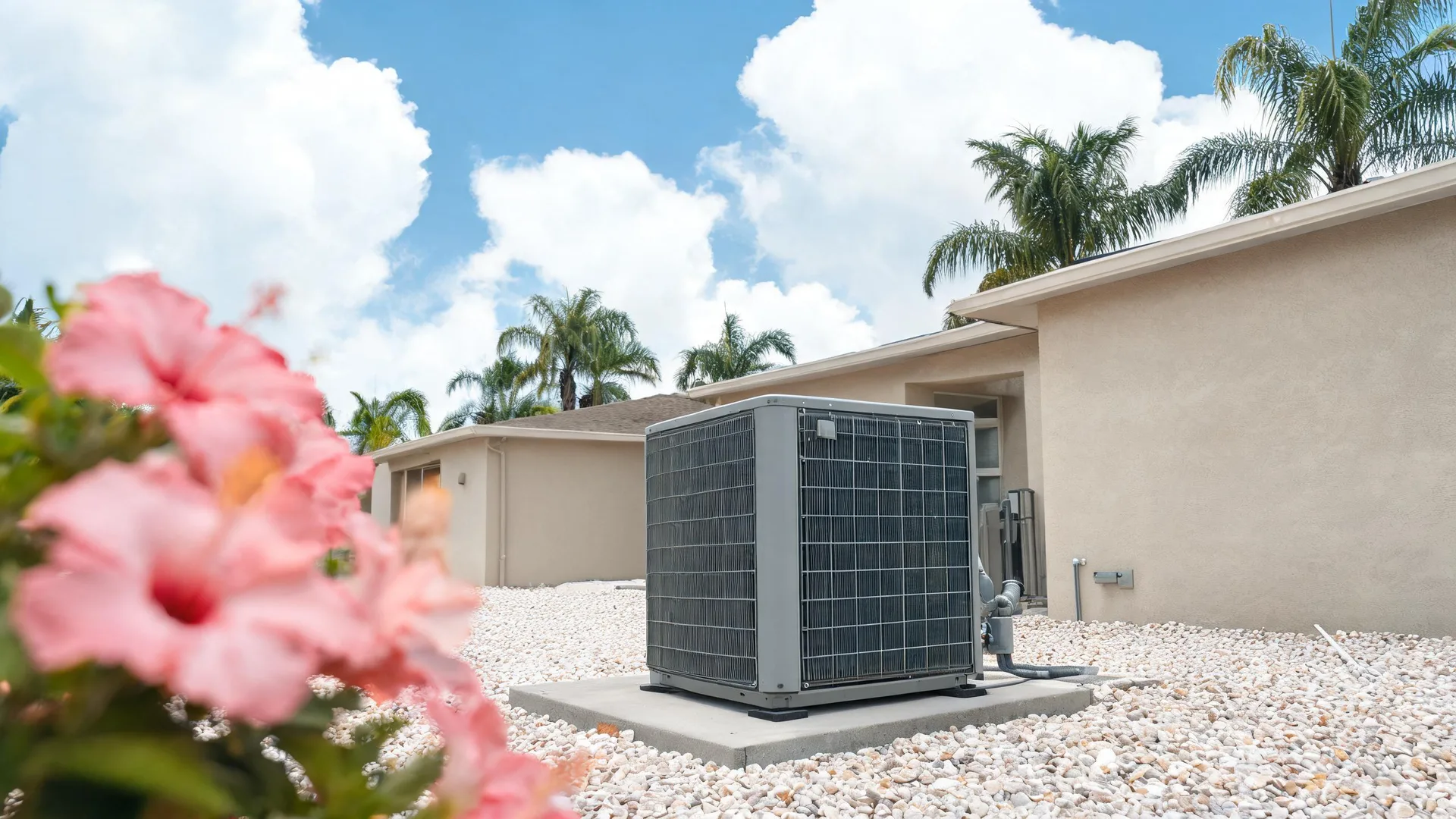
An outdoor residential air conditioning condenser unit mounted on a concrete pad, surrounded by gravel with a blue sky in the background.

Nothing fails all at once

A coil left unchecked picks up a film of dust and grime that acts like a blanket over it, so heat can't transfer the way it's supposed to. The system doesn't shut off and tell you that. It just runs longer to get the same result, and the compressor absorbs that extra strain every cycle. A dirty filter adds to it, starving the system of airflow until the evaporator coil gets cold enough to ice over. Once that happens, cooling drops off even though the unit is working harder than ever. None of this shows up as a sudden failure. It shows up as a compressor that wears out long before it should, because nobody caught the small stuff while it was still small.

Gauges come out, or they don't

A thorough tune-up includes connecting gauges to check refrigerant pressure and measuring the temperature split between the air going into the system and the air coming out. A quick visit skips straight to a visual check and maybe a filter swap. Without the gauges, a low charge or a restriction in the line can sit there undetected for another full season.

The coil gets touched, not glanced at

Cleaning the evaporator coil properly means pulling panels and washing the fins, not just looking at them through an access door. The same goes for the condensate drain, which gets flushed to make sure it isn't starting to clog. Skip that step and the coil keeps losing efficiency quietly, and a clogged drain backs up and causes water damage long before the system itself quits.

An outdoor air conditioning condenser unit on a concrete pad next to the gray vinyl siding of a residential home.

Book your AC tune-up in May, before homes here start needing cooling in June.

  1. Jan
  2. Feb
  3. Mar
  4. Apr
  5. May
  6. Jun
  7. Jul
  8. Aug
  9. Sep
  10. Oct
  11. Nov
  12. Dec

A tune-up checks the refrigerant charge, cleans the coils, tests the capacitor and tightens the electrical connections.

A real tune-up starts with the filter and works inward. The technician checks the blower motor and its capacitor, since a weak capacitor makes the motor strain to start every cycle. The condenser fan gets checked too, along with the contactor that feeds it power, because pitted contacts build resistance and run hot. Electrical connections get tightened, since a loose wire under load is how a breaker ends up tripping under heavy use. The outdoor coil gets cleared of leaves and grass clippings so air can actually move through it. Refrigerant charge gets checked against what the system calls for, not topped off by guesswork. None of this is optional add-on work. It's what separates a system that lasts from one that limps through the season.